How We Picked the Best Budget Chinese EVs
The Chinese EV market produces more sub-$20,000 electric vehicles than the rest of the world combined. But "cheapest" doesn't mean "best value." To rank these vehicles, we evaluated five criteria:
- Price-to-range ratio — dollars per mile of CLTC-rated range (adjusted for real-world highway driving)
- Battery chemistry and warranty — LFP longevity, usable kWh, and manufacturer coverage
- Charging capability — peak DC fast-charge kW, 10–80% time, and connector standard (GB/T, CCS2, or NACS)
- Export availability — whether the model is sold or confirmed for markets outside China (Europe, Southeast Asia, Latin America, Middle East)
- Platform maturity — dedicated EV architecture vs. converted ICE chassis, plus ADAS hardware
All prices reflect the Chinese domestic MSRP in RMB, converted to USD at approximately ¥7.2 = $1.00 as of early 2026. Export prices are typically 30–80% higher due to tariffs, shipping, and homologation costs. Vehicles discontinued before model year 2026 are excluded.
The 7 Cheapest Electric Cars in China Worth Buying in 2026
#7 — Changan Lumin (2026 Refresh)
Key Spec: CLTC range 301 km (187 mi) | 27.8 kWh LFP battery | $6,300 base
Why It Made the List: The Lumin (also called "Mini EV" in some markets) remains one of the most affordable four-seat EVs globally. The 2026 refresh adds a 27.8 kWh CATL-sourced LFP pack, up from 17.7 kWh, bringing real-world city range closer to 150 miles. DC fast charging peaks at 25 kW — painfully slow by 2026 standards, yielding a 10–80% charge in roughly 55 minutes.
Best For: Urban commuters in dense Chinese cities who need a second car for grocery runs and school drop-offs. Export availability is limited to Southeast Asia.
Price: ¥45,400 (~$6,300) base / ¥59,900 (~$8,300) top trim
#6 — Wuling Bingo Plus
Key Spec: CLTC range 410 km (255 mi) | 41.9 kWh LFP | $11,800 base
Why It Made the List: Wuling (a SAIC-GM joint venture) built the Bingo on a dedicated micro-EV platform with surprisingly competent packaging. The 41.9 kWh LFP pack from Gotion High-Tech delivers roughly 200 miles of real-world mixed driving. DC fast charging peaks at 50 kW, reaching 10–80% in about 38 minutes. The five-door hatchback layout and 310-liter cargo area make it genuinely practical.
Best For: Budget-conscious buyers in emerging markets (India, Thailand, Indonesia) where Wuling has active distribution.
Price: ¥84,900 (~$11,800) base / ¥99,800 (~$13,900) top trim
#5 — Geely Geometry E Firefly
Key Spec: CLTC range 401 km (249 mi) | 39.4 kWh LFP | $10,500 base
Why It Made the List: Geely's Geometry sub-brand targets the value segment with SEA-derived architecture. The Firefly uses a 39.4 kWh LFP pack with liquid thermal management — a rarity at this price point — enabling sustained DC fast charging at 60 kW (10–80% in ~32 minutes) without severe taper. The 80 kW (107 hp) motor provides adequate highway merging performance, with a 0–100 km/h time of 11.2 seconds.
Best For: European buyers when exported under Geely's expanding dealer network; homologation for EU markets adds ~€8,000–€12,000 to the price.
Price: ¥75,600 (~$10,500) base / ¥89,800 (~$12,500) top trim
#4 — Chery QQ Ice Cream EV (2026)
Key Spec: CLTC range 301 km (187 mi) | 28.5 kWh LFP | $5,800 base
Why It Made the List: At $5,800, the QQ Ice Cream is the absolute cheapest new EV on this list. Chery kept costs down with air cooling on the battery pack and a modest 20 kW DC charge rate (10–80% in ~70 minutes). However, for pure city use with overnight Level 2 charging at home, the 28.5 kWh pack delivers a genuine 130–140 real-world miles. Build quality has improved noticeably over the 2023 original, with standard dual airbags and ABS.
Best For: Price-first buyers in China's tier-3 and tier-4 cities, or export to Latin American markets where Chery has presence.
Price: ¥41,800 (~$5,800) base / ¥55,900 (~$7,800) top trim
#3 — Nio Firefly (2026)
Key Spec: CLTC range 420 km (261 mi) | 52 kWh LFP | $19,500 base (battery purchase) / $14,200 with BaaS
Why It Made the List: Nio's sub-brand Firefly targets the global budget segment with something no competitor offers at this price: battery-as-a-service (BaaS). Buyers can purchase the car without the battery for ¥102,000 (~$14,200) and subscribe to the 52 kWh LFP pack for roughly $100/month. The dedicated EV platform supports 80 kW DC fast charging (10–80% in ~28 minutes), and Nio's third-generation battery swap stations can exchange a depleted pack for a full one in under 4 minutes. The 130 kW (174 hp) motor delivers a 0–100 km/h time of 8.5 seconds — the quickest on this list.
Best For: Tech-savvy buyers in Europe and Southeast Asia who want premium features (ADAS, OTA updates, battery swap) at a budget price point.
Price: ¥140,000 (~$19,500) with battery / ¥102,000 (~$14,200) BaaS + subscription
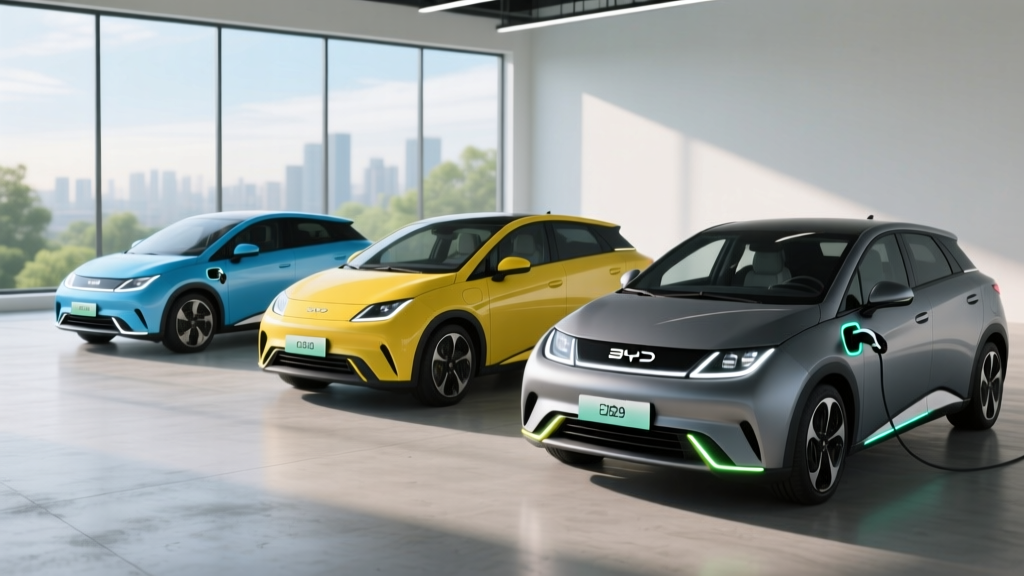
#2 — BYD Seagull (2026 Global Spec)
Key Spec: CLTC range 405 km (252 mi) | 44.9 kWh Blade LFP | $11,200 base (China) / ~$21,000 (Europe estimate)
Why It Made the List: The Seagull is the global benchmark for budget EVs. BYD's vertically integrated Blade LFP battery — a cell-to-pack design that eliminates module-level hardware — delivers exceptional energy density for an LFP chemistry at 160 Wh/kg. The 44.9 kWh pack supports 60 kW DC fast charging (10–80% in ~30 minutes). The e-Platform 3.0 architecture includes a heat pump as standard, reducing cold-weather range loss to roughly 20% at 0°C — significantly better than the 30–40% loss typical in budget EVs without thermal management. Export to Europe and Latin America began in 2024, with the 2026 global spec adding CCS2 compatibility alongside the domestic GB/T port.
Best For: The single best overall value pick. Suitable for first-time EV buyers globally who want proven battery tech, reasonable range, and fast charging.
Price: ¥80,800 (~$11,200) China base / ~$21,000–$24,000 EU (varies by market tariff)
#1 — BYD Dolphin Mini / Atto 1 (2026)
Key Spec: CLTC range 420 km (261 mi) | 44.9 kWh Blade LFP | $13,100 base (China) / ~$23,500 (EU/AU)
Why It Made the List: Our top pick combines the Seagull's Blade LFP technology with a larger, more practical hatchback body. The Dolphin Mini (sold as Atto 1 in some markets) offers 370 liters of cargo space, a 130 kW (174 hp) motor with a 0–100 km/h time of 9.1 seconds, and 80 kW DC fast charging (10–80% in ~26 minutes). The e-Platform 3.0 underpinnings include 8 standard airbags, a standard heat pump, and Level 2 ADAS (adaptive cruise, lane centering, AEB). For the Chinese domestic market, it's the cheapest EV that doesn't feel like a compromise in any category.
Best For: Small families or daily commuters who need highway capability, fast charging, and real cargo space — the most complete package under $15,000 in China.
Price: ¥94,800 (~$13,100) China base / ~$23,500–$26,000 export markets
Side-by-Side: How the 7 Cheapest Chinese EVs Compare
| Model | Battery (kWh) | CLTC Range | Real-World Range Est. | DC Fast Charge (Peak kW) | 10–80% Time | 0–100 km/h | China MSRP (USD) |
|---|---|---|---|---|---|---|---|
| Chery QQ Ice Cream | 28.5 LFP (air-cooled) | 301 km / 187 mi | ~130–140 mi | 20 kW | ~70 min | 14.5 sec | $5,800 |
| Changan Lumin | 27.8 LFP (air-cooled) | 301 km / 187 mi | ~130–150 mi | 25 kW | ~55 min | 14.0 sec | $6,300 |
| Geely Geometry E Firefly | 39.4 LFP (liquid) | 401 km / 249 mi | ~185–200 mi | 60 kW | ~32 min | 11.2 sec | $10,500 |
| Wuling Bingo Plus | 41.9 LFP (liquid) | 410 km / 255 mi | ~190–200 mi | 50 kW | ~38 min | 12.0 sec | $11,800 |
| BYD Seagull | 44.9 Blade LFP (liquid) | 405 km / 252 mi | ~195–210 mi | 60 kW | ~30 min | 11.0 sec | $11,200 |
| BYD Dolphin Mini | 44.9 Blade LFP (liquid) | 420 km / 261 mi | ~200–215 mi | 80 kW | ~26 min | 9.1 sec | $13,100 |
| Nio Firefly | 52.0 LFP (liquid) | 420 km / 261 mi | ~200–220 mi | 80 kW | ~28 min | 8.5 sec | $19,500 / $14,200 BaaS |
Note: CLTC (China Light-Duty Vehicle Test Cycle) range figures are typically 10–15% higher than the US EPA cycle and 5–10% higher than WLTP. Real-world estimates above assume mixed highway/city driving at moderate temperatures. Cold-weather (below freezing) range loss ranges from 15% (liquid-cooled packs with heat pumps) to 35% (air-cooled packs without thermal management).
Budget Tiers: Which Chinese EV Fits Your Wallet?
| Tier | Price Range (China MSRP) | Models | What You Get | What You Sacrifice |
|---|---|---|---|---|
| Ultra-Budget | $5,000–$7,000 | Chery QQ Ice Cream, Changan Lumin | Basic city mobility, 130+ real-world miles, 4 seats | Air-cooled battery, slow DC charging (<25 kW), no highway comfort, minimal ADAS |
| Value | $10,000–$13,000 | Geely Firefly, Wuling Bingo Plus, BYD Seagull | Liquid thermal management, 60 kW DC charging, heat pump (BYD), usable highway capability | Modest power (80–100 kW motors), cloth interiors, basic infotainment |
| Premium Budget | $13,000–$20,000 | BYD Dolphin Mini, Nio Firefly | 80 kW DC charging, Level 2 ADAS, 130+ kW motors, OTA updates, battery swap (Nio) | Still compact (B-segment), export pricing significantly higher |
Tax Credits, Tariffs, and the Export Reality
A critical caveat for readers outside China: the prices listed above are Chinese domestic MSRPs and do not reflect what you'll actually pay in the US, Europe, or other markets.
United States: Chinese-manufactured EVs face a 100% tariff under the 2024 Section 301 tariff increase, effectively doubling the import price. A $11,200 BYD Seagull would cost roughly $22,400+ before dealer markup, shipping, and compliance modifications. Furthermore, Chinese-built vehicles are ineligible for the §30D federal tax credit due to battery sourcing and critical mineral requirements. This makes the US market effectively closed to budget Chinese EVs for the foreseeable future.
European Union: The EU imposed countervailing duties of 17–36% on Chinese EVs in late 2024, varying by manufacturer (BYD faces ~17%, SAIC/Wuling ~36%). Even with duties, a BYD Seagull lands in Europe at approximately €21,000–€24,000 — still undercutting most European rivals but no longer the bargain it appears at Chinese MSRP.
Southeast Asia, Latin America, Middle East: These markets have the most favorable conditions for Chinese EV exports, with lower or no punitive tariffs. BYD, Chery, and Wuling have active dealer networks in Thailand, Brazil, Mexico, and the UAE, where prices typically run 40–70% above Chinese MSRP.
Category Winners at a Glance
🏆 Overall Top Pick: BYD Dolphin Mini — The most complete package. Fastest charging (80 kW), quickest acceleration (9.1 sec to 100 km/h), standard heat pump, Level 2 ADAS, and Blade LFP battery with an 8-year/150,000 km warranty.
🥈 Runner-Up: BYD Seagull — Same Blade LFP tech in a slightly smaller, cheaper package. Best pure value at $11,200 China MSRP.
💰 Cheapest Overall: Chery QQ Ice Cream — At $5,800, it's the most affordable new four-wheel EV on the planet. Just don't expect highway comfort or fast charging.
⚡ Fastest Charging: Tie — BYD Dolphin Mini and Nio Firefly, both at 80 kW peak (10–80% in ~26–28 minutes).
🔋 Longest Range: Tie — BYD Dolphin Mini and Nio Firefly, both at 420 km CLTC (~200–220 real-world miles).
🔧 Most Innovative: Nio Firefly — Battery-as-a-service and sub-4-minute battery swap capability are unique in the sub-$20,000 segment.
What Is the Best Budget Chinese EV for Your Use Case?
City-only commuting (no highway): Chery QQ Ice Cream or Changan Lumin. If you charge at home overnight and never exceed 60 km/h, the slow DC charging and air-cooled battery are non-issues. You'll spend under $7,000 and operate for pennies per mile.
Mixed city/highway daily driving: BYD Seagull. The liquid-cooled Blade LFP pack handles sustained highway speeds without thermal throttling, the heat pump preserves winter range, and 60 kW DC charging means a 20-minute stop adds ~120 miles.
Small family needing cargo space: BYD Dolphin Mini. The 370-liter trunk, 80 kW charging, and 130 kW motor make it a genuine primary vehicle, not just a city runabout.
Tech enthusiast who wants premium features: Nio Firefly with BaaS. You get OTA updates, Nio's ADAS stack, battery swap access, and a lower upfront cost by subscribing to the battery rather than purchasing it.
Buyer in a market with high Chinese EV tariffs (US): Unfortunately, none of these vehicles make financial sense in the US once tariffs, shipping, and credit ineligibility are factored in. Consider the Chevrolet Equinox EV or Nissan Leaf as domestic alternatives with §30D credit eligibility.
Battery Chemistry Deep-Dive: Why LFP Dominates This Segment
Every vehicle on this list uses lithium iron phosphate (LFP) battery chemistry. This isn't accidental — LFP offers critical advantages for budget EVs:
| Attribute | LFP (This Segment) | NMC/NCA (Premium EVs) |
|---|---|---|
| Energy Density | 140–170 Wh/kg | 220–300 Wh/kg |
| Cycle Life | 3,000–5,000+ cycles | 1,000–2,000 cycles |
| Thermal Stability | Excellent (no thermal runaway below ~270°C) | Moderate (requires robust BMS) |
| Cobalt/Nickel Content | None (iron + phosphate) | Significant (supply chain risk) |
| Cost per kWh | ~$60–$80 (2026 cell-level) | ~$90–$120 (2026 cell-level) |
| Cold-Weather Performance | Weaker (needs heat pump for winter) | Better intrinsic low-temp output |
| Recommended SoC Range | 0–100% (can charge to full daily) | 20–80% daily (100% for trips only) |
The trade-off is clear: LFP sacrifices energy density (meaning heavier, larger packs for the same range) but gains dramatically on cost, longevity, and safety. For a budget EV where the target is 200–260 miles of range rather than 350+, LFP is the rational choice. BYD's Blade cell-to-pack design narrows the energy-density gap to roughly 160 Wh/kg — competitive with older NMC cells — while maintaining LFP's cost and safety advantages.
Frequently Asked Questions
Can I buy the cheapest electric car in China and import it to the US?
Technically possible, but economically irrational. A 100% Section 301 tariff doubles the vehicle cost, shipping and customs brokerage add $2,000–$4,000, and the vehicle will not qualify for the §30D federal tax credit. You'd also need to independently certify the vehicle for FMVSS compliance, which costs tens of thousands of dollars. The total landed cost of a $6,000 Chery QQ Ice Cream would exceed $20,000 with no credit offset.
Which is the best value after accounting for total cost of ownership?
The BYD Seagull. At $11,200 (China MSRP), it delivers 200+ real-world miles, liquid thermal management, 60 kW DC charging, and a heat pump — features that typically cost $30,000+ in Western markets. The Blade LFP battery's 3,000+ cycle life means the pack should outlast the vehicle's economic life. Operating cost is roughly $0.02–$0.04 per mile on Chinese residential electricity rates.
How do Chinese EV prices compare to the cheapest EVs in the US?
The cheapest new EV in the US for 2026 is the Nissan Leaf S at approximately $28,140 before the §30D credit. After the $7,500 credit (if eligible), it drops to ~$20,640. The BYD Dolphin Mini — a more capable vehicle by most metrics — costs $13,100 in China but is unavailable in the US. The price gap between Chinese domestic and US markets remains roughly 2:1 for equivalent vehicles.
Are these budget Chinese EVs safe?
Safety varies significantly by model and price tier. The BYD Dolphin Mini and Nio Firefly include 6–8 airbags, ESC, and Level 2 ADAS as standard — comparable to global safety expectations. The ultra-budget tier (Chery QQ Ice Cream, Changan Lumin) offers only dual front airbags and ABS. None of these vehicles have been crash-tested by NHTSA or IIHS. C-NCAP (China's safety authority) ratings exist for some models but use a less stringent protocol than Euro NCAP.
What about battery degradation on cheap LFP packs?
LFP chemistry is inherently more durable than NMC, with typical degradation of 5–8% over 1,000 cycles and 10–15% over 3,000 cycles. BYD warranties its Blade LFP packs for 8 years/150,000 km with a 70% capacity retention floor. Budget-tier models from Chery and Changan typically offer 8 years/120,000 km. Given that LFP can be charged to 100% daily without accelerated degradation (unlike NMC, which prefers 80% daily), real-world usable range stays more consistent over the vehicle's life.
Which budget Chinese EV has the fastest charging?
The BYD Dolphin Mini and Nio Firefly tie at 80 kW peak DC fast charging, reaching 10–80% in approximately 26–28 minutes. However, note that peak kW is not sustained — both vehicles taper charging power above 80% SoC to protect the battery, and the Nio Firefly's larger 52 kWh pack means it sustains higher absolute power for longer despite the same peak rate. For context, premium EVs like the Hyundai Ioniq 5 or Tesla Model 3 charge at 200–250 kW in this segment.
Final Decision Framework
Choose the Chery QQ Ice Cream if: Your budget is strictly under $6,000, you drive only in the city, and you charge at home overnight.
Choose the BYD Seagull if: You want the best overall value — proven Blade LFP battery, heat pump, and 200 real-world miles at $11,200.
Choose the BYD Dolphin Mini if: You need a primary family vehicle with cargo space, fast charging, and highway capability under $14,000.
Choose the Nio Firefly if: You want premium tech (ADAS, OTA, battery swap) and are open to a battery subscription model.
Look elsewhere if: You live in the US. Tariffs and credit ineligibility make Chinese EVs non-competitive — consider the Chevy Equinox EV or Nissan Leaf instead.