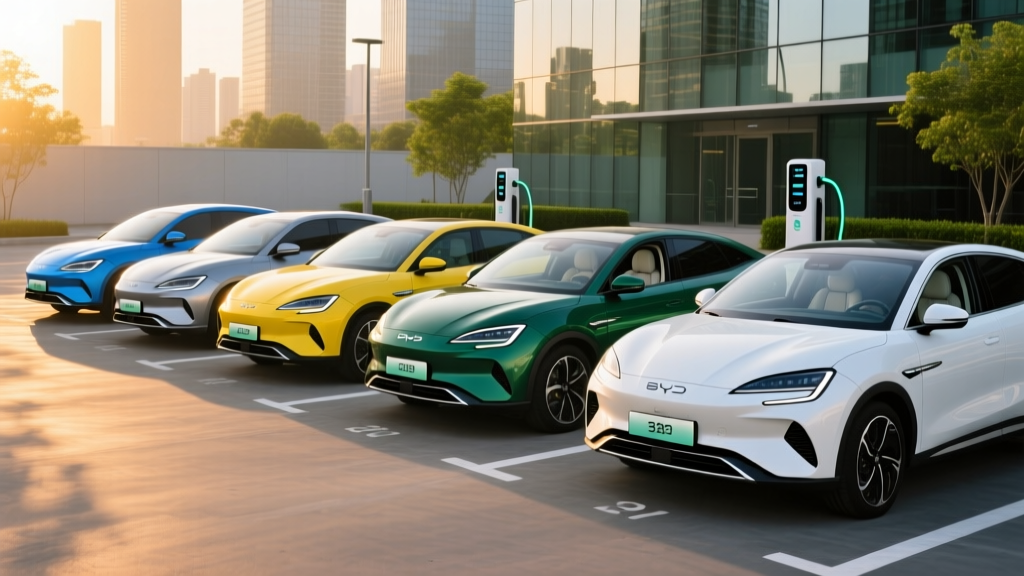
BYD (Build Your Dreams) has become the world's largest producer of electrified vehicles, offering everything from sub-$15,000 city runabouts to premium electric SUVs. For budget-conscious buyers, the question isn't whether BYD makes affordable cars — it's which BYD model delivers the most value for the money in your market. This guide ranks the cheapest BYD cars by starting MSRP, comparing real-world range, charging speed, efficiency, and total ownership cost so you can match a model to your actual driving needs.
A note on availability: As of 2026, BYD does not sell passenger vehicles directly in the United States due to ongoing tariffs and regulatory barriers. The models ranked below are available in international markets (Europe, Australia, Southeast Asia, Latin America, and the Middle East). US-based readers can use this guide for cross-border reference, future market planning, or to understand how BYD's pricing pressures are reshaping the global EV landscape. Where applicable, we note US-market equivalents from brands that do qualify for the IRS §30D federal tax credit.
How We Ranked the Cheapest BYD Cars
Our selection criteria for this roundup prioritize measurable value, not just sticker price:
- Base MSRP (local currency converted to USD): Entry-level trim before incentives, using 2026 model-year pricing.
- Real-world range vs. WLTP/EPA claim: We apply a ~10-15% reduction from WLTP figures to estimate realistic mixed-driving range, and note cold-weather losses.
- Charging speed (peak kW and 10-80% time): Because a cheap EV that charges slowly costs you time on road trips.
- Efficiency (kWh/100 km or MPGe): Lower consumption means lower electricity costs per mile.
- Battery chemistry and warranty: BYD's Blade Battery (LFP) vs. NMC trade-offs, plus coverage terms.
- Practical utility: Cargo space, seating, and ground clearance for real daily use.
Ranked: The 7 Cheapest BYD Cars for 2026
#1 — BYD Dolphin (2026)
Starting Price: ~$17,500 USD (varies by market) | Key Spec: 310 mi WLTP range, 44.9 kWh LFP Blade Battery
Why it made the list: The Dolphin remains BYD's global entry point for a practical, full-size hatchback EV. It uses the e-Platform 3.0 architecture with a standard Blade Battery (LFP chemistry), offering excellent thermal stability and a rated 5,000+ cycle life. The 70 kW (94 hp) base motor handles city and suburban driving adequately, while the available 130 kW (174 hp) extended-range variant adds highway confidence.
Best for: Urban commuters who want a spacious 5-door hatchback at the lowest possible price, with the safety of LFP chemistry for daily 100% charging.
Real-world range caveat: WLTP claims 310 mi (499 km); expect ~260-275 mi in mixed driving, dropping to ~210 mi in sustained cold-weather highway use.
Charging: Peak 60 kW DC fast charging, 10-80% in approximately 35 minutes. Level 2 AC at 7 kW (full charge in ~7 hours).
#2 — BYD Seagull (2026)
Starting Price: ~$10,500 USD (China/LATAM); ~$20,000+ in Europe (as Dolphin Mini) | Key Spec: 252 mi WLTP range (38 kWh), 75 hp
Why it made the list: The Seagull is objectively the cheapest BYD car globally — a subcompact hatchback that undercuts nearly every EV on the planet. In China, it starts under ¥70,000. Export markets see higher pricing due to homologation, shipping, and dealer margins, but it remains the most affordable way into a new BYD EV with modern safety tech and the Blade Battery platform.
Best for: City-only drivers, second-car households, and markets where micro-EVs qualify for aggressive purchase subsidies.
Real-world range caveat: WLTP 252 mi; expect ~200-215 mi real-world. This is strictly a city and suburban vehicle — highway efficiency drops sharply above 70 mph.
Charging: Peak 40 kW DC, 10-80% in ~40 min. Not built for road-trip fast charging.
#3 — BYD Qin Plus DM-i (PHEV, 2026)
Starting Price: ~$14,000 USD (China); ~$22,000-25,000 export | Key Spec: 75 mi electric-only range, 750+ mi combined, 1.5L + electric motor
Why it made the list: The cheapest BYD car doesn't have to be a pure EV. The Qin Plus DM-i is a plug-in hybrid sedan that pairs a 1.5-liter Atkinson-cycle engine with BYD's DM-i hybrid system and an 18.3 kWh Blade Battery. It delivers genuine electric-only commuting range while eliminating range anxiety for longer trips. Fuel consumption in charge-sustaining mode is rated at approximately 3.8 L/100 km (~62 MPG combined).
Best for: Drivers who commute short distances on electricity but regularly take longer trips where charging infrastructure is unreliable.
Real-world range caveat: 75 mi (120 km) EV-only is WLTP; expect ~60 mi in mixed conditions. The gasoline engine is efficient but not silent — NVH increases noticeably when the engine kicks on.
#4 — BYD Yuan Plus / Atto 3 (2026)
Starting Price: ~$28,000 USD (varies by market) | Key Spec: 260 mi WLTP, 60.48 kWh LFP, 201 hp
Why it made the list: The Atto 3 (Yuan Plus in China) is BYD's compact crossover — the segment that dominates global sales. It's the cheapest BYD SUV with competitive specs against the Hyundai Kona Electric, Kia Niro EV, and MG ZS EV. The 201 hp motor delivers a 7.3-second 0-60 mph time, and the 60.48 kWh Blade Battery provides usable range for weekend trips.
Best for: Small families and buyers who need crossover ride height and cargo flexibility without paying premium-EV prices.
Real-world range caveat: WLTP 260 mi; expect ~220-235 mi mixed, ~180 mi highway in winter.
Charging: Peak 80 kW DC, 10-80% in ~29 minutes. Level 2 AC at 7 kW.
#5 — BYD Seal U / Song Plus EV (2026)
Starting Price: ~$33,000 USD | Key Spec: 310 mi WLTP, 71.8 kWh LFP, 215 hp
Why it made the list: Stepping into mid-size SUV territory, the Seal U (export name for the updated Song Plus EV) offers the most interior space per dollar in BYD's lineup. Rear legroom and cargo volume rival vehicles costing 40% more. The 71.8 kWh Blade Battery and 215 hp motor provide confident highway merging and adequate fast-charging speeds.
Best for: Families prioritizing interior volume and comfort over sporty driving dynamics, especially in markets with reliable Level 2 home charging.
Real-world range caveat: WLTP 310 mi; expect ~260-280 mi real-world, with winter highway driving dropping to ~210 mi.
Charging: Peak 90 kW DC, 10-80% in ~30 minutes.
#6 — BYD Destroyer 05 / Chazor (PHEV, 2026)
Starting Price: ~$16,000 USD (China); ~$24,000 export | Key Spec: 68 mi EV-only, 1.5L DM-i hybrid, 700+ mi total range
Why it made the list: A compact PHEV sedan positioned just above the Qin Plus, the Destroyer 05 (sold as the Chazor in some export markets) offers slightly more power and a more premium interior at a modest price increase. The DM-i system prioritizes electric drive, with the gasoline engine acting primarily as a generator at cruising speeds.
Best for: Buyers who want PHEV flexibility with a more refined cabin and stronger acceleration than the Qin Plus provides.
Real-world range caveat: 68 mi EV-only WLTP; expect ~55 mi in real-world commuting with HVAC use.
#7 — BYD Seal (Sedan, 2026)
Starting Price: ~$38,000 USD | Key Spec: 355 mi WLTP, 82.5 kWh LFP, 313 hp (RWD) / 530 hp (AWD)
Why it made the list: The Seal is BYD's Tesla Model 3 fighter — a sport sedan with Cell-to-Body (CTB) battery integration that lowers the center of gravity and increases torsional rigidity. While not the cheapest BYD car in absolute terms, it's the cheapest way to get a premium electric sedan with 300+ hp, rear-wheel-drive dynamics, and competitive range against European rivals costing 50% more.
Best for: Driving enthusiasts who want performance-sedan thrills at a mass-market price, and who have access to reliable DC fast charging.
Real-world range caveat: WLTP 355 mi; expect ~290-310 mi real-world (RWD). AWD variants sacrifice ~15% range for the extra traction and acceleration.
Charging: Peak 150 kW DC, 10-80% in ~26 minutes. One of the faster-charging BYD models.
Side-by-Side Comparison: Cheapest BYD Cars at a Glance
| Model | Type | Base Price (USD est.) | Range (WLTP / Real est.) | Battery (kWh) | Peak DC Charge | 0-60 mph |
|---|---|---|---|---|---|---|
| BYD Seagull | BEV | $10,500+ | 252 mi / ~210 mi | 38 LFP | 40 kW | 11.0 sec |
| BYD Qin Plus DM-i | PHEV | $14,000+ | 75 mi EV / 750+ total | 18.3 LFP | N/A (PHEV) | 7.3 sec |
| BYD Dolphin | BEV | $17,500+ | 310 mi / ~270 mi | 44.9 LFP | 60 kW | 10.9 sec |
| BYD Destroyer 05 | PHEV | $16,000+ | 68 mi EV / 700+ total | 18.3 LFP | N/A (PHEV) | 7.1 sec |
| BYD Atto 3 / Yuan Plus | BEV | $28,000+ | 260 mi / ~225 mi | 60.48 LFP | 80 kW | 7.3 sec |
| BYD Seal U | BEV | $33,000+ | 310 mi / ~270 mi | 71.8 LFP | 90 kW | 7.9 sec |
| BYD Seal | BEV | $38,000+ | 355 mi / ~300 mi | 82.5 LFP | 150 kW | 5.9 sec (RWD) |
Budget Tiers: Which BYD Fits Your Wallet?
| Tier | Price Range | Models | Best For |
|---|---|---|---|
| Ultra-Budget | Under $15,000 | Seagull, Qin Plus DM-i (China pricing) | City commuting, emerging-market buyers, fleet purchases |
| Value | $15,000–$30,000 | Dolphin, Destroyer 05, Atto 3 (export) | Daily drivers wanting real range and practicality |
| Premium-Value | $30,000–$45,000 | Seal U, Seal | Families and enthusiasts wanting more space or performance |
Tax Credits and Incentives: What BYD Buyers Actually Pay
Here's the critical caveat for US readers: BYD vehicles do not currently qualify for the US federal §30D clean vehicle tax credit. The credit requires final assembly in North America, and BYD's passenger vehicles are manufactured in China, Thailand, Brazil, and other non-qualifying locations. Even in markets where BYD is sold, the IRS battery component and critical minerals sourcing requirements would likely disqualify BYD models due to their vertically integrated Chinese supply chain.
For international buyers, local incentives vary dramatically:
- Europe: Country-specific EV incentives range from €3,000–€6,000+ (France, Germany, Spain) — BYD models typically qualify where available.
- Australia: FBT exemption for fleet/employer-provided EVs under the Electric Car Discount; no direct consumer rebate in most states.
- Southeast Asia: Thailand and Indonesia offer purchase subsidies of $2,000–$4,000 for locally assembled EVs — BYD has begun local production in Thailand.
- Latin America: Brazil reinstated import tariffs on EVs in 2024-2026, increasing BYD's effective pricing; local factory construction is underway.
Always verify current incentive eligibility with your local transport authority or tax professional before purchasing.
Top Pick and Runners-Up
🏆 Top Pick: BYD Dolphin
Justification: The Dolphin hits the sweet spot of BYD's lineup. It's the cheapest BYD car that delivers genuine 250+ mile real-world range, 5-seat practicality, acceptable DC fast charging (60 kW), and the long-cycle-life LFP Blade Battery that can be charged to 100% daily without accelerated degradation. At ~$17,500 in international markets, it undercuts comparable rivals like the MG4 and Renault Zoe while offering more interior space and a more mature software interface. If you have home Level 2 charging and a commute under 50 miles round-trip, the Dolphin is the best value-per-mile EV BYD makes.
Runner-Up (Best for Tight Budgets): BYD Seagull — If you drive exclusively in the city and can charge at home overnight, the Seagull's sub-$11,000 China pricing (where available) is unmatched globally. Just accept the limited fast-charging capability and reduced highway comfort.
Runner-Up (Best for Range Flexibility): BYD Qin Plus DM-i — For buyers in markets without reliable public DC charging, the Qin Plus DM-i's 75-mile EV-only range covers most commutes, while the gasoline engine eliminates range anxiety entirely. At ~62 MPG combined in hybrid mode, it's cheaper to fuel than most pure EVs charged on expensive public networks.
BYD's Battery Advantage: What the Blade Battery Means for Buyers
Every model on this list uses BYD's proprietary Blade Battery with LFP (lithium iron phosphate) chemistry. This matters for budget buyers in three concrete ways:
- Longevity: LFP cells are rated for 3,000-5,000+ charge cycles before reaching 80% capacity — roughly 2-3× the cycle life of NMC cells. At the Dolphin's 44.9 kWh capacity and 270-mile real-world range, that's potentially 800,000+ miles before significant degradation.
- Daily charging: Unlike NMC batteries, LFP batteries can (and should) be regularly charged to 100% without accelerated wear. BYD recommends periodic full charges to recalibrate the battery management system.
- Safety: LFP chemistry is inherently more thermally stable, with a higher thermal runaway threshold (~270°C vs ~210°C for NMC). The Blade form factor further resists thermal propagation in nail penetration tests.
The trade-off: LFP batteries are heavier and less energy-dense than NMC, which is why BYD's range figures don't always match competitors using NMC packs of similar kWh capacity. For budget buyers prioritizing longevity and low cost over maximum range, LFP is the right choice.
BYD provides a standard battery warranty of 8 years / 160,000 km (~100,000 mi) with a 70% capacity retention guarantee across most markets — consistent with industry norms from Hyundai, Kia, and Tesla.
Frequently Asked Questions
What is the cheapest BYD car available in 2026?
The BYD Seagull is the cheapest BYD car globally, starting at approximately $10,500 USD in China. In export markets where it's sold (often badged as the Dolphin Mini), pricing typically starts around $18,000–$22,000 USD due to shipping, homologation, and dealer costs. For a full-size hatchback, the BYD Dolphin at ~$17,500 (international) is the cheapest practical BYD EV.
Can I buy a BYD in the United States?
Not currently. BYD does not sell passenger vehicles in the US as of 2026. The company has focused on commercial vehicles (electric buses, trucks) in the American market. Ongoing US tariffs on Chinese-manufactured vehicles (100%+ as of 2025) make passenger car imports economically unviable. US buyers seeking similar value should look at the Chevrolet Equinox EV, Hyundai Kona Electric, or used Tesla Model 3 — all of which may qualify for the §30D federal tax credit.
How does BYD's LFP Blade Battery compare to NMC batteries?
LFP (lithium iron phosphate) offers superior cycle life (3,000-5,000+ cycles vs 1,000-2,000 for NMC), better thermal safety, and lower cost per kWh. The trade-off is lower energy density — LFP packs are heavier for the same capacity, which slightly reduces vehicle range and efficiency. For budget buyers who charge at home and don't need 350+ miles of range, LFP is the more practical and durable choice.
Which BYD model charges the fastest?
The BYD Seal sedan peaks at 150 kW DC fast charging, reaching 10-80% in approximately 26 minutes. The Seal U (mid-size SUV) peaks at 90 kW. Entry-level models like the Seagull (40 kW) and Dolphin (60 kW) charge more slowly — plan for 35-40 minute fast-charging stops on road trips. Remember that peak kW is not sustained; charging slows significantly above 80% SoC to protect battery health.
Are BYD PHEVs worth considering over pure EVs?
Yes, if your use case includes regular long trips (200+ miles) in areas with sparse DC fast charging, or if you lack reliable home charging. The Qin Plus DM-i and Destroyer 05 offer 60-75 miles of EV-only commuting — enough for most daily driving — while the gasoline engine handles longer trips at ~60 MPG. Total cost of ownership can be lower than a pure EV if public DC charging (at $0.35-$0.50/kWh) would be your primary fuel source.
What is the real-world range of the cheapest BYD EVs?
Real-world range typically falls 10-20% below WLTP ratings depending on driving style, temperature, and terrain. The Dolphin delivers ~260-275 mi real-world from its 310 mi WLTP claim. The Seagull achieves ~200-215 mi from 252 mi WLTP. Cold weather (below 32°F / 0°C) can reduce range an additional 15-25%, especially on highway drives where cabin heating draws significant energy from the battery.