The Engineering Behind EV Battery Warranties
When investing in an electric vehicle, the battery pack represents the single most expensive and technologically complex component. Unlike internal combustion engines, which suffer from mechanical wear and friction, EV batteries degrade primarily through electrochemical fatigue. Understanding which automakers back their technology with the most comprehensive coverage requires a deep dive into battery chemistry, thermal management, and Battery Management System (BMS) architecture.
According to the U.S. Environmental Protection Agency, modern EV batteries are engineered to outlast the usable life of the vehicle itself, provided they are managed correctly. However, manufacturers define 'failure' differently. A standard EV battery warranty does not guarantee zero degradation; rather, it guarantees that the battery will retain a specific State of Health (SoH)—typically 70% of its original capacity—over a set period or mileage. If the degradation curve falls below this threshold prematurely, the manufacturer is legally obligated to replace or repair the modular pack.
The Chemistry of Degradation: SEI Growth and Cathode Fatigue
To understand why some automakers confidently offer 10-year warranties while others cap out at 8 years, we must examine the microscopic realities of lithium-ion cells. Degradation occurs via two primary mechanisms: calendar aging and cycle aging.
- Solid Electrolyte Interphase (SEI) Layer Growth: During charging, the liquid electrolyte reacts with the graphite anode, forming a protective layer called the SEI. Over time, and especially during high-temperature DC fast charging, this layer thickens, permanently consuming active lithium ions and increasing internal resistance.
- Cathode Micro-Cracking: In Nickel Manganese Cobalt (NMC) chemistries, the physical expansion and contraction of the cathode during charge cycles cause microscopic fractures. This isolates active material, reducing overall capacity.
Automakers that offer the longest warranties mitigate these issues through advanced cell-level chemistry and aggressive pack-level thermal regulation. The Alternative Fuels Data Center notes that active liquid cooling systems are now a mandatory requirement for ensuring long-term battery viability, a feature that directly correlates with extended warranty offerings.
Ranking the Best EVs with the Longest Warranty Coverage
1. Hyundai Ioniq 5 & Kia EV6 (The 10-Year Champions)
Battery Warranty: 10 Years / 100,000 Miles
Core Technology: E-GMP Platform, 800V Architecture, Active Liquid Thermal Management
Hyundai and Kia dominate the warranty landscape by offering an unprecedented 10-year/100,000-mile battery and powertrain warranty. This confidence stems from their Electric-Global Modular Platform (E-GMP). The 800-volt architecture not only allows for blistering 18-minute DC fast charging but also utilizes highly sophisticated silicon-carbide (SiC) inverters that generate less heat. Their BMS actively precondition the battery using the vehicle's heat pump, ensuring the cells are at the optimal 25°C–35°C window before accepting high-current charges, drastically reducing SEI layer thickening.
2. Tesla Model 3 & Model Y Long Range (The 150k-Mile Endurance Standard)
Battery Warranty: 8 Years / 120,000 Miles (Standard Range) to 150,000 Miles (Long Range/Performance)
Core Technology: Octovalve Thermal Management, NMC/LFP Chemistries, Integrated Heat Pump
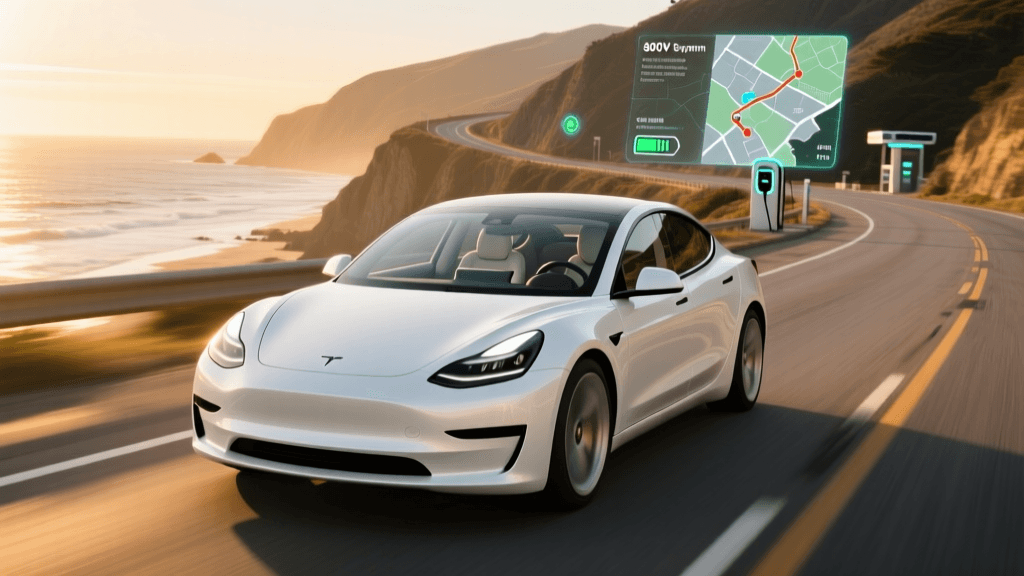
Tesla offers an 8-year warranty, but distinguishes itself with a massive 150,000-mile limit on Long Range and Performance models (guaranteeing 70% SoH). Tesla’s engineering edge lies in its Octovalve thermal management system, which scavenges waste heat from the motors, battery, and cabin to maintain optimal cell temperatures. Furthermore, Tesla’s standard-range models utilize Lithium Iron Phosphate (LFP) chemistry. LFP cells lack cobalt and nickel, making them virtually immune to cathode micro-cracking and allowing owners to charge to 100% daily without accelerating degradation, a massive advantage for high-mileage drivers.
3. Rivian R1T & R1S (The Heavy-Duty 175k-Mile Exception)
Battery Warranty: 8 Years / 175,000 Miles
Core Technology: Structural Battery Packs, Endurance Network Validation
Rivian takes a unique approach to warranty structuring. While their standard battery warranty is 8 years/120,000 miles, vehicles that utilize the Rivian Adventure Network for charging or meet specific commercial criteria can qualify for extended coverage up to 175,000 miles. Rivian’s large-format cylindrical cells are potted in a structural resin that provides immense physical protection and excellent thermal mass. The BMS continuously monitors cell-level voltage variance, allowing for modular replacement of degraded battery trays rather than full-pack replacements, keeping long-term warranty costs sustainable.
4. Ford Mustang Mach-E & F-150 Lightning (The 100k-Mile Workhorses)
Battery Warranty: 8 Years / 100,000 Miles
Core Technology: Active Liquid Cooling, Pro Power Onboard Integration
Ford guarantees 70% capacity retention over 8 years or 100,000 miles. For the F-150 Lightning, this warranty is backed by rigorous commercial-grade testing. Ford utilizes a highly redundant active liquid cooling system that circulates dielectric fluid directly against the cell cooling fins. The BMS is calibrated conservatively, utilizing a larger 'buffer' at the top and bottom of the charge curve. This means a 131 kWh extended-range pack might only expose 115 kWh to the driver, but this hidden buffer absorbs the brunt of calendar aging and deep-discharge stress.
Comprehensive Warranty & Tech Comparison Table
| EV Model | Battery Chemistry | Thermal Management | Basic Warranty | Battery Warranty | SoH Guarantee |
|---|---|---|---|---|---|
| Hyundai Ioniq 5 / Kia EV6 | NMC (Nickel Manganese Cobalt) | Active Liquid (800V preconditioning) | 5 yr / 60k mi | 10 yr / 100k mi | 70% |
| Tesla Model 3 / Y (LR) | NMC / LFP | Active Liquid (Octovalve Heat Pump) | 4 yr / 50k mi | 8 yr / 150k mi | 70% |
| Rivian R1T / R1S | NMC (Large Cylindrical) | Active Liquid (Structural Resin) | 5 yr / 60k mi | 8 yr / 175k mi* | 70% |
| Ford F-150 Lightning | NMC (Pouch Cells) | Active Liquid (Heavy-Duty Loop) | 3 yr / 36k mi | 8 yr / 100k mi | 70% |
*Rivian's 175,000-mile warranty applies to specific commercial and Adventure Network usage profiles; standard consumer warranty is 8yr/120k mi.
Actionable Advice: Maximizing Your EV Battery Lifespan
Even with a 10-year warranty, preserving your battery's State of Health ensures optimal range and resale value. The Department of Energy emphasizes that temperature and charge-state extremes are the primary catalysts for premature degradation.
- Respect the 20-80% Rule for NMC Batteries: If your EV uses NMC chemistry (most Long Range and Performance models), set your daily charge limit to 80%. Only charge to 100% immediately before a long road trip to minimize time spent at high-voltage states.
- Leverage LFP Chemistry: If you own a Standard Range Tesla or specific BYD models with LFP batteries, ignore the 80% rule. LFP cells require regular 100% charges to allow the BMS to accurately calibrate cell balancing.
- Precondition Before DC Fast Charging: Always route your navigation through a DC fast charger. This signals the BMS to activate the thermal management system, heating or cooling the battery to the optimal temperature curve before electrons begin flowing, preventing lithium plating on the anode.
- Avoid Deep Discharges: Letting an EV sit at 0% for extended periods can cause the cells to drop below their critical voltage threshold, leading to copper dendrite formation and permanent cell death.
Final Verdict
When ranking the best EVs by warranty coverage, Hyundai and Kia stand alone at the summit with their 10-year/100,000-mile guarantee, backed by the highly efficient E-GMP platform. However, Tesla’s 150,000-mile limit on Long Range models offers unmatched endurance for high-mileage commuters, while Rivian’s structural pack engineering provides unique peace of mind for heavy-duty adventure seekers. Ultimately, the longest warranty is a reflection of an automaker's mastery over thermal dynamics and electrochemical preservation.