The Essential Electric Vehicle App Stack
If you are shopping for or currently own an EV, relying on a single electric vehicle app is rarely enough. The most effective approach in 2026 is a three-app stack: a route planner (like A Better Routeplanner or Tesla’s native nav) for trip logistics, a network aggregator (PlugShare or ChargePoint) for finding reliable public chargers, and a cost tracker (like EV Track or the OEM app) to monitor efficiency and charging spend. Together, these tools bridge the gap between EPA range stickers and real-world driving variables like cold weather, elevation, and charging-curve taper.
Quick Answer: Which Electric Vehicle App Do I Need?
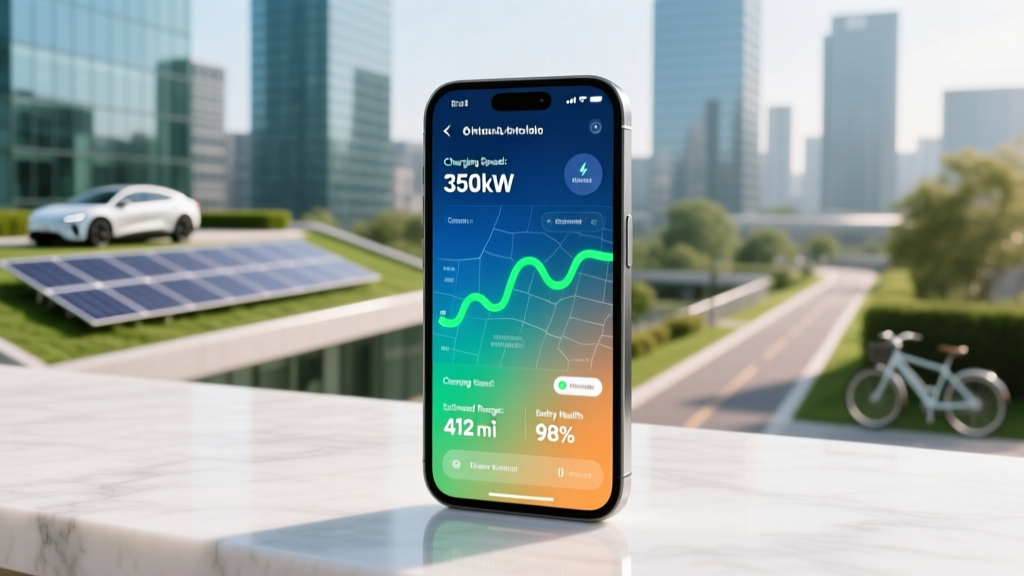
For daily driving, your OEM app (Tesla, FordPass, Hyundai Bluelink) handles remote preconditioning and battery health. For road trips, A Better Routeplanner (ABRP) is the gold standard for accounting for wind, temperature, and payload. For public charging reliability, PlugShare offers user-verified station status. Most owners use at least two of these concurrently.
EV vs. Gas: The Data Behind the App Hype
Apps claim to save you money, but how does an EV actually compare to a gas car in 2026? According to the EPA, the average new gas car achieves about 28 MPG combined. An EV like the 2026 Hyundai Ioniq 6 SE (140 MPGe) uses about 25 kWh per 100 miles.
| Metric | 2026 Toyota Camry (Gas) | 2026 Hyundai Ioniq 6 SE (EV) |
|---|---|---|
| Energy Cost per Mile | $0.14 (at $3.50/gal) | $0.04 (at $0.16/kWh home) |
| Annual Fuel/Energy (12k mi) | $1,680 | $480 |
| Maintenance (5-yr avg) | $2,800 | $1,200 |
| 0-60 mph | 7.6 sec | 5.1 sec |
A quality electric vehicle app helps you track these savings in real-time, showing you exactly how much your "fuel" cost drops when you charge at home versus using 350 kW DC fast chargers on the road, which can cost $0.48/kWh or more.
Real-World Range vs. The App Algorithm
The primary reason owners use third-party apps is the "range gap." The EPA sticker on a 2026 Ford F-150 Lightning says 320 miles. However, real-world testing shows that at 75 mph in 40°F weather, that range can drop by 25-30%, landing closer to 225 miles.
Apps like ABRP allow you to input your specific "reference consumption" and weather conditions. They then calculate the charge-curve taper—the reality that a 240 kW peak charge rate only lasts until about 55% State of Charge (SoC) before slowing down to protect the battery chemistry (NMC or LFP).
Cost Breakdown: Apps and Ownership Economics
Tracking your Total Cost of Ownership (TCO) is where the modern electric vehicle app shines. Most OEM apps now provide a "charging history" that breaks down kWh added and cost per session.
| Cost Category | Year 1 | Year 3 | Year 5 |
|---|---|---|---|
| Purchase (after §30D credit) | $37,500 | - | - |
| Home Charging (Level 2) | $550 | $1,650 | $2,750 |
| Insurance Premium (Avg) | $2,100 | $6,300 | $10,500 |
| Maintenance (Tires/Fluid) | $200 | $900 | $1,800 |
By monitoring these figures through your app, you can determine if your driving patterns (highway vs. city) are maximizing your regenerative braking and minimizing your DC fast-charging spend.
Common Misconceptions About EV Apps
Many new buyers believe that if their car has a built-in navigation system, a third-party electric vehicle app is redundant. This is often a mistake.
- Myth: Built-in nav always knows if a charger is broken. Fact: Crowdsourced apps like PlugShare update station status in minutes based on user check-ins.
- Myth: Apps can "hack" your battery for more range. Fact: Apps only monitor the BMS (Battery Management System); they cannot override the manufacturer's buffer limits.
- Myth: All chargers in an app are free. Fact: Most Level 2 and DCFC stations now require a network-specific account or credit card on file.
Decision Framework: Which App for Which Driver?
Choose OEM Apps if: You primarily charge at home and need remote climate control to precondition your battery while plugged into Level 2.
Choose ABRP if: You take road trips exceeding 200 miles and need to account for elevation changes and trailer towing weight.
Choose PlugShare/ChargePoint if: You live in an urban area or apartment complex and rely on public Level 2 infrastructure for daily top-ups.
FAQ: Electric Vehicle App Essentials
Do I need to pay for these apps?
Most essential features are free. However, premium tiers (like ABRP Live Data via an OBD-II dongle) can cost $50 for the hardware and provide real-time battery temperature and cell-voltage monitoring.
Can an electric vehicle app help me get the §30D tax credit?
No. Apps cannot determine your eligibility for the federal credit. You must consult IRS guidelines regarding MSRP caps, income limits, and battery-sourcing requirements for the 2026 tax year.
Which app is best for battery health monitoring?
The Tesla App and Hyundai Bluelink provide excellent State of Health (SoH) estimates. For deeper analysis, third-party tools like Tessie (for Tesla) can track degradation curves over time.