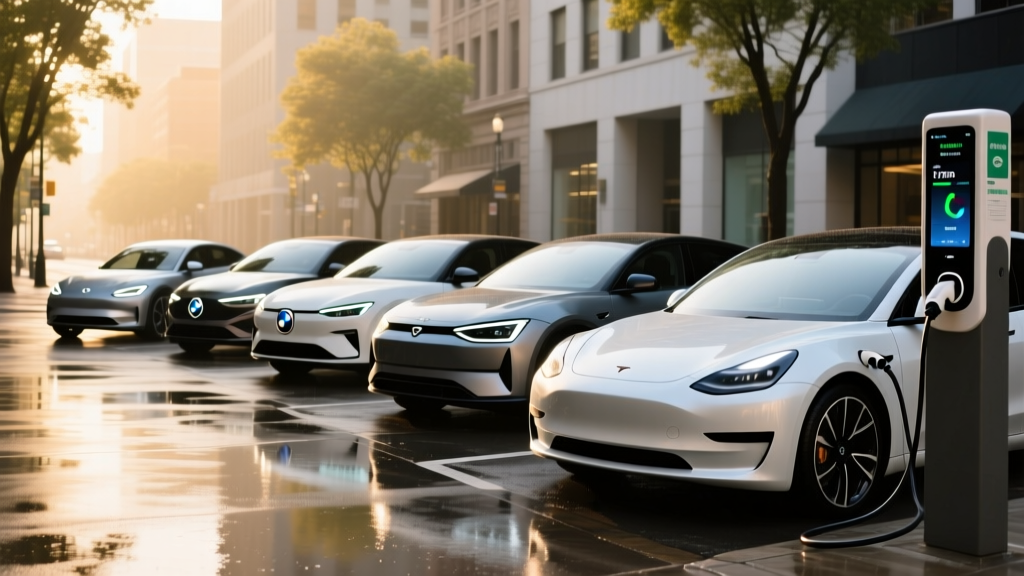
Quick Answer: What Makes a Great City Electric Car?
The ideal city electric car in 2026 pairs 200+ miles of EPA range with compact dimensions (under 180 inches long), DC fast charging above 100 kW, and a sub-$40,000 MSRP before incentives. Top picks include the Chevrolet Equinox EV (319 mi EPA, ~$33,600 base), Hyundai Kona Electric (261 mi EPA, ~$32,975), and Nissan Leaf (212 mi EPA, ~$28,140). For urban drivers covering 30–40 miles daily, even the most affordable options require charging only once per week on a Level 2 home charger, cutting fuel costs by 60–75% versus a comparable gas compact.
Why an EV Excels in City Driving (and Where It Doesn't)
Electric motors deliver instant torque from zero RPM, making stoplight launches and low-speed merging effortless. Regenerative braking recaptures energy in stop-and-go traffic, boosting real-world efficiency well beyond highway driving. The EPA rates many city-friendly EVs above 120 MPGe combined — the U.S. Department of Energy's fueleconomy.gov database confirms the 2026 Hyundai Kona Electric at 129 MPGe combined, for example.
But city EV ownership has real friction points. If you live in an apartment without access to a garage or dedicated parking spot with a 240V outlet, you'll rely on public Level 2 or DC fast chargers, which cost $0.30–$0.50 per kWh (versus ~$0.13–$0.17/kWh at home). Cold climates reduce range by 15–30% in winter due to cabin heating demands and slower battery chemistry. And while urban miles are kind to batteries, frequent fast-charging to 100% accelerates long-term degradation.
Top City Electric Cars Compared: Specs That Matter
Below is a side-by-side breakdown of the most practical urban EVs available in 2026, with data sourced from manufacturer specifications and EPA filings.
| Spec | 2026 Chevy Equinox EV 2LT | 2026 Hyundai Kona Electric SEL | 2026 Nissan Leaf SV Plus | 2026 Toyota Corolla Hybrid (Gas Baseline) |
|---|---|---|---|---|
| Powertrain | BEV | BEV | BEV | HEV |
| EPA Range / MPG | 319 mi | 261 mi | 212 mi | 50 MPG combined |
| Battery (usable kWh) | 85 kWh (NMC) | 64.8 kWh (NMC) | 60 kWh (NMC) | N/A |
| Peak DC Fast Charge | 150 kW | 100 kW | 100 kW (CCS) | N/A |
| 10–80% DC Charge Time | ~30 min | ~43 min | ~45 min | ~3 min (gas fill) |
| Level 2 Rate (kW) | 11.5 kW | 7.2 kW | 7.2 kW | N/A |
| 0–60 mph | ~7.5 sec | ~7.7 sec | ~6.9 sec | ~9.2 sec |
| Horsepower | 213 hp | 201 hp | 214 hp | 138 hp net |
| Length (inches) | 190.2 | 171.5 | 176.4 | 182.5 |
| Base MSRP | $33,600 | $32,975 | $28,140 | $23,500 |
| Federal Tax Credit (§30D) | Up to $7,500* | Up to $7,500* | Up to $7,500* | Up to $8,000 (§30D hybrid provisions vary) |
| Battery Warranty | 8 yr / 100,000 mi | 10 yr / 100,000 mi | 8 yr / 100,000 mi | 10 yr / 150,000 mi (hybrid system) |
*§30D credit eligibility depends on buyer income caps ($150K single / $300K joint), vehicle MSRP caps ($55K SUVs / $25K sedans — check IRS guidelines), and battery critical-mineral sourcing requirements that shift annually. Confirm at point of sale.
Real Costs: City EV vs. Gas Car Over 5 Years
Purchase price is only part of the equation. Here's a realistic 5-year cost projection for a city driver covering 10,000 miles annually, comparing the Hyundai Kona Electric to the gas Toyota Corolla LE (33 MPG combined).
| Cost Category (5 yr) | 2026 Kona Electric | 2026 Corolla LE (Gas) |
|---|---|---|
| Purchase Price (after $7,500 credit) | $25,475 | $22,500 |
| Fuel / Electricity (50,000 mi total) | $2,150 (home L2, $0.15/kWh avg) | $5,300 ($3.50/gal, 33 MPG) |
| Maintenance | $600 (cabin filter, wipers, tire rotation) | $2,800 (oil, filters, brakes, plugs) |
| Insurance (avg) | $8,200 | $6,500 |
| Depreciation (est.) | $10,500 | $8,500 |
| 5-Year Total | $46,925 | $45,600 |
The EV edges ahead or matches the gas car on total cost even before factoring in state/local incentives, HOV lane access, or employer-subsidized charging. The gap widens further if you have access to free or low-cost workplace charging. However, insurance premiums run 15–25% higher for EVs in most metro areas due to specialized repair costs — get quotes before buying.
Charging in the City: Home, Workplace, and Public Reality
For urban dwellers, the charging question breaks into three scenarios:
Scenario A: You Have a Garage or Driveway
Install a Level 2 (240V) home charger rated at 32–48 amps. Expect $500–$800 for the charger hardware and $800–$2,500 for electrician labor, depending on whether your panel needs an upgrade from 100A to 200A service. A 48A charger adds roughly 30–35 miles of range per hour — more than enough to fully replenish any city EV overnight.
Scenario B: Apartment or Street Parking Only
This is the hardest scenario. Options include workplace Level 2 chargers, public networks like ChargePoint or EVgo ($0.25–$0.50/kWh), or DC fast chargers for quick top-ups. At 100 kW, the Kona Electric gains roughly 80 miles in 20 minutes. Plan for 2–3 public sessions per week at $8–$15 each. Total monthly fuel cost rises to ~$60–$90, still below gas for most drivers.
Scenario C: Occasional Access to a 120V Outlet
Level 1 charging (120V, 12A) delivers about 1.2 kW — roughly 4–5 miles of range per hour. For a 40-mile daily commute, you'd need 8–10 hours plugged in nightly. It works for low-mileage drivers but isn't viable as a primary strategy for most.
Common City EV Myths — Fact-Checked
| Myth | Fact |
|---|---|
| "You need 300+ miles of range for a city car." | Urban drivers average 30–40 mi/day. A 200-mi EV needs charging only once per week with home L2 access. |
| "EVs don't work in cold climates." | Range drops 15–30% in sub-freezing temps due to cabin heating and battery resistance. A 261-mi Kona becomes ~190 mi in winter — still plenty for city use. Preconditioning while plugged in mitigates this. |
| "The battery will need replacing in 5 years." | Modern NMC and LFP batteries are warrantied for 8–10 years / 100,000 mi at ≥70% capacity retention. Real-world degradation averages 1.5–2.5% per year for city driving with mostly L2 charging. |
| "EVs are more expensive to own." | Fuel savings of $600–$900/yr and near-zero maintenance typically offset higher insurance and depreciation within 3–5 years, especially with the federal tax credit. |
| "Public charging is always broken." | Reliability varies by network. Tesla Superchargers average >95% uptime; Electrify America and EVgo hover around 85–90%. Urban areas typically have multiple redundant stations. |
Decision Framework: Which City EV Fits Your Life?
If you have home charging and drive under 50 miles/day:
→ Choose the Nissan Leaf SV Plus ($28,140 before credit). Lowest entry price, adequate 212-mi range, and the cheapest total cost of ownership for light urban use. Its CHAdeMO connector is a drawback — DC fast-charging infrastructure for CHAdeMO is shrinking as CCS and NACS dominate. If you take occasional road trips, skip it.
If you want the best range-to-price ratio and CCS/NACS flexibility:
→ Choose the Hyundai Kona Electric ($32,975 before credit). Compact 171.5-inch length makes parking easy, 261 miles covers any city week, and Hyundai's 10-year battery warranty leads the segment. The 100 kW peak charge rate is modest — plan for ~43-minute 10–80% sessions on road trips.
If you need crossover space and the longest range:
→ Choose the Chevrolet Equinox EV 2LT ($33,600 before credit). 319 miles EPA is exceptional at this price, the 150 kW peak charge rate is faster, and the Ultium platform supports future OTA improvements. At 190 inches long, it's larger than the Kona — measure your parking spot first.
If you can't install home charging:
→ Consider a PHEV like the Toyota Prius Prime (44 mi electric-only, 52 MPG combined after battery depletes). You get electric commuting without depending on a single charging location, and total fuel flexibility for road trips. MSRP starts around $33,675.
First-Time City EV Buyer Checklist
- Confirm your charging access before ordering. If renting, ask your landlord about EV charger installation — some states require landlords to permit it.
- Get insurance quotes early. EV premiums vary wildly by insurer and ZIP code. GEICO, Progressive, and State Farm often differ by $400+/year for the same model.
- Check §30D eligibility at IRS.gov before assuming the $7,500 credit applies. Battery sourcing rules change annually, and point-of-sale transfer requires dealer participation.
- Test-drive in your actual commute. Pay attention to one-pedal driving feel (regen strength), visibility in tight spots, and how the infotainment handles navigation to chargers.
- Download charging apps (PlugShare, ChargePoint, EVgo) and map public chargers near your home, work, and frequent destinations before purchase day.
Is a city electric car practical without a garage?
It can be, but it requires planning. If your workplace offers Level 2 charging or reliable public DC fast chargers exist within a half-mile of your routine, it's manageable. Expect to spend $60–$90/month on public charging versus $30–$45 with home Level 2. If neither option exists, a PHEV is the smarter bridge.
How long does it take to charge a city EV at home?
On a Level 2 (240V) charger at 7.2 kW, the Hyundai Kona Electric's 64.8 kWh battery charges from empty to full in roughly 9 hours. At 11.5 kW (Equinox EV), the 85 kWh battery takes about 7.5 hours. Most city drivers use only 15–25% of battery daily, so a nightly top-up takes 1.5–3 hours.
Do city EVs hold their resale value?
EV depreciation has been steeper than gas cars — averaging 40–50% over 3 years versus 30–35% for gas compacts, driven partly by Tesla price cuts resetting the used market. However, as the market stabilizes and federal incentives anchor demand, 2025–2026 models are showing improved retention. Buying used (2–3 years old) lets someone else absorb that initial hit.
What about safety in a small city EV?
Check IIHS and NHTSA ratings for each model. The Kona Electric earns IIHS Top Safety Pick+ status in recent model years. EVs carry their battery mass low in the chassis, giving them a lower center of gravity and strong crash-test performance relative to their size.