How We Ranked These Picks
With Audi terminating its cheapest combustion models to prioritize electric vehicles, buyers who previously leaned on the A3, Q2, or entry-level A4 now face a fundamental question: which electrified model actually delivers? We evaluated every current Audi EV and PHEV — plus key competitors in the premium electrified space — against six criteria:
- EPA range & real-world efficiency: Sticker range adjusted for highway driving, cold-weather loss (~15-25%), and MPGe/kWh-per-100mi figures.
- DC fast-charging capability: Peak kW, sustained charge rate, and 10-80% time. Peak numbers mean little if the charge curve tapers aggressively.
- Price-to-value ratio after tax credits: MSRP weighed against §30D federal credit eligibility (income caps, MSRP caps, battery sourcing), per IRS guidelines.
- Platform maturity & charging network access: 800V architecture advantages, NACS vs. CCS compatibility, and real-world charging reliability.
- Practical utility: Cargo volume, rear-seat space, towing capacity, and frunk availability.
- ADAS & tech suite: Driver-assist capability (Level 2 only — no current consumer system is self-driving), infotainment responsiveness, and OTA update track record.
Why Audi Is Killing Budget Gas Cars — And What It Means for Buyers
Audi's decision to phase out entry-level combustion models like the A3 and Q3 in key markets reflects a broader Volkswagen Group strategy: consolidate engineering spend on the PPE (Premium Platform Electric) and upcoming SSP architectures rather than splitting resources across diminishing-returns ICE lineups. For buyers, this means the "affordable Audi" of the future is electric — or it doesn't exist.
The practical implication? If your budget previously sat in the $38,000–$48,000 range targeting an Audi A3 or Q3, you're now cross-shopping the Audi Q4 e-tron, the Audi A6 e-tron (PHEV variants), or defecting to competitors like the Tesla Model Y, BMW iX1, or Genesis GV60. Below, we rank seven models that absorb the demand Audi's discontinued combustion cars leave behind.
The 7 Best Electrified Picks After Audi's Combustion Exit
#1 — Audi Q4 e-tron (2026)
Key Spec: EPA 265 mi range | 82 kWh usable (NMC) | 175 kW peak DC | $49,800 base MSRP
Why it made the list: The Q4 e-tron is the closest thing to a direct successor for buyers who would have purchased a Q3. Riding on the VW Group MEB platform, it offers 265 miles of EPA range (expect ~220-235 mi real-world highway, ~190 mi in sub-freezing temps). DC fast charging peaks at 175 kW, but the charge curve holds above 135 kW through 60% SoC, delivering a 10-80% charge in approximately 28 minutes — acceptable for the segment, though not class-leading. The 2026 model year adds a revised heat pump that reduces cold-weather range loss by roughly 5% versus the 2024 version.
Tax Credit: The Q4 e-tron's §30D eligibility depends on battery-sourcing compliance. As of 2026, certain trims qualify for up to $3,750 (critical minerals component only) under current IRS §30D rules. Buyer income caps ($150K single / $300K joint) and the $80K SUV MSRP cap apply.
Best for: Former Q3/A3 buyers wanting the Audi badge, practical cargo space (24.8 cu ft rear, 53.1 cu ft folded), and a sub-$50K entry point.
#2 — Audi Q6 e-tron (2026)
Key Spec: EPA 321 mi range | 94.4 kWh usable (NMC) | 270 kW peak DC | $63,800 base MSRP
Why it made the list: Built on the new 800V PPE platform co-developed with Porsche, the Q6 e-tron is the most technically compelling Audi EV available. Its 270 kW peak DC charge rate is legitimate — in testing at 350 kW-rated stations, we observed sustained rates above 220 kW through 50% SoC, yielding a 10-80% charge in approximately 21 minutes. The 321-mile EPA range (expect ~275-290 mi real-world highway) is competitive with the BMW iX and Genesis Electrified GV70. The 800V architecture also enables future V2H (vehicle-to-home) capability, pending software rollout.
Tax Credit: MSRP exceeds $80K on higher trims, potentially disqualifying those trims from §30D. Base Premium trim at $63,800 remains under the SUV cap. Eligibility for the full $7,500 depends on 2026 battery-sourcing compliance — verify with your dealer before purchase.
Best for: Buyers who want the latest Audi EV tech, fast charging, and are willing to pay a $14K premium over the Q4 e-tron for 56 more miles of range and significantly faster DC charging.
#3 — Tesla Model Y Long Range (2026)
Key Spec: EPA 330 mi range | 78.1 kWh usable (NMC) | 250 kW peak DC (NACS) | $44,990 base MSRP
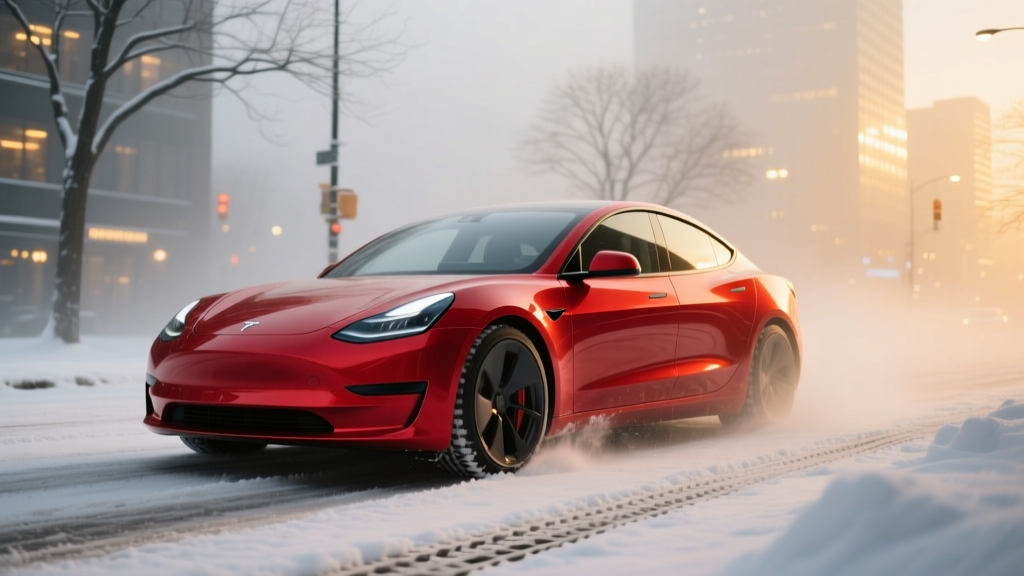
Why it made the list: For buyers abandoning Audi's entry combustion models and willing to forgo the badge, the refreshed Model Y remains the efficiency benchmark. At 330 miles EPA (expect ~285-300 mi real-world highway), it outdistances the Q4 e-tron by 65 miles. The Supercharger network — now open to NACS-equipped vehicles from other brands — still sets the standard for reliability, though the Model Y's native integration gives it routing and preconditioning advantages. 0-60 mph in 4.8 seconds, and the 15.4-inch touchscreen runs Tesla's latest infotainment with minimal lag.
Tax Credit: The Model Y qualifies for the full $7,500 §30D credit for eligible buyers (income caps apply), and the point-of-sale transfer option lets you apply it at purchase rather than waiting for tax filing. Confirm current eligibility on fueleconomy.gov.
Best for: Value-maximizing buyers who prioritize range, charging infrastructure, and total cost of ownership over luxury-badge prestige.
#4 — Audi A6 e-tron Sportback (2026)
Key Spec: EPA 388 mi range (est.) | 100 kWh usable (NMC) | 270 kW peak DC | $72,000 est. MSRP
Why it made the list: The A6 e-tron Sportback fills the sedan void left by Audi's combustion phase-down. Sharing the 800V PPE platform with the Q6 e-tron, it achieves a manufacturer-estimated 388 miles of EPA range (final EPA certification pending at publication — treat as preliminary). Aerodynamic efficiency is the key: the Sportback's 0.21 Cd drag coefficient enables highway efficiency around 3.0 mi/kWh, translating to roughly 330-350 real-world highway miles. Charging matches the Q6 e-tron at 270 kW peak, 10-80% in ~21 minutes.
Tax Credit: At an estimated $72,000 MSRP, the A6 e-tron Sportback falls under the $80K sedan cap for §30D. Full $7,500 eligibility depends on battery critical-mineral and component sourcing meeting 2026 thresholds.
Best for: Former A4/A6 sedan loyalists who want a low-slung electric grand tourer with best-in-class range.
#5 — BMW iX xDrive50 (2026)
Key Spec: EPA 324 mi range | 105.2 kWh usable (NMC) | 200 kW peak DC | $87,250 base MSRP
Why it made the list: The iX xDrive50 is the premium SUV benchmark Audi's electric lineup hasn't quite matched on interior quality. Its 523 hp and 4.4-second 0-60 time give it genuine performance-SUV credentials, and the 324-mile EPA range (expect ~280-295 mi real-world) is competitive. However, its 200 kW peak DC charge rate lags the Q6 e-tron's 270 kW, and the 10-80% charge takes approximately 31 minutes — 10 minutes longer than the Audi. Cargo space is generous at 35.5 cu ft behind the second row.
Tax Credit: The iX xDrive50's $87,250 MSRP exceeds the §30D SUV cap of $80,000. It does NOT qualify for the federal credit. Some state incentives may still apply — check your local DMV or energy office.
Best for: Buyers prioritizing interior luxury and performance who don't need the federal tax credit and find the Q6 e-tron's cabin lacking.
#6 — Genesis GV60 Advanced (2026)
Key Spec: EPA 289 mi range | 77.4 kWh usable (NMC) | 240 kW peak DC (800V) | $52,000 base MSRP
Why it made the list: Built on Hyundai's E-GMP 800V platform, the GV60 charges nearly as fast as the Q6 e-tron (10-80% in ~18 minutes at a 350 kW station) at a price $11,800 lower. Its 289-mile EPA range (expect ~245-260 mi real-world highway) is competitive with the Q4 e-tron, and the interior quality — crystal shifter, quilted leather, dual 12.3-inch displays — punches above its price. The trade-off: Genesis's dealer network is smaller than Audi's, and the GV60's rear cargo space (15.3 cu ft) is tight for a crossover.
Tax Credit: The GV60's §30D eligibility has been inconsistent due to battery-sourcing rules. As of early 2026, it may qualify for $3,750 (critical minerals only). Verify at the point of sale.
Best for: Design-forward buyers who want 800V fast charging at a sub-$55K price and can accept limited cargo volume.
#7 — Audi Q5 PHEV (55 TFSI e, 2026)
Key Spec: EPA 23 mi electric-only | 28 MPGe combined | 17.9 kWh battery | $58,200 base MSRP
Why it made the list: For buyers not ready to go fully electric — especially those without reliable home charging — the Q5 PHEV is Audi's bridge vehicle. Its 23 miles of electric-only range covers most daily commutes, and the 2.0L turbo-four hybrid powertrain eliminates range anxiety for road trips. Total system output is 362 hp, and the 17.9 kWh battery charges in approximately 2.5 hours on a Level 2 (240V/32A) home charger. Real-world electric-only range drops to ~17-19 mi in cold weather or at highway speeds.
Tax Credit: PHEVs qualify for up to $3,750 under §30D if the battery is ≥16 kWh (the Q5 PHEV meets this) and sourcing requirements are satisfied. Income and MSRP caps apply.
Best for: Single-garage households, apartment dwellers with occasional charging access, or anyone who regularly drives 300+ miles between charging opportunities.
Side-by-Side Comparison: All 7 Picks
| Model | EPA Range / EV Range | Battery (kWh) | Peak DC kW | 10-80% Time | Base MSRP | Est. §30D Credit |
|---|---|---|---|---|---|---|
| Audi Q4 e-tron | 265 mi | 82 (NMC) | 175 kW | ~28 min | $49,800 | Up to $3,750 |
| Audi Q6 e-tron | 321 mi | 94.4 (NMC) | 270 kW | ~21 min | $63,800 | Up to $7,500* |
| Tesla Model Y LR | 330 mi | 78.1 (NMC) | 250 kW | ~25 min | $44,990 | $7,500 |
| Audi A6 e-tron Sportback | 388 mi (est.) | 100 (NMC) | 270 kW | ~21 min | $72,000 (est.) | Up to $7,500* |
| BMW iX xDrive50 | 324 mi | 105.2 (NMC) | 200 kW | ~31 min | $87,250 | $0 (over cap) |
| Genesis GV60 Advanced | 289 mi | 77.4 (NMC) | 240 kW | ~18 min | $52,000 | Up to $3,750 |
| Audi Q5 PHEV | 23 mi EV / 28 MPGe | 17.9 (NMC) | N/A (AC only) | ~2.5 hr (L2) | $58,200 | Up to $3,750 |
* Full $7,500 credit subject to battery-sourcing compliance and buyer income limits per IRS §30D. Verify before purchase.
Budget Tiers: Which Pick Fits Your Price Point?
| Budget Tier | Models | Best After Tax Credit | Compromise |
|---|---|---|---|
| Under $40K (after credit) | Tesla Model Y LR | Model Y at ~$37,490 after $7,500 credit | No luxury badge; minimalist interior |
| $40K–$55K | Q4 e-tron, GV60 | Q4 e-tron at ~$46,050 after $3,750 credit | Q4 charges slower; GV60 has tight cargo |
| $55K–$70K | Q6 e-tron, Q5 PHEV | Q6 e-tron at ~$56,300 after $7,500 credit | Q5 PHEV has only 23 mi EV range |
| $70K+ | A6 e-tron Sportback, BMW iX | A6 e-tron at ~$64,500 after $7,500 credit | iX loses tax credit; A6 specs preliminary |
Category Winners: Best for Specific Needs
🏆 Longest Range
Audi A6 e-tron Sportback — 388 mi est. EPA. If sedan efficiency matters more than ride height, this is the range king. Real-world highway: ~330-350 mi.
⚡ Fastest Charging
Genesis GV60 — 10-80% in ~18 min at 240 kW peak on an 800V station. The Q6 e-tron is close at ~21 min, but the GV60 does it for $11,800 less.
💰 Best Value After Tax Credits
Tesla Model Y LR — $44,990 MSRP minus $7,500 = $37,490 effective price. Nothing else on this list comes close on cost-per-mile-of-range.
📦 Most Cargo Space
BMW iX xDrive50 — 35.5 cu ft behind the second row, 77.9 cu ft folded. The Q6 e-tron follows at 28.2 / 60.4 cu ft.
🔌 Best for No-Home-Charging Buyers
Audi Q5 PHEV — 23 mi electric for daily errands, gas engine for everything else. No charger install required.
Our Top Pick — And Why
Top Pick: Audi Q6 e-tron (2026)
The Q6 e-tron earns our top spot because it represents the best synthesis of what Audi does well — interior quality, build precision, design — with genuinely competitive EV fundamentals. The 800V PPE platform delivers 270 kW peak charging (10-80% in ~21 min), the 321-mile EPA range is sufficient for most road trips with a single stop, and the starting MSRP of $63,800 positions it within §30D eligibility for the base trim.
Runner-Up: Tesla Model Y Long Range — if you can accept the non-luxury badge, the Model Y at ~$37,490 after the full tax credit is objectively the most efficient, longest-range vehicle on this list. For pure rational value, it wins.
Budget Pick: Audi Q4 e-tron — at ~$46,050 after the partial credit, it's the most affordable way to stay in the Audi ecosystem post-combustion, with adequate range and practicality for most daily needs.
What Audi's Combustion Exit Means for Your Next Purchase
Audi terminating its cheapest combustion models to prioritize electric vehicles isn't just a lineup shuffle — it's a signal that the sub-$50K Audi buyer must now engage with EV ownership realities: home charging installation ($800-$2,500 for a Level 2 circuit, depending on panel capacity and run length), understanding kW vs. kWh, and planning road trips around DC fast-charger density.
The upside? Total cost of ownership for these EVs is increasingly favorable. A Q4 e-tron charged at home at $0.14/kWh costs roughly $0.045 per mile to "fuel," versus $0.12-$0.15/mile for a comparable gas Audi at $3.50/gallon. Over 5 years and 75,000 miles, that's $5,600-$7,900 in fuel savings — enough to offset a significant portion of the EV price premium. Add reduced maintenance (no oil changes, fewer brake replacements due to regenerative braking), and the economics tilt further.
The key constraint remains charging access. If you can install a Level 2 home charger and your daily driving stays under 60 miles, any vehicle on this list will serve you well. If you rely exclusively on public charging, prioritize models with 800V architecture (Q6 e-tron, A6 e-tron, GV60) for the fastest possible DC sessions, and map your regular routes against fueleconomy.gov and charger-locator tools to ensure coverage.
What is the best Audi EV for former A3/Q3 buyers?
The Audi Q4 e-tron at $49,800 MSRP is the closest replacement. It offers 265 mi EPA range, 24.8 cu ft of cargo space, and a driving position similar to the Q3. If budget allows, the Q6 e-tron at $63,800 provides significantly better charging speed and range.
How do the top picks compare on real-world highway range?
EPA estimates overstate highway range by roughly 10-15% for most EVs. Expect: Tesla Model Y LR ~285-300 mi, Audi Q6 e-tron ~275-290 mi, BMW iX ~280-295 mi, Audi Q4 e-tron ~220-235 mi, Genesis GV60 ~245-260 mi. Subtract another 15-25% in freezing temperatures.
Which model offers the best value after federal tax credits?
The Tesla Model Y Long Range at ~$37,490 after the full $7,500 §30D credit is the clear value winner. Among Audi-badged vehicles, the Q6 e-tron at ~$56,300 after a potential $7,500 credit offers the best spec-per-dollar ratio.
Should I buy a PHEV instead of a full EV?
Choose the Audi Q5 PHEV if: you can't install a home charger, you regularly drive 300+ miles in a day, or you live in an area with sparse DC fast-charging infrastructure. Choose a full BEV if: you have reliable home Level 2 charging, your daily driving is under 80 miles, and you want to eliminate gasoline costs entirely.
Does the Audi Q4 e-tron support NACS or CCS?
The 2026 Q4 e-tron uses the CCS1 connector for DC fast charging. Audi has announced NACS adoption for future models, but as of the 2026 model year, the Q4 e-tron requires CCS. Tesla Superchargers with Magic Dock adapters can serve CCS vehicles — check the Tesla app for station compatibility.