Quick Answer: Which All Electric Off Road Vehicle Should You Buy?
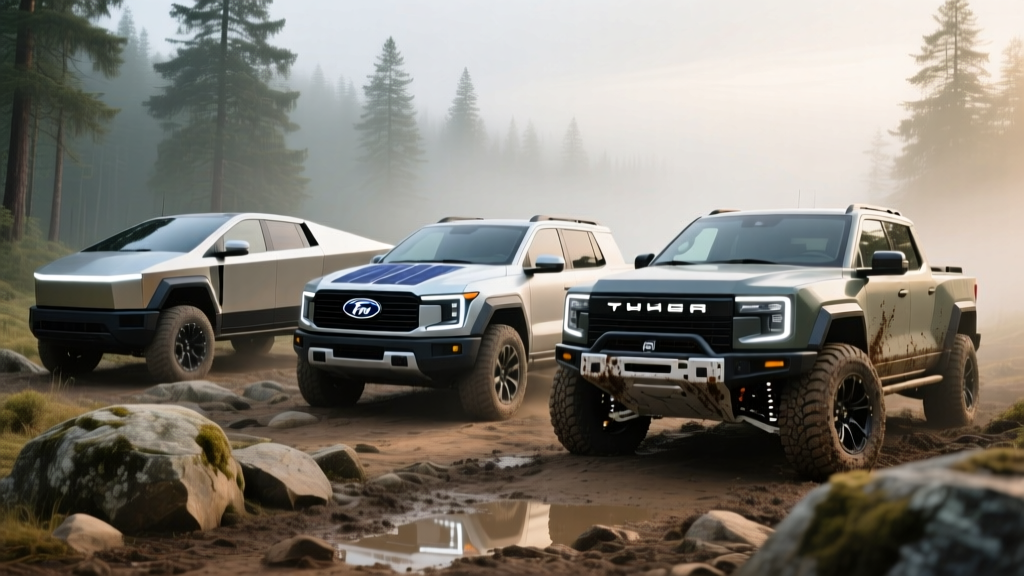
If you need a true all electric off road vehicle in 2026, your three best options are the Rivian R1S Tri Motor (371-mile EPA range, quad-motor torque vectoring, $99,900), the GMC Hummer EV SUV (314-mile EPA range, CrabWalk, Extract Mode, $104,500), and the upcoming Scout Terra (targeting 350+ miles, mechanical 4WD, ~$60,000 expected). For serious rock crawling with daily-driver practicality, the Rivian R1S leads. For extreme capability and presence, the Hummer EV delivers. For budget-conscious overlanders willing to wait, the Scout Terra (expected late 2026/early 2027) is worth watching.
The All Electric Off Road Vehicle Landscape in 2026
The electric off-road segment has matured past the early-adopter phase. Battery packs now exceed 140 kWh in some models, DC fast-charging speeds have climbed past 200 kW, and real-world trail testing has proven that electric motors offer genuine advantages over combustion engines off-pavement: instant torque at zero RPM, precise throttle modulation for rock crawling, and a low center of gravity from floor-mounted battery packs that reduces rollover risk.
But electric off-roaders also carry real trade-offs. A 9,000-pound Hummer EV burns through electrons quickly on soft sand or steep grades. Trail range can drop 30-40% below EPA estimates when climbing at low speed with high accessory loads. And if your nearest DC fast charger is 80 miles from the trailhead, range planning becomes a critical skill.
Here's what the current market actually looks like, with exact numbers.
| Spec | Rivian R1S Tri Motor | GMC Hummer EV SUV 3X | Scout Terra (Announced) |
|---|---|---|---|
| Base MSRP | $99,900 | $104,500 | ~$60,000 (est.) |
| EPA Range | 371 mi (Max Pack) | 314 mi | 350+ mi (target) |
| Battery (usable) | 149 kWh (NMC) | 212 kWh (NMC) | ~120 kWh (est.) |
| Horsepower | 850 hp | 830 hp | ~600 hp (est.) |
| 0-60 mph | 2.9 sec | 3.5 sec | TBA |
| Peak DC Charge | 220 kW | 350 kW | TBA |
| 10-80% DC Time | ~30 min | ~35 min | TBA |
| Ground Clearance | 14.9 in (max) | 15.9 in (Extract) | ~12 in (est.) |
| Approach Angle | 35.6° | 51.6° | TBA |
| Water Fording | 39.4 in | 32.0 in | TBA |
| Towing Capacity | 7,700 lb | 7,500 lb | 10,000 lb (target) |
| Battery Warranty | 8 yr / 175,000 mi | 8 yr / 100,000 mi | TBA |
| Availability | On sale now | On sale now | Expected late 2026/early 2027 |
Source: fueleconomy.gov, Rivian and GMC official specifications. Scout Terra specs are preliminary estimates from the manufacturer's announcement and subject to change.
Real-World Range: What the EPA Sticker Doesn't Tell You
EPA range estimates assume a mix of city and highway driving at moderate temperatures. Off-road driving breaks those assumptions entirely.
Trail Range Reality Check
Rivian R1S Max Pack: EPA 371 miles. Expect 280-310 miles in mixed highway driving to a trailhead. On moderate trails (forest roads, fire roads), expect 180-220 miles of effective range. On technical rock-crawling or deep sand, range can drop to 120-160 miles before you need to turn back.
GMC Hummer EV SUV: EPA 314 miles. The 212 kWh battery is massive, but so is the 9,000-pound curb weight. Highway real-world: 240-270 miles. Trail range on moderate terrain: 150-190 miles. Technical crawling: 100-140 miles.
Cold weather compounds the loss. At 20°F, expect an additional 15-25% range reduction on top of off-road losses. A Rivian R1S that manages 200 miles on a summer trail may only deliver 150 miles on a winter run. Battery preconditioning helps at the charger, but it won't recover lost trail range.
The key insight for off-road EV buyers: plan your trail routes around your return-to-pavement range, not your EPA sticker. A 371-mile EPA rating sounds generous until you realize a challenging 60-mile out-and-back trail could consume the equivalent of 200+ highway miles of energy.
EV vs. Gas Off-Roaders: The Honest Comparison
How do these electric platforms stack up against the gas-powered off-road benchmarks — the Jeep Wrangler Rubicon 392 and the Ford Bronco Raptor?
| Factor | Rivian R1S Tri Motor | Jeep Wrangler Rubicon 392 | Advantage |
|---|---|---|---|
| Peak Torque | 1,100+ lb-ft (instant) | 470 lb-ft @ 4,300 RPM | EV — instant torque at 0 RPM is unmatched for crawling |
| Fuel/Energy Cost per Mile | $0.04-$0.06 (home L2) | $0.22-$0.28 (gas, 14 MPG) | EV — 4-5x cheaper per mile at home |
| Trail Range | 120-220 mi (terrain-dependent) | 200-280 mi (18.5 gal tank) | Gas — more predictable, faster refueling on trail |
| Refuel/Recharge Time | 30+ min (DC fast charge) | 5 min (gas can or station) | Gas — critical for remote multi-day trips |
| Maintenance (5 yr) | ~$1,200 (tires, cabin filter, fluid top-offs) | ~$4,500 (oil, filters, plugs, belts, fluids) | EV — no oil changes, fewer moving parts |
| Trail Noise | Near-silent | 85+ dB under load | EV — less disturbance to wildlife and other trail users |
| Weight | 7,148 lb | 5,200 lb | Gas — lighter weight aids soft terrain and recovery |
| Remote Refueling | Not possible without generator/V2L | Carry extra gas cans | Gas — critical for remote overlanding |
The takeaway is nuanced. Electric off-roaders dominate in torque precision, per-mile cost, and maintenance simplicity. Gas rigs still win on remote range security, refueling speed, and lighter weight for soft terrain. If your off-roading is primarily day trips within 100 miles of pavement and a DC fast charger, an EV is an excellent choice. If you do multi-day remote overlanding far from charging infrastructure, a gas rig or a PHEV like the Jeep Wrangler 4xe (22 miles electric, then gas) remains more practical today.
Total Cost of Ownership: 5-Year Breakdown
The purchase price of an electric off-roader is steep, but the operating economics tell a different story over time. Here's a realistic 5-year / 75,000-mile ownership comparison, assuming 12,000 miles of mixed driving and 3,000 miles of off-road use per year.
| Cost Category | Rivian R1S Tri Motor | Jeep Wrangler Rubicon 392 |
|---|---|---|
| Purchase Price (MSRP) | $99,900 | $82,990 |
| Federal Tax Credit (§30D) | $0 (MSRP exceeds $80K SUV cap) | $0 (MSRP exceeds cap) |
| Estimated Insurance (5 yr) | $14,500 | $10,200 |
| Energy/Fuel (5 yr) | $3,750 (home L2, $0.13/kWh avg) | $13,500 (gas @ $3.60/gal, 14 MPG avg) |
| Maintenance (5 yr) | $1,200 | $4,500 |
| Estimated Depreciation (5 yr) | $42,000 | $30,000 |
| Total 5-Year Cost | $161,350 | $141,190 |
| Cost Per Mile | $2.15 | $1.88 |
Insurance estimates based on national averages for high-value SUVs; actual premiums vary by driver, location, and carrier. Depreciation estimates from industry resale data. Tax credit eligibility per IRS §30D rules — both vehicles exceed the $80,000 MSRP cap for SUVs, so neither qualifies for the new-vehicle credit. Consult a tax professional for your specific situation.
The Rivian costs roughly $20,000 more over five years, driven primarily by its higher purchase price and steeper depreciation. However, the energy and maintenance savings are substantial — nearly $13,000 combined. For buyers who can absorb the upfront premium, the per-mile operating cost on the EV is dramatically lower, especially if you charge primarily at home on off-peak electricity rates.
Charging Logistics: Trail, Home, and Road Trip
Off-road EV ownership lives or dies on your charging strategy. Here's what each level looks like in practice:
| Level | Power (kW) | Rivian R1S Miles/Hour | Hummer EV Miles/Hour | Typical Use Case |
|---|---|---|---|---|
| Level 1 (120V) | 1.4 kW | ~3 mi/hr | ~2 mi/hr | Emergency trickle; not viable for daily use on large packs |
| Level 2 (240V, 48A) | 11.5 kW | ~25 mi/hr | ~20 mi/hr | Home overnight charging — full charge in 10-15 hours |
| Level 2 (240V, 80A) | 19.2 kW | ~42 mi/hr | ~34 mi/hr | High-amperage home/workplace; full charge in 7-10 hours |
| DC Fast Charge | 200-350 kW | ~250+ mi in 30 min | ~200+ mi in 35 min | Road trips to trailheads; 10-80% in 30-35 minutes |
Home charging is essential. These battery packs are enormous — 149 kWh in the Rivian, 212 kWh in the Hummer. Level 1 charging would take days to fill either pack. A Level 2 home charger (240V, 48A minimum) is a non-negotiable requirement. Installation typically costs $800-$2,500 depending on panel capacity and run length, plus $500-$700 for a quality Level 2 unit like the ChargePoint Home Flex or Rivian Wall Connector.
Charging curve reality: The Rivian R1S peaks at 220 kW but sustains that rate only between roughly 10-40% state of charge. From 40-80%, the rate tapers to 120-150 kW. Above 80%, expect 50-80 kW. This is why manufacturers quote 10-80% times rather than full-charge times — the last 20% can take as long as the first 60%. Plan road-trip charging stops around the 10-80% window for maximum efficiency.
Trail-area charging: This remains the biggest pain point. National forests, BLM land, and most trailheads lack DC fast charging. Before committing to an electric off-roader, map the charging infrastructure within 50 miles of your favorite trails. The Rivian Adventure Network is expanding, and Electrify America and Tesla Superchargers (now open to non-Tesla vehicles via NACS adapters) cover major highway corridors, but the last mile to the trail is often uncharged territory.
Common Misconceptions About Electric Off-Roaders
| Myth | Fact |
|---|---|
| "EVs can't handle water crossings — the battery will short out." | Battery packs are sealed to IP67 or IP6K9K standards. The Rivian R1S fords 39.4 inches of water — deeper than most gas rigs without snorkels. The battery is not a submersion risk at rated depths. |
| "Electric motors don't have enough low-end torque for rock crawling." | The opposite is true. Electric motors deliver peak torque at 0 RPM with no clutch or gear engagement delay. Rivian's quad-motor system can independently vector torque to each wheel, providing crawl precision that mechanical lockers can't match. |
| "You'll get stranded on the trail with no way to recharge." | Range planning is critical, yes — but the same is true of gas rigs running out of fuel. The difference is that carrying spare electricity isn't practical like carrying a gas can. Solutions include conservative range planning, portable solar trickle chargers for multi-day camps, and V2L (vehicle-to-load) systems to power camp equipment. |
| "Battery replacement will cost $30,000 and the vehicle is totaled." | Current battery replacement costs are $15,000-$25,000 for these platforms, but both Rivian and GM warranty their packs for 8 years. Real-world degradation data from 2022-2024 Rivian owners shows roughly 5-8% capacity loss over 100,000 miles with NMC chemistry — far less than the catastrophic failure scenario many fear. |
| "EVs are too heavy for soft sand and mud." | Weight is a legitimate concern — the Hummer EV at 9,000+ pounds will sink more than a 4,500-pound Wrangler in deep sand. However, the low center of gravity and instant torque can actually aid traction. Tire choice and air-down technique matter more than weight alone for most sand driving. |
Federal Tax Credits and Incentives: What Actually Applies
Here's the uncomfortable truth for electric off-roader buyers: none of the current dedicated electric off-road vehicles qualify for the full $7,500 federal tax credit under IRS §30D.
§30D Eligibility Requirements (2026)
- MSRP Cap: SUVs must be under $80,000. The Rivian R1S starts at $99,900; Hummer EV at $104,500. Both exceed the cap.
- Buyer Income Cap: AGI must be under $300,000 (joint) / $225,000 (head of household) / $150,000 (individual).
- Battery Sourcing: Critical minerals and battery components must meet phased-in domestic/free-trade sourcing thresholds that tighten annually through 2029.
- Point-of-Sale Transfer: Eligible credits can be transferred to the dealer at purchase for an immediate price reduction — but only if all other requirements are met.
The Scout Terra, if it arrives near its projected ~$60,000 price point, could potentially qualify — assuming Scout Motors meets the battery sourcing requirements and the buyer falls within income limits. This would make it the only electric off-roader with access to the credit, potentially bringing its effective price below $53,000.
State incentives vary widely. California's CVRP, Colorado's innovative motor vehicle credits, and various utility rebates can stack on top of federal credits. Check your state's energy office and local utility for current programs — these change frequently and often have funding caps.
Decision Framework: Which Electric Off-Roader Fits Your Use Case?
Choose Based on Your Actual Driving Pattern
Choose the Rivian R1S if:
- You want the longest range (371 mi EPA) and most refined daily-driver experience
- You need three rows of seating for family + gear
- Your off-roading is primarily moderate trails, forest roads, and overlanding within 150 miles of charging
- You value over-the-air updates and an expanding proprietary adventure charging network
- Budget: $99,900-$115,000 depending on pack and trim
Choose the GMC Hummer EV SUV if:
- Maximum ground clearance (15.9 in Extract Mode) and approach angle (51.6°) are priorities
- You want CrabWalk for tight trail obstacles and Watts to Freedom launch mode
- You value 350 kW DC fast-charging capability for quicker road-trip stops
- You accept the weight penalty (9,000+ lb) and reduced efficiency as trade-offs for extreme capability
- Budget: $104,500-$130,000+
Wait for the Scout Terra if:
- You want an electric off-roader closer to $60,000 (before potential tax credits)
- You prefer a pickup truck form factor with a bed for gear
- You want mechanical 4WD engagement (Scout has hinted at a series-hybrid variant alongside the full EV)
- You're comfortable waiting for a new brand's first production vehicle — expect early-production quirks
- Budget: ~$60,000-$75,000 (estimated)
Stick with a gas off-roader (Wrangler, Bronco) if:
- You regularly do multi-day remote overlanding far from any charging infrastructure
- You need to carry spare fuel for range security in areas with zero cell service or charging
- Your budget is under $55,000 and you need a capable trail rig now
- You tow heavy trailers long distances — EV range drops dramatically under tow (expect 50-60% reduction)
Frequently Asked Questions
Can an electric off-roader handle extreme cold on the trail?
Yes, with planning. Battery chemistry (NMC in both the Rivian and Hummer) loses 15-25% of usable capacity at 20°F and below. The vehicles' thermal management systems precondition the battery, but this consumes energy. Pre-heat the cabin and battery while still plugged in at home, then depart with a full charge. On the trail, seat heaters and steering wheel heaters use far less energy than cabin air heating. Expect real trail range to be 40-50% below EPA in cold, technical conditions.
How long do the batteries last, and what does replacement cost?
Both Rivian and GM warranty their battery packs for 8 years, with Rivian covering 175,000 miles and GM covering 100,000 miles. The warranty guarantees the pack will retain at least 70% of original capacity. Real-world data from early Rivian owners (2022-2025 models) shows approximately 5-8% degradation over the first 80,000-100,000 miles. Out-of-warranty replacement currently runs $15,000-$25,000 depending on the pack, though prices are expected to decline as battery manufacturing scales and chemistry improves.
Can I charge from solar panels on the trail?
Technically yes, but impractically. A portable 200W solar panel in full sun generates roughly 1 kWh per day — enough for about 2-3 miles of range in a Rivian R1S. Solar is useful for maintaining 12V systems and keeping the battery topped during extended camp stays, but it won't meaningfully recharge the traction battery. For multi-day off-grid trips, plan your route around your battery capacity, not around solar recharging.
Is the Rivian R1S better off-road than a Jeep Wrangler Rubicon?
It depends on the terrain. For rock crawling and technical low-speed precision, the Rivian's quad-motor torque vectoring and instant torque are genuinely superior. For deep mud, soft sand, and situations where lighter weight matters, the 5,200-pound Wrangler has an advantage over the 7,148-pound Rivian. For water fording, the Rivian wins (39.4 inches vs. roughly 30 inches for a stock Wrangler). For remote range security where there's no charger for 200 miles, the Wrangler with auxiliary fuel cans wins. They're different tools for overlapping but not identical jobs.
What home electrical upgrades do I need for an electric off-roader?
These vehicles have large batteries that benefit from high-amperage Level 2 charging. A 48A charger requires a 60A circuit; an 80A charger (like the Rivian Wall Connector at full power) requires a 100A circuit. Most homes with 200A service can accommodate a 60A circuit, but a 100A dedicated circuit may require a panel upgrade ($1,500-$3,500). Hire a licensed electrician to assess your panel capacity before purchasing. Do not assume your existing dryer circuit can be shared — these chargers draw sustained high current for 8-12 hours.
Are electric off-roaders safe in a crash?
Both the Rivian R1S and GMC Hummer EV have performed well in safety testing. The Rivian R1S earned a 5-star overall rating from NHTSA. The low, floor-mounted battery pack gives these vehicles an exceptionally low center of gravity compared to body-on-frame gas off-roaders, reducing rollover risk. Battery packs are housed in reinforced enclosures designed to withstand impacts and punctures. The primary safety concern is the same as any EV: first responders need training on high-voltage system disconnect procedures, which is now standard in most fire departments.