Quick Answer: Is a 3-Wheeler EV Right for You?
A 3-wheeler EV (also called an autocycle or three-wheeled electric vehicle) is best suited for short urban commutes under 30 miles round-trip, fair-weather driving, and buyers who want ultra-low operating costs without the price tag of a full-size electric car. Expect 50–100+ miles of real-world range depending on the model, Level 1 (120V) charging as standard with 6–10 hour fill times, and purchase prices starting around $18,000–$40,000 before incentives. They cost pennies per mile to operate but come with real trade-offs: limited cargo, no highway-capable fast charging on most models, reduced crash protection compared to enclosed four-wheeled EVs, and limited dealer/service networks.
What Exactly Is a 3-Wheeler EV?
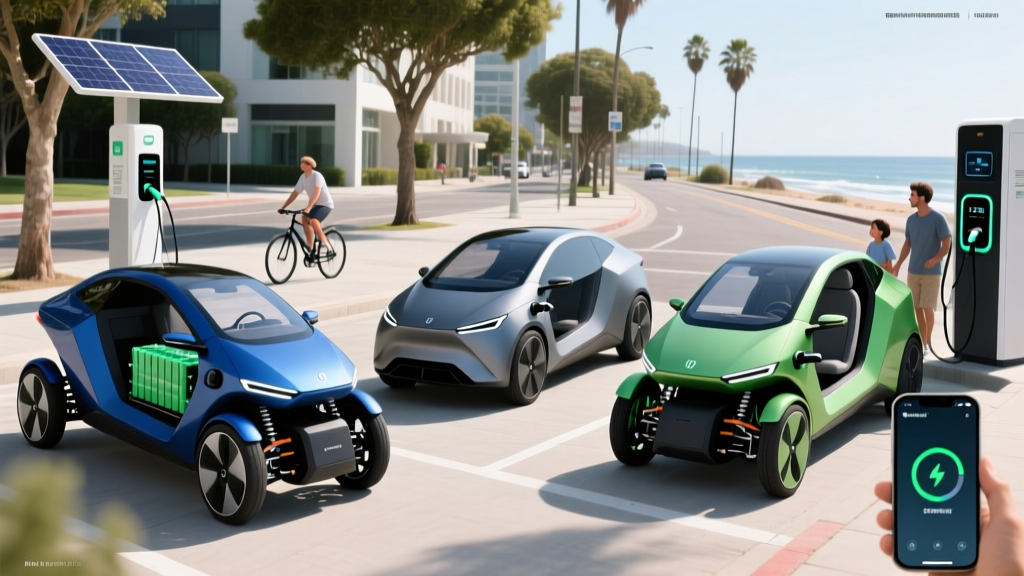
A 3-wheeler EV is an electric vehicle with three wheels — typically two in front and one in the rear, though some configurations reverse this. The category spans everything from enclosed, highway-capable autocycles like the Aptera to open-air neighborhood vehicles and electric trikes from brands like Arcimoto (now largely discontinued) and emerging micro-mobility entrants. Most fall into one of two classifications:
- Highway-capable autocycles: Top speeds of 80–100+ mph, full lighting and safety equipment, street-legal on highways. Examples: Aptera (announced, limited production).
- Low-speed/neighborhood electric vehicles (NEVs): Top speeds capped at 25 mph, restricted to roads with speed limits ≤35 mph in most states. Examples: various imported and domestic micro-EVs.
For this guide, we focus primarily on highway-capable 3-wheeler EVs — the segment that overlaps with real commuting needs and traditional EV ownership considerations.
2026 3-Wheeler EV Models: Specs at a Glance
The market for highway-capable 3-wheeler EVs remains niche in 2026. Here are the key models to know:
| Spec | Aptera Launch Edition (2026) | Aptera 400 (2026) | Generic NEV Trike (Low-Speed) |
|---|---|---|---|
| EPA-Est. Range | ~400 miles* | ~400 miles* | 20–40 miles |
| Battery (usable kWh) | ~60 kWh (est.) | ~60 kWh (est.) | 5–10 kWh |
| Chemistry | NMC (announced) | NMC (announced) | Lead-acid or LFP |
| Max DC Fast Charge | ~50 kW (Level 2 primary) | ~50 kW (Level 2 primary) | N/A (Level 1 only) |
| Level 2 Charge Time (0–100%) | ~8–10 hours | ~8–10 hours | 6–8 hours |
| 0–60 mph | ~3.5 sec (AWD variant) | ~5.5 sec (RWD) | N/A (25 mph top speed) |
| Horsepower | ~150–200 hp (AWD) | ~100–150 hp (RWD) | 5–15 hp |
| Top Speed | ~110 mph | ~100 mph | 25 mph |
| Solar Integration | Yes (~40 mi/day gain) | Yes (~40 mi/day gain) | No |
| Base MSRP | ~$33,200 | ~$29,900 | $8,000–$15,000 |
| Warranty (battery) | TBD (announced) | TBD (announced) | 1–2 years |
*Aptera range figures are manufacturer-estimated and pending final EPA certification. Real-world range will vary with speed, temperature, and solar gain. Production has been limited and subject to delays; confirm availability before ordering.
Real-World Range Reality Check
Aptera claims up to 400 miles on a full charge, aided by its ultra-low drag coefficient (~0.13 Cd) and integrated solar panels that can add up to 40 miles of range per day in ideal sun. In real-world highway driving at 70 mph, expect closer to 300–340 miles from the 400-mile variant. In cold weather (below 40°F), range could drop 15–25%, landing around 240–290 miles — still excellent for the class, but not the sticker number. For NEV-class trikes, the 20–40 mile range is typically accurate in mild weather but can drop to 12–20 miles in winter.
3-Wheeler EV vs Gas Car vs Hybrid: Cost Comparison
How does owning a 3-wheeler EV stack up against a gas commuter car or a conventional hybrid? Here's a 5-year total cost of ownership (TCO) comparison based on 12,000 miles/year, national average electricity and fuel prices:
| Cost Factor (5 Years / 60,000 mi) | Aptera 400 (~$29,900) | Gas Sedan (e.g., Honda Civic ~$26,000) | Hybrid (e.g., Toyota Prius ~$29,000) |
|---|---|---|---|
| Purchase Price (after incentives) | ~$29,900* | $26,000 | $29,000 |
| Fuel/Energy Cost | ~$1,800 ($0.03/mi) | ~$7,500 ($0.125/mi) | ~$4,200 ($0.07/mi) |
| Maintenance | ~$600 | ~$3,000 | ~$2,500 |
| Insurance (est.) | ~$6,000–$9,000** | ~$5,400 | ~$5,400 |
| Estimated 5-Year TCO | ~$38,300–$41,300 | ~$41,900 | ~$41,100 |
*Incentive eligibility is uncertain for low-volume manufacturers — see tax credit section below.
**Insurance for niche/autocycle vehicles can be 20–50% higher due to limited actuarial data and repair networks. Get quotes before purchasing.
Key takeaway: A 3-wheeler EV like the Aptera can break even or beat a gas sedan on 5-year TCO, driven almost entirely by fuel and maintenance savings. However, insurance costs and uncertain resale value can erode that advantage. A hybrid like the Prius remains the safest all-around bet for buyers who need flexibility and proven infrastructure.
Charging a 3-Wheeler EV: What You Need to Know
Charging is one area where 3-wheeler EVs differ significantly from mainstream electric cars:
| Charging Level | Power (kW) | Miles Added per Hour | Availability on 3-Wheelers |
|---|---|---|---|
| Level 1 (120V outlet) | 1.2–1.4 kW | ~6–8 mi/hr | Standard on most models |
| Level 2 (240V home/public) | 6.6–7.2 kW | ~35–45 mi/hr | Available on highway-capable models |
| DC Fast Charging | ~50 kW (limited) | ~150+ mi/hr (peak) | Limited availability; not on NEVs |
Home Charging Setup
Most 3-wheeler EV owners will rely on Level 1 or Level 2 home charging. A standard 120V outlet can replenish ~6–8 miles of range per hour, which is adequate if you drive under 50 miles daily and park overnight. For faster fills, a Level 2 home charger (240V, 32–48 amp) costs $500–$1,200 for equipment plus $800–$2,500 for professional installation by a licensed electrician, depending on whether your electrical panel needs an upgrade. For a full cost breakdown:
| Component | Low Estimate | High Estimate |
|---|---|---|
| Level 2 charger (hardware) | $400 | $1,200 |
| Electrician labor (240V run) | $500 | $1,500 |
| Electrical panel upgrade (if needed) | $1,500 | $3,500 |
| Permit/inspection | $50 | $300 |
| Total | $950 | $6,500 |
Always get a quote from a licensed electrician before purchasing equipment. Panel upgrades are the biggest variable — homes built before 2000 with 100-amp service may need an upgrade to support a dedicated 40–50 amp EV circuit.
Public Charging Limitations
This is a critical ownership reality: most 3-wheeler EVs have limited or no DC fast-charging capability. The Aptera, for instance, is designed around solar supplementation and Level 2 charging, with DC fast charging as a secondary option at modest speeds (~50 kW). This means road trips require significant planning — expect 45–60 minute stops for meaningful range additions, compared to 15–25 minutes in a 250 kW-capable EV like the Hyundai Ioniq 5. NEV-class trikes have no public charging compatibility at all. If your lifestyle involves frequent trips over 150 miles, a 3-wheeler EV will test your patience.
Federal Tax Credits & Incentives: Do 3-Wheelers Qualify?
This is where things get complicated. The IRS §30D Clean Vehicle Credit offers up to $7,500 for qualifying new EVs, but eligibility hinges on several requirements that many 3-wheeler EVs may not meet:
§30D Credit Requirements (2026)
- Vehicle classification: Must be a 4-wheeled vehicle OR a 2/3-wheeled vehicle meeting specific criteria. The credit for 2- and 3-wheeled electric vehicles was previously covered under §30D(g) but has undergone legislative changes — confirm current-year eligibility with a tax professional.
- MSRP cap: $80,000 for SUVs/pickups/vans; $55,000 for sedans and other vehicles. Most 3-wheelers fall under this cap.
- Buyer income cap: AGI ≤ $150,000 (single) or ≤ $300,000 (joint).
- Battery sourcing: Critical minerals and battery components must meet escalating domestic/free-trade-partner sourcing thresholds — difficult for low-volume manufacturers to certify.
- Point-of-sale transfer: If eligible, the credit can be transferred to the dealer at purchase, reducing your out-of-pocket cost immediately.
- Manufacturer cap: The per-manufacturer cap was removed, but low-volume startups may not have completed IRS qualification paperwork.
Bottom line: Do not assume a 3-wheeler EV qualifies for the $7,500 federal credit. Verify with the manufacturer and your tax advisor before counting on it in your budget. State and local incentives (e.g., California's CVRP, Colorado's state credit) may offer additional savings — check your state energy office for current programs.
Common Misconceptions About 3-Wheeler EVs
| Myth | Fact |
|---|---|
| "3-wheelers are as safe as regular cars." | Most 3-wheeler EVs have not been crash-tested by NHTSA or IIHS. They lack the mass, crumple zones, and airbag arrays of mainstream vehicles. Aptera claims a Formula 1-inspired safety cell, but independent crash data is not yet available. |
| "Solar panels mean I never need to plug in." | Integrated solar adds ~20–40 miles/day in optimal sun. If you drive more than that, or park in shade/garages, you'll still need to plug in regularly. Solar is a supplement, not a replacement for grid charging. |
| "They're street-legal everywhere." | Autocycle regulations vary by state. Some states require a motorcycle endorsement; others classify them as passenger vehicles. NEV-class trikes are restricted to low-speed roads. Check your state's DMV before purchasing. |
| "Maintenance-free means zero costs." | While EVs skip oil changes and exhaust repairs, you'll still pay for tire replacement (often specialty sizes), brake fluid, cabin filters, software updates, and eventual battery degradation. Budget $100–$200/year minimum. |
| "I can take road trips just like a normal EV." | Limited DC fast-charging speeds (or no DCFC at all) make 200+ mile road trips impractical for most 3-wheelers. Plan for long charge stops or keep it as a commuter/second vehicle. |
Real-World Ownership Considerations
Before you put down a deposit, honestly assess these factors:
Climate & Weather
3-wheeler EVs are more exposed to weather than enclosed cars. Even enclosed autocycles like the Aptera have smaller thermal mass, meaning cabin heating in winter draws proportionally more from the battery. Cold-weather range loss of 15–30% is realistic. If you live in a region with harsh winters (Minnesota, Maine, Montana), a 3-wheeler EV is a fair-weather vehicle at best. Owners in Sun Belt states (Arizona, Southern California, Florida) will see the best year-round utility — and maximum solar charging benefit.
Home Charging Access
Because most 3-wheelers lack DC fast-charging capability, reliable home charging is essentially mandatory. If you live in an apartment without charging access or park on the street, a 3-wheeler EV will be extremely difficult to own. Confirm you can install at least a Level 1 (120V) outlet near your parking spot before purchasing.
Driving Patterns
The ideal 3-wheeler EV owner drives under 60 miles per day, commutes on roads with speed limits under 65 mph, rarely carries passengers or large cargo, and has a second vehicle for longer trips or inclement weather. If your commute is 80+ miles each way on the interstate, a mainstream EV (Tesla Model 3, Chevrolet Equinox EV) or a hybrid is a better fit.
Service & Parts
Low-volume 3-wheeler manufacturers have limited service networks. If something goes wrong with the drivetrain or body, you may be waiting weeks for parts or shipping the vehicle back to the factory. This is a real risk that mainstream EV buyers (with hundreds of service centers) don't face.
Decision Framework: Should You Buy a 3-Wheeler EV?
Choose a 3-Wheeler EV If:
- Your daily commute is under 50 miles round-trip
- You have reliable home charging (garage or dedicated outlet)
- You live in a mild climate (rarely below 30°F)
- You already own or have access to a conventional vehicle for long trips
- You want the lowest possible per-mile energy cost and enjoy solar supplementation
- You're comfortable with a niche vehicle and limited service infrastructure
- You've confirmed your state's licensing/registration requirements for autocycles
Choose a Mainstream EV or Hybrid Instead If:
- You regularly drive over 100 miles per day or take road trips
- You need to carry more than one passenger or significant cargo
- You live in an area with harsh winters or frequent rain
- You lack home charging access
- You want proven crash-test safety ratings (NHTSA/IIHS)
- You need DC fast charging for highway travel
- You want easy access to service centers and readily available parts
Frequently Asked Questions
Do I need a motorcycle license to drive a 3-wheeler EV?
It depends on your state. Many states classify highway-capable autocycles (like the Aptera) as passenger vehicles or a special "autocycle" class that requires a standard driver's license. Some states still require a motorcycle endorsement. NEV-class trikes typically only require a standard license. Check with your state DMV before purchasing.
How long do 3-wheeler EV batteries last?
For highway-capable models using NMC lithium-ion batteries, expect 1,000–2,000 charge cycles before significant degradation (80% remaining capacity), which translates to roughly 150,000–300,000 miles. LFP batteries in some NEV trikes offer longer cycle life (3,000+) but lower energy density. Warranty terms vary widely — insist on seeing written battery warranty terms (years/miles and minimum capacity retention percentage) before purchasing.
Can I charge a 3-wheeler EV at public charging stations?
Highway-capable 3-wheelers with a J1772 (Level 2) or CCS connector can use many public chargers. However, the vehicle's compact size may not trigger charging-station parking sensors, and some networks' apps don't list autocycle-compatible stalls. NEV-class trikes typically cannot use public chargers at all.
Are 3-wheeler EVs safe in a crash?
This is the biggest unknown. As of 2026, no 3-wheeler EV has been independently crash-tested by NHTSA or IIHS. Manufacturers like Aptera claim advanced composite safety cells and racing-derived structures, but without standardized crash data, you're accepting more risk than in a tested mainstream vehicle. Always wear the provided harness/seatbelt and understand the trade-off.
What happens if the manufacturer goes out of business?
This is a real concern with low-volume EV startups. If the manufacturer ceases operations, you may lose access to software updates, replacement parts, warranty service, and resale value. Research the company's financial backing, production volume, and parts availability commitments before ordering. Consider this risk when comparing to established automakers.
Is a 3-wheeler EV a good first EV?
For most first-time EV buyers, a mainstream 4-wheeled EV (Chevrolet Equinox EV, Hyundai Ioniq 5, Tesla Model 3) is a safer choice due to proven reliability, extensive charging networks, crash-test data, and established service infrastructure. A 3-wheeler EV is better suited as a second vehicle for a household already familiar with EV ownership basics.