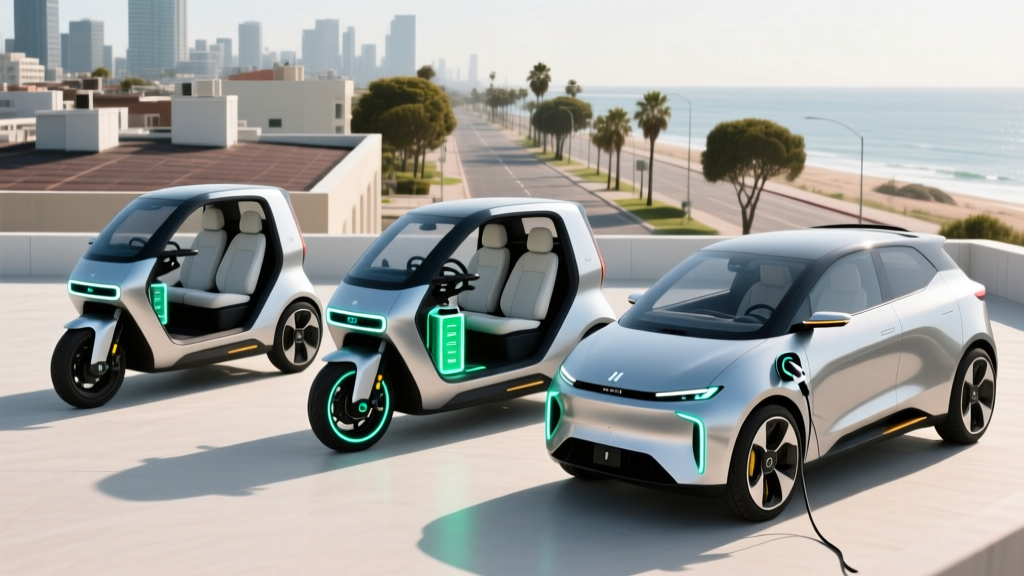
If you've seen a three-wheeled electric vehicle zipping through traffic or squeezed into a tight parking spot, you've probably wondered: is a 3 wheel EV actually practical for daily use? The short answer is yes — for a specific type of driver. Three-wheel EVs (classified as autocycles or neighborhood electric vehicles) offer 70–102 miles of EPA-rated range, starting prices from roughly $18,000 to $36,000, and the ability to charge on a standard 120V outlet. They excel as urban commuters, last-mile delivery vehicles, and second cars for short errands. However, they sacrifice highway comfort, cargo space, and crash-protection parity with four-wheel passenger cars. Below, we break down the real-world numbers, ownership costs, and decision criteria so you can determine whether a three-wheel EV fits your driving life in 2026.
Quick Answer: Should You Buy a 3 Wheel EV?
Buy one if: Your commute is under 50 miles round-trip, you have access to a standard 120V outlet, you want a low-cost EV entry point, and you drive primarily in urban or suburban areas at speeds under 65 mph.
Skip it if: You regularly drive highways above 70 mph, need seating for more than two, require substantial cargo space, live in a state that restricts autocycle registration, or need the crash protection of a full-size vehicle.
What Exactly Is a 3 Wheel EV?
Three-wheel electric vehicles fall into two main regulatory categories in the United States:
- Autocycles (FMVSS-compliant): Vehicles like the Arcimoto FUV and the now-discontinued ElectraMeccanica SOLO are classified by the NHTSA as three-wheeled motorcycles but are designed with car-like controls (steering wheel, pedals, enclosed or semi-enclosed cabin). Most states allow them to be driven with a standard driver's license, though a handful still require a motorcycle endorsement.
- Neighborhood Electric Vehicles (NEVs) / Low-Speed Vehicles (LSVs): Federally limited to a top speed of 25 mph, these are restricted to roads with speed limits of 35 mph or below (varies by state). Examples include the Polaris GEM and various Chinese-market imports.
For this guide, we focus primarily on highway-capable autocycles — the segment most buyers research when searching for a "3 wheel EV" — while noting NEV limitations where relevant.
2026 3 Wheel EV Models: Specs at a Glance
The three-wheel EV market remains niche, but several models are available or taking orders in 2026. Here's how the leading options stack up on the numbers that matter:
| Spec | Arcimoto FUV (Evergreen) | Arcimoto Deliverator | Polaris GEM e2 (NEV) |
|---|---|---|---|
| Vehicle Class | Autocycle (highway-capable) | Autocycle (commercial) | Low-Speed Vehicle (LSV) |
| EPA Range | 102 mi | ~80 mi (laden) | ~50 mi |
| Battery Capacity | 12.6 kWh (NMC lithium-ion) | 12.6 kWh (NMC) | ~8.0 kWh (lead-acid or lithium option) |
| Top Speed | 75 mph | 70 mph | 25 mph (federal LSV limit) |
| Motor Output | 77 hp (combined dual front motors) | 77 hp | ~14 hp |
| 0–30 mph | ~3.5 sec | ~4.2 sec (loaded) | Not rated (LSV) |
| Level 1 Charge (120V) | ~8–10 hours (full) | ~8–10 hours | ~8 hours |
| Level 2 Charge (240V) | ~3–4 hours (full) | ~3–4 hours | ~4–5 hours (if equipped) |
| DC Fast Charge | Not available | Not available | Not available |
| Cargo Volume | ~4 cu ft (rear shelf) | ~28 cu ft (cargo box) | ~12 cu ft (bed) |
| Seating | 2 (tandem) | 1 (driver only) | 2 (side-by-side) |
| Base MSRP | ~$23,900 | ~$26,900 | ~$18,000–$22,000 |
| Battery Warranty | 3 yr / 36,000 mi | 3 yr / 36,000 mi | 1–2 yr depending on pack |
Sources: Arcimoto official specs, fueleconomy.gov, Polaris GEM. Specs reflect 2025–2026 model-year data where available; some figures are manufacturer estimates. Verify with dealer before purchase.
Real-World Range vs. EPA Sticker
The Arcimoto FUV's 102-mile EPA range is achievable in mixed city driving at moderate temperatures (60–80°F). Expect ~70–80 miles at sustained highway speeds (65–75 mph) due to the open-body aerodynamic drag. In cold weather (below 40°F) without a cabin heater running continuously, range drops to ~60–75 miles. The FUV uses an NMC lithium-ion pack, which experiences more cold-weather capacity loss than LFP chemistry but offers higher energy density in a compact form factor.
3 Wheel EV vs. Gas Car vs. Compact EV: Cost Comparison
To understand where a 3 wheel EV saves — and where it doesn't — we compared five-year ownership costs against a typical gas commuter car (2026 Honda Civic) and a mainstream compact EV (2026 Chevrolet Bolt EV, used-market equivalent). All scenarios assume 12,000 miles/year, a 60-mile daily round-trip commute, and electricity at the US average of $0.17/kWh.
| Cost Category | Arcimoto FUV (~$23,900) | 2026 Honda Civic ($25,000) | 2026 Chevy Bolt EV (~$28,000) |
|---|---|---|---|
| Purchase Price (base MSRP) | $23,900 | $25,000 | $28,000 |
| Federal Tax Credit (§30D) | $0 (does not qualify — autocycle classification) | $0 (gas vehicle) | Up to $7,500 (if eligible; income/MSRP/sourcing rules apply) |
| Net Purchase (before state incentives) | $23,900 | $25,000 | ~$20,500–$28,000 |
| Fuel/Energy Cost (5 yr, 60k mi) | ~$2,450 (12.6 kWh × ~$0.17/kWh × 172 charges) | ~$9,750 (gasoline at $3.50/gal, 33 MPG combined) | ~$2,890 (~$0.17/kWh, ~65 kWh usable × 185 charges) |
| Maintenance (5 yr) | ~$400 (tires, cabin filter, brake inspection) | ~$2,800 (oil changes, filters, brakes, transmission fluid) | ~$1,200 (tires, cabin filter, brake fluid, coolant check) |
| Insurance (5 yr avg.) | ~$5,500 (specialty autocycle; varies widely by state) | ~$7,200 | ~$8,000 |
| Estimated 5-Year Total | ~$32,250 | ~$44,750 | ~$32,590–$39,790 |
| Cost Per Mile | ~$0.54 | ~$0.75 | ~$0.54–$0.66 |
Key takeaway: A 3 wheel EV like the FUV achieves cost-per-mile parity with a compact EV and dramatically undercuts a gas commuter. The energy savings alone are roughly $7,300 over five years vs. gasoline. However, the FUV does not qualify for the federal §30D clean vehicle credit because it is classified as a motorcycle/autocycle, not a light-duty passenger vehicle under IRS rules (source: IRS §30D). Some states offer separate rebates for electric motorcycles or autocycles — check your state energy office.
Charging a 3 Wheel EV: What You Actually Need
One of the biggest advantages of a low-capacity 3 wheel EV is charging simplicity. You do not need a dedicated 240V Level 2 home charger to own one comfortably.
| Charging Level | Power (kW) | Time to Full (0–100%) | Miles Added per Hour | Equipment Needed |
|---|---|---|---|---|
| Level 1 (120V household outlet) | ~1.4 kW | ~9 hours | ~11 mi/hr | Included J1772 cordset; standard 15A outlet |
| Level 2 (240V, 16A) | ~3.3 kW | ~3.5 hours | ~29 mi/hr | Level 2 EVSE (optional; $250–$400 unit) |
| DC Fast Charging | N/A | N/A | N/A | Not supported on most 3 wheel EVs |
Because the battery pack is small (12.6 kWh usable), overnight Level 1 charging fully replenishes the FUV. If you commute 50 miles daily, you'll use roughly 6–7 kWh and need only 5–6 hours on a standard outlet to recover. This makes a 3 wheel EV one of the few EVs genuinely viable for apartment dwellers or renters who lack dedicated charging infrastructure — as long as you can run an extension cord to a standard outlet from a garage, carport, or ground-floor unit (check local fire codes and lease agreements first).
What you won't get: DC fast charging. With no CCS or NACS DC inlet, road-trip rapid top-ups are impossible. These vehicles are designed for a home-base charging cycle, not cross-country travel.
Real-World Ownership: What First-Time 3 Wheel EV Buyers Get Wrong
Three-wheel EVs attract buyers with their low price, quirky design, and EV-curious appeal. But several misconceptions lead to post-purchase frustration:
| Myth | Fact |
|---|---|
| "I'll get the $7,500 federal tax credit." | Autocycles are classified as motorcycles under IRS §30D rules and do not qualify for the clean vehicle credit. Some states offer electric motorcycle rebates ($500–$2,000), but federal credit is unavailable. |
| "It's as safe as a regular car." | Autocycles are not required to meet the same FMVSS crash-test standards as passenger cars. The Arcimoto FUV includes a roll cage, seatbelts, and side-impact protection, but it has not been crash-tested by NHTSA or IIHS. You are more exposed than in a four-wheel enclosed vehicle. |
| "I can drive it in any state with a normal license." | Most states allow autocycle operation with a standard Class C license, but some (e.g., California historically, certain Northeast states) have required a motorcycle endorsement (M1/M). Laws change — verify with your state DMV before purchasing. |
| "I can take it on the highway for road trips." | While the FUV can reach 75 mph, its open design, lack of DC fast charging, and limited range make sustained highway travel impractical. Plan for 70–80 real-world highway miles before needing a multi-hour Level 2 stop. |
| "The battery will need expensive replacement soon." | At 12.6 kWh with NMC chemistry and moderate daily cycling (50–70% depth of discharge), expect 80–90% capacity retention at 5 years. Replacement packs are estimated at $4,000–$6,000 — significant but less than a full-size EV battery. |
Safety, Insurance, and Registration: The Practical Details
Registration: Autocycles are typically registered as motorcycles or "autocycles" (a growing classification). Registration fees are often lower than passenger cars — $50–$150/year depending on state. You'll receive a motorcycle-style license plate in most jurisdictions.
Insurance: Specialty insurers (Progressive, Geico, and niche motorcycle carriers) cover autocycles, but premiums vary enormously. Expect $900–$1,500/year for liability + comprehensive, though some states and riders report quotes as high as $2,000+. The lack of actuarial data on three-wheel EVs means insurers price conservatively. Always get a quote before purchasing.
Safety equipment: The FUV comes with a tubular steel roll cage, three-point seatbelts, LED lighting, and optional windshield wipers. Helmets are not required in most states for enclosed autocycles, but check local law. There are no airbags.
Climate limitations: The FUV offers an optional heater and a semi-enclosed or fully enclosed cabin configuration. In cold climates (sustained below-freezing temperatures), expect 25–35% range loss due to battery chemistry and heating load. In heavy rain, even the enclosed variant has limited weather sealing compared to a conventional car.
Decision Framework: Is a 3 Wheel EV Right for You?
Choose a 3 Wheel EV If:
- Your daily commute is under 50 miles round-trip and primarily on roads with speed limits ≤55 mph
- You have access to a standard 120V outlet at home or work (garage, carport, or ground-level parking)
- You want a second vehicle for errands, school runs, or last-mile commuting
- You're interested in last-mile delivery (the Deliverator variant targets commercial use with ~28 cu ft of cargo)
- You want to minimize per-mile fuel cost to under $0.04/mile (electricity)
- You live in a mild climate (Pacific Coast, Southeast, Southwest) where cold-weather range loss is minimal
Choose a Compact 4-Wheel EV (Bolt, Leaf, Equinox EV) Instead If:
- You need DC fast charging for road trips or lack reliable overnight home charging
- You regularly carry more than one passenger or need >10 cu ft of cargo
- You drive highway commutes above 65 mph for extended distances
- You want NHTSA crash-test ratings and full FMVSS passenger-car safety compliance
- You want to qualify for the $7,500 federal §30D tax credit (subject to income, MSRP, and battery-sourcing requirements)
- You live in a cold climate (Upper Midwest, Northeast) where range loss and cabin heating are daily concerns
Choose a PHEV or Gas Car Instead If:
- Your daily mileage regularly exceeds 80 miles with no charging opportunity
- You need a single vehicle that handles both commuting and long road trips
- Your state restricts autocycle registration or requires a motorcycle endorsement you don't have
Frequently Asked Questions
Do I need a motorcycle license to drive a 3 wheel EV?
In most US states, no. As of 2026, over 40 states have created an "autocycle" classification that allows operation with a standard driver's license. However, a handful of states still treat three-wheeled vehicles as motorcycles requiring an M endorsement. Always check with your state DMV before purchasing. The NHTSA classifies these vehicles federally, but licensing is a state-level decision.
Can a 3 wheel EV be my only car?
For a small subset of drivers — single-person households in warm climates with short commutes, no children to transport, and no road-trip needs — yes. For most buyers, a 3 wheel EV works best as a second vehicle complementing a longer-range primary car or hybrid.
How long does the battery last in a 3 wheel EV?
The Arcimoto FUV's 12.6 kWh NMC battery is warranted for 3 years / 36,000 miles. Based on typical NMC degradation curves at moderate depth-of-discharge, expect 85–90% state of health at 5 years with daily charging. A replacement pack costs an estimated $4,000–$6,000. Because the pack is small and accessible, replacement labor is typically less than a full-size EV.
How does a 3 wheel EV compare to a gas scooter or motorcycle?
A 3 wheel EV like the FUV offers enclosed (or semi-enclosed) weather protection, more cargo space than a scooter, and a steering-wheel driving interface that's more familiar to car drivers. Energy cost per mile is comparable (~$0.03–0.04/mi vs. ~$0.04–0.06/mi for a 125cc scooter). However, a gas scooter costs $3,000–$6,000 new — significantly less upfront — and can be refueled in 2 minutes anywhere.
Are 3 wheel EVs street-legal on highways?
Highway-capable autocycles like the FUV (top speed 75 mph) are legal on most highways and freeways where motorcycles are permitted. NEVs/LSVs (top speed 25 mph) are not highway-legal and are restricted to low-speed roads. Always verify your specific vehicle's classification and your state's road-access rules.
What happens if a 3 wheel EV tips over?
Three-wheeled vehicles have a higher rollover risk than four-wheeled cars due to a narrower track width. The Arcimoto FUV uses a low center of gravity (battery mounted low in the chassis) and a wide front track to mitigate this. The tubular roll cage is designed to protect occupants in a rollover event, but no NHTSA rollover rating has been published for the FUV. Drive conservatively in high-speed cornering situations.