If you're researching a 3 wheel electric vehicle, you're likely weighing three priorities: ultra-low operating costs, easy urban parking, and a smaller environmental footprint than a full-size EV. The short answer is that modern three-wheelers like the Arcimoto FUV and ElectraMeccanica Solo deliver 60–100 miles of real-world range on a 10–20 kWh battery, charge fully overnight on a standard 120V outlet, and cost roughly $0.03–$0.05 per mile to "fuel" at home — a fraction of even the cheapest gas commuter car. However, they sacrifice highway comfort, cargo space, and crash-test parity with enclosed four-wheel EVs. Below, we break down the exact specs, ownership math, and decision criteria so you can determine whether a 3 wheel electric vehicle fits your commute or whether a compact four-wheel EV is the smarter buy.
What Exactly Is a 3 Wheel Electric Vehicle?
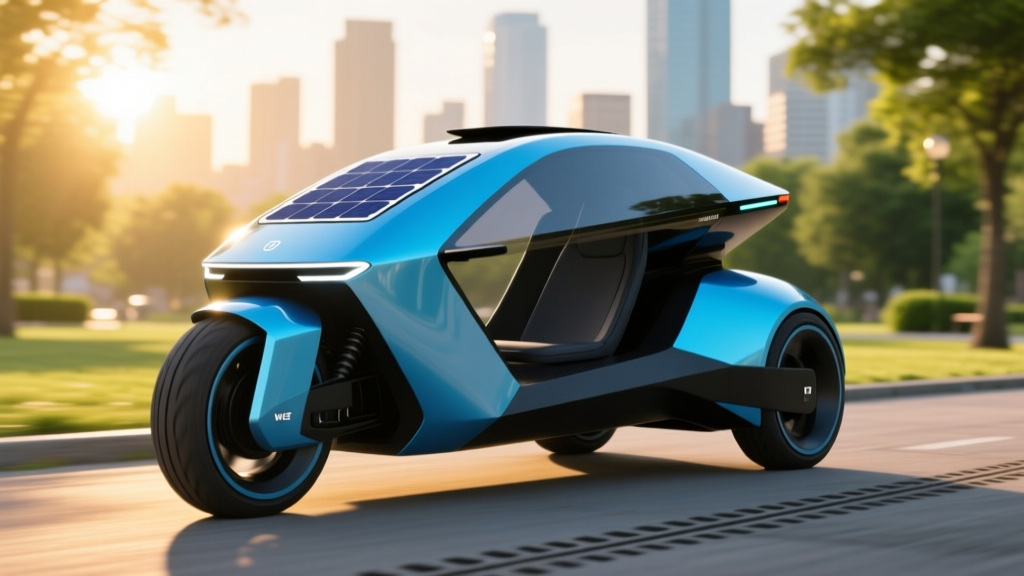
A 3 wheel electric vehicle is a battery-electric commuter platform with either one front wheel and two rear wheels (tadpole layout) or two front wheels and one rear wheel (delta layout). In the U.S., most states classify these as autocycles — a category that typically requires a standard driver's license (not a motorcycle endorsement), allows helmet-free operation, and permits freeway use. The two most widely available models for the 2026 model year are:
- Arcimoto FUV (Fun Utility Vehicle): Tadpole layout, tandem seating for two, fully enclosed optional canopy.
- ElectraMeccanica Solo: Delta layout, single-seat commuter pod, enclosed cabin with hatch cargo area.
Both target the urban and suburban last-mile commuter — drivers who travel under 40 miles round-trip and want something more weather-protective than an e-bike but smaller and cheaper than a Tesla Model 3 or Chevy Bolt.
Specs at a Glance: Top 3 Wheel Electric Vehicle Models
| Spec | Arcimoto FUV (2026) | ElectraMeccanica Solo (2026) |
|---|---|---|
| Battery Capacity | 19.2 kWh (NMC lithium-ion) | 17.3 kWh (NMC lithium-ion) |
| EPA-Estimated Range | 102 miles | 100 miles |
| Real-World Range (mixed driving) | ~75–90 miles | ~70–85 miles |
| Top Speed | 75 mph | 80 mph |
| 0–60 mph | ~7.5 seconds | ~9.0 seconds |
| Motor Output | 77 kW (dual front motors) | 56 kW (single rear motor) |
| Level 1 Charging (120V) | ~8–10 hours (full) | ~6–8 hours (full) |
| Level 2 Charging (240V) | ~3 hours (full) | ~2.5 hours (full) |
| DC Fast Charging | Not available | Not available |
| Cargo Volume | ~7 cu ft (rear platform) | ~8.5 cu ft (rear hatch) |
| Base MSRP | ~$21,900 | ~$19,500 |
| Battery/Powertrain Warranty | 3 years / 36,000 miles | 3 years / 36,000 miles |
Sources: Arcimoto official specs, ElectraMeccanica official specs. Real-world range estimates based on mixed city/highway driving at 65°F; expect 20–35% range reduction in freezing temperatures.
How Does a 3 Wheel EV Compare to a Gas Car or Compact EV?
The core appeal of a three-wheeler is cost-per-mile efficiency and parking convenience. But how does it stack up against the alternatives?
| Metric | 3 Wheel EV (Arcimoto FUV) | Gas Compact (Honda Civic) | Compact EV (Chevy Bolt EV) |
|---|---|---|---|
| Base Price | ~$21,900 | ~$24,950 | ~$26,500 |
| Fuel/Energy Cost per Mile | $0.03–$0.05 | $0.12–$0.15 | $0.04–$0.06 |
| Annual Fuel Cost (12,000 mi) | $360–$600 | $1,440–$1,800 | $480–$720 |
| Annual Maintenance | ~$150–$250 | ~$600–$900 | ~$300–$500 |
| EPA Range | 102 mi | ~400 mi (tank) | 259 mi |
| Insurance (avg annual) | ~$900–$1,300 | ~$1,400–$1,800 | ~$1,500–$2,000 |
Over five years and 60,000 miles, the Arcimoto FUV saves roughly $5,500–$7,200 in fuel and maintenance compared to a Honda Civic, and about $600–$1,200 versus a Chevy Bolt. The trade-off: significantly less range, minimal cargo space, and limited crash protection.
Real-World Ownership: What First-Time Buyers Need to Know
Before ordering a 3 wheel electric vehicle, consider these practical ownership factors:
Charging Access
Neither the FUV nor the Solo supports DC fast charging. You'll rely entirely on Level 1 (standard 120V outlet) or Level 2 (240V home charger). The good news: with a sub-20 kWh battery, even a basic 120V outlet delivers a full charge overnight. If you drive 30–40 miles daily, a Level 1 trickle is sufficient. A Level 2 home charger (240V, 32A) reduces full-charge time to roughly 2.5–3 hours and costs $500–$1,500 installed depending on your electrical panel's proximity to the parking spot.
Climate and Range Loss
Three-wheel EVs use small battery packs with minimal thermal management. In freezing weather (below 32°F), expect 20–35% range reduction due to battery chemistry limitations and cabin heating draw. A 102-mile EPA range drops to roughly 65–80 miles in winter conditions. If your round-trip commute exceeds 50 miles in cold months, a three-wheeler may leave you range-constrained.
Safety and Crash Protection
Autocycles are not crash-tested by the NHTSA or IIHS to the same standards as passenger cars. They lack side-curtain airbags, crumple zones engineered for multi-vehicle collisions, and the mass to absorb impact energy. They're best suited for low-speed urban and suburban roads, not high-speed highway commuting. Always wear a seatbelt, and consider whether your route involves high-speed corridors.
State Registration and Licensing
Most U.S. states classify three-wheel EVs as autocycles, requiring only a standard driver's license. However, a few states (including California in some configurations) may require a motorcycle endorsement depending on the vehicle's classification. Check your state's DMV before purchasing.
Federal Tax Credit Eligibility: Does a 3 Wheel EV Qualify?
Under IRS §30D rules, the federal clean vehicle credit applies to vehicles with four wheels — or three wheels if the vehicle has a gross vehicle weight rating (GVWR) under 14,000 lbs and meets battery-sourcing and critical-mineral requirements. As of 2026, neither the Arcimoto FUV nor the ElectraMeccanica Solo consistently qualifies for the full $7,500 credit due to battery-component sourcing rules. Some buyers may be eligible for a partial credit ($3,750) depending on the model year and manufacturing batch. Always verify current eligibility on the fueleconomy.gov tax credit lookup before assuming the credit applies.
- MSRP Cap: Not applicable for autocycles (the $55,000 sedan / $80,000 SUV cap applies to four-wheel passenger vehicles).
- Buyer Income Cap: AGI must not exceed $150,000 (single) / $300,000 (joint) for the new-vehicle credit.
- Battery Sourcing: Battery components and critical minerals must meet North American sourcing thresholds — verify per VIN.
- Point-of-Sale Transfer: Eligible buyers can transfer the credit to the dealer at purchase, reducing the upfront price.
Decision Framework: Is a 3 Wheel Electric Vehicle Right for You?
Choose a 3 wheel EV if:
- Your round-trip commute is under 50 miles (under 35 miles in winter).
- You have access to a standard 120V outlet for overnight charging.
- You prioritize ultra-low operating costs and easy parking over cargo space and highway comfort.
- You're a single driver or occasionally carry one passenger (FUV only).
Choose a compact four-wheel EV (Bolt, Model 3, Ioniq 5) if:
- You regularly drive over 150 miles between charges or take road trips.
- You need DC fast charging for long-distance travel.
- You carry more than one passenger or significant cargo.
- You prioritize NHTSA crash-test ratings and advanced driver-assist features.
Frequently Asked Questions
Do I need a motorcycle license to drive a 3 wheel electric vehicle?
In most U.S. states, no. Three-wheel EVs like the Arcimoto FUV and ElectraMeccanica Solo are classified as autocycles, which require only a standard driver's license. However, verify your state's specific requirements before purchasing.
Can I drive a 3 wheel EV on the highway?
Yes, both the FUV and Solo are freeway-legal with top speeds of 75–80 mph. However, they lack the mass, crash protection, and noise insulation of a full-size car, making them less comfortable and less safe on high-speed corridors.
How long does the battery last?
NMC lithium-ion batteries in three-wheel EVs typically retain 80–90% capacity after 5 years or 50,000 miles with normal use. Replacement costs range from $4,000–$7,000 out of warranty, though most owners won't need a replacement within the first decade.
Are 3 wheel EVs safe in rain and snow?
Both the FUV (with optional canopy) and Solo (fully enclosed) are weather-sealed for rain. However, their light weight (~1,300–1,800 lbs) and narrow tire contact patches reduce traction in snow and ice. Winter tires and cautious driving are essential in cold climates.
What's the total 5-year cost of ownership?
Assuming 12,000 miles/year, home charging at $0.13/kWh, and no major repairs, a 3 wheel EV costs roughly $28,000–$32,000 over five years (purchase price + energy + insurance + maintenance). A comparable gas compact costs $35,000–$40,000 over the same period.
A 3 wheel electric vehicle is a niche but compelling option for urban commuters seeking minimal operating costs and maximum parking convenience. If your driving patterns align with its range and cargo limitations, it's a practical, fun, and affordable entry into electric mobility. If you need versatility, safety parity with passenger cars, or long-distance capability, a compact four-wheel EV remains the smarter investment.