If you're considering a 3 wheel electric car for adults as a daily commuter or neighborhood runabout, here's the quick reality: most current models deliver 60–100 miles of EPA-estimated range, charge fully overnight on a standard 120V outlet (Level 1), and cost between $15,000 and $30,000 before incentives. They excel as second-vehicle urban commuters but fall short for highway road trips, cold-climate driving, or carrying more than one passenger comfortably. Before you buy, you need to understand the trade-offs in stability, safety ratings, and charging infrastructure access.
Quick Answer: Are 3-Wheel EVs Worth It?
Yes — but only for a narrow use case. A 3 wheel electric car for adults works best as a solo commuter covering under 50 miles daily in mild climates with reliable home charging. Models like the Arcimoto FUV (EPA 102 mi range, ~$22,500) and the now-discontinued ElectraMeccanica Solo (EPA 100 mi, ~$18,500 when available) offer ultra-low running costs. They do not replace a primary vehicle for families, highway travel, or regions with harsh winters.
What Exactly Is a 3-Wheel Electric Car?
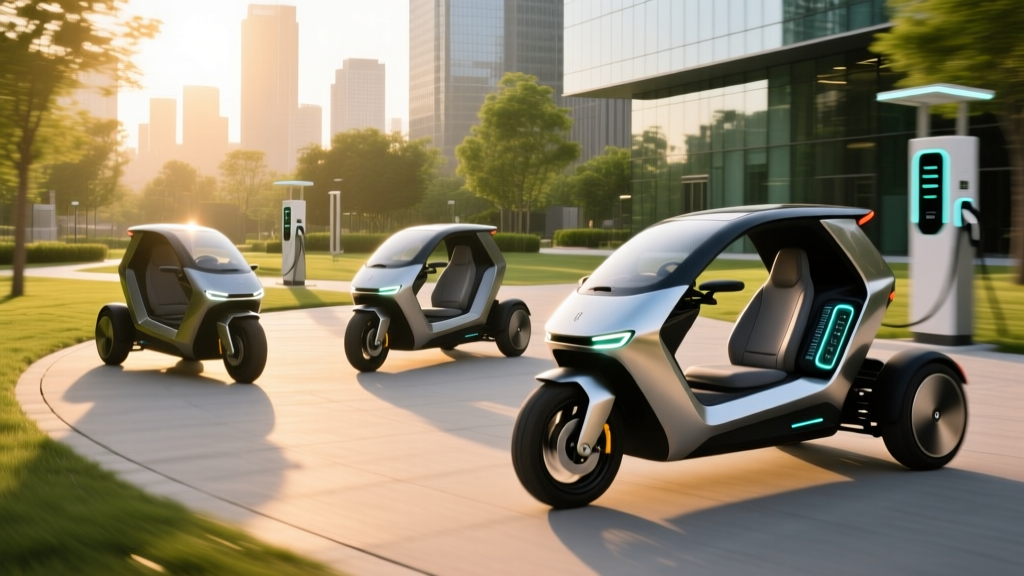
Three-wheel electric vehicles (often called "autocycles" or NEVs depending on classification) sit between a full-size EV and an electric motorcycle. Most use a tadpole configuration — two wheels in front, one in back — for improved stability over the reverse-trike layout. Federal and state regulations classify them differently:
- Autocycles (e.g., Arcimoto FUV): Enclosed or semi-enclosed, steering wheel, pedals, typically rated as motorcycles under FMVSS but legal on most roads with a standard driver's license in many states.
- Neighborhood Electric Vehicles (NEVs): Limited to 25 mph, restricted to roads with speed limits ≤35 mph, governed by FMVSS 500. Examples include the Polaris GEM and Club Car Onward EV.
- Enclosed electric trikes: Smaller, often classified as motorcycles, requiring a motorcycle endorsement in some jurisdictions.
The distinction matters enormously for where you can legally drive, what license you need, and whether the vehicle qualifies for the IRS §30D federal EV tax credit. Most autocycles and NEVs do not qualify because they don't meet the full light-duty vehicle requirements — a critical cost factor many buyers overlook.
Top 3-Wheel Electric Cars for Adults: 2026 Models
The market for 3 wheel electric cars for adults remains small but viable. Here are the most relevant models available or taking orders in 2026:
| Model | EPA Range | Battery (kWh) | Top Speed | Base MSRP | Charge Time (Level 1) |
|---|---|---|---|---|---|
| Arcimoto FUV (2025) | 102 mi | 21.6 kWh (NMC) | 75 mph | $22,500 | ~8 hours (full) |
| Polaris GEM e2 NEV | ~30 mi (NEV class) | 11.5 kWh (lead-acid/LFP options) | 25 mph | $13,500 | ~6 hours |
| ElectraMeccanica Solo (used/remaining stock) | 100 mi | 17.3 kWh (NMC) | 80 mph | $18,500 (was) | ~6 hours |
| Daymak Spiritus Tri-Wheel (announced) | ~100 mi (est.) | ~20 kWh (est.) | 85 mph (est.) | $21,995 (est.) | TBD |
Important note: ElectraMeccanica ceased Solo production in late 2023 after pivoting to commercial electric trucks, so new inventory is essentially gone. The Arcimoto FUV remains the most viable new-purchase option in the highway-capable autocycle category. The Daymak Spiritus has been announced but not yet in volume production — treat its specs as preliminary.
Real-World Range Reality
The Arcimoto FUV's EPA-estimated 102-mile range assumes moderate speeds and mild temperatures. In real-world testing at sustained 65 mph highway speeds, expect roughly 70–80 miles. In cold weather (below 40°F), range can drop 20–30%, bringing usable range down to 55–65 miles. These vehicles lack the sophisticated thermal management systems of full-size EVs like the Tesla Model 3 or Hyundai Ioniq 5, so preconditioning while plugged in is essential for maximizing winter range.
Cost Breakdown: Purchase, Charging, and Ownership
Understanding total cost of ownership is where 3 wheel electric cars for adults either shine or disappoint, depending on your situation.
5-Year Cost Estimate: Arcimoto FUV vs. Gas Compact Car
| Cost Category | Arcimoto FUV (EV) | Honda Civic (Gas, 2025) |
|---|---|---|
| Purchase Price | $22,500 | $25,000 |
| Federal Tax Credit (§30D) | $0 (not eligible*) | $0 |
| Fuel/Energy (5 yrs, 12k mi/yr) | $1,800 (at $0.15/kWh) | $9,000 (at $3.50/gal, 30 MPG) |
| Maintenance (5 yrs) | $500 | $3,500 |
| Insurance (5 yrs, est.) | $6,000–$8,000** | $5,500 |
| 5-Year Total | $30,800–$32,800 | $43,000 |
*The Arcimoto FUV is classified as a motorcycle/autocycle in most states and does not meet §30D requirements for a qualified plug-in electric vehicle. Always verify current eligibility with a tax professional and the IRS guidelines.
**Insurance for autocycles can be higher than standard EVs due to limited crash-test data and specialty classification. Get quotes before purchasing.
The energy savings are substantial — roughly $7,200 over five years at national average electricity and gas prices. However, the lack of a federal tax credit and potentially higher insurance costs narrow the gap considerably. Some states offer their own EV incentives that may apply; check your state energy office or fueleconomy.gov for state-specific rebates.
3-Wheel EV vs. Gas Car vs. Hybrid: Which Makes Sense?
| Factor | 3-Wheel EV (Autocycle) | Compact Gas Car | Compact Hybrid (HEV) | Full-Size EV (e.g., Bolt EV) |
|---|---|---|---|---|
| EPA Range | 60–102 mi | 350–450 mi | 450–550 mi | 230–350 mi |
| Passenger Capacity | 1–2 (tight) | 5 | 5 | 5 |
| Cargo Space | Minimal (5–10 cu ft) | 12–15 cu ft trunk | 12–15 cu ft trunk | 18–25 cu ft + frunk |
| Highway Capable | Yes (65–75 mph) | Yes | Yes | Yes |
| Home Charging Needed | Strongly recommended | No | No | Strongly recommended |
| Cold-Weather Penalty | 20–30% range loss | Minimal | Minimal | 15–25% range loss |
| Safety Ratings (IIHS/NHTSA) | Not crash-tested | Top Safety Pick available | Top Safety Pick available | 5-star NHTSA available |
| Cost Per Mile (Energy) | $0.03–$0.05 | $0.12–$0.15 | $0.08–$0.10 | $0.03–$0.05 |
The honest comparison: a 3 wheel electric car for adults is not a direct substitute for a gas car or hybrid. It's a supplement — a dedicated commuter that pairs well with a larger vehicle in a two-car household. If you need only one vehicle, a full-size EV like the Chevrolet Bolt EV ($26,500 base, 259 mi EPA, §30D eligible) or a hybrid like the Toyota Prius (57 MPG combined) serves far more use cases.
Charging: What 3-Wheel EV Owners Need to Know
One advantage of small-battery 3-wheel EVs: they charge on standard household power without requiring an expensive Level 2 installation.
| Charging Level | Power (kW) | Time to Full (FUV, 21.6 kWh) | Miles Added/Hour |
|---|---|---|---|
| Level 1 (120V outlet) | 1.4–1.9 kW | ~8–10 hours | ~12–15 mi/hr |
| Level 2 (240V, 32A) | 6.6–7.7 kW | ~3 hours | ~35–45 mi/hr |
| DC Fast Charge | Not supported (most models) | N/A | N/A |
For daily commutes under 50 miles, Level 1 charging from a standard 120V garage outlet is sufficient — plug in when you get home, wake up to a full battery. This eliminates the $500–$1,500 Level 2 home charger installation cost that full-size EV owners typically face.
Key limitation: Most 3-wheel EVs do not support DC fast charging. You cannot pull into an Electrify America or Tesla Supercharger station and add 100 miles in 20 minutes. This makes road trips impractical and means you're entirely dependent on destination or home charging.
Common Misconceptions About 3-Wheel Electric Cars
| Myth | Fact |
|---|---|
| "They're as safe as a regular car." | Most 3-wheel autocycles are not crash-tested by NHTSA or IIHS. They lack crumple zones, side-impact beams, and the mass of a 3,500+ lb vehicle. Wear a helmet if the model recommends it. |
| "They qualify for the $7,500 federal tax credit." | Most autocycles and NEVs do not qualify under IRS §30D because they're classified as motorcycles or low-speed vehicles, not qualified plug-in electric drive motor vehicles. Verify before purchasing. |
| "You don't need a special license." | Varies by state. Many states allow autocycles with a standard driver's license, but some require a motorcycle endorsement. Check your state DMV before buying. |
| "100 miles of range is enough for anything." | 100 EPA miles translates to roughly 70–80 real-world highway miles, and as low as 55 in cold weather. Plan conservatively. |
| "They're street-legal everywhere." | NEVs (25 mph max) are restricted to low-speed roads. Autocycles are generally street-legal but may be prohibited from certain highways. State laws vary significantly. |
Decision Framework: Is a 3-Wheel EV Right for You?
If / Then Guide
- If your daily commute is under 50 miles round-trip, you have garage/outlet access for overnight charging, and you already own a larger vehicle for trips → a 3-wheel EV is a strong fit as a low-cost commuter.
- If you need a single vehicle that handles highway driving, carries passengers, and works in all weather → choose a full-size EV (Bolt EV, Model 3, Ioniq 5) or a hybrid instead.
- If you live in a cold climate (sustained below-freezing winters) → expect 20–30% range loss and consider whether 55–70 miles of real winter range meets your needs. A hybrid or full-size EV with a heat pump is more practical.
- If you live in an apartment without charging access → skip the 3-wheel EV. Without DC fast charging capability, public charging is impractical for daily use.
- If safety is a top priority (carrying children, frequent highway driving) → choose a crash-tested, NHTSA-rated vehicle. 3-wheel autocycles lack comparable safety validation.
- If you're looking for the lowest possible cost-per-mile commuter and have safe, low-speed routes → a 3-wheel EV delivers at $0.03–$0.05/mile in energy costs.
Frequently Asked Questions
Do I need a motorcycle license to drive a 3 wheel electric car?
It depends on your state and the vehicle classification. Most tadpole-configuration autocycles (like the Arcimoto FUV) can be driven with a standard driver's license in the majority of U.S. states, but some states — including a few that classify them as motorcycles — require an M endorsement. NEVs (limited to 25 mph) typically require only a standard license. Always check with your state DMV before purchasing.
Can I take a 3-wheel EV on the highway?
Highway-capable autocycles like the FUV can reach 65–75 mph and are legal on most highways. However, with limited range (70–80 real-world highway miles), no DC fast charging, and minimal crash protection, highway driving is practical only for short stretches. NEVs are legally restricted from roads with speed limits above 35 mph.
How long does the battery last, and what does replacement cost?
Most 3-wheel EVs use NMC lithium-ion batteries rated for 1,000–2,000 charge cycles before dropping to 80% capacity — roughly 100,000–200,000 miles of use. Arcimoto provides a 3-year/36,000-mile battery warranty. Replacement batteries for these platforms typically cost $4,000–$7,000. Proper care (avoiding frequent 100% charges, not leaving at 0% for extended periods) extends longevity.
Are 3-wheel electric cars safe in rain and bad weather?
Enclosed autocycles like the FUV offer weather protection (roof, windshield, wipers), and the tadpole layout provides reasonable wet-weather stability. However, they're lighter than full-size vehicles (the FUV weighs ~1,300 lbs), making them more susceptible to crosswinds and hydroplaning. Traction control and ABS are included, but stability control systems are less sophisticated than those in passenger cars. Drive cautiously in severe weather.
What's the cheapest 3 wheel electric car for adults available today?
The most affordable new highway-capable option is the Arcimoto FUV at $22,500 base. NEVs like the Polaris GEM e2 start around $13,500 but are limited to 25 mph and ~30 miles of range. Used ElectraMeccanica Solos occasionally appear on the secondary market for $12,000–$16,000. For comparison, a used Chevrolet Bolt EV (259 mi EPA range, full safety features, §30D eligible if purchased new) can be found for $18,000–$22,000 — often a better value for buyers who need versatility.