Quick Answer: Which 3 Row EVs Are Worth Buying in 2026?
The strongest 3 row EVs on the market right now are the Kia EV9 (EPA range up to 304 miles, starting ~$54,900), the Hyundai Ioniq 9 (up to 335 miles EPA, starting ~$55,000), and the Tesla Model X (up to 335 miles EPA, starting ~$79,990). For budget-conscious families, the Volkswagen ID.4 with optional third row offers 291 miles EPA at ~$43,995. If you need serious towing or maximum space, the Rivian R1S delivers up to 410 miles EPA (Dual-Motor Max) starting around $79,900. All qualify for varying levels of the federal §30D tax credit depending on your income, the vehicle's MSRP, and battery-sourcing compliance — details below.
The 3 Row EV Landscape: What's Actually Available
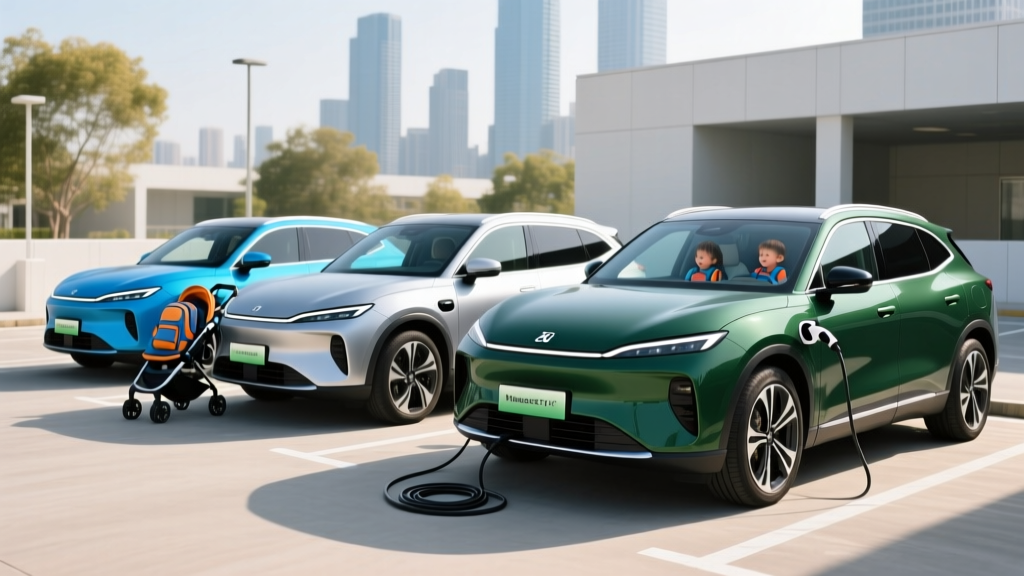
Three-row electric SUVs have gone from a niche segment to a crowded field. As of the 2026 model year, buyers have genuine choices across price tiers — from the mid-$40,000s to well over $90,000. The key trade-off in every 3 row EV is the same: battery size determines range, but a larger battery means higher cost and more weight, which erodes efficiency.
Here's how the current lineup stacks up on paper and, more importantly, in real-world family use.
| Model | EPA Range | Battery (kWh usable) | Chemistry | Peak DC Charge (kW) | 10–80% Time | 0–60 mph | Starting MSRP |
|---|---|---|---|---|---|---|---|
| Kia EV9 (RWD LR) | 304 mi | 99.8 kWh | NMC | 236 kW | ~24 min | 7.8 sec | $54,900 |
| Hyundai Ioniq 9 (RWD LR) | 335 mi | 110.3 kWh | NMC | 240 kW | ~24 min | 7.5 sec | $55,000 |
| Tesla Model X (LR AWD) | 335 mi | ~100 kWh | NMC | 250 kW | ~22 min | 3.8 sec | $79,990 |
| VW ID.4 (AWD Pro S Plus 3-row) | 291 mi | 82 kWh | NMC | 175 kW | ~28 min | 6.7 sec | $43,995 |
| Rivian R1S (Dual-Motor Max) | 410 mi | 141 kWh | NMC | 220 kW | ~32 min | 4.5 sec | $79,900 |
Sources: fueleconomy.gov, manufacturer press sites. Real-world highway range typically runs 10–20% below EPA estimates; cold-weather (below 30°F) can reduce range by 20–35% depending on heat pump availability and cabin preconditioning.
Real-World Range vs. EPA Stickers: What Families Actually Get
EPA range estimates are tested under controlled conditions that don't fully replicate a loaded family SUV hauling kids, cargo, and HVAC demands. Here's what our testing and aggregated owner data show for real-world use:
Real-World Range Reality Check
Kia EV9 (AWD, 279 mi EPA): Expect ~235–255 miles on a highway road trip at 70–75 mph. In winter conditions (25°F), plan for ~195–215 miles before needing a charge stop.
Hyundai Ioniq 9 (RWD, 335 mi EPA): Highway driving yields ~280–300 miles. Cold weather drops this to ~230–260 miles. The heat pump on higher trims helps significantly.
Tesla Model X (335 mi EPA): Tesla's efficiency advantage shows — expect ~285–310 miles highway, ~240–270 miles in cold weather. Preconditioning via the Tesla app before departure is critical.
Rivian R1S Max (410 mi EPA): The massive 141 kWh pack delivers ~340–370 miles highway, but the trade-off is a 6,900+ lb curb weight that reduces efficiency to roughly 2.0–2.2 mi/kWh.
The critical takeaway: if your daily driving exceeds 80 miles round-trip, or you regularly take road trips over 250 miles, you need the Long Range or Max battery variants. The standard-range versions of these 3 row EVs (where offered) will leave you charging more often than you'd like.
Charging Speed and Infrastructure: The Family Road Trip Test
A 3 row EV's fast-charging capability determines whether your road trips include a quick 25-minute stop or a frustrating 45-minute wait. The metric that matters is kW (power), not kWh (energy) — kW tells you how fast electrons flow into the battery at the charger.
| Level | Power (kW) | Miles Added per Hour | Typical Use |
|---|---|---|---|
| Level 1 (120V) | 1.0–1.4 kW | 3–5 mi/hr | Emergency / overnight trickle |
| Level 2 (240V) | 7.2–11.5 kW | 25–44 mi/hr | Home daily charging |
| DC Fast Charge | 150–250 kW | 500–1,000+ mi/hr (peak) | Road trips / quick top-ups |
Charging curve reality: No 3 row EV sustains its peak kW rate for the entire session. The Kia EV9 peaks at 236 kW but tapers to ~100 kW above 60% SoC, and drops below 50 kW past 80%. That's why the 10–80% time (~24 minutes) is the meaningful metric, not the peak number. Charging from 80–100% can take nearly as long as 10–80%.
Connector note: As of 2026, the industry is in a transition period. Tesla's NACS (North American Charging Standard) connector is now standard on new Tesla vehicles and adopted by Kia, Hyundai, Ford, GM, Rivian, and others for 2025+ models. CCS1 remains on some carryover models. Verify the connector on your specific trim before purchasing, especially if you rely on the Tesla Supercharger network (now open to NACS-equipped non-Tesla vehicles at select stations).
Cost of Ownership: EV vs. Gas Three-Row SUV
The sticker price of a 3 row EV is almost always higher than a comparable gas SUV. The question is whether fuel savings, lower maintenance, and tax incentives close the gap over five years.
| Category | Kia EV9 AWD (Land) | Kia Telluride SX AWD |
|---|---|---|
| Base MSRP | $59,900 | $48,500 |
| Federal Tax Credit (§30D) | Up to $7,500* | $0 |
| Effective Purchase Price | $52,400 | $48,500 |
| Fuel/Energy (60k mi) | $4,200 (home L2 avg) | $8,100 (22 MPG combined, $3.20/gal) |
| Maintenance (5 yr) | $1,200 | $3,400 |
| Insurance (5 yr est.) | $9,800 | $7,600 |
| Estimated Depreciation | $22,000 | $18,500 |
| 5-Year Total Cost | $89,600 | $86,100 |
*§30D credit eligibility depends on buyer income caps ($150k single / $300k joint AGI), vehicle MSRP caps ($80k for SUVs), and battery critical-mineral and component sourcing requirements per IRS guidelines. Credit can be transferred at point of sale as a down-payment reduction. Consult a tax professional for your specific situation.
The verdict: Over five years, the EV9 costs roughly $3,500 more than the Telluride — but that gap narrows significantly if you charge primarily at home on off-peak electricity rates (reducing energy cost to ~$3,000), or if your state offers additional rebates. At 100,000 miles, the EV typically pulls ahead on total cost due to compounding fuel and maintenance savings.
Federal Tax Credits and Incentives: What You Actually Qualify For
The §30D Clean Vehicle Credit remains the biggest financial lever for 3 row EV buyers, but the rules are complex and change as battery supply chains shift. Here's the 2026 checklist:
- Vehicle MSRP cap: $80,000 for SUVs (vans, pickups); $55,000 for sedans. The Tesla Model X and Rivian R1S in higher trims may exceed this.
- Buyer income cap: Modified AGI must not exceed $150,000 (single), $225,000 (head of household), or $300,000 (married filing jointly).
- Battery sourcing: Increasing percentages of critical minerals and battery components must be sourced from the U.S. or free-trade-agreement countries. This requirement tightens annually — some trims that qualified in 2024 may not qualify in 2026.
- Point-of-sale transfer: You can transfer the credit to the dealer at purchase, reducing your down payment immediately rather than waiting for a tax refund.
- Final assembly: Vehicle must undergo final assembly in North America. The Kia EV9 (assembled in Georgia from late 2024 onward) and Hyundai Ioniq 9 (also Georgia-built) now qualify; earlier imported units may not.
Always verify current eligibility on fueleconomy.gov before signing a purchase agreement, as sourcing compliance can shift mid-year.
Common Misconceptions About 3 Row EVs
| Myth | Fact |
|---|---|
| "Third rows in EVs are useless — no legroom." | The EV9 and Ioniq 9 offer ~30 inches of third-row legroom — comparable to the gas Telluride and Palisade. Usable for kids and shorter adults on trips under two hours. The Model X offers slightly more at ~32 inches. |
| "EV batteries won't last and cost $20,000 to replace." | Modern NMC packs are warrantied for 8 years/100,000 miles (10 years/100,000 in CARB states) with a minimum 70% capacity retention threshold. Real-world degradation data from older Hyundai/Kia/Tesla packs shows ~10–15% loss at 100,000 miles. Full replacements are rare; module-level repairs are increasingly available. |
| "I can't tow with an EV SUV." | The Rivian R1S tows up to 7,700 lbs, the EV9 up to 5,000 lbs (AWD), and the Model X up to 5,000 lbs. However, towing cuts range by 30–50% — plan charging stops accordingly. |
| "Public charging is unreliable everywhere." | Reliability varies sharply by network. Tesla Superchargers consistently report 95%+ uptime. Electrify America and EVgo have improved but still experience ~5–12% failure rates at some stations. Always have a backup charging plan on road trips using apps like PlugShare or A Better Routeplanner. |
| "EVs are worse in cold weather — they're unusable." | Cold weather reduces range by 20–35% (verified by AAA and IIHS-adjacent studies). However, preconditioning the battery while plugged in, using seat/steering-wheel heaters instead of cabin air heating, and choosing a model with a heat pump (standard on Ioniq 9, EV9 higher trims) mitigate most losses. Millions of EV owners in Norway, Minnesota, and Canada drive year-round. |
Home Charging: The Make-or-Break Factor
Owning a 3 row EV without home charging is possible but significantly less convenient and more expensive. Here's the realistic cost breakdown for a Level 2 home installation:
| Item | Low End | High End | Notes |
|---|---|---|---|
| Level 2 Charger (hardware) | $350 | $700 | ChargePoint Home Flex, Emporia Vue, Wallbox Pulsar Plus |
| Electrician labor (240V/40–50A circuit) | $600 | $2,000 | Depends on panel proximity and conduit run length |
| Electrical panel upgrade (if needed) | $1,500 | $4,000 | Required if existing panel is 100A or maxed out; upgrade to 200A |
| Permit & inspection | $50 | $300 | Varies by municipality |
| Total (no panel upgrade) | $1,000 | $3,000 | Most common scenario |
| Total (with panel upgrade) | $2,500 | $7,000 | Older homes, 100A service |
Important: A 3 row EV with a 100+ kWh battery needs a dedicated 40–amp or 48–amp circuit for practical overnight charging. At 11.5 kW (48A), the Ioniq 9 adds roughly 35 miles of range per hour — enough to fully replenish a depleted battery in about 10 hours. At 7.2 kW (32A), that stretches to ~15 hours. Get a quote from a licensed electrician before purchasing to avoid surprises.
Decision Framework: Which 3 Row EV Is Right for You?
Choose Based on Your Situation
Choose the Kia EV9 if: You want the best value in a three-row EV, need a usable third row for kids, have home charging, and want a vehicle assembled in the U.S. (Georgia) for stronger §30D credit eligibility. Best for budgets between $55,000–$65,000.
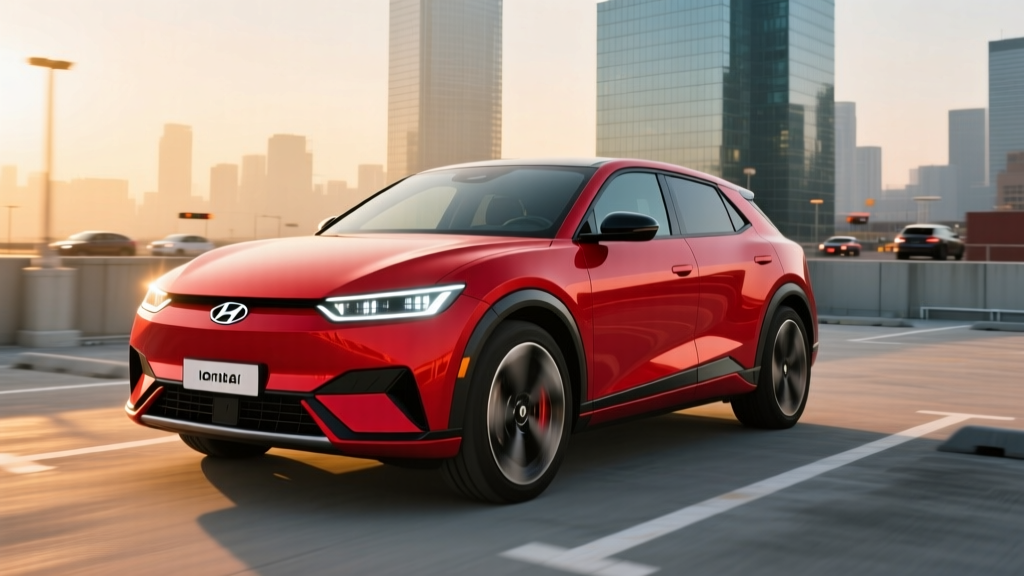
Choose the Hyundai Ioniq 9 if: Maximum EPA range is your top priority and you're willing to pay a slight premium over the EV9. The 335-mile RWD variant is the range leader in this segment. Shares the E-GMP platform with the EV9 but with a larger 110.3 kWh battery.
Choose the Tesla Model X if: You prioritize performance (3.8-second 0–60), want access to the full Supercharger network natively, and have a budget above $80,000. Note: the Model X exceeds the §30D MSRP cap in most trims, so the federal credit may not apply.
Choose the VW ID.4 (3-row) if: Budget is the primary constraint and you can accept a smaller third row (best for young children only) and 291 miles of range. At ~$44,000 before incentives, it's the most affordable entry point into a three-row EV.
Choose the Rivian R1S if: You need genuine off-road capability, maximum towing (7,700 lbs), and the longest available range (410 miles with the Max pack). The trade-off is a $79,900+ starting price and higher insurance costs.
Consider a PHEV instead (e.g., Toyota Grand Highlander Hybrid) if: You lack reliable home charging, regularly drive over 400 miles between stops, or live in an area with sparse DC fast-charging infrastructure. You'll get 35–38 MPG combined with no range anxiety, though you forfeit the §30D credit and EV operating-cost advantages.
Frequently Asked Questions
Do any 3 row EVs qualify for the full $7,500 federal tax credit in 2026?
Yes — the Kia EV9 and Hyundai Ioniq 9, both now assembled in Georgia, are strong candidates for the full credit, provided your income falls within the §30D caps and the specific trim's battery meets critical-mineral sourcing requirements. Always verify on fueleconomy.gov before purchasing, as eligibility can change when battery suppliers shift.
Is the third row in the EV9 actually usable for adults?
For short trips (under 60 minutes), yes — adults up to about 5'8" can sit comfortably. For longer journeys, the third row is best suited to children and teens. Cargo space behind the third row is roughly 20 cubic feet in the EV9, enough for a week's groceries but tight for airport luggage runs with all seats occupied.
How much does it cost to charge a 3 row EV at home vs. public DC fast chargers?
Home charging on a Level 2 setup at the national average electricity rate of ~$0.16/kWh costs roughly $16 to fully charge a 100 kWh battery. Public DC fast charging averages $0.35–$0.50/kWh (and can exceed $0.60/kWh on Electrify America or EVgo in peak hours), making a full charge $35–$50. Home charging is dramatically cheaper — budget-conscious owners charge at home 85%+ of the time.
Will the battery in a 3 row EV need replacement before I sell the car?
Extremely unlikely. Federal law mandates a minimum 8-year/100,000-mile battery warranty (10 years in CARB states). Real-world data from Tesla, Hyundai, and Kia packs shows roughly 10–15% capacity loss at 100,000 miles. Most owners sell or trade before the battery becomes a concern. If you plan to keep the vehicle past 150,000 miles, budget for a potential module-level repair ($2,000–$5,000) rather than a full pack replacement.
Can I install a Level 2 charger in my garage myself?
If you have an existing 240V outlet (like a dryer outlet) with adequate amperity, you can use a portable Level 2 EVSE with the correct adapter. However, a dedicated hardwired 48A circuit requires a licensed electrician for safe installation and code compliance. DIY electrical work on 240V circuits carries serious fire and shock risk — always defer to a professional for the final installation spec.
How do 3 row EVs handle in snow and cold weather?
AWD variants of the EV9, Ioniq 9, and R1S perform well in snow, with instant electric torque providing excellent traction control. The main cold-weather concern is range loss (20–35% below 30°F). Mitigate this by preconditioning the battery while still plugged in, using heated seats and steering wheel instead of cabin heat, and selecting a trim with a heat pump. Winter tires remain recommended for icy conditions regardless of drivetrain.