The Short Answer
If you need a 3 row electric car for family duty in 2026, your top contenders are the Kia EV9 (300-mile EPA range, starting ~$54,900), Hyundai Ioniq 9 (335-mile range, ~$56,000), Tesla Model X (335-mile range, ~$79,990), and Rivian R1S Tri-Motor (352-mile range, ~$82,700). Expect real-world highway range to drop 15–25% below EPA stickers, and plan for $1,200–$2,500 in Level 2 home charger installation. Federal tax credit eligibility (§30D) varies by model, buyer income, and battery sourcing — always verify on IRS.gov before purchasing.
Why Families Are Looking at 3 Row Electric Cars Now
The three-row EV segment has matured past early-adopter territory. Battery packs have grown, DC fast-charging speeds have climbed above 200 kW on several models, and starting prices have dropped below $55,000. For households covering 30–50 miles of daily driving — school runs, commutes, errands — a three-row electric SUV eliminates most fuel stops and handles weekend road trips with one or two charging stops.
But a 3 row electric car is not a universal solution. Cold climates sap 20–30% of range. Rural charging infrastructure remains sparse in many regions. And towing a trailer over 3,000 pounds will cut your range nearly in half. This guide gives you the exact numbers to decide whether going electric makes financial and practical sense for your household.
2026 Three-Row EV Lineup: Spec Comparison
Here is how the major 2026 three-row electric SUVs stack up on the metrics that matter most to family buyers.
| Model | EPA Range | Battery (kWh usable) | Peak DC Charge (kW) | 10–80% Time | 0–60 mph | Starting MSRP |
|---|---|---|---|---|---|---|
| Kia EV9 (LR RWD) | 300 mi | 99.8 kWh (NMC) | 236 kW | ~24 min | 8.2 sec | $54,900 |
| Hyundai Ioniq 9 (LR RWD) | 335 mi | 110.3 kWh (NMC) | 240 kW | ~22 min | 7.8 sec | $56,000 |
| Tesla Model X (LR) | 335 mi | 100 kWh (NMC) | 250 kW | ~20 min | 3.8 sec | $79,990 |
| Rivian R1S (Tri-Motor) | 352 mi (Max Pack) | 141 kWh (NMC) | 220 kW | ~28 min | 4.9 sec | $82,700 |
| Volkswagen ID. Buzz | 234 mi | 86 kWh (NMC) | 175 kW | ~26 min | 7.9 sec | $59,995 |
Real-World Range Reality Check
EPA range figures assume mixed driving at moderate temperatures. On a 75-mph highway run in 30°F weather, expect a 300-mile-rated EV to deliver roughly 210–240 miles before you need to charge. The Hyundai Ioniq 9's 335-mile EPA rating translates to approximately 260–280 miles of real-world highway range in fair conditions, dropping to ~230 miles in deep cold. Plan your road-trip charging stops around the lower number.
EV vs Gas vs Hybrid: The Family SUV Cost Showdown
The most common question from buyers cross-shopping a 3 row electric car against a gas or hybrid SUV is simple: does the higher sticker price pay off? Here is a five-year cost comparison based on 15,000 miles per year, $3.50/gallon regular fuel, and $0.14/kWh home electricity (national average).
| Cost Factor | Kia EV9 LR RWD | Kia Telluride (Gas V6) | Toyota Grand Highlander Hybrid |
|---|---|---|---|
| Base MSRP | $54,900 | $38,790 | $42,390 |
| Est. Federal Tax Credit | $3,750–$7,500* | $0 | $0 |
| 5-Year Fuel/Energy Cost | $3,675 | $13,125 | $8,440 |
| 5-Year Maintenance | $1,500 | $3,800 | $3,200 |
| 5-Year Insurance (est.) | $9,500 | $7,200 | $7,800 |
| Home Charger Install | $1,800 | $0 | $0 |
| 5-Year Total (pre-resale) | $67,575–$71,325 | $62,915 | $61,830 |
*Tax credit amount depends on battery sourcing, buyer income caps ($150K single / $300K joint), and MSRP caps ($80K for SUVs). Verify current eligibility at IRS.gov or transfer at point of sale through a registered dealer.
The EV9 narrows the gap primarily through fuel and maintenance savings — roughly $9,450 less in energy and $2,300 less in maintenance over five years. However, higher insurance premiums (EVs typically cost 15–25% more to insure due to repair complexity and parts cost) and the upfront charger installation partially offset those gains. If you drive more than 15,000 miles annually or have access to cheap electricity (under $0.10/kWh), the EV's economics improve substantially.
Real-World Ownership: What First-Time EV Buyers Must Know
Spec sheets only tell part of the story. Here are the practical ownership factors that determine whether a 3 row electric car works for your household day to day.
Home Charging Is Non-Negotiable for Most Families
Level 1 charging (120V household outlet) adds roughly 3–4 miles of range per hour — about 36–48 miles overnight. That covers some commutes, but a family SUV with a 100 kWh battery would take over 30 hours for a full charge. A Level 2 home charger (240V, 48 amps / 11.5 kW) adds 30–35 miles per hour, fully replenishing a 100 kWh battery in about 9–10 hours overnight.
| Item | Typical Cost Range |
|---|---|
| Level 2 charger hardware (48A hardwired) | $400–$700 |
| Electrician labor (50-ft run, standard panel) | $600–$1,500 |
| Electrical permit | $50–$200 |
| Panel upgrade (if needed: 100A → 200A) | $1,500–$3,500 |
| Total (no panel upgrade) | $1,050–$2,400 |
| Total (with panel upgrade) | $2,550–$5,900 |
Before purchasing, have a licensed electrician evaluate your panel capacity. A 200-amp panel with available breaker slots handles a 60-amp circuit (48A continuous) without issue. Older 100-amp panels often require an upgrade, which adds $1,500–$3,500 and several weeks of permitting.
Public Charging: Plan Around the Taper
DC fast-charging speeds are rated at peak kW, but batteries cannot sustain that rate. The Kia EV9 peaks at 236 kW but tapers to roughly 100 kW above 60% state of charge and drops further above 80%. That 10–80% time of ~24 minutes assumes you precondition the battery (most EVs do this automatically when you navigate to a charger). On a 300-mile road trip, expect two 20–25 minute charging stops — comparable to gas-station rest breaks with kids.
Cold Weather and Towing Cut Range Hard
Lithium-ion batteries lose efficiency in cold temperatures. At 20°F, expect 20–30% range reduction even with a heat pump (standard on the EV9 and Ioniq 9). Towing a 2,500-pound camper trailer will slash range by 35–50% depending on speed and terrain. If your family tows frequently or lives in sub-freezing climates for months, a plug-in hybrid like the Jeep Grand Cherokee 4xe (25 miles electric-only, then gas) may offer more flexibility.
Common Misconceptions About 3 Row Electric Cars
| Myth | Fact |
|---|---|
| "The battery will need replacing in 5 years." | Modern NMC batteries degrade roughly 10–15% over 100,000 miles. Federal law mandates a minimum 8-year/100,000-mile battery warranty covering defects and excessive capacity loss (typically below 70% State of Health). Replacement costs, if needed out of warranty, range from $12,000–$20,000 for a 100 kWh pack. |
| "You can't take an EV on a road trip." | A 300+ mile EPA range means 220–250 real highway miles between stops. With 200+ kW DC charging, you add 150+ miles in 15 minutes. Apps like A Better Routeplanner map charger locations and account for terrain and temperature. |
| "All three-row EVs qualify for the $7,500 tax credit." | Under current §30D rules, the credit depends on battery critical-mineral sourcing, buyer income (≤$300K joint), and MSRP caps (≤$80K for SUVs). Several trims of the Model X and R1S exceed the MSRP cap. Always check the IRS qualified vehicle list before purchasing. |
| "EVs cost more to insure and always will." | Insurance premiums for EVs are currently 15–25% higher on average, but the gap is narrowing as repair networks expand and collision data matures. Shop quotes from EV-friendly insurers (GEICO, State Farm, Progressive) before committing. |
Decision Framework: Which 3 Row Electric Car Fits You?
Choose based on your primary use case:
- Best value for most families: Kia EV9 Land AWD ($60,900). Strong range (270 mi AWD), 236 kW charging, usable third row, and available for potential §30D credit. Ideal if your daily driving is under 60 miles and you road-trip 3–4 times per year.
- Maximum range and efficiency: Hyundai Ioniq 9 Long Range ($56,000). At 335 miles EPA and a large 110.3 kWh pack, this offers the longest legs for frequent highway commuters who want fewer charging stops.
- Performance and Supercharger access: Tesla Model X Long Range ($79,990). The 335-mile range, 3.8-second 0–60, and access to Tesla's Supercharger network (17,000+ stalls in North America) make it the road-trip king — but the MSRP exceeds the §30D SUV cap, so no federal credit.
- Off-road and adventure families: Rivian R1S Tri-Motor ($82,700+). 352 miles with the Max Pack, 8,200-lb towing capacity, and genuine off-road capability. Exceeds the MSRP cap for the federal credit. Best for families who tow boats or trailers regularly.
- Consider a PHEV instead if: You lack home charging access, frequently tow over 3,000 lbs, live in extreme cold (below 0°F regularly), or drive in rural areas with sparse DC charging. A Toyota Grand Highlander Hybrid (36 MPG combined, no range anxiety, ~$42,390) covers most family needs without the charging dependency.
Frequently Asked Questions
Is a 3 row electric car practical for a family of five?
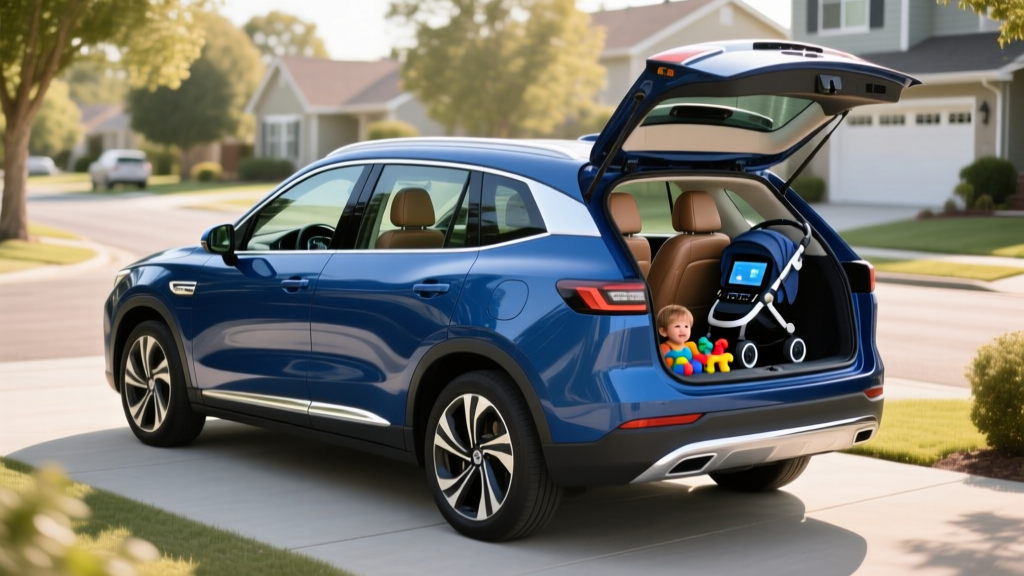
Yes, if your daily driving is under 70 miles and you have home charging. The Kia EV9 and Hyundai Ioniq 9 offer usable third rows that fit children or smaller adults, with cargo room behind the third row for groceries and strollers. For six or seven passengers regularly, check second-row captain's chair vs. bench configurations.
How long does it take to charge a three-row EV at home?
On a Level 2 home charger (11.5 kW / 48 amps), a 100 kWh battery takes roughly 9–10 hours from near-empty to full. Most owners plug in overnight and wake up to a full charge every morning, which is actually more convenient than weekly gas station visits.
Do three-row electric SUVs hold their resale value?
EV depreciation has been steeper than gas vehicles in recent years — some models have lost 40–50% of value in the first two years, partly due to Tesla-initiated price cuts and rapid battery tech improvements. Lease deals (often $400–$600/month for an EV9) can mitigate depreciation risk. Check current resale data on Kelley Blue Book or Edmunds before deciding between buying and leasing.
Can I install a Level 2 charger in my garage myself?
While plug-in Level 2 chargers (NEMA 14-50 outlet) are available, a hardwired 48-amp unit delivers faster charging and is safer for continuous high-load use. Always hire a licensed electrician for the circuit and permit. DIY electrical work on 240V circuits carries fire and code-violation risks.
What happens if the battery degrades significantly?
Federal law requires manufacturers to warrant the battery for at least 8 years or 100,000 miles. Most warranties cover capacity loss below 70% State of Health. Real-world data from earlier EVs shows NMC batteries retaining 85–90% capacity at 100,000 miles under normal use. Avoid routinely charging to 100% or letting the battery sit at 0% for extended periods to maximize longevity.