The Short Answer: What Is a 1 Person Electric Car?
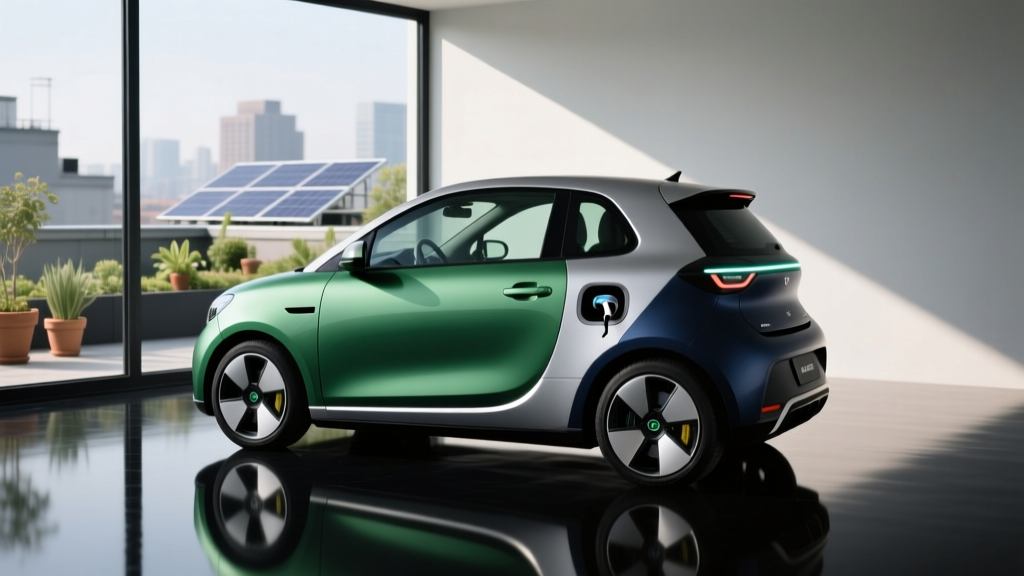
A true single-occupant electric vehicle designed for urban commuting remains a niche category in the U.S. market as of 2026. The closest production options are micro-EVs like the Citroën Ami (not street-legal on U.S. highways), neighborhood electric vehicles (NEVs) such as the GEM e2, and compact solo-commuter EVs like the Mini Cooper SE and Nissan Leaf S. For most American solo drivers, a subcompact EV with 110–150 miles of EPA range, priced between $28,000 and $33,000 before incentives, delivers the best balance of practicality, highway legality, and daily usability. If your commute is under 30 miles round-trip and you have access to Level 2 home charging, a compact EV can cost roughly $0.04–$0.06 per mile to fuel versus $0.12–$0.16 per mile for a comparable gas car.
Why the "1 Person Electric Car" Concept Matters for Solo Commuters
The search for a dedicated single-passenger EV reflects a real ownership pattern: according to U.S. Census data, roughly 76% of American commuters drive alone to work. Yet the EV market has largely focused on family crossovers and midsize sedans. Solo commuters—particularly those in dense urban areas or with short, predictable routes—often don't need 300+ miles of range, five seats, or 350 horsepower. They need an affordable, efficient, easy-to-park vehicle with minimal operating costs.
The challenge is that U.S. safety regulations, consumer expectations, and infrastructure realities make true micro-EVs (the kind popular in Europe and Asia) difficult to sell at scale. Vehicles like the Citroën Ami or Renault Twizy are classified as quadricycles in Europe, but they fail to meet Federal Motor Vehicle Safety Standards (FMVSS) for highway use in the United States. That leaves American solo buyers choosing among the smallest highway-legal EVs available.
Highway-Legal Solo-Commuter EVs: 2026 Lineup Compared
Here are the most practical small EVs suited for single-occupant commuting in the U.S. market, with current 2026 model-year specifications:
| Vehicle | EPA Range | Battery (kWh) | Peak DC Charge | 10–80% Time | 0–60 mph | Base MSRP |
|---|---|---|---|---|---|---|
| Mini Cooper SE (2026) | 146 mi | 40.7 (NMC) | 95 kW | ~28 min | 6.7 sec | $30,900 |
| Nissan Leaf S (2026) | 149 mi | 40.0 (NMC) | 50 kW (CHAdeMO) | ~60 min | 7.4 sec | $28,140 |
| Chevrolet Bolt EV 2LT (2026) | 259 mi | 65.0 (NMC) | 115 kW | ~30 min | 6.5 sec | $29,900 |
| Hyundai Kona Electric SE (2026) | 261 mi | 64.8 (NMC) | 100 kW | ~43 min | 6.4 sec | $32,975 |
| GEM e2 NEV* | ~30 mi | ~11.5 (LFP/AGM) | N/A (L1 only) | 6–8 hr (full) | 25 mph top speed | $12,500 |
*NEV = Neighborhood Electric Vehicle. Top speed limited to 25 mph; not legal on roads posted above 35 mph in most states. Not suitable for highway commuting.
Real-World Range Reality Check
EPA range figures assume a mix of city and highway driving at moderate temperatures. For solo commuters in cold climates (below 30°F), expect 20–35% range reduction due to battery chemistry limitations and cabin heating demands. A Mini Cooper SE rated at 146 miles EPA may deliver only 95–115 miles in January in Chicago. Highway-only driving at 70+ mph also reduces range by roughly 15–20% compared to the EPA combined cycle. If your round-trip commute exceeds 80 miles in cold weather, consider the Bolt EV or Kona Electric for their larger batteries.
Cost Breakdown: EV vs. Gas Car for the Solo Commuter
The financial case for a small EV hinges on your local electricity rates, daily mileage, and whether you can charge at home. Below is a 5-year cost comparison for a solo commuter driving 12,000 miles per year (33 miles/day round-trip):
| Cost Category | Mini Cooper SE (EV) | Honda Civic 2.0 (Gas) | 5-Year Difference |
|---|---|---|---|
| Purchase Price (MSRP) | $30,900 | $25,000 | EV +$5,900 |
| Federal Tax Credit (§30D)* | –$0 (does not qualify) | $0 | — |
| Fuel / Electricity (5 yr) | $2,700 (at $0.14/kWh) | $8,400 (at $3.20/gal, 33 MPG) | EV saves $5,700 |
| Maintenance (5 yr) | $1,200 | $2,800 | EV saves $1,600 |
| Insurance (5 yr avg) | $7,500 | $6,200 | EV +$1,300 |
| Total 5-Year Cost | $42,300 | $42,400 | EV –$100 |
*The Mini Cooper SE is assembled in the UK and does not meet §30D battery-sourcing or North American assembly requirements as of 2026. The Chevrolet Bolt EV, assembled in Michigan with a U.S.-sourced battery, may qualify for up to $7,500 depending on buyer income and point-of-sale transfer rules. Always verify eligibility at IRS.gov.
The takeaway: at roughly parity on total cost, the EV offers a smoother, quieter commute with zero tailpipe emissions—but the savings depend heavily on cheap home electricity. If you're paying $0.30/kWh at public DC fast chargers exclusively, your fuel cost nearly triples to ~$7,500 over five years, erasing the EV advantage.
Charging at Home: The Make-or-Break Factor
For a 1-person electric car used as a daily commuter, home Level 2 charging is practically essential. Here's what that involves:
| Level | Power | Miles Added/Hour | Typical Use |
|---|---|---|---|
| Level 1 (120V outlet) | 1.4–1.9 kW | 3–5 mi/hr | Overnight trickle; sufficient for <30 mi/day commutes |
| Level 2 (240V, 32A) | 7.7 kW | 22–28 mi/hr | Ideal daily charging; full battery in 5–8 hours |
| DC Fast Charge | 50–115 kW | 120–250 mi/hr | Road trips; not for daily use (accelerates degradation) |
A Level 2 home charger (such as a ChargePoint Home Flex or Emporia Level 2) costs $500–$700 for the unit. Professional installation by a licensed electrician typically runs $400–$1,200, depending on whether your electrical panel needs an upgrade (a 200-amp panel is usually sufficient; older homes with 100-amp service may need a $1,500–$3,000 panel upgrade). Total installed cost: $900–$1,900 for most homes with adequate panel capacity.
If you live in an apartment or condo without dedicated parking and charging access, relying solely on public charging is expensive and inconvenient. In that scenario, a plug-in hybrid (PHEV) like the Toyota Prius Prime—offering 44 miles of electric-only range plus a gas engine—may serve a solo commuter better than a pure BEV.
Tax Credits and Incentives: What Solo EV Buyers Actually Qualify For
The federal §30D clean vehicle credit offers up to $7,500 for qualifying new EVs and up to $4,000 for qualifying used EVs. However, eligibility depends on several factors that trip up many buyers:
§30D New EV Credit Requirements (2026)
- MSRP cap: Vans/SUVs/pickups ≤ $80,000; sedans/hatchbacks ≤ $55,000
- Buyer income cap: $150K single / $225K head of household / $300K joint
- North American assembly: Vehicle must be assembled in the U.S., Canada, or Mexico
- Battery sourcing: Critical minerals and battery components must meet phased-in percentage thresholds from U.S. or FTA-partner countries
- Point-of-sale transfer: You can transfer the credit to the dealer for an immediate price reduction, or claim it on your tax return
For the solo commuter segment: the Chevrolet Bolt EV (assembled in Orion Township, MI) has historically qualified for the full $7,500 credit, potentially dropping its effective price below $22,500—making it one of the cheapest new EVs available. The Nissan Leaf (assembled in Tennessee) may qualify for a partial credit depending on battery sourcing. The Mini Cooper SE and Hyundai Kona Electric (assembled overseas) generally do not qualify for §30D as of 2026.
Always confirm current eligibility on the official fueleconomy.gov tax credit page before purchasing, as sourcing requirements tighten annually.
Common Misconceptions About Small EVs
| Myth | Fact |
|---|---|
| "Small EVs are unsafe compared to larger vehicles" | Modern subcompacts like the Bolt EV earn IIHS Top Safety Pick ratings with standard automatic emergency braking, lane-keeping, and multiple airbags. Size matters in multi-vehicle collisions, but active safety tech narrows the gap significantly. Check IIHS.org for specific crash-test results. |
| "You need 300+ miles of range for daily commuting" | The average U.S. one-way commute is 16 miles. A 146-mile-range EV covers a 60-mile round-trip with 80+ miles of buffer—more than enough for 95% of commuting days, even with climate-control usage. |
| "EV batteries need replacement every 5 years" | Modern NMC and LFP batteries are warranted for 8 years/100,000 miles with a guaranteed minimum capacity retention of 70% (often higher). Real-world degradation data shows most EV batteries retain 85–92% capacity after 5 years and 60,000 miles. |
| "Charging takes too long for daily use" | Home Level 2 charging replenishes a 40 kWh battery overnight in ~5 hours—plug in when you get home, wake up to a full battery. You spend zero time at a "station" during your daily routine. |
| "Cold weather makes small EVs unusable" | Range loss of 20–35% in sub-freezing weather is real but manageable. A 146-mile EV still delivers ~100 miles in cold weather—adequate for most commutes. Preconditioning while plugged in mitigates much of the loss. |
Decision Framework: Which Solo EV Is Right for You?
If / Then Recommendations
If your round-trip commute is under 40 miles and you have home Level 2 charging → Mini Cooper SE offers the lowest price, fun handling, and sufficient range with premium build quality.
If you want maximum value after the federal tax credit → Chevrolet Bolt EV at ~$22,400 effective price (with $7,500 credit) delivers 259 miles of range and practical hatchback cargo space.
If you live in an apartment without home charging and drive under 40 miles/day → Consider a PHEV like the Toyota Prius Prime (44 mi electric-only, 52 MPG combined on gas) to avoid public-charging dependency.
If your commute includes highway driving in cold climates and exceeds 60 miles round-trip → Hyundai Kona Electric (261 mi EPA) provides the range buffer to handle winter conditions and occasional road trips without DC fast-charging stress.
If you only drive in a low-speed campus, retirement community, or neighborhood (roads ≤35 mph) → A GEM e2 NEV at ~$12,500 is the cheapest electric option, but understand its severe speed and range limitations.
If you lack home charging and your commute exceeds 50 miles → A pure BEV in the 150-mile range class will require frequent public fast-charging, which is costly and accelerates battery wear. Either install home charging or choose a PHEV/longer-range EV.
Battery Longevity and Warranty: What Solo Owners Should Expect
All major manufacturers provide an 8-year/100,000-mile battery and powertrain warranty (10 years/150,000 miles in California and states that follow CARB rules). The warranty guarantees the battery will retain at least 70% of its original capacity during that period. For a solo commuter driving 12,000 miles/year, that warranty covers well beyond a typical ownership cycle.
Key degradation factors to understand:
- DC fast charging frequency: Daily DCFC sessions accelerate degradation. For daily commuting, use Level 2 and reserve DC fast charging for road trips.
- State of Charge habits: Keeping the battery between 20–80% SoC for daily use (rather than routinely charging to 100%) extends NMC battery lifespan. Most EVs let you set a charge limit in the app.
- Thermal management: Vehicles with active liquid cooling (Bolt EV, Kona Electric, Mini Cooper SE) manage battery temperature better than passively cooled packs, reducing heat-related degradation in hot climates.
A full battery replacement out of warranty costs $5,000–$9,000 for these smaller packs—a significant expense, but one that statistically affects a small percentage of owners within the first decade.
Frequently Asked Questions
Is there a true single-seat electric car available in the U.S.?
No major automaker sells a dedicated single-seat, highway-legal EV in the United States as of 2026. The closest options are compact two-door EVs (Mini Cooper SE) or NEVs (GEM e2) limited to low-speed roads. Solo commuters buy small 4-seat EVs and simply use the other seats for cargo or occasional passengers.
Can I charge a small EV from a standard household outlet?
Yes. Level 1 charging from a 120V outlet adds roughly 3–5 miles of range per hour. For a 40 kWh battery (Mini Cooper SE or Nissan Leaf), a full charge from empty takes 24–30 hours on Level 1. This works if your daily driving is under 30 miles and the car is parked overnight, but Level 2 is strongly recommended for convenience and battery health.
How much does insurance cost for a small EV vs. a gas car?
EV insurance premiums run 10–25% higher than comparable gas vehicles due to higher repair costs (specialized labor, battery protection requirements) and higher replacement values. For a Mini Cooper SE, expect $1,400–$1,700/year depending on your state, driving record, and coverage level. Get quotes from multiple insurers—some (like GEICO and Progressive) offer EV-specific discounts.
Do small EVs hold their resale value?
EV depreciation has been steeper than gas cars in recent years, partly due to rapid technology improvements and Tesla price cuts pulling down the entire segment. A small EV purchased for $30,000 may retain 45–55% of its value after 3 years, versus 55–65% for a comparable gas car. Buying used (2–3 years old) lets you avoid the steepest depreciation hit while still getting a modern vehicle with most of its battery warranty intact.
What about the Citroën Ami or Renault Twizy—can I import one?
These vehicles are classified as quadricycles under European regulations and do not meet U.S. FMVSS safety standards. Importing one for street use is effectively impossible. They are excellent urban vehicles in Europe but not viable for the American market. Some NEV-class alternatives (GEM, Arcimoto) offer a similar spirit with U.S. road legality at low speeds.