Hyundai Kona Electric vs MINI Countryman SE: The Ultimate EV Crossover Showdown
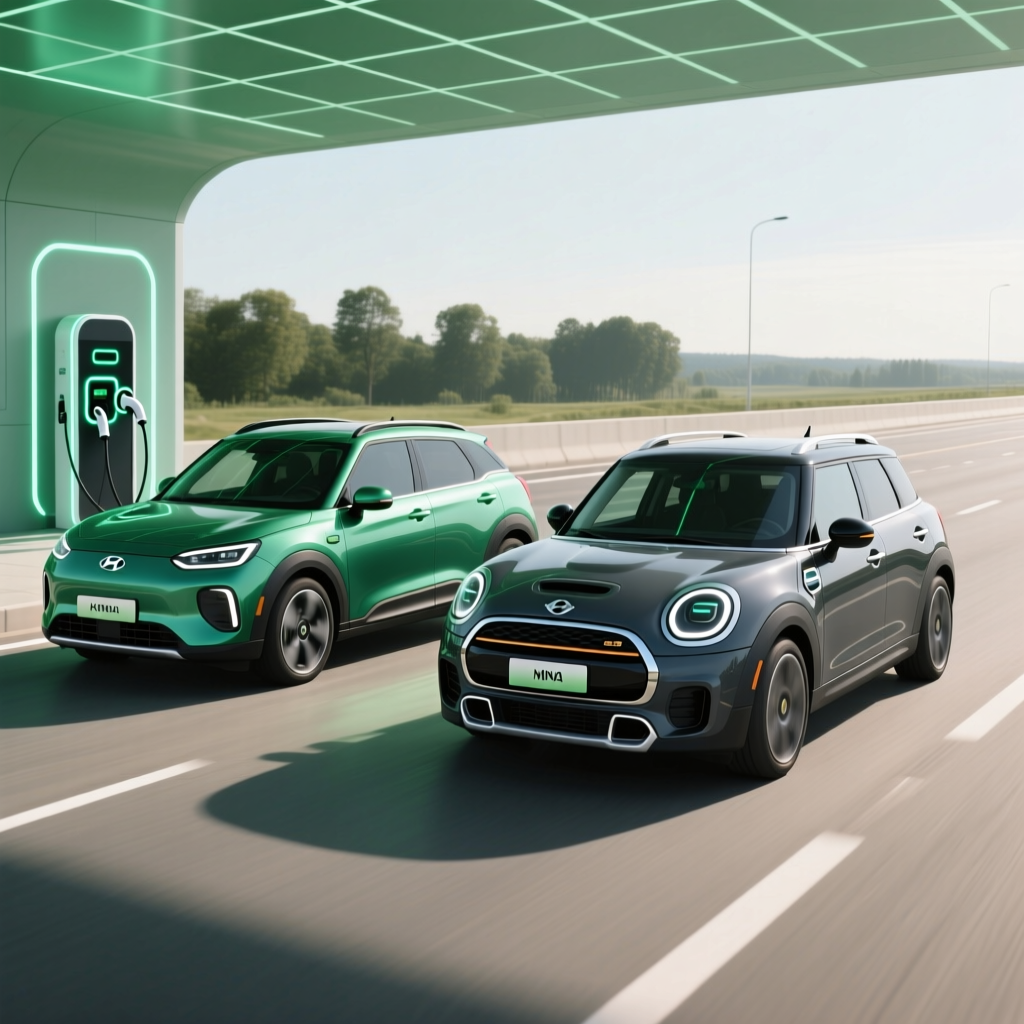
The electric vehicle market has expanded rapidly, but the subcompact and compact crossover segments remain the sweet spot for most buyers. These vehicles offer the perfect blend of urban maneuverability, practical cargo space, and efficient battery packaging. Two standout contenders in this highly competitive space are the Hyundai Kona Electric and the fully electric MINI Countryman SE. While both aim to electrify the daily commute, they approach the task with vastly different philosophies, target audiences, and engineering priorities.
The Hyundai Kona Electric has long been a darling of the EV community, praised for its pragmatic approach, impressive range, and outstanding value proposition. It is designed for the sensible buyer who wants maximum utility and efficiency without breaking the bank. On the other hand, the MINI Countryman SE brings a heavy dose of premium styling, go-kart-inspired handling, and a quirky, high-end interior to the table. It caters to drivers who view their vehicle as a fashion statement and a luxury experience, even in a smaller footprint.
If you are cross-shopping these two distinct electric crossovers, you are likely weighing practicality against premium flair. In our detailed Hyundai Kona Electric review and MINI Countryman SE review, we explored each vehicle individually. Now, it is time to put them head-to-head. Below, we break down everything from EPA range estimates and charging speeds to interior dimensions and warranty coverage to help you decide which EV deserves a spot in your driveway. For more options in this segment, be sure to check out our roundup of the best electric SUVs on the market.
Side-by-Side Specification Comparison
Before diving into the nuances of daily driving and ownership, it is helpful to look at the raw numbers. The following table highlights the core specifications for the top-tier trims of both the Hyundai Kona Electric and the MINI Countryman SE (All4). Keep in mind that specific figures can vary based on wheel size, optional equipment, and regional market configurations.
| Specification | Hyundai Kona Electric (Long Range) | MINI Countryman SE (All4) |
|---|---|---|
| Drivetrain | Front-Wheel Drive (FWD) | All-Wheel Drive (AWD) |
| Horsepower | 201 hp | 308 hp |
| Torque | 188 lb-ft | 364 lb-ft |
| Battery Capacity (Usable) | ~63.0 kWh | ~66.5 kWh |
| EPA Estimated Range | Up to 261 miles | Up to 230 miles |
| Peak DC Fast Charging | ~100 kW | ~130 kW |
| Cargo Space (Behind Rear Seats) | 25.8 cu ft | 16.4 cu ft |
| Starting MSRP (Approximate) | Mid $30,000s | Mid $40,000s |
Range and Battery Efficiency
When it comes to electric vehicles, range anxiety is often the primary concern for new buyers. In this department, the Hyundai Kona Electric holds a distinct advantage. Equipped with a high-capacity liquid-cooled lithium-ion battery pack, the Kona Electric achieves an impressive EPA-estimated range of up to 261 miles on a single charge. This efficiency is bolstered by Hyundai’s advanced heat pump system, which helps preserve battery life and cabin heating during colder months without severely depleting the overall range.
The MINI Countryman SE, while equipped with a slightly larger battery pack, sacrifices some efficiency due to its heavier curb weight, standard all-wheel-drive system, and less aerodynamic, boxy profile. Its EPA-estimated range sits at approximately 230 miles. While 230 miles is more than sufficient for the average daily commute and weekend road trips, it falls short of the Kona’s long-distance capabilities.
Independent real-world testing by automotive experts often shows that Hyundai’s battery management system is incredibly consistent. According to data from EPA ratings and various independent track tests, the Kona Electric frequently meets or exceeds its range estimates in mixed city and highway driving. The MINI, while offering a spirited drive, tends to consume energy more rapidly when pushed hard on the highway, a common trait among performance-oriented AWD crossovers. If maximizing miles between charges is your top priority, the Kona is the undisputed winner here.
Pricing and Value Proposition
The financial aspect of EV ownership extends far beyond the sticker price, but the initial purchase price is where the Hyundai Kona Electric makes a massive statement. Starting in the mid-$30,000 range, the Kona Electric is one of the most affordable and accessible electric crossovers on the market. Even when fully loaded with premium features like ventilated seats, a premium audio system, and advanced driver assistance tech, the Kona remains a bargain compared to its luxury-branded rivals.
Conversely, the MINI Countryman SE commands a significant premium. Starting in the mid-$40,000s, the MINI positions itself as a luxury lifestyle vehicle. You are paying for the iconic badge, the bespoke interior materials, and the standard dual-motor all-wheel-drive setup. While MINI offers various customization packages that allow you to tailor the vehicle to your exact aesthetic preferences, these options can quickly push the final transaction price into the territory of much larger luxury SUVs.
When factoring in potential federal and state incentives, the value gap widens further. Buyers should always consult our EV tax credit eligibility guide to see how current incentives apply to their specific tax situation. Ultimately, the Kona Electric offers a superior return on investment for budget-conscious buyers, while the MINI Countryman SE appeals to those willing to pay a premium for exclusivity, design, and brand cachet.
Charging Speed and Infrastructure
A vehicle’s range is only half of the charging equation; how quickly it can replenish that range on a road trip is equally critical. The MINI Countryman SE takes the lead in peak DC fast charging speeds, capable of accepting up to 130 kW at a compatible public charger. This allows the MINI to charge from 10% to 80% in roughly 30 minutes under optimal conditions. Hyundai, on the other hand, caps the Kona Electric’s peak charging rate at around 100 kW, resulting in a 10% to 80% charge time of approximately 40 to 43 minutes.
While the MINI charges faster on paper, real-world charging curves tell a slightly more nuanced story. Hyundai’s charging curve is relatively flat, meaning it maintains a decent charging speed for a longer portion of the session. MINI’s peak speed is impressive but can taper off more aggressively as the battery warms up and approaches higher states of charge. For a deeper dive into how to optimize your public charging sessions, check out our comprehensive EV charging guide.
For home charging, both vehicles support Level 2 AC charging at roughly 11 kW, meaning a full overnight charge from empty to full will take about 6 to 7 hours on a dedicated home wallbox. Both vehicles also utilize the CCS (Combined Charging System) standard natively, though adapters are increasingly available for those who wish to access the Tesla Supercharger network, a crucial factor for frequent road trippers.
Performance and Driving Dynamics
If range and value are the Kona Electric’s strong suits, performance and driving dynamics are where the MINI Countryman SE flexes its muscles. The MINI SE All4 features a dual-motor setup producing a combined 308 horsepower and a massive 364 lb-ft of torque. This translates to a blistering 0-60 mph time of roughly 5.4 seconds. The instant torque delivery, combined with MINI’s legendary suspension tuning, results in a vehicle that feels remarkably planted, eager, and genuinely fun to carve through canyon roads.
The Hyundai Kona Electric is no slouch, offering 201 horsepower and 188 lb-ft of torque sent exclusively to the front wheels. Its 0-60 mph time hovers around the 7.0-second mark, which is perfectly adequate for highway merging and city zipping. However, the Kona is tuned primarily for comfort. The suspension soaks up potholes and rough pavement beautifully, making it an excellent daily commuter, but it lacks the athletic feedback and cornering grip of the MINI. Furthermore, applying too much throttle from a stop in the Kona can result in torque steer and traction loss, a non-issue in the AWD MINI.
Regenerative braking is another key component of the EV driving experience. Hyundai offers multiple levels of regen adjustable via steering wheel paddles, including an excellent i-Pedal mode that allows for true one-pedal driving in stop-and-go traffic. MINI also offers adjustable regen and a one-pedal mode, but some drivers find the transition between regen and friction braking in the MINI to be slightly less linear than in the Hyundai. If driving engagement is your priority, the MINI is the clear choice; if comfort is king, the Kona wins.
Interior Space, Cargo, and Comfort
Despite being classified in similar size segments, the interior packaging of these two crossovers is remarkably different. The current generation Hyundai Kona Electric was redesigned with a focus on maximizing interior volume. It offers surprisingly generous rear legroom and headroom, easily accommodating tall adults for long journeys. The cargo area is expansive, offering 25.8 cubic feet behind the rear seats, and a nearly flat load floor when the seats are folded down, making it highly practical for hauling groceries, luggage, or outdoor gear.
The MINI Countryman SE, while larger than its hardtop Cooper sibling, still prioritizes style over outright utility. The rear seats are slightly more cramped, and the cargo area is notably smaller at 16.4 cubic feet. The sloping roofline and thick C-pillars also create larger blind spots and a slightly more claustrophobic feeling in the back row compared to the airy, greenhouse-like cabin of the Kona.
Where the MINI strikes back is in material quality and ambiance. The Countryman’s interior features premium sustainable materials, intricate ambient lighting, and a highly stylized dashboard that feels like a luxury boutique. The Kona’s interior is highly functional, durable, and easy to clean, but it relies heavily on hard plastics in the lower door panels and center console, reminding you of its budget-friendly price point. Noise, vibration, and harshness (NVH) levels are well-controlled in both, though the MINI’s thicker acoustic glass gives it a slight edge in highway quietness.
Technology and Infotainment
Both automakers have heavily invested in digital cockpits, but their execution varies wildly. The Hyundai Kona Electric features a sleek, dual-screen setup with two 12.3-inch displays merged into a single panoramic curved glass panel. The interface is intuitive, responsive, and retains physical shortcut buttons for climate control and volume, a massive plus for ergonomics. Wireless Apple CarPlay & Android Auto are standard, and the native navigation system includes excellent EV-specific routing that accounts for charging stops and battery preconditioning.
The MINI Countryman SE takes a radically different approach with its signature circular OLED display mounted front and center. The infotainment system runs on MINI Operating System 9, which is visually stunning and highly customizable, featuring playful animations and a unique digital pet companion. However, the system relies almost entirely on touchscreen inputs, having eliminated nearly all physical buttons. While the voice assistant is robust, adjusting the climate control or changing a setting while driving requires taking your eyes off the road, which can be frustrating for some users.
In terms of Advanced Driver Assistance Systems (ADAS), Hyundai’s Highway Driving Assist is one of the best in the business, offering smooth lane centering and adaptive cruise control that feels natural and trustworthy. MINI’s Driving Assistant Professional is also highly capable, but it often requires more frequent steering wheel inputs to prove driver attentiveness compared to the Hyundai system.
Warranty and Ownership Costs
Long-term peace of mind is a critical factor when purchasing an electric vehicle, and this is an area where Hyundai completely dominates. The Hyundai Kona Electric is backed by an industry-leading 10-year/100,000-mile powertrain warranty, which includes coverage for the high-voltage battery against excessive degradation. Combined with a 5-year/60,000-mile new vehicle limited warranty and complimentary maintenance for the first few years, the Kona offers unparalleled protection against unexpected repair bills.
The MINI Countryman SE comes with a more traditional luxury-brand warranty package: a 4-year/50,000-mile limited warranty and a 4-year/50,000-mile powertrain warranty. While MINI does offer an 8-year/100,000-mile battery warranty (as is standard across the industry for EV battery defect coverage), the overall bumper-to-bumper protection pales in comparison to Hyundai’s offering. Furthermore, maintenance and out-of-warranty repair costs at MINI dealerships are notoriously higher than at Hyundai dealerships.
Insurance premiums also tend to favor the Hyundai. Due to its lower replacement cost and less aggressive performance profile, the Kona Electric generally costs less to insure annually than the high-performance, luxury-branded MINI. Over a five-year ownership period, the total cost of ownership for the Kona Electric will be significantly lower, making it the undisputed champion of financial pragmatism.
The Verdict: Which EV Should You Buy?
Choosing between the Hyundai Kona Electric and the MINI Countryman SE ultimately comes down to your personal priorities, budget, and lifestyle. These two vehicles may share a similar footprint, but they exist in entirely different universes of automotive design.
Choose the Hyundai Kona Electric if:
- You prioritize maximum range and battery efficiency for long road trips.
- You want the best possible value, low starting price, and an industry-leading warranty.
- You need practical cargo space and comfortable rear seating for adults.
- You prefer an intuitive infotainment system with physical buttons and excellent ADAS.
Choose the MINI Countryman SE if:
- You crave a premium, luxury-branded interior with unique, head-turning styling.
- You want the traction and performance benefits of dual-motor All-Wheel Drive.
- You value engaging, sporty driving dynamics and rapid acceleration.
- You are willing to pay a premium for brand cachet and bespoke customization options.
In summary, the Hyundai Kona Electric is the rational, highly capable, and immensely practical choice that excels at the fundamentals of EV ownership. The MINI Countryman SE is the emotional, premium choice that sacrifices a bit of range and utility to deliver a uniquely fun and stylish driving experience. Both are fantastic additions to our list of top-rated electric crossovers, but they serve very different masters.
Frequently Asked Questions
Which vehicle has better real-world highway range?
The Hyundai Kona Electric generally outperforms the MINI Countryman SE in real-world highway range testing. Thanks to its more aerodynamic shape, lighter weight, and highly efficient front-wheel-drive powertrain, the Kona is able to stretch its battery further at sustained speeds of 70 mph or higher. The MINI’s boxy design and dual-motor AWD system consume more energy during high-speed cruising, making the Kona the better choice for frequent road trippers.
Can I use a Tesla Supercharger with these EVs?
Both the Hyundai Kona Electric and the MINI Countryman SE natively use the CCS (Combined Charging System) plug standard. However, both Hyundai and MINI have announced transitions to the NACS (North American Charging Standard) port for future model years. In the meantime, owners of current-generation CCS-equipped models can access the Tesla Supercharger network by purchasing an approved CCS-to-NACS adapter. Always verify adapter compatibility with your specific vehicle manufacturer to ensure safe charging and warranty compliance.
How do the maintenance costs compare between the two?
As electric vehicles, both cars require significantly less routine maintenance than internal combustion vehicles, eliminating the need for oil changes, spark plugs, and transmission fluid flushes. However, the Hyundai Kona Electric will generally be cheaper to maintain over its lifespan. Hyundai offers complimentary scheduled maintenance for the initial ownership period, and its parts and labor rates at dealerships are typically lower than those at MINI, which operates under the BMW Group’s luxury pricing structure.
Is the Hyundai Kona Electric available in all-wheel drive?
No, the current generation Hyundai Kona Electric is exclusively offered with a front-wheel-drive (FWD) powertrain. If you require the added traction and security of all-wheel drive for snowy or slippery conditions, the dual-motor MINI Countryman SE All4 holds a distinct advantage. Alternatively, buyers who want a Hyundai with AWD might need to look at the larger Hyundai Ioniq 5 or consider the gas-powered/hybrid versions of the Kona, which do offer AWD configurations.