The Evolution of the American Interstate EV Corridor
Cross-country electric vehicle travel has evolved from a niche, anxiety-inducing experiment into a mainstream reality. However, as EV adoption accelerates, the demands placed on public charging infrastructure have outpaced historical deployment rates. The American interstate highway system, spanning over 48,000 miles, represents the most critical artery for long-distance EV mobility. For years, coverage along these corridors was defined by a patchwork of proprietary networks, inconsistent reliability, and vast rural gaps. Today, we are witnessing a massive structural shift in how interstate EV charging corridors are funded, built, and maintained.
The future of interstate charging is no longer solely in the hands of private enterprise; it is now a matter of federal infrastructure policy. As we look toward 2025 and beyond, the convergence of federal mandates, standardized connector transitions, and advanced grid-management technologies is poised to eliminate the 'charging desert' phenomenon. For EV owners and road-trippers, understanding these macro-trends is essential for navigating the rapidly changing landscape of American highway travel.
The NEVI Mandate: Reshaping Highway Infrastructure
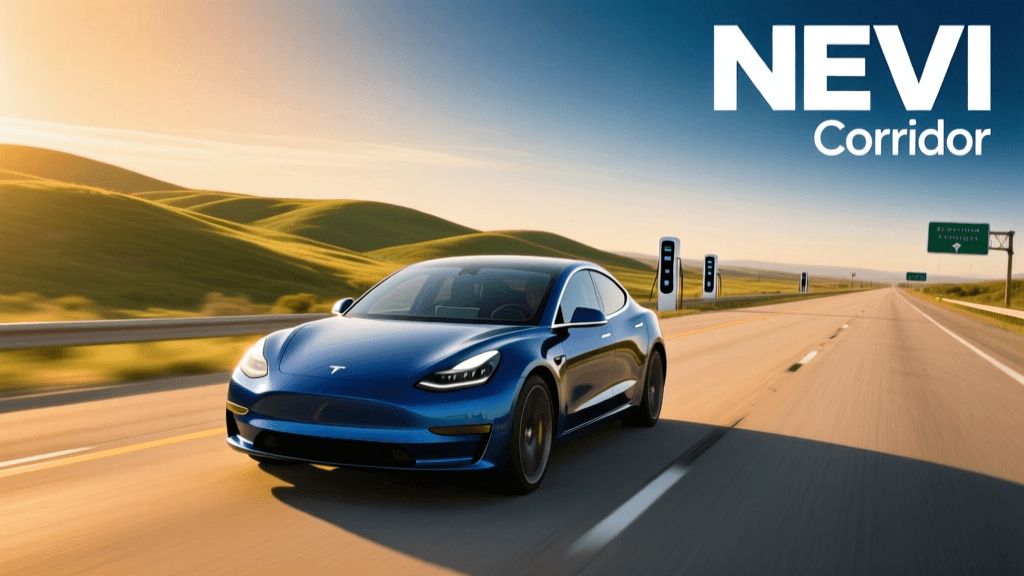
The most significant catalyst for interstate charging corridor development is the National Electric Vehicle Infrastructure (NEVI) Formula Program. Established under the Bipartisan Infrastructure Law, the NEVI program allocated $5 billion to states to strategically deploy EV charging infrastructure along designated Alternative Fuel Corridors. According to the Federal Highway Administration, the primary goal is to create a convenient, affordable, reliable, and equitable national network.
The NEVI guidelines impose strict, uniform requirements that will fundamentally standardize the interstate charging experience. To qualify for federal funding, charging stations must meet several rigorous criteria:
- Proximity to Highways: Stations must be located within one mile of an interstate exit or highway interchange.
- Spacing: Chargers must be deployed roughly every 50 miles along designated corridors to ensure no driver is ever more than 25 miles from a reliable charging hub.
- Port Capacity: Each location must feature a minimum of four charging ports capable of charging four vehicles simultaneously.
- Power Output: All ports must support Combined Charging System (CCS) connectors and deliver at least 150 kW per vehicle, with a total site capacity of 600 kW.
- Uptime Reliability: Stations must maintain a minimum average annual uptime of 97%, a metric that directly attacks the historical plague of broken or offline public chargers.
As outlined by the Joint Office of Energy and Transportation, these standards ensure that whether a driver is navigating I-80 through Wyoming or I-10 through New Mexico, the baseline expectation for charging speed, availability, and payment processing remains consistent.
Network Responses: Tesla, Electrify America, and the NACS Shift
While the NEVI program sets the regulatory floor, private networks are aggressively expanding their interstate footprints to capture market share. Tesla’s Supercharger network has long been the gold standard for interstate travel, renowned for its high uptime and seamless plug-and-charge integration. With the industry-wide adoption of the North American Charging Standard (NACS), Tesla is opening its network to non-Tesla EVs. This transition is heavily impacting interstate corridors, as legacy automakers like Ford, Rivian, and GM now rely on Tesla’s highway-adjacent Superchargers to supplement their own route planning.
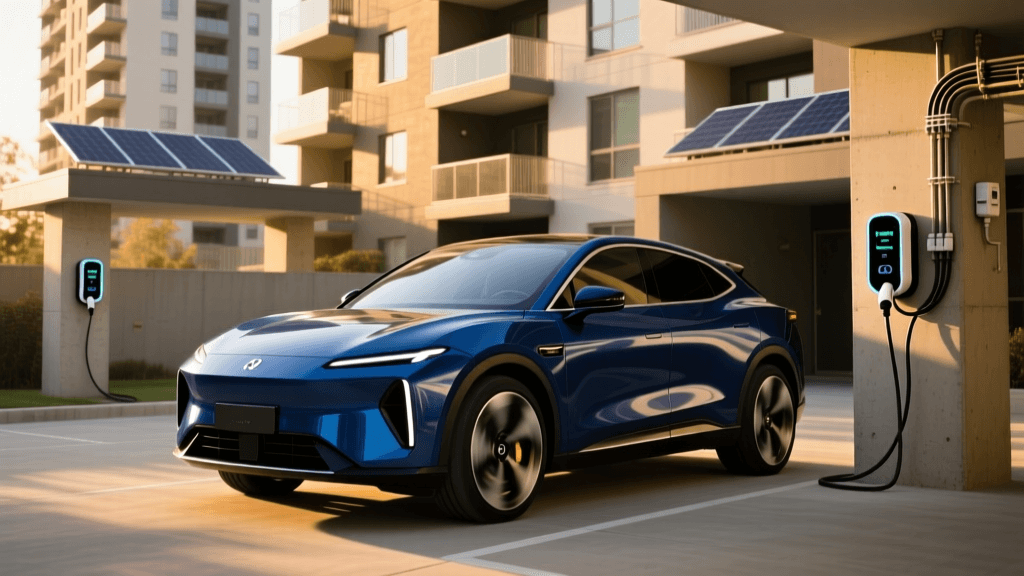
Simultaneously, Electrify America (EA) and EVgo are leveraging a mix of private capital and NEVI funds to fortify their highway presence. Electrify America has focused heavily on deploying 350 kW ultra-fast chargers along major interstate routes, catering to next-generation EV architectures like the Hyundai E-GMP and Porsche 800V systems. However, the industry's focus is shifting from pure speed to holistic site management, including integrated solar canopies, battery energy storage systems (BESS), and improved amenities like Wi-Fi and dedicated rest areas.
Comparative Analysis: Interstate Network Reliability and Coverage
To understand the current landscape and future trajectory, it is vital to compare how the major networks are approaching interstate corridor coverage. The following table outlines the strategic focus, current reliability metrics, and future targets for the dominant players in the US highway charging space.
| Network | Primary Interstate Strategy | Current Est. Uptime | 2025+ Target Standard | Dominant Connector |
|---|---|---|---|---|
| Tesla Supercharger | High-density urban & highway routing; opening to NACS adapters. | 98% - 99% | 99%+ with V4 Megachargers | NACS |
| Electrify America | Major interstate truck stops and travel plazas; 350kW focus. | 88% - 92% | 97% NEVI compliance | CCS / NACS |
| EVgo | Suburban highway corridors and fleet hubs; ReNew program. | 90% - 94% | 97% NEVI compliance | CCS / NACS |
| Blink / ChargePoint | Secondary highways and destination routing; lower power. | 85% - 90% | Focus on Level 2 & NEVI L2 | CCS / J1772 |
As the data suggests, Tesla currently leads in raw reliability, but Electrify America and EVgo are rapidly upgrading legacy hardware to meet the stringent 97% uptime requirement mandated by federal NEVI funding. The transition to NACS across all networks by 2025 will also drastically reduce hardware failure rates associated with bulky CCS cables and latch mechanisms.
Overcoming Grid Constraints: Battery Buffers and Megawatt Charging
One of the most pressing bottlenecks for interstate charging expansion is local electrical grid capacity. Many rural interstate exits lack the three-phase utility power required to support four simultaneous 150kW+ chargers. Upgrading utility lines can take years and cost millions. The industry's solution to this is the deployment of Battery Energy Storage Systems (BESS).
Companies like Tesla (using Megapacks) and Freewire (using integrated Boost Chargers) are installing massive battery buffers on-site. These batteries trickle-charge from the local grid 24/7 at low power, and then discharge rapidly to provide high-speed DC fast charging to EVs during peak travel times. This trend will define the next generation of interstate charging hubs, allowing ultra-fast charging in remote locations where grid infrastructure is weak.
Furthermore, the development of the Megawatt Charging System (MCS) for electric semi-trucks will have a trickle-down effect on passenger corridors. As the Department of Energy notes, integrating heavy-duty freight corridors with light-duty passenger routes will lead to the construction of massive, multi-megawatt charging plazas at major interstate truck stops. These plazas will feature dedicated heavy-duty bays alongside high-speed passenger canopies, fundamentally transforming the American truck stop into an electrified mobility hub.
Strategic Planning for the Modern EV Road Tripper
Given this dynamic landscape, how should EV owners approach cross-country road trips today and in the near future? While the NEVI program guarantees a robust network by the late 2020s, drivers navigating the roads in the immediate future must adopt strategic planning habits:
- Embrace Redundancy via Aggregator Apps: Never rely on a single network's proprietary app for interstate travel. Utilize aggregator platforms like PlugShare or A Better Routeplanner (ABRP). Filter your route to show only 'High Power' chargers (150kW+) and check the community-driven status reports to avoid stations currently undergoing maintenance.
- Master the NACS Adapter Ecosystem: If you drive a non-Tesla EV equipped with a CCS port, investing in a high-quality, certified NACS-to-CCS adapter is no longer optional for road trippers. Access to Tesla’s Supercharger network effectively doubles your reliable interstate coverage, particularly in rural stretches of the Midwest and Mountain West where EA or EVgo footprints are sparse.
- Target Travel Plazas over Standalone Retail: Future NEVI-funded stations and private mega-hubs are heavily favoring large travel plazas (e.g., Pilot, Flying J, Love's). These locations offer 24/7 access, well-lit environments, security, and amenities. Plan your charging stops around these major hubs rather than standalone retail chargers, which are more prone to vandalism, ICEing, and power throttling.
- Monitor Uptime Metrics: Start paying attention to network reliability dashboards. The industry is moving toward transparent uptime reporting as a condition of federal funding. Favor networks and specific corridors that consistently meet the 97% reliability threshold to minimize the risk of being stranded at a dead-end rural exit.
The Road Ahead
The era of the 'charging desert' along the American interstate system is drawing to a close. Driven by the aggressive deployment of NEVI funds, the universal adoption of the NACS connector, and the integration of battery-buffered microgrids, the future of interstate EV charging is highly standardized and deeply reliable. For the modern EV road-tripper, the anxiety of the unknown is being replaced by the predictability of a truly national, interconnected charging grid.