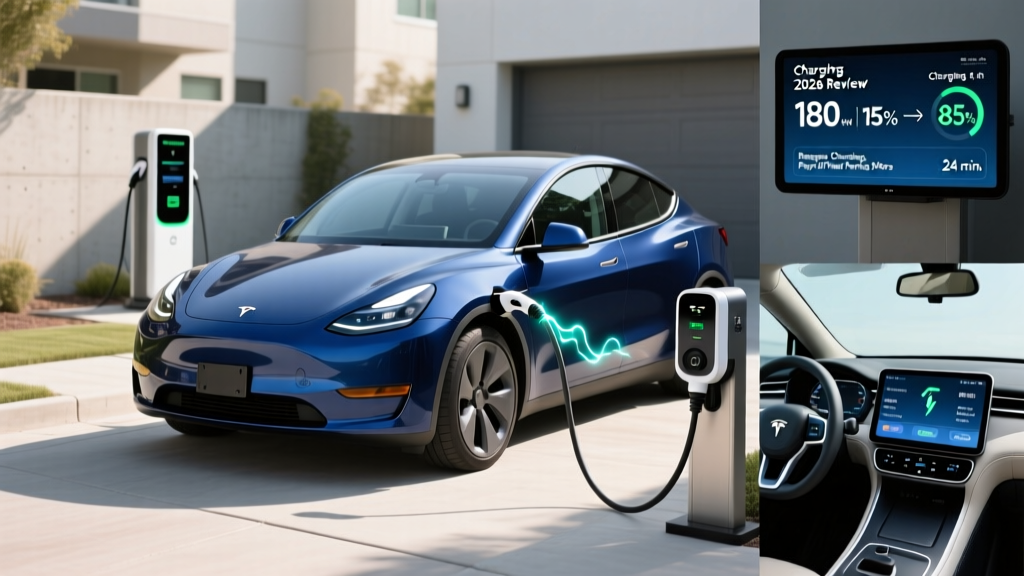
Quick Verdict: Why the 2026 Tesla Model Y Dominates Fleet and Payroll Programs
If you're researching the Tesla payroll benefit angle — whether you're an employer evaluating EVs for company fleets, an employee eyeing a salary-sacrifice EV scheme, or a buyer trying to understand how Tesla's corporate purchase programs work — the 2026 Model Y remains the default choice. It balances range, charging speed, interior space, and total cost of ownership in a package that fits both family duty cycles and corporate procurement spreadsheets.
For 2026, Tesla refreshed the Model Y with a revised interior, improved thermal management, and a slightly larger battery pack on the Long Range variant. The result is an SUV that delivers up to 320 miles of EPA-estimated range, charges at up to 250 kW on DC fast chargers, and starts at $44,990 before incentives. It's the EV most frequently deployed in corporate payroll lease schemes because it checks every box: low operating cost, strong residual value, and Supercharger network reliability.
Range, Battery & Efficiency: The Numbers That Matter
| Spec | Long Range AWD | Performance AWD | RWD (Standard) |
|---|---|---|---|
| EPA Range | 320 mi | 295 mi | 270 mi |
| Battery (usable) | 78.1 kWh (NMC) | 78.1 kWh (NMC) | 60 kWh (LFP) |
| MPGe (combined) | 122 MPGe | 115 MPGe | 128 MPGe |
| kWh/100 mi | 28 | 29 | 26 |
| 0-60 mph | 4.8 sec | 3.5 sec | 6.6 sec |
| Horsepower | 384 hp | 456 hp | 295 hp |
| Drivetrain | Dual-Motor AWD | Dual-Motor AWD | RWD |
| Base MSRP | $48,990 | $53,490 | $44,990 |
Real-World Range Reality Check
EPA sticker: 320 miles (Long Range AWD). Expect in practice: ~265–285 miles on highway trips at 70–75 mph; ~240–255 miles in sub-freezing winter conditions. The Model Y's heat pump helps mitigate cold-weather losses compared to older EVs, but plan for a 15–25% range reduction when temperatures drop below 30°F. City driving with regenerative braking can push real-world numbers close to or slightly above the EPA figure.
The Long Range uses NMC (nickel manganese cobalt) chemistry, which offers higher energy density — ideal for maximizing range in a mid-size SUV. The RWD Standard model uses LFP (lithium iron phosphate), which sacrifices some range but tolerates frequent 100% charging without accelerated degradation. For payroll fleet managers, this matters: LFP vehicles can be charged to full nightly without long-term health concerns, simplifying fleet logistics.
Charging Speed: DC Fast, Level 2, and Supercharger Access
Charging infrastructure access is a key reason corporate Tesla payroll programs favor the Model Y. The Supercharger network remains the most reliable public DC fast-charging ecosystem in the U.S., and the 2026 Model Y (now equipped with the NACS port natively) plugs in without adapters.
| Charging Level | Power | Speed | Notes |
|---|---|---|---|
| Level 1 (120V) | ~1.4 kW | ~3–4 mi/hr | Emergency/trickle only |
| Level 2 (240V, 48A) | 11.5 kW | ~37 mi/hr | Home Wall Connector; full charge ~8.5 hrs |
| DC Fast (V3 Supercharger) | Peak 250 kW | 10–80% in ~22 min | Sustains ~170 kW avg from 10–60%; tapers above 80% |
| DC Fast (V4 Supercharger) | Peak 250 kW | 10–80% in ~20 min | Newer stalls; cable is lighter and longer |
The DC fast-charge curve is critical to understand: the Model Y peaks at 250 kW only at low states of charge (roughly 10–25%), then steps down progressively. Average power from 10–80% is closer to 150–170 kW. On a road trip, this means a 20-minute stop gets you roughly 200 miles of range — enough for most highway segments. For fleet operators, overnight Level 2 charging at 11.5 kW fully replenishes any Model Y variant during an 8-hour shift or overnight parking window.
Pricing, Tax Credits & Payroll Fleet Economics
The 2026 Model Y qualifies for the federal §30D EV tax credit, but eligibility depends on several factors that shift annually. As of the 2026 tax year:
| Trim | MSRP | §30D Credit (est.) | Effective Price |
|---|---|---|---|
| RWD Standard | $44,990 | Up to $7,500* | ~$37,490 |
| Long Range AWD | $48,990 | Up to $7,500* | ~$41,490 |
| Performance AWD | $53,490 | Up to $7,500* | ~$45,990 |
*The §30D credit is subject to IRS rules including: buyer AGI caps ($150K single / $300K joint), vehicle MSRP caps ($80K for SUVs), and battery critical-mineral and component sourcing thresholds that phase in annually. As of 2026, Tesla's U.S.-built Model Y generally meets sourcing requirements, but always verify current eligibility at IRS.gov before purchase. Point-of-sale transfer is available, letting dealers apply the credit as a down-payment reduction.
For payroll and fleet buyers: Many employers structure EV acquisitions through salary-sacrifice or corporate lease programs. The Model Y's strong residual values (typically 55–65% at 36 months, per industry data) keep monthly lease payments competitive. Combined with lower per-mile energy costs (~$0.04–0.06/mi on residential electricity vs. $0.12–0.16/mi for a comparable gas SUV), the Model Y delivers a 5-year total cost of ownership that undercuts rivals like the Ford Mustang Mach-E and Hyundai Ioniq 5 in fleet calculations.
Interior, Cargo, and Technology
The 2026 Model Y received a cabin refresh addressing the most common complaints about earlier builds: improved NVH (noise, vibration, harshness), ventilated front seats, ambient lighting, and updated materials on the dashboard and door panels. The minimalist single-screen layout remains, centered on a 15.4-inch touchscreen running Tesla's latest software.
- Cargo volume: 30.2 cu ft behind rear seats; 72.1 cu ft with rear seats folded
- Front trunk (frunk): 4.1 cu ft
- Rear legroom: 41.6 inches
- Front headroom: 40.7 inches
- Seating: 5 standard; optional 7-seat layout available (third row best for children only)
Standout tech features:
- Tesla Supercharger network access (17,000+ stalls in North America)
- Over-the-air software updates adding features post-purchase
- Sentry Mode dashcam surveillance while parked
- Phone-as-key with automatic unlock
- Heat pump for efficient cabin heating in cold climates
Notable drawbacks:
- No Apple CarPlay or Android Auto — Tesla's proprietary infotainment only
- Rear visibility is limited; relies heavily on cameras
- Turn-signal stalks removed on newer builds (steering-wheel buttons instead — divisive among drivers)
- No physical buttons for climate or volume — everything routes through the touchscreen
Driver Assistance: Autopilot and FSD (Supervised)
SAE Automation Level: Level 2
Tesla Autopilot and Full Self-Driving (Supervised) are SAE Level 2 driver-assistance systems. The driver must remain fully attentive, keep hands on the wheel (or demonstrate engagement via cabin camera), and be prepared to take over at any moment. These are not self-driving systems. Level 4 driverless operation (no human required) is currently available only through robotaxi services like Waymo in select metro areas.
Autopilot comes standard and includes adaptive cruise control, lane-keeping assist, and automatic emergency braking. FSD (Supervised) is a $8,000 add-on (or $99/month subscription as of 2026) that adds automated lane changes, intersection handling, and parking assistance. Real-world FSD performance has improved substantially, but it still requires active supervision and occasionally makes unexpected decisions in construction zones or complex intersections.
Warranty, Safety, and Ownership Costs
Tesla's warranty package is competitive within the EV segment:
- Basic vehicle: 4 years / 50,000 miles
- Battery & drive unit: 8 years / 120,000 miles (Long Range/Performance); 8 years / 100,000 miles (RWD)
- Battery degradation guarantee: Tesla warrants that the battery will retain at least 70% of original capacity during the warranty period
Safety ratings remain strong. The Model Y earned a 5-star overall rating from NHTSA and has consistently performed well in IIHS crash testing. Standard active safety features include automatic emergency braking, blind-spot monitoring, and lane-departure warning.
5-Year Ownership Cost Highlights:
- Estimated electricity cost (15,000 mi/yr): ~$3,300–$4,500 total (varies by local rates)
- Estimated maintenance: ~$800–$1,200 over 5 years (no oil changes; cabin air filter, tire rotation, wiper fluid)
- Insurance: typically 15–25% higher than comparable gas SUVs due to repair-cost data — get quotes before purchasing
- Tires: expect replacement at 25,000–35,000 miles due to EV weight and instant torque wear patterns
Pros, Cons, and Who Should Buy
Pros
- Class-leading Supercharger network access for road trips
- Strong real-world range (265–285 mi highway, Long Range)
- 250 kW DC fast charging with 10–80% in ~22 minutes
- Spacious cargo area (72.1 cu ft max) for a mid-size SUV
- Low operating cost per mile vs. gas competitors
- Strong resale value benefits fleet/payload lease programs
- OTA updates continuously improve the vehicle
Cons
- No Apple CarPlay or Android Auto
- Turn-signal buttons on steering wheel (no stalk) frustrate some drivers
- Insurance premiums above segment average
- Build quality inconsistency (panel gaps, though improved for 2026)
- FSD (Supervised) still requires constant driver attention
- Rear-seat comfort is adequate but not class-leading
Who Is the 2026 Model Y For?
- Payroll/fleet buyers: Excellent. Low TCO, strong residuals, and §30D eligibility make it a corporate favorite.
- Daily commuters: Ideal if you have home Level 2 charging. The 270–320 mi range covers most round trips easily.
- Families: Yes — 5-seat layout with ample cargo. The optional 7-seat is viable only for small children.
- Road trippers: The Supercharger network makes long-distance travel the easiest of any EV on the market.
- Towing: Rated for 3,500 lbs — adequate for a small trailer, but not a serious towing vehicle.
Frequently Asked Questions
What is the real-world range of the 2026 Tesla Model Y?
The EPA rates the Long Range AWD at 320 miles. In real-world highway driving at 70–75 mph, expect 265–285 miles. In freezing temperatures, plan for 240–255 miles. The RWD Standard variant (270 EPA) typically delivers 225–245 miles on the highway.
How fast does the Model Y charge at home and on the road?
On a Level 2 home charger (240V, 48A), the Model Y adds roughly 37 miles per hour, fully charging overnight. On a V3 or V4 Supercharger, it peaks at 250 kW and charges from 10–80% in approximately 20–22 minutes, though sustained average power is closer to 150–170 kW.
Does the 2026 Model Y qualify for the $7,500 federal EV tax credit?
Generally yes, but eligibility depends on your income (AGI caps: $150K single / $300K joint), the vehicle's MSRP (under the $80K SUV cap), and battery sourcing compliance. Tesla's U.S.-built Model Y has met sourcing thresholds for 2026. Verify at IRS.gov and consider point-of-sale transfer at the dealer.
How does the Model Y compare to the Ford Mustang Mach-E or Hyundai Ioniq 5?
The Model Y leads in Supercharger network reliability, cargo volume, and software integration. The Ioniq 5 offers faster 10–80% charging (~18 min at 350 kW on capable chargers) and a more comfortable rear seat. The Mach-E provides a more traditional driving feel and available CarPlay. For payroll and fleet use, the Model Y's residual value and TCO typically win.
What's the biggest drawback of owning a Tesla Model Y?
The lack of Apple CarPlay/Android Auto is the most-cited frustration for buyers coming from other brands. Insurance costs are also notably higher than comparable gas SUVs. Some drivers strongly dislike the removal of turn-signal stalks in favor of steering-wheel buttons.
Is the Model Y a good choice for corporate payroll or salary-sacrifice programs?
Yes. The Model Y is one of the most popular EVs in employer-sponsored purchase and lease programs. Its combination of low per-mile operating cost, strong residual values, federal tax-credit eligibility, and reliable charging infrastructure makes it a safe choice for both employers structuring benefits and employees selecting a vehicle.
Sources: EPA Fuel Economy, Tesla Model Y Specifications, IRS Clean Vehicle Credits, NHTSA Safety Ratings.