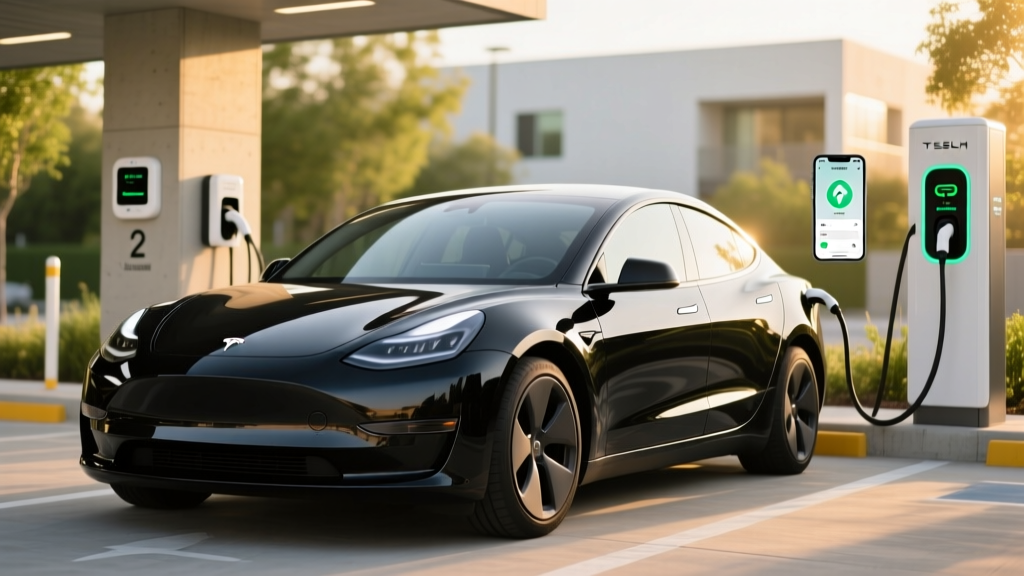
The Tesla Model 3 has long served as the default entry point into electric-vehicle ownership for American buyers. Now in its refreshed "Highland" generation, the 2026 Model 3 brings a quieter cabin, improved suspension tuning, and a streamlined interior that leans heavily into its central touchscreen. But with an increasingly crowded compact EV sedan segment—featuring the Hyundai Ioniq 6, BMW i4, and Polestar 2—the question isn't just whether the Model 3 is good. It's whether the total cost of ownership still justifies the purchase.
Below, we examine the 2026 Tesla Model 3 ownership cost from every angle that matters: purchase price, federal tax credit eligibility, charging expenses, real-world range, insurance, and long-term battery warranty coverage. Every figure cited reflects current 2026 model-year specifications.
2026 Tesla Model 3 at a Glance: Key Specifications
| Spec | Model 3 RWD | Model 3 Long Range AWD | Model 3 Performance |
|---|---|---|---|
| EPA Range | 363 miles | 346 miles | 315 miles |
| Battery (usable) | ~60 kWh (LFP) | ~75 kWh (NMC) | ~75 kWh (NMC) |
| Drivetrain | Rear-Wheel Drive | Dual-Motor AWD | Dual-Motor AWD |
| Horsepower | 271 hp | 346 hp | 510 hp |
| 0–60 mph | 5.8 sec | 4.2 sec | 2.9 sec |
| Peak DC Fast Charge | 170 kW | 250 kW | 250 kW |
| 10–80% DCFC Time | ~25 min | ~25 min | ~25 min |
| Level 2 Home Charge | 11.5 kW (~44 mi/hr) | 11.5 kW (~44 mi/hr) | 11.5 kW (~44 mi/hr) |
| EPA Efficiency | 132 MPGe / 25 kWh/100mi | 132 MPGe / 25 kWh/100mi | 119 MPGe / 28 kWh/100mi |
| Cargo Volume | 23 cu ft (trunk + frunk combined) | ||
| Rear Legroom | 35.2 inches | ||
| Battery Warranty | 8 yr / 100,000 mi | 8 yr / 120,000 mi | 8 yr / 120,000 mi |
| Base MSRP | $38,990 | $44,990 | $52,990 |
Note: MSRP figures exclude Tesla's destination charge of approximately $1,390. Pricing reflects the 2026 model year and may vary by configuration.
Real-World Range: What the EPA Number Doesn't Tell You
EPA Estimate: 363 mi (RWD), 346 mi (Long Range), 315 mi (Performance)
Highway Driving (75 mph sustained): Expect ~280–310 mi (Long Range), ~250–270 mi (Performance)
Cold Weather (below 32°F): Range drops 15–30% depending on cabin heating demands and battery preconditioning
Combined Real-World Expectation: ~300–330 mi for Long Range in mixed driving
The Model 3 Long Range AWD's 346-mile EPA rating remains one of the highest in its class, and Tesla's efficiency engineering is genuinely impressive. The Model 3's heat pump—standard across all trims—significantly reduces cold-weather energy loss compared to EVs relying on resistive cabin heating. In our experience, preconditioning the battery while plugged in (a feature Tesla handles automatically when you set a departure time) recovers much of the winter range penalty.
However, sustained highway speeds above 70 mph erode range noticeably. The RWD trim's LFP battery is slightly heavier and less energy-dense than the Long Range's NMC pack, but it compensates with a lower base price and the ability to charge to 100% daily without degradation concerns—a meaningful advantage for commuters who need maximum daily range.
For authoritative efficiency data, we cross-reference fueleconomy.gov, which lists the Model 3 Long Range at 132 MPGe combined.
Charging Speed and Infrastructure: DC Fast, Level 2, and the Supercharger Advantage
Charging speed is where the Model 3's ownership experience diverges sharply from competitors—and it's one of the strongest arguments in Tesla's favor for road-trippers and apartment dwellers without home charging access.
| Charging Level | Power / Rate | Miles Added per Hour | Notes |
|---|---|---|---|
| Level 1 (120V household) | ~1.4 kW | ~4–5 mi/hr | Emergency/top-up only |
| Level 2 (240V home/public) | 11.5 kW (max onboard) | ~44 mi/hr | Full charge in ~7–8 hours |
| DC Fast Charge (V3 Supercharger) | Up to 250 kW peak | ~175 mi in 15 min (Long Range) | Tapers significantly above 80% SoC |
| DC Fast Charge (V4 Supercharger) | Up to 250 kW | Similar to V3 for Model 3 | Newer stations with CCS compatibility |
A critical nuance many spec sheets obscure: peak kW is not sustained kW. The Model 3 Long Range hits 250 kW only at a low state of charge (roughly 10–20% SoC) and tapers progressively. The 10–80% charge takes approximately 25 minutes, but an 80–100% top-off can add another 20+ minutes. Plan road-trip stops around the 10–80% window for optimal efficiency.
Tesla's Supercharger network now serves non-Tesla EVs at many locations via the NACS connector standard, which has been adopted by Ford, GM, Rivian, and most major automakers for 2025+ models. However, Tesla owners still benefit from the most seamless plug-and-charge experience, with automatic billing and route-integrated battery preconditioning.
The RWD trim's LFP battery charges at a lower peak rate (170 kW) but can be charged to 100% regularly without accelerating degradation—something NMC owners should avoid for daily use.
Purchase Price, Tax Credits, and the True Cost to Drive Away
The 2026 Model 3 RWD starts at $38,990 before destination and options, placing it squarely in competition with the Hyundai Ioniq 6 SE ($39,500) and undercutting the BMW i4 eDrive35 ($52,200). But the headline price is only the starting point for calculating Tesla Model 3 ownership cost.
- Vehicle MSRP cap: Sedans must be at or below $55,000 (vans/SUVs/pickups: $80,000). The Model 3 RWD and Long Range qualify; the Performance trim at $52,990 also qualifies before options push it above the cap.
- Buyer income cap: Modified AGI must not exceed $150,000 (single), $225,000 (head of household), or $300,000 (joint filers).
- Battery sourcing requirements: Critical minerals and battery components must meet escalating domestic/free-trade-partner percentages. As of 2026, the Model 3's battery sourcing status must be verified per VIN—Tesla provides this in the vehicle's compliance documentation. Some configurations may qualify for the full $7,500; others may receive $3,750 or none at all depending on the specific battery batch.
- Point-of-sale transfer: Buyers can transfer the credit to the dealer at purchase, reducing the out-of-pocket cost immediately rather than waiting for tax filing.
- Verify before purchasing: Always check current eligibility at IRS.gov's qualified vehicle list, as eligibility changes with supply-chain updates.
| Trim | Base MSRP | + Destination | Est. Federal Credit | Effective Price |
|---|---|---|---|---|
| RWD | $38,990 | $1,390 | Up to $7,500 | ~$32,880 |
| Long Range AWD | $44,990 | $1,390 | Up to $7,500 | ~$38,880 |
| Performance | $52,990 | $1,390 | $0–$7,500* | ~$46,880–$54,380 |
*Performance trim credit depends on options pushing MSRP above $55,000 cap and battery sourcing compliance. Verify per VIN.
State and local incentives may further reduce cost. California's CVRP, Colorado's state credit, and various utility rebates can stack with the federal credit—but amounts vary by jurisdiction, income, and utility territory. Consult your state's energy office or a tax professional for specifics.
Operating Costs: Electricity, Insurance, Maintenance, and Depreciation
The ongoing Tesla Model 3 ownership cost story is where EVs generally shine compared to gas-powered vehicles, and the Model 3 is no exception—but with some important caveats.
Electricity costs: At the US average residential rate of ~$0.16/kWh (EIA data, 2025), fully charging the Long Range's 75 kWh battery costs roughly $12 at home. Over 15,000 annual miles, that's approximately $600/year in electricity—compared to roughly $1,800 in gasoline for a 30 MPG sedan at $3.60/gallon. Supercharger costs are higher (typically $0.30–$0.50/kWh), so frequent DC fast charging raises your per-mile cost meaningfully.
Maintenance: The Model 3 has no engine oil, transmission fluid, spark plugs, or timing belts. Routine costs are limited to cabin air filter replacement (~$50–100 annually), tire rotation, wiper fluid, and brake fluid checks. Regenerative braking significantly extends pad life. Expect $200–$400/year in scheduled maintenance versus $800–$1,200 for a comparable gas sedan.
Insurance: This is where the Model 3 stings. Tesla vehicles carry above-average insurance premiums due to high repair costs (specialized aluminum and glass work, sensor recalibration) and strong performance. National averages for a Model 3 range from $2,200–$3,400/year depending on driver profile, location, and coverage level. Always get quotes before purchasing.
Depreciation: EV depreciation has been volatile. Tesla's aggressive price cuts in 2023–2024 damaged resale values across the brand. The 2026 Model 3 is expected to depreciate roughly 40–50% over five years, which is competitive with luxury sedans but worse than high-demand hybrids like the Toyota RAV4 Hybrid. Buying at the right price—and holding the vehicle 5+ years—mitigates this concern.
Tech, Interior, and the Driver-Assist Question
The refreshed Model 3 interior is minimalist by design: a single 15.4-inch touchscreen handles all infotainment, climate, and vehicle controls. There are no physical stalks—turn signals live on the steering wheel, and gear selection is via the touchscreen or overhead console. This is polarizing; some buyers love the clean aesthetic, others find it distracting.
Notable tech features include:
- Tesla Autopilot (standard): Adaptive cruise control and lane-centering on highways. Competent but requires constant driver supervision.
- Full Self-Driving Supervised ($8,000 option or $99/month): Adds automatic lane changes, navigate-on-autopilot, traffic light/stop sign recognition, and city street steering. Despite the name, this is SAE Level 2—you must remain fully engaged, hands near the wheel, eyes on the road.
- Ventilated front seats, ambient lighting, and rear-seat touchscreen (new for the Highland refresh)
- Over-the-air updates that periodically add features and refine existing ones
Tesla Autopilot and FSD (Supervised) are SAE Level 2 driver-assistance systems. They do NOT make the vehicle autonomous. The driver is legally and practically responsible for all vehicle operation at all times. Hands-free systems like GM's Super Cruise and Ford's BlueCruise offer similar Level 2 capabilities with eye-tracking verification. No consumer Tesla vehicle is self-driving.
Drawbacks include the absence of Apple CarPlay/Android Auto (Tesla uses its proprietary interface exclusively), limited rear-seat headroom due to the sloping roofline, and the lack of physical buttons that many drivers prefer for volume, climate, and mirror adjustments.
How the Model 3 Compares to Key Rivals
The compact EV sedan segment has matured considerably. Here's how the Model 3 Long Range AWD stacks up against its most direct competitors:
| Attribute | Tesla Model 3 LR | Hyundai Ioniq 6 SEL | BMW i4 eDrive35 | Polestar 2 LR DM |
|---|---|---|---|---|
| EPA Range | 346 mi | 361 mi | 307 mi | 315 mi |
| Base MSRP | $44,990 | $43,500 | $52,200 | $49,900 |
| Peak DCFC | 250 kW | 235 kW | 205 kW | 205 kW |
| 10–80% Time | ~25 min | ~18 min | ~31 min | ~30 min |
| 0–60 mph | 4.2 sec | 5.1 sec | 5.5 sec | 4.3 sec |
| Federal Credit | Up to $7,500 | Up to $7,500 | $0 (MSRP cap issue varies) | $0–$3,750 |
| Supercharger Access | Native NACS | NACS adapter (2025+) | CCS (adapter available) | CCS (adapter available) |
The Ioniq 6 is the closest efficiency rival, with slightly better EPA range and a faster 10–80% charge time thanks to its 800V architecture. However, it lacks native NACS compatibility (an adapter is needed at Superchargers), and its rear visibility and infotainment lag behind Tesla's. The BMW i4 offers superior build quality and driving dynamics but commands a premium price with less range. The Polestar 2 is well-built and engaging to drive but trails on range, charging speed, and price.
Who Should Buy the 2026 Tesla Model 3?
Choose the Model 3 RWD if: You want the lowest entry price, commute under 60 miles daily, can charge at home, and value the ability to charge to 100% daily without LFP degradation worries.
Choose the Model 3 Long Range if: You take regular road trips, live in a cold-weather state, need AWD traction, and want the best balance of range, charging speed, and performance.
Choose the Model 3 Performance if: Track capability, sub-3-second acceleration, and adaptive suspension matter to you—and you accept the range and price trade-offs.
Look elsewhere if: You need CarPlay/Android Auto, prioritize rear-seat space for adults on long trips, want physical climate/audio controls, or prefer a traditional dealership service experience.
The Model 3 excels as a daily commuter and road-trip vehicle for couples or small families. Its Supercharger network access, efficiency, and over-the-air improvement cycle make it a compelling long-term ownership proposition. It's less ideal for buyers who frequently carry rear-seat passengers (legroom is tight for adults over 6 feet), need towing capability (the Model 3 is not rated for towing in the US), or want the hands-off service experience of a legacy dealer network.
Pros and Cons
- Class-leading efficiency (25 kWh/100mi)
- Supercharger network: most reliable DC fast-charging in the US
- Strong performance even in base RWD trim
- Heat pump standard for cold-weather efficiency
- LFP battery option (RWD) allows 100% daily charging
- Over-the-air updates add features post-purchase
- Low maintenance costs vs. gas competitors
- No Apple CarPlay or Android Auto
- Above-average insurance premiums
- Minimalist controls (no stalks, no physical buttons) are divisive
- Rear-seat headroom and legroom are tight for tall adults
- Resale value uncertainty after 2023–2024 price volatility
- FSD costs $8,000 extra and remains Level 2 only
- Service center availability varies by region
Frequently Asked Questions
What is the real-world range of the Tesla Model 3?
The EPA rates the 2026 Model 3 Long Range at 346 miles, but sustained highway driving at 75 mph typically yields 280–310 miles. In cold weather (below freezing), expect a 15–30% reduction unless you precondition the battery while plugged in. The RWD model's 363-mile EPA rating translates to roughly 290–320 real-world miles in mixed conditions.
How fast does the Model 3 charge at home and on the road?
On a Level 2 home charger (240V, 48A), the Model 3 adds approximately 44 miles of range per hour, fully charging overnight in 7–8 hours. At a V3 Supercharger, the Long Range and Performance trims peak at 250 kW, achieving a 10–80% charge in about 25 minutes. The RWD trim peaks at 170 kW, adding roughly 5 minutes to that window.
Does the 2026 Tesla Model 3 qualify for the federal EV tax credit?
The Model 3 RWD and Long Range both fall under the $55,000 MSRP cap for sedans under IRS §30D rules. However, the actual credit amount ($0, $3,750, or $7,500) depends on battery component and critical-mineral sourcing requirements, which vary by production batch. Your buyer income must also fall below the AGI caps ($150K single / $300K joint). Always verify eligibility on IRS.gov for the specific VIN before finalizing your purchase.
How much does it cost to charge a Model 3 per month?
At the national average electricity rate of $0.16/kWh and 1,250 miles driven per month, the Model 3 Long Range costs approximately $50/month to charge at home. Exclusive Supercharger use roughly doubles or triples that figure. Compare this to $150/month in gasoline for a 30 MPG sedan at current fuel prices.
Is the Tesla Model 3 worth buying over the Hyundai Ioniq 6 or BMW i4?
If Supercharger access, software integration, and proven efficiency are your top priorities, the Model 3 remains the benchmark. If you value faster peak charging (Ioniq 6's 800V system), more conventional controls, or premium build quality (BMW i4), the alternatives deserve serious consideration. Test-drive all three—ergonomic preferences often decide this comparison more than spec sheets.
What is the battery warranty on the 2026 Model 3?
Tesla covers the RWD's battery and drive unit for 8 years or 100,000 miles (whichever comes first), with a minimum 70% capacity retention guarantee. The Long Range and Performance trims extend that to 8 years or 120,000 miles. Tesla's historical degradation data shows most Model 3 batteries retaining 85–90% capacity at 100,000 miles, though LFP batteries in the RWD trim may exhibit different long-term curves than NMC packs.