The North American EV Charging Paradigm Shift
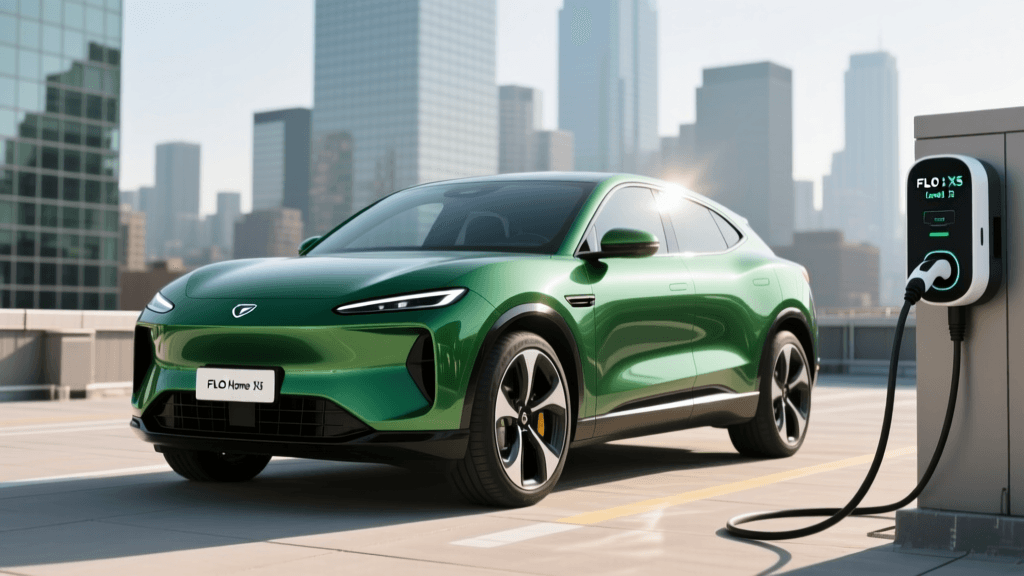
As electric vehicle adoption accelerates across North America, the conversation around home charging is shifting from mere convenience to grid resilience and extreme weather durability. According to the Edison Electric Institute, millions of EVs are now on US roads, fundamentally altering residential energy consumption patterns. For Canadian and US homeowners, this means the Level 2 charger you install today must be capable of handling the grid demands and climate realities of tomorrow. Enter the FLO Home X5, a Level 2 EV charger that has built a formidable reputation in the Great White North and is increasingly capturing the attention of discerning US buyers. In this comprehensive review, we analyze the FLO Home X5 through the lens of future industry trends, evaluating its hardware longevity, smart-grid readiness, and overall value proposition in a rapidly evolving market.
Hardware and Build: Engineered for Climate Extremes
One of the most pressing future trends in North American infrastructure is the need for climate resilience. With polar vortexes plunging temperatures in Canada and the northern US, and unprecedented heatwaves scorching the Southwest, outdoor electronics face immense stress. The FLO Home X5 addresses this with an uncompromising, heavy-duty aluminum enclosure. Unlike the brittle plastic casings found on many budget-friendly alternatives, the X5’s metallic shell dissipates heat efficiently and resists UV degradation, physical impacts, and vandalism.
More importantly, the X5 is rated to operate flawlessly in ambient temperatures ranging from -40°C to 50°C (-40°F to 122°F). As the Alternative Fuels Data Center notes, environmental hardening is critical for outdoor Electric Vehicle Supply Equipment (EVSE). Furthermore, FLO utilizes a proprietary cold-weather cable that remains remarkably flexible even in sub-zero conditions. Anyone who has wrestled with a stiff, frozen charging cable in January will recognize this as a massive quality-of-life improvement that future-proofs your daily charging routine against increasingly volatile winter weather.
Technical Specifications and Performance Matrix
Before diving into smart features, it is essential to understand the raw capabilities of the FLO Home X5. Below is a detailed breakdown of its core specifications tailored for the North American residential market.
| Feature | FLO Home X5 Specification | Future-Proofing Context |
|---|---|---|
| Max Amperage | 30 Amps | Ideal for older homes with 100A panels; prevents costly electrical upgrades. |
| Power Output | 7.2 kW (at 240V) | Replenishes ~25-30 miles of range per hour; sufficient for 95% of daily driving. |
| Cable Length | 25 Feet | Accommodates varying driveway layouts and future garage reconfigurations. |
| Connector Type | SAE J1772 | Universal standard; easily adapts to NACS via passive adapters for new EVs. |
| Enclosure | Aluminum Alloy | Superior thermal management and physical protection compared to plastic. |
| Operating Temp | -40°C to 50°C | Guarantees reliability during extreme North American climate events. |
| Warranty | 5 Years | Outpaces the industry standard of 2-3 years, reflecting build confidence. |
Smart Grid Integration and Demand Response
The future of residential EV charging is inextricably linked to the smart grid. Utilities are increasingly implementing Time-of-Use (TOU) rates and demanding load-balancing to prevent neighborhood transformers from overloading during peak evening hours. The FLO Home X5 connects via Wi-Fi to the FLO app, enabling sophisticated scheduling and energy tracking. However, its true future-proofing lies in its compatibility with utility demand response programs.
Through FLO’s smart charging ecosystem, the X5 can participate in Auto-Demand Response (Auto-DR) events. When the local grid is strained, the utility can signal the charger to temporarily pause or throttle charging, earning the homeowner rebates or credits on their electricity bill. While 48-amp chargers are popular, they often require expensive 60-amp dedicated circuits. The X5’s 30-amp draw is highly strategic for the future: it allows for easier integration with home energy management systems (HEMS) and solar setups without requiring a main panel upgrade, a crucial consideration as homes simultaneously adopt heat pumps and EVs.
The NACS Transition: J1772 in a Tesla-Dominated Future
With major automakers like Ford, GM, and Rivian adopting the North American Charging Standard (NACS) for their vehicles starting in 2025, many buyers wonder if purchasing a J1772 charger like the FLO Home X5 is a mistake. From an industry outlook perspective, it is not. The J1772 standard remains deeply embedded in North American infrastructure, and the transition to NACS at home is easily bridged by a simple, inexpensive, and passive J1772-to-NACS adapter.
Because the FLO Home X5 delivers a robust 7.2 kW of continuous power, it will comfortably charge any future NACS-equipped vehicle overnight. Furthermore, FLO’s J1772 connector is renowned for its ruggedness, featuring a heavy-duty strain relief and silver-plated pins that resist corrosion. Investing in a high-quality J1772 unit today, paired with an adapter for your future Tesla or Ford F-150 Lightning, is a highly pragmatic and cost-effective strategy that avoids the premium pricing of early-generation native NACS home wall connectors.
Installation, Economics, and Regional Incentives
Installation economics vary significantly between the US and Canada, but the FLO Home X5 is positioned to capitalize on regional incentives. In the United States, the Alternative Fuel Vehicle Refueling Property Credit (30C) can cover up to 30% of the hardware and installation costs (up to $1,000) for homeowners in eligible census tracts. The US Department of Energy strongly recommends utilizing certified electricians to assess home panel capacity before installation, a step where the X5’s 30-amp requirement often saves homeowners thousands in panel upgrade fees.
In Canada, the FLO brand is a domestic powerhouse. While the federal iZEV program focuses on vehicle purchases, provincial programs like Quebec’s Roulez Vert and British Columbia’s CleanBC frequently offer substantial rebates for Level 2 home charging stations, often covering a significant percentage of the X5’s purchase price. Because FLO is headquartered in Quebec, Canadian buyers also benefit from localized customer support, faster warranty fulfillment, and seamless integration with Canadian utility networks like Hydro-Québec’s smart charging initiatives.
Final Verdict: A Pragmatic Pillar for the Future
The FLO Home X5 is not the highest-amperage charger on the market, nor does it boast the flashy touchscreens of some tech-forward competitors. However, when viewed through the lens of future trends and industry outlook, its value proposition becomes exceptionally clear. It is a masterclass in pragmatic engineering. The aluminum enclosure and extreme temperature ratings ensure it will survive the increasingly erratic North American climate, while its 30-amp footprint makes it a friendly companion for aging electrical panels and future solar integrations.
For homeowners in the US and Canada who prioritize longevity, grid harmony, and extreme weather reliability over raw, unbridled amperage, the FLO Home X5 remains a top-tier investment. It is a charger built not just for the EV you drive today, but for the environmental and electrical realities of the decade to come.