Quick Verdict: The BMW i7 Is a Full-Size Statement
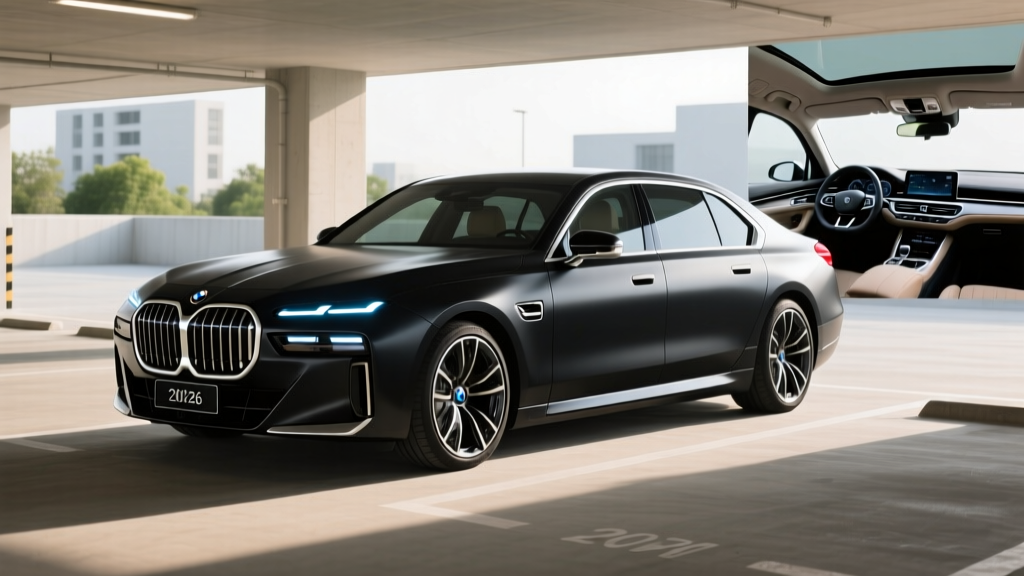
The 2026 BMW i7 is the brand's electric flagship sedan — a 205.6-inch-long, 5,910-pound luxury barge built on the same CLAR platform as the 7 Series. If you're searching for the BMW i7 length because you're measuring your garage or comparing it against the Mercedes EQS or Tesla Model S, here's the headline: at 205.6 inches (17.13 feet), the i7 is longer than both, and its 126.6-inch wheelbase delivers genuine limousine-class rear legroom.
But size is only part of the equation. The i7 pairs that footprint with a 105.7 kWh battery, up to 318 miles of EPA-rated range, and 200 kW DC fast-charging capability. It's a serious long-distance cruiser — not a track toy. Below, we break down every spec that matters to a real buyer.
Dimensions: BMW i7 Length, Width, and Interior Space
The i7's dimensions define its character. This is a car designed to be driven and chauffeured in, and the numbers reflect that dual purpose.
| Measurement | Value |
|---|---|
| Overall Length | 205.6 inches (17.13 ft) |
| Wheelbase | 126.6 inches |
| Width (excl. mirrors) | 76.8 inches |
| Height | 60.3 inches |
| Curb Weight (xDrive50) | 5,910 lbs |
| Front Headroom | 39.8 inches |
| Rear Headroom | 38.2 inches |
| Rear Legroom | 42.8 inches |
| Trunk Volume | 17.7 cu ft |
For context, the BMW i7 length of 205.6 inches exceeds the Mercedes EQS sedan (205.4 in) and significantly overshoots the Tesla Model S (196.0 in). That extra length translates directly to the rear seat, where 42.8 inches of legroom comfortably accommodates adults on long trips. The 17.7-cubic-foot trunk is generous for a luxury sedan, though the i7 has no frunk — BMW uses that space for HVAC and power electronics.
Garage consideration: You'll want at least 22 feet of depth and a 9-foot-wide door opening. Standard single-car garages may be tight.
Range, Battery, and Efficiency
EPA Estimated: 318 miles (xDrive50) / 291 miles (M70)
Real-World Expectation: ~260–280 miles highway (70–80 mph); ~220–250 miles in sub-30°F cold weather; up to 310+ miles in mild city driving with regen.
The 2026 BMW i7 xDrive50 uses a 105.7 kWh battery pack (net usable capacity) built with NMC (nickel manganese cobalt) cells. BMW's fifth-generation eDrive system integrates the battery into the floor structure, keeping the center of gravity low despite the vehicle's height.
The EPA rates the xDrive50 at 82 MPGe combined, which translates to roughly 41 kWh per 100 miles. That's less efficient than lighter sedans — the Model S Long Range achieves 124 MPGe — but it's competitive for a 5,900-pound luxury flagship. The M70 variant, with its larger motors and stickier tires, drops to 73 MPGe combined (about 46 kWh/100 mi) and 291 miles of EPA range.
Why the real-world gap? The i7's aerodynamic drag and weight hit hard at sustained highway speeds. On a flat 70 mph cruise in 65°F weather, expect roughly 85–90% of the EPA sticker. Drop to 20°F with cabin heat running (even with the standard heat pump), and you're looking at 70–75% — so plan charging stops around the 220-mile mark in deep winter. According to fueleconomy.gov, the i7's combined efficiency trails the segment average, but owners who charge at home nightly will rarely notice.
Charging Speed: DC Fast, Level 2, and Connector Details
BMW equips the 2026 i7 with a Combined Charging System (CCS1) port. While BMW has announced future NACS adoption, the 2026 model year uses CCS1 with a Tesla Supercharger adapter included in the trunk kit.
| Level | Power / Voltage | Speed | Notes |
|---|---|---|---|
| Level 1 (120V) | 1.4 kW | ~3 mi/hr | Emergency only; full charge in ~75 hours |
| Level 2 (240V, 48A) | 11.5 kW | ~28 mi/hr | Full charge in ~11 hours; onboard charger max 11 kW |
| DC Fast Charge | Up to 195 kW (peak) | 10–80% in ~34 min | Sustained ~150 kW to 50%; tapers sharply above 80% |
Charging curve reality: BMW's peak 195 kW figure is achievable at low state-of-charge (10–25%) on a 350 kW-capable station. However, the curve begins tapering noticeably around 50% SoC, and above 80%, charge rate drops below 50 kW. This is standard behavior for NMC packs with active thermal management, but it means the advertised "34-minute 10–80%" time assumes ideal conditions — a preconditioned battery and a high-power charger. If you arrive at a charger without preconditioning (which the i7 does automatically when you navigate to a DC station), expect 40–45 minutes instead.
For home charging, the i7's 11 kW onboard charger means a standard 48-amp Level 2 wallbox (like a ChargePoint Home Flex or BMW Wallbox) adds about 28 miles of range per hour. A full overnight charge from 10% takes roughly 11 hours. Home charging on a time-of-use plan at $0.13/kWh costs about $13.74 for a full pack — roughly $0.04 per mile, compared to $0.14–0.18/mile in a gasoline 7 Series.
Performance: Powertrain, Acceleration, and Driving Dynamics
| Trim | Drivetrain | Horsepower | Torque (lb-ft) | 0–60 mph | Top Speed |
|---|---|---|---|---|---|
| xDrive50 | Dual-motor AWD | 536 hp | 549 | 4.5 sec | 149 mph |
| M70 | Dual-motor AWD | 650 hp | 785 | 3.5 sec | 155 mph |
Both trims use BMW's fifth-generation eDrive with one motor per axle. The xDrive50's 536 hp and 4.5-second 0–60 time are more than adequate for a car this size — it pulls with the effortless, linear torque delivery that defines large electric sedans. The M70 adds a more powerful rear motor and M-tuned suspension, dropping the 0–60 to 3.5 seconds, but the trade-off is 27 fewer miles of EPA range and a firmer ride.
Standard rear-axle air suspension and integral active steering (rear-wheel steering up to 3 degrees) make the i7 surprisingly maneuverable despite its 205.6-inch length. The turning circle is 41.0 feet — tight enough for most parking structures, though you'll feel the weight in quick lane changes.
Pricing, Trims, and Federal Tax Credit Eligibility
| Trim | Base MSRP | As-Tested (typical) | §30D Federal Credit |
|---|---|---|---|
| xDrive50 | $106,675 | $118,000–$130,000 | Not eligible (MSRP exceeds $55,000 sedan cap) |
| M70 | $147,175 | $155,000–$170,000 | Not eligible (MSRP exceeds $55,000 sedan cap) |
Tax credit reality: Under IRS §30D rules, new EV sedans must have an MSRP at or below $55,000 to qualify for the up-to-$7,500 federal tax credit. The i7 starts at $106,675, so it does not qualify for the new-vehicle federal credit. Buyer income caps ($150K single / $300K joint) and battery critical-mineral sourcing requirements are moot here — the MSRP cap alone disqualifies it.
However, i7 buyers may benefit from:
- State incentives: Some states offer rebates or HOV-lane access regardless of MSRP (check your state's energy office).
- Lease loophole: If BMW Financial classifies the i7 lease under §45W (commercial clean vehicle credit), the lessor may pass through a $7,500 lease credit as a capitalized-cost reduction. This has been common for luxury BMW EVs — confirm with your dealer.
- Used i7 credit: A pre-owned i7 purchased for under $25,000 (unlikely in 2026, but eventually) could qualify for the up-to-$4,000 used-EV credit under §25E.
Technology, Driver Assistance, and Interior
The i7's cabin centers on BMW's Curved Display — a 12.3-inch instrument cluster merged with a 14.9-inch touchscreen running iDrive 8.5. Standard features include:
- Theater Screen: An available 31.3-inch 8K display drops from the ceiling for rear passengers, with Amazon Fire TV built in — a genuine differentiator vs. competitors.
- Driving Assistant Professional: Includes adaptive cruise with stop-and-go, lane-keeping, evasive steering assist, and Highway Assistant (hands-off driving up to 85 mph on divided highways, SAE Level 2 — eyes-on supervision required at all times).
- Parking Assistant Professional: Remote parking via smartphone, 360-degree cameras, and automatic parking in spaces as tight as 27.5 inches wider than the car (a useful feature given the i7's 76.8-inch width).
- Executive Lounge Seating: Available rear outboard seats with 42.5-degree recline, massage, ventilation, and a center console touchscreen.
Notable drawbacks: The iDrive 8.5 interface relies heavily on touchscreen controls — climate settings, seat adjustments, and even the passenger vent controls are buried in menus. The crystal Interaction Bar looks stunning but is a fingerprint magnet. And at nearly 6,000 pounds, tire wear is a real cost factor — expect replacement every 25,000–30,000 miles at $350–$500 per corner for the 22-inch Pirellis.
Warranty and Ownership Costs
BMW backs the 2026 i7 with:
- Basic warranty: 4 years / 50,000 miles
- Battery & powertrain: 8 years / 100,000 miles (covers capacity loss below 70% of original)
- Complimentary maintenance: 3 years / 36,000 miles
- Roadside assistance: 4 years / unlimited miles
The battery warranty's 70% retention threshold is industry-standard but worth noting: BMW will replace or repair modules if the 105.7 kWh pack drops below ~74 kWh of usable capacity within 8 years or 100,000 miles. Real-world NMC degradation data from earlier BMW iX owners suggests roughly 5–8% loss over the first 100,000 miles under normal use — well within the warranty buffer.
Insurance: Expect premiums 25–40% higher than a gasoline 7 Series due to repair costs, sensor density, and the vehicle's value. Shop quotes before purchasing.
Pros, Cons, and Who Should Buy
- Class-leading rear-seat space and Theater Screen
- 318-mile EPA range (xDrive50) is solid for the segment
- Whisper-quiet cabin; excellent ride quality with air suspension
- 195 kW DC charging with preconditioning
- Highway Assistant is one of the best Level 2 systems available
- No federal tax credit (MSRP far above $55K sedan cap)
- 41 kWh/100 mi is thirsty — charging costs add up on road trips
- iDrive 8.5 touchscreen dependency frustrates some users
- No frunk; 17.7 cu ft trunk is good but not class-leading
- 22-inch tire replacement costs are significant
Best for: Luxury sedan buyers who want a full-size EV with genuine rear-seat comfort, daily commute ranges under 100 miles with home charging, and the occasional 300-mile road trip. The i7 works best for owners with a garage for Level 2 charging and who value back-seat luxury over outright efficiency.
Consider instead: The Mercedes EQS 580 (390 mi EPA, more efficient, similar price), the Lucid Air Grand Touring (512 mi EPA, smaller dealer network), or the Tesla Model S Long Range (402 mi EPA, less rear-seat luxury but far more range).
Frequently Asked Questions
What is the real-world range of the BMW i7?
Expect 260–280 miles on the highway at 70–80 mph in moderate temperatures, and up to 310 miles in city driving with frequent regenerative braking. In sub-30°F cold weather, range drops to approximately 220–250 miles. The EPA rates the xDrive50 at 318 miles.
How fast does the BMW i7 charge?
On a DC fast charger, the i7 peaks at 195 kW, achieving a 10–80% charge in about 34 minutes under ideal conditions (preconditioned battery, 350 kW station). At home on a 48-amp Level 2 charger (11 kW), it gains about 28 miles per hour and fully charges in roughly 11 hours.
Does the BMW i7 qualify for the federal EV tax credit?
No. Under current IRS §30D rules, new EV sedans must have an MSRP at or below $55,000 to qualify. The i7 starts at $106,675, so it exceeds the cap. A lease may unlock a $7,500 pass-through credit via §45W — confirm with your dealer and tax professional.
How does the BMW i7 length compare to competitors?
At 205.6 inches, the BMW i7 is among the longest electric sedans available. It's 0.2 inches longer than the Mercedes EQS sedan (205.4 in) and 9.6 inches longer than the Tesla Model S (196.0 in). That length translates to a 126.6-inch wheelbase and 42.8 inches of rear legroom.
Is the BMW i7 worth buying vs. key competitors?
The i7 wins on rear-seat luxury (Theater Screen, Executive Lounge seating), build quality, and Level 2 driver-assist refinement. It loses to the EQS on efficiency and range, to the Lucid Air on pure range, and to the Model S on value. If back-seat experience and BMW driving dynamics matter most, the i7 earns its price. If maximum range and efficiency are priorities, look elsewhere.
What is the battery chemistry and will it last?
The i7 uses NMC (nickel manganese cobalt) cells with a 105.7 kWh usable capacity. BMW warranties the battery for 8 years or 100,000 miles against capacity loss below 70%. Based on NMC degradation trends, expect 92–95% state of health at 100,000 miles with normal charging habits (avoiding frequent 100% charges and deep discharges).