Quick Verdict: The Performance EV Benchmark Gets Sharper
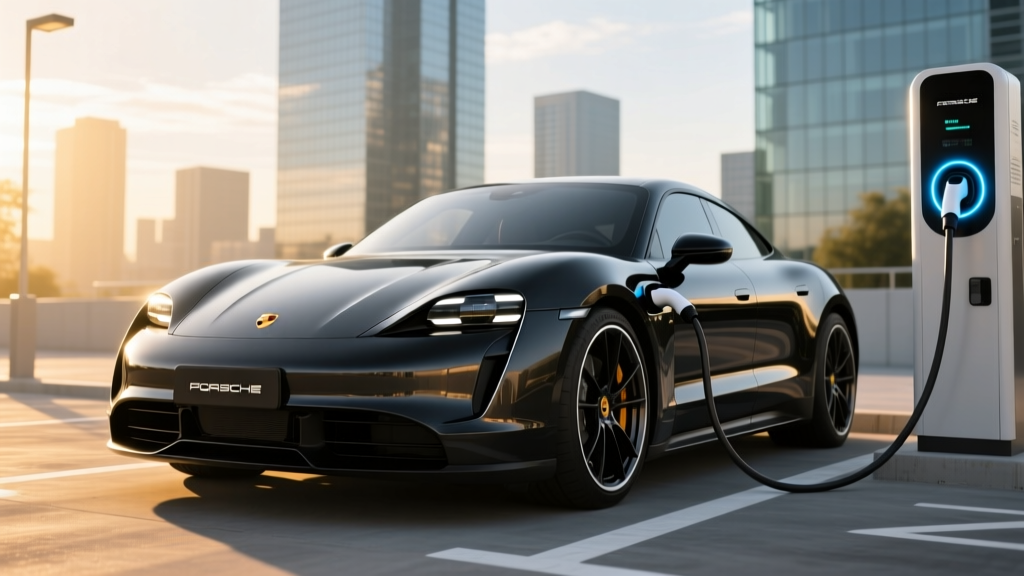
The 2026 Porsche Taycan Turbo S remains the definitive answer to the question: can a battery-electric sedan deliver supercar acceleration while functioning as a legitimate daily driver? With its updated 105 kWh Performance Battery Plus, revised 800-volt architecture supporting up to 320 kW of DC fast charging, and a staggering 1,019 horsepower on overboost, the Turbo S variant sits at the apex of Porsche's electric lineup. But flagship performance comes with flagship compromises — in range, in price, and in federal tax credit eligibility. This review breaks down every number that matters before you sign a $200K+ purchase order.
2026 Porsche Taycan Turbo S Core Specifications
| Attribute | Value |
|---|---|
| EPA Estimated Range | 292 miles (with Performance Battery Plus) |
| Battery (Usable / Gross) | 97.0 kWh usable / 105 kWh gross, NMC chemistry |
| Drivetrain | Dual-motor AWD with 2-speed rear transmission |
| Horsepower (Overboost w/ Launch Control) | 1,019 hp |
| Torque | 828 lb-ft |
| 0–60 mph | 2.2 seconds (manufacturer w/ rollout) |
| Top Speed | 162 mph |
| Max DC Fast Charge Rate | 320 kW (800V architecture) |
| 10–80% DC Fast Charge Time | ~18 minutes (optimal conditions) |
| Level 2 AC Charge Rate | 11 kW (onboard charger) |
| Efficiency (Combined) | 78 MPGe / 43 kWh/100 mi |
| Cargo (Rear Trunk + Frunk) | 14.3 cu ft rear + 2.9 cu ft frunk (17.2 cu ft total) |
| Base MSRP | $197,400 (Turbo S sedan) |
| Federal §30D Tax Credit | Not eligible (exceeds MSRP cap) |
| Battery / Powertrain Warranty | 8 years / 100,000 miles |
Range and Efficiency: What the EPA Sticker Doesn't Tell You
Porsche quotes an EPA-estimated 292 miles for the 2026 Taycan Turbo S equipped with the Performance Battery Plus. That figure represents a meaningful improvement over the pre-refresh generation, driven by the larger 105 kWh pack (up from 93.4 kWh gross), improved thermal management, and a more efficient rear motor. However, Porsche's EPA testing methodology has historically under-promised — the Taycan family consistently beats its stickers in independent testing.
EPA Estimate: 292 miles
Mixed driving (55/45 city/highway): ~270–310 miles (Porsche's EPA cycles tend to be conservative; expect to meet or slightly beat the sticker in mild conditions)
Sustained highway (75+ mph): ~235–260 miles
Cold weather (below 32°F, cabin heat): ~200–230 miles (NMC chemistry loses 20–30% at freezing temps)
Track / aggressive driving: ~120–150 miles (the 1,019 hp will drain the pack rapidly under sustained load)
Efficiency clocks in at roughly 43 kWh per 100 miles combined, which is thirsty by EV standards — but expected for a 5,100-pound sedan making over 1,000 horsepower. For comparison, the base rear-wheel-drive Taycan achieves around 85 MPGe combined. The Turbo S's efficiency penalty is the direct cost of dual motors, all-wheel drive, and the thermal overhead needed to sustain launch-control performance.
Charging Speed: 800-Volt Architecture Put to Work
The Taycan's 800-volt electrical architecture remains one of its most consequential engineering decisions. While many competitors operate at 400V, doubling the voltage allows Porsche to push higher charge rates with lower current, reducing cable weight and heat buildup. For 2026, the Turbo S supports a peak DC fast-charge rate of 320 kW when connected to a compatible CCS1 or NACS charger (via adapter, as Porsche has committed to the NACS standard for North American models).
| Charging Level | Power | Time / Rate |
|---|---|---|
| Level 1 (120V household) | ~1.4 kW | ~3–4 miles per hour of charging |
| Level 2 (240V home/public) | 11 kW (max onboard) | ~28–30 miles per hour; full charge in ~9 hours |
| DC Fast Charge (peak) | 320 kW | 10–80% in ~18 min (optimal battery temp) |
| DC Fast Charge (typical 150 kW station) | ~150 kW sustained | 10–80% in ~30–35 min |
A critical nuance: the 320 kW peak rate requires the battery to be preconditioned (navigating to a compatible charger in the PCM infotainment system triggers automatic thermal preconditioning) and ambient/battery temperatures must be favorable. In practice, you'll see 320 kW only briefly in the 10–30% state-of-charge window before the charge curve tapers. From roughly 50% onward, expect rates to drop to 200 kW and below, with a significant taper above 80%. This is normal for NMC chemistry — charging above 80% is slow by design to protect long-term cell health.
For home charging, the 11 kW onboard AC charger means a full overnight replenishment on a 48-amp Level 2 circuit (such as a ChargePoint Home Flex or Porsche-recommended Mobile Charger Connect on a NEMA 14-50 outlet). Budget roughly 9 hours from near-empty to 100%. Most owners will plug in nightly and wake up to a full battery, making the DC fast-charge rate relevant primarily for road trips.
Performance: 1,019 Horsepower and the 2-Second Barrier
The numbers are almost absurd: 1,019 horsepower and 828 lb-ft of torque with Launch Control engaged, delivered through a dual-motor all-wheel-drive system with Porsche's signature 2-speed transmission on the rear axle. The 0–60 mph time of 2.2 seconds (with the standard 1-foot rollout subtraction) places the Taycan Turbo S in hypercar territory. In Car and Driver and MotorTrend independent testing, the Turbo S has consistently clocked 2.2–2.4 second runs on prepared surfaces.
But straight-line acceleration is only part of the story. The Taycan Turbo S features rear-axle steering (up to 2.8 degrees), Porsche Dynamic Chassis Control (PDCC) active anti-roll bars, and Porsche Torque Vectoring Plus. The result is a 5,100-pound sedan that attacks corners with a flatness and responsiveness that defies its mass. The brake energy recuperation system delivers up to 290 kW of regen, enabling genuine one-pedal driving in most scenarios while also reducing wear on the mechanical brakes.
Drivetrain note: the Turbo S uses permanently excited synchronous motors (PSM) front and rear. The 2-speed rear transmission — first gear for explosive launches, second gear for high-speed efficiency — is unique in the EV segment and a key reason the Taycan maintains composure at autobahn speeds where single-gear competitors begin to breathe hard.
Pricing, Tax Credits, and the $200K Reality
The 2026 Porsche Taycan Turbo S sedan starts at $197,400 including the $1,650 destination charge. The Turbo S Cross Turismo (wagon body style) starts at $202,400. By the time you add common options — Sport Chrono package, Porsche Electric Sport Sound, rear-axle steering (standard on Turbo S but worth confirming), premium leather interior, and 21-inch Mission E Design wheels — as-tested prices routinely land between $210,000 and $225,000.
The Taycan Turbo S does not qualify for the $7,500 federal EV tax credit under IRS §30D. The reason: the credit applies only to sedans with an MSRP at or below $55,000 (or SUVs/trucks at or below $80,000). At $197,400 base, the Turbo S exceeds this cap by over $140,000. Additionally, buyer income caps ($150K single / $300K joint for modified AGI) would exclude many buyers even if the MSRP qualified. Always verify current-year rules at IRS.gov §30D. Some states offer their own incentives — check your local DMV or energy office — but these rarely offset a vehicle at this price point meaningfully.
| Trim | Base MSRP | §30D Eligible? |
|---|---|---|
| Taycan (base RWD) | $99,400 | No (exceeds $55K sedan cap) |
| Taycan 4S | $127,400 | No |
| Taycan GTS | $151,500 | No |
| Taycan Turbo | $175,600 | No |
| Taycan Turbo S | $197,400 | No |
| Taycan Turbo S Cross Turismo | $202,400 | No |
Interior, Cargo, and Daily Livability
The Turbo S cabin is a study in digital minimalism done right — or at least done Porsche's way. The curved 12.6-inch driver display, 10.9-inch central PCM touchscreen, and optional 10.9-inch passenger display sit behind a flat, buttonless dashboard. Physical controls are scarce; climate, seat, and drive-mode adjustments all route through the touchscreen or haptic steering-wheel controls. This is polarizing — some owners love the clean aesthetic, others miss physical knobs for HVAC.
Practical space is the Turbo S's most honest limitation:
- Rear trunk: 14.3 cu ft (sedan) — adequate for two carry-on bags and a garment bag, but shallow due to the rear diffuser and motor packaging
- Front trunk (frunk): 2.9 cu ft — fits a charging cable bag and a small soft duffel, not much more
- Total cargo: 17.2 cu ft — significantly less than a Tesla Model S (28 cu ft behind rear seats) or even the Taycan Cross Turismo (15.7 cu ft rear, expandable to 42.8 cu ft with seats folded)
- Rear legroom: 32.7 inches — tight for adults on longer trips; the Taycan is a grand tourer, not a limousine
- Seating: Standard 18-way Adaptive Sport Seats Plus with memory; 4-seat configuration standard, optional 4+1 (narrow middle seat)
Infotainment highlights include wireless Apple CarPlay and Android Auto, native navigation with real-time charger routing and preconditioning, over-the-air (OTA) updates, and the Porsche Connect app for remote climate control, charge scheduling, and vehicle status. The optional Burmester 3D surround sound system (21 speakers, 1,455 watts) is among the best in any production car.
Driver Assistance and Safety Technology
Porsche equips the Turbo S with a comprehensive ADAS suite, though it stops firmly at SAE Level 2 — meaning the driver must remain fully engaged and responsible at all times. This is not self-driving technology.
Porsche InnoDrive with Active Lane Keeping provides adaptive cruise control, lane centering, and predictive speed adjustment based on navigation data (upcoming curves, speed limits, roundabouts). The driver must keep hands on the wheel and eyes on the road. Porsche does not currently offer a hands-free highway driving system comparable to GM Super Cruise or Ford BlueCruise.
Standard safety features include forward collision warning with automatic emergency braking, lane departure warning with lane keep assist, blind-spot monitoring, rear cross-traffic alert, surround-view cameras, and ParkAssist with parking sensors front and rear. Night Vision Assist with pedestrian detection is optional. The Taycan has earned strong crash-test results from Euro NCAP (5 stars); NHTSA and IIHS ratings for the 2026 U.S.-spec model should be confirmed at NHTSA.gov and IIHS.org as testing completes.
Battery Longevity, Warranty, and Ownership Costs
Porsche backs the Taycan's NMC lithium-ion battery with an 8-year / 100,000-mile warranty that guarantees a minimum of 70% state-of-health (capacity retention) over that period. This is industry-standard and matches competitors like Tesla, Lucid, and BMW. The general vehicle limited warranty covers 4 years / 50,000 miles, with 4 years of Porsche Roadside Assistance included.
Long-term degradation data from earlier Taycan model years (2020–2024) suggests the 800V thermal management system is highly effective at preserving battery health. Fleet data from high-mileage Taycan owners and independent analyses indicate typical degradation of 5–8% over the first 60,000 miles — well within warranty thresholds. The NMC chemistry in the Turbo S prioritizes energy density and charge-rate capability over the extreme cycle life of LFP (lithium iron phosphate) packs found in some lower-cost EVs, but Porsche's aggressive thermal conditioning — liquid cooling/heating with dedicated battery circuits — mitigates the typical NMC aging concerns.
Ownership cost realities to budget for:
- Insurance: Expect $3,500–$5,500/year depending on location, driving record, and coverage. High-performance EVs carry elevated premiums due to repair costs and vehicle value.
- Tires: The Turbo S wears through high-performance rubber (standard Michelin Pilot Sport EV or Pirelli P Zero Elect) every 15,000–25,000 miles under normal driving. A set of four 21-inch tires runs $2,000–$3,000.
- Electricity cost: At 43 kWh/100 mi and a national average of $0.17/kWh, home charging costs roughly $7.31 per 100 miles. DC fast charging at Electrify America or similar networks ($0.35–$0.50/kWh) raises that to $15–$22 per 100 miles.
- Maintenance: Minimal compared to ICE — no oil changes, no transmission fluid (the 2-speed rear unit is sealed), brake pad life extended by regen. Budget $500–$800/year for cabin air filters, wiper fluid, brake fluid checks, and tire rotation.
- Depreciation: Luxury EVs in the $200K range historically depreciate 40–55% over 5 years. The Turbo S will likely follow this pattern, meaning a potential $80K–$110K loss over 60 months.
Competitive Landscape: Turbo S vs. the Field
At nearly $200K, the Taycan Turbo S competes in a small but fierce arena:
- Tesla Model S Plaid ($89,990): Faster to 60 (1.99 sec claimed), more range (396 mi EPA), vastly more cargo space, and less than half the price. But the Plaid can't match the Porsche's build quality, chassis refinement, or steering feel. The interior gap is substantial.
- Lucid Air Sapphire ($249,000): 1,234 hp, 427-mi EPA range, and a luxury interior that rivals Porsche. The Sapphire is rarer, more expensive, and offers superior range — but Porsche's dealer network, service infrastructure, and track-proven durability give the Taycan an ownership practicality edge.
- BMW i7 M70 ($168,500): Larger, more comfortable, more cargo room, and significantly cheaper. The i7 is a luxury cruiser first; the Taycan is a sports car that happens to have four doors. Different buyer, different mission.
- Mercedes-AMG EQS 53 ($149,950): More range, more rear-seat space, and a lower price. But the EQS 53 is heavier, less engaging to drive, and its MBUX Hyperscreen interior is a love-it-or-hate-it proposition.
Choose the Taycan Turbo S if: You prioritize driving dynamics, build quality, and brand prestige above all else. You want a daily-drivable supercar sedan with legitimate track capability. You have reliable home charging and don't need 300+ miles of range. You value Porsche's dealer/service network for a $200K vehicle.
Look elsewhere if: Maximum range is your priority (Lucid Air, Tesla Model S). You need practical cargo/family space (BMW i7, Lucid Air). You want the best performance-per-dollar (Tesla Model S Plaid). You need federal tax credit eligibility (no EV near this price qualifies).
Pros and Cons at a Glance
- 2.2-sec 0–60 with repeatable launch control performance
- 320 kW DC fast charging among the fastest in production
- Exceptional chassis dynamics — sports car handling in a sedan
- 800V architecture future-proofs charging compatibility
- Build quality, materials, and fit/finish are benchmark-level
- Conservative EPA ratings often beaten in real-world driving
- Strong OTA update cadence and Porsche Connect ecosystem
- 292-mi EPA range trails key competitors by 50–100+ miles
- $197K+ base price; as-tested easily exceeds $210K
- No federal tax credit eligibility (§30D MSRP cap)
- Cargo space (17.2 cu ft total) is tight for the class
- Rear seat legroom (32.7 in) is snug for tall adults
- Touchscreen-heavy interior lacks physical climate controls
- No hands-free Level 2+ highway driving (unlike Super Cruise/BlueCruise)
- High tire wear and insurance costs add to ownership burden
Frequently Asked Questions
What is the real-world range of the 2026 Porsche Taycan Turbo S?
The EPA estimates 292 miles, but Porsche's testing methodology is historically conservative. In mixed driving at moderate temperatures, expect 270–310 miles. Sustained highway driving at 75+ mph drops this to roughly 235–260 miles, and cold-weather driving (below 32°F) can reduce range to 200–230 miles due to NMC battery chemistry characteristics and cabin heating demand.
How fast does the Taycan Turbo S charge at home and on the road?
On a Level 2 home charger (240V, 48A), the 11 kW onboard charger adds roughly 28–30 miles per hour, completing a full charge in about 9 hours. On a DC fast charger capable of 320 kW, the 10–80% charge takes approximately 18 minutes under optimal conditions (preconditioned battery, moderate ambient temperature). On a typical 150 kW public charger, expect 30–35 minutes for the same 10–80% window.
How much does the 2026 Taycan Turbo S cost after tax credits?
The base MSRP is $197,400, and the Taycan Turbo S does not qualify for the $7,500 federal §30D tax credit because it far exceeds the $55,000 MSRP cap for sedans. The effective purchase price remains at or above $197,400 before state/local incentives, dealer fees, and options. As-tested prices with common options typically reach $210,000–$225,000.
Does the Taycan Turbo S qualify for the federal EV tax credit?
No. Under current IRS §30D rules, the federal clean vehicle credit applies only to new EVs with an MSRP at or below $55,000 for sedans (or $80,000 for SUVs, vans, and trucks). The Turbo S at $197,400 is ineligible regardless of buyer income or battery sourcing. Verify current rules at IRS.gov as regulations may evolve.
Is the Taycan Turbo S worth buying over a Tesla Model S Plaid?
It depends on your priorities. The Model S Plaid is faster to 60, offers nearly 400 miles of EPA range, has more cargo space, and costs less than half as much. The Taycan Turbo S delivers substantially better build quality, steering feel, chassis balance, and a more premium cabin. If driving engagement and Porsche ownership experience matter more than spec-sheet dominance and value, the Turbo S justifies its premium. If you want maximum performance per dollar, the Plaid wins on paper.
What is the battery warranty on the 2026 Taycan Turbo S?
Porsche provides an 8-year / 100,000-mile battery warranty that guarantees a minimum of 70% capacity retention (state of health) over the coverage period. The general vehicle warranty is 4 years / 50,000 miles. Early-generation Taycan fleet data suggests real-world degradation of 5–8% over the first 60,000 miles, well within warranty thresholds.
Can the Taycan Turbo S use Tesla Superchargers?
For 2026, Porsche has adopted the NACS (North American Charging Standard) connector for North American models, enabling direct compatibility with Tesla's Supercharger network without an adapter. CCS1 chargers remain accessible via adapter for backward compatibility. Always confirm connector configuration with your dealer at delivery, as transition timelines can vary by production batch.