Xiaomi SU7 73.6 kWh at a Glance: Battery, Range, and Charging Architecture
The Xiaomi SU7 Standard variant ships with a 73.6 kWh (gross) lithium iron phosphate (LFP) blade battery supplied by BYD. In China's CLTC cycle, Xiaomi rates it for 700 km (~435 miles), though the more conservative WLTP estimate lands closer to 490 km (~305 miles). For US buyers considering a grey-market import or tracking the model for a potential future launch, expect real-world highway range of approximately 250–280 miles at 70 mph, with cold-weather losses of 15–25% in sub-freezing conditions — consistent with LFP chemistry behavior.
The SU7's electrical architecture supports:
- Peak DC fast charging: ~130 kW (400V architecture, not 800V like the SU7 Max/Pro)
- 10–80% DC fast charge time: approximately 28–32 minutes under optimal thermal conditions
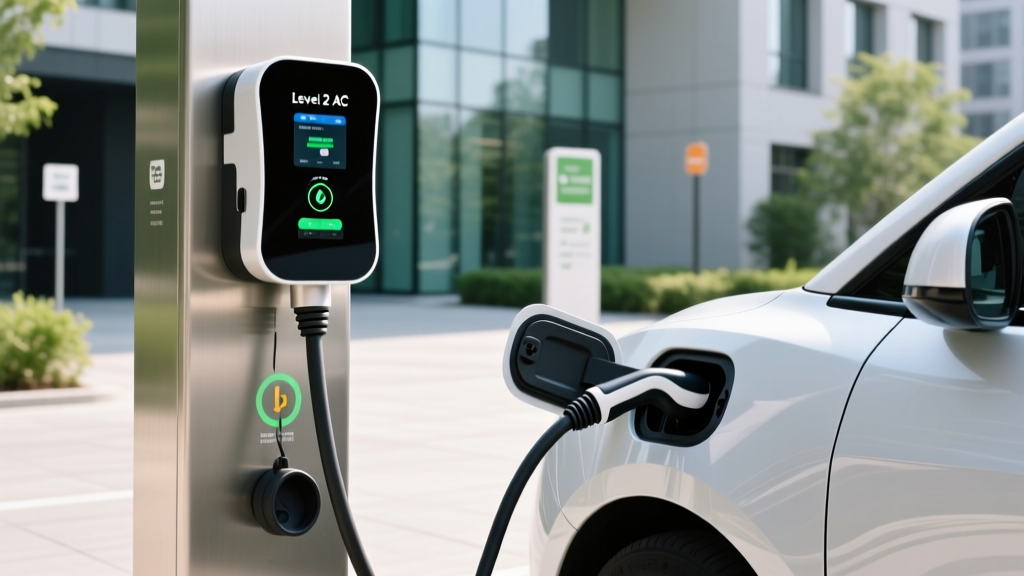
- Level 2 AC onboard charger: 7 kW (single-phase) or up to 11 kW (three-phase, market-dependent)
- Connector: GB/T standard in China; CCS2 in select export markets — no NACS variant currently offered
Charging Levels Explained: How Fast Will Each Level Add Range to the SU7?
Understanding the difference between kW (power — the rate of energy delivery, like water pressure from a hose) and kWh (energy — the total capacity of your battery, like the size of a bucket) is essential. Your 73.6 kWh battery needs 73.6 kilowatt-hours to fill from empty to full; the kW rating of a charger determines how quickly that happens.
| Charging Level | Power (kW) | Miles of Range Added per Hour | 0–100% Time (73.6 kWh) | Best Use Case |
|---|---|---|---|---|
| Level 1 (120V household) | 1.2–1.9 kW | 3–5 miles/hr | ~40–60 hours | Overnight top-up, emergencies |
| Level 2 (240V home/public) | 7–11 kW | 22–35 miles/hr | 7–10.5 hours | Daily home charging, workplace |
| DC Fast Charge | 50–130 kW (peak) | 150–300+ miles/hr (at peak) | 10–80% in ~28–32 min | Road trips, rapid top-ups |
Important charging-curve reality: The SU7's 130 kW peak rate is not sustained for the entire session. Like all EVs, the charge rate tapers significantly above 80% state of charge (SoC) to protect battery health. Expect an average rate closer to 80–95 kW across a typical 10–80% session. Charging from 80–100% on DC fast can add another 20+ minutes — plan to charge to 80% and go.
Home Level 2 Charger Installation: Electrical Requirements and Costs
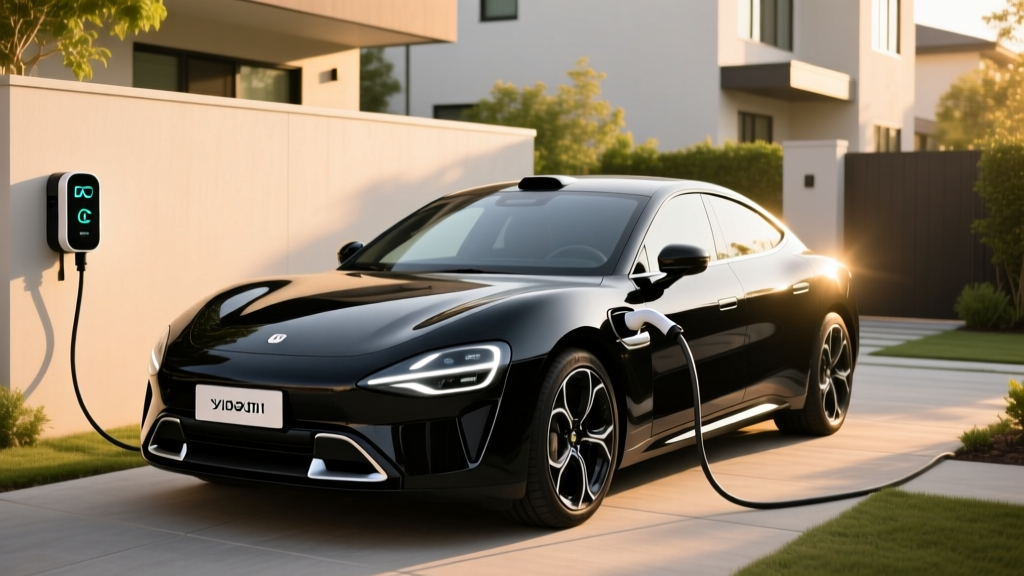
For daily ownership, a Level 2 home charger is the single most impactful upgrade. For the Xiaomi SU7's 7 kW single-phase onboard charger, a 240V / 32A circuit is the minimum practical setup; installing a 40A or 48A circuit provides headroom for future EVs or three-phase-capable models.
Electrical Panel and Circuit Requirements
- Dedicated circuit: 40A breaker minimum (for continuous 32A charging load per NEC 80% rule), 50A breaker recommended for 40A charging
- Wire gauge: 6 AWG copper (for 50A breaker) or 8 AWG (for 40A breaker)
- Panel capacity: Your main panel must have spare amperage headroom. A 200A service panel is standard in modern homes; older 100A panels may require a panel upgrade ($1,500–$3,000) before adding a 40–50A EV circuit
- GFCI protection: Required by NEC 2020+ for outdoor receptacles; most hardwired EV chargers include built-in ground-fault protection
- Permit: Most jurisdictions require an electrical permit for new 240V circuits — typically $50–$200 depending on locality
Installation Cost Breakdown
| Cost Component | Typical Range | Notes |
|---|---|---|
| Level 2 EVSE equipment (smart charger) | $350–$700 | Varies by brand, power output, cable length |
| Licensed electrician labor | $400–$1,500 | Depends on run length from panel, wall material, conduit |
| Electrical permit | $50–$200 | Required in most US jurisdictions |
| Panel upgrade (if needed) | $1,500–$3,000 | Only if existing panel lacks capacity; common in pre-1990 homes |
| Total (no panel upgrade) | $800–$2,400 | Most homeowners fall in $1,200–$1,800 range |
| Total (with panel upgrade) | $2,300–$5,400 | Get 2–3 electrician quotes; ask about load calculation |
Pro tip: Have your electrician perform a NEC Article 220 load calculation before committing to a 48A charger. If your panel is near capacity, a 32A charger (which draws 25.6A continuous) may be the safer choice without a panel upgrade.
Connector Compatibility: GB/T, CCS, and Adapter Options for the SU7
The Xiaomi SU7 is currently sold primarily in China with a GB/T connector for both AC and DC charging. This is the Chinese national standard and is incompatible with North American (NACS/CCS1) or European (CCS2/Type 2) infrastructure without an adapter.
| Connector Standard | Region | SU7 Compatibility | Adapter Available? |
|---|---|---|---|
| GB/T | China | Native (standard on all SU7 trims) | N/A — included |
| NACS (Tesla) | North America | Not compatible without adapter | GB/T-to-NACS adapters exist but are limited and not UL-listed for DC fast charging |
| CCS1 | North America (non-Tesla) | Not compatible without adapter | Limited availability; verify DC rating |
| CCS2 / Type 2 | Europe | Export-market SU7 may ship with CCS2 | Check market-specific spec sheet |
| CHAdeMO | Japan, legacy global | Not compatible | No practical adapter |
For US-based buyers: If you are importing a Xiaomi SU7 or evaluating it for future availability, the GB/T connector creates a significant infrastructure barrier. Public DC fast-charging networks in the US (Electrify America, EVgo, Tesla Superchargers) use CCS1 or NACS. Third-party GB/T adapters exist but are generally limited to AC Level 2 charging and may not support full DC fast-charge speeds. Factor this into your ownership calculus.
Cost to Charge the Xiaomi SU7: Home vs. Public vs. Gas Comparison
The 73.6 kWh battery in the SU7 Standard makes cost-per-mile calculations straightforward. Here's what charging actually costs across common scenarios, compared against a gasoline sedan averaging 30 MPG combined.
| Charging Scenario | Rate ($/kWh) | Cost for Full 73.6 kWh Charge | Cost per Mile (~305 mi range) |
|---|---|---|---|
| Home (off-peak utility rate) | $0.08–$0.13 | $5.89–$9.57 | $0.02–$0.03 |
| Home (standard residential rate) | $0.14–$0.18 | $10.30–$13.25 | $0.03–$0.04 |
| Public Level 2 (ChargePoint, etc.) | $0.20–$0.35 | $14.72–$25.76 | $0.05–$0.08 |
| DC Fast Charge (public) | $0.30–$0.55 | $22.08–$40.48 | $0.07–$0.13 |
| Gasoline sedan (30 MPG, $3.50/gal) | — | $35.58 (equiv. 10.17 gal) | $0.12 |
Bottom line: Home charging the SU7 at off-peak rates delivers fuel costs roughly 75–85% lower per mile than a 30 MPG gasoline sedan. Even DC fast charging at premium rates is competitive with or cheaper than gasoline. The economic advantage is strongest when you can charge at home overnight on a time-of-use (TOU) plan.
Recommended Level 2 Chargers for the Xiaomi SU7 (or Any 7–11 kW EV)
Since the SU7 Standard's onboard charger maxes at 7 kW on single-phase power, any quality 32A (7.7 kW) or 40A (9.6 kW) Level 2 EVSE will fully utilize its AC charging capability. Here are proven options with specific specs:
ChargePoint Home Flex
- Power output: Up to 12 kW (50A) / configurable down to 16A
- Connector: J1772 (NACS adapter available separately)
- Cable length: 23 feet
- Smart features: Wi-Fi, app scheduling, Alexa integration, energy reporting
- Price: ~$550–$650
- Best for: Flexibility — adjustable amperage matches your panel capacity
Emporia Level 2 EV Charger
- Power output: Up to 11.5 kW (48A)
- Connector: J1772
- Cable length: 24 feet
- Smart features: Wi-Fi, app control, energy monitoring, solar integration
- Price: ~$350–$400
- Best for: Budget-conscious buyers wanting full smart features
Grizzl-E Smart
- Power output: Up to 10 kW (40A)
- Connector: J1772
- Cable length: 24 feet
- Smart features: OCPP-compatible, app scheduling, load balancing
- Price: ~$450–$550
- Best for: Cold-climate durability (rated to -40°C), Canadian-built
Tesla Wall Connector (Universal)
- Power output: Up to 11.5 kW (48A)
- Connector: NACS with integrated J1772 adapter (Magic Dock style)
- Cable length: 24 feet
- Smart features: Wi-Fi, OTA updates, power sharing with second unit
- Price: ~$600–$650
- Best for: Multi-EV households with Tesla + non-Tesla vehicles
For GB/T-equipped SU7 owners: If your SU7 has a GB/T port, you will need a dedicated GB/T AC wallbox (widely available in China from brands like ABB, Star Charge, or Xiaomi's own branded home charger at ~¥2,500–4,000 / $350–$550). Standard J1772 or NACS chargers will not physically connect without an adapter.
Safety, Electrical Code, and Best Practices
EV charging involves sustained high-current draw that differs from typical household loads. Follow these non-negotiable safety practices:
- Dedicated circuit only: Never share your EV charger circuit with other appliances. The NEC requires EVSE to be on a dedicated breaker.
- Hardwired vs. plug-in: Hardwired installations (no plug) are preferred for 40A+ chargers — they eliminate the NEMA 14-50 receptacle as a failure point and are required by some local codes for circuits above 40A.
- NEMA 14-50 receptacle caution: If using a plug-in charger, specify an industrial-grade receptacle (Hubbell or Bryant, ~$80–$120) rather than a residential-grade unit. Sustained 32–40A draw can overheat cheap receptacles.
- Outdoor rating: If installing outdoors, ensure the EVSE is NEMA 4 rated (weatherproof). All recommended chargers above meet this standard.
- GFCI protection: NEC 2020 and later requires GFCI for outdoor receptacles. Hardwired chargers with internal ground-fault protection satisfy this requirement without a GFCI breaker (which can nuisance-trip on some EVSEs).
- Cable management: Use a holster or cable organizer to prevent the cord from lying on the ground where it can be damaged or become a trip hazard.
- Annual inspection: Check your receptacle or hardwired connections annually for discoloration, warmth, or burning smell — signs of loose connections that need immediate attention.
Frequently Asked Questions: Xiaomi SU7 73.6 kWh Charging
How much does it cost to install a home EV charger for the Xiaomi SU7?
Expect $800–$2,400 for a standard Level 2 installation (equipment + electrician + permit) if your electrical panel has sufficient capacity. If a panel upgrade from 100A to 200A is needed, add $1,500–$3,000. Always get a load calculation from a licensed electrician before committing.
How fast will each charging level add range to the 73.6 kWh SU7?
Level 1 (120V) adds roughly 3–5 miles per hour — essentially useless for daily driving. Level 2 (240V, 32A) adds approximately 22–25 miles per hour, fully replenishing the battery overnight in 7–10 hours. DC fast charging peaks at ~130 kW, adding up to 300 miles per hour at peak rate, with a 10–80% session taking approximately 28–32 minutes.
Which connector is compatible with the Xiaomi SU7?
The SU7 uses GB/T in China. If Xiaomi expands to North America, expect a CCS1 or NACS variant. For now, GB/T-to-J1772 adapters exist for AC Level 2 charging but are not widely available or UL-listed in the US. DC fast-charge adapters from GB/T to CCS/NACS are rare and not recommended for regular use due to safety certification gaps.
How much does charging the SU7 cost per mile vs. a gas car?
At home off-peak rates ($0.10/kWh), the SU7 costs approximately $0.025 per mile — roughly 80% cheaper than a 30 MPG gasoline car at $3.50/gallon ($0.12/mile). Even public DC fast charging at $0.40/kWh ($0.10/mile) remains competitive with gasoline.
What electrical upgrades might I need for a home charger?
The most common upgrade is a panel capacity increase if your existing service panel lacks spare amperage. Homes with 100A service often need an upgrade to 200A ($1,500–$3,000). Other potential needs: running new conduit from the panel to the garage (adds $200–$800 depending on distance), upgrading from aluminum to copper wiring, or adding a sub-panel if the main panel is full. A licensed electrician's load calculation will determine your specific requirements.
Does the LFP battery in the SU7 need special charging care?
LFP chemistry actually benefits from being charged to 100% periodically (unlike NMC batteries, which prefer 80% daily limits). Xiaomi recommends charging to 100% at least once per week to allow the BMS to calibrate cell balancing. For daily use, charging to 90% is fine, but don't baby an LFP pack the way you would an NMC pack — they tolerate full charges better and typically show slower degradation over time.
Can I use a Tesla Supercharger with the Xiaomi SU7?
Not without a GB/T-to-NACS adapter, and even then, communication protocol compatibility between the SU7's BMS and Tesla's Supercharger network is not guaranteed. Tesla's open NACS network is expanding to non-Tesla vehicles, but currently only supports vehicles with native NACS or CCS1-to-NACS adapters from manufacturers like Ford, Rivian, and GM. The SU7 is not on the supported list as of 2026.
Sources: Xiaomi EV official specifications (xiaomi.com/ev); US Department of Energy EV charging infrastructure data (afdc.energy.gov); National Electrical Code (NEC) Article 625 — Electric Vehicle Charging System Equipment. Always consult a licensed electrician for installation specifics and verify current local electrical codes.