Understanding EV Charging Levels and Speeds
Before calculating any xeal charging cost, you need to understand the three charging levels available to EV owners. Each level delivers power at a different rate, measured in kilowatts (kW)—the speed of energy flow—while your battery stores energy in kilowatt-hours (kWh). Confusing kW with kWh is the single most common EV literacy mistake; think of kW as how fast water flows from a hose, and kWh as the size of the bucket.
| Level | Voltage | Power (kW) | Miles of Range/Hour | Typical Use |
|---|---|---|---|---|
| Level 1 | 120V AC | 1.4–1.9 kW | 3–5 mi/hr | Overnight trickle, PHEVs |
| Level 2 | 240V AC | 7.2–19.2 kW | 25–65 mi/hr | Home daily, workplace |
| DC Fast (Level 3) | 400–800V DC | 50–350 kW | 150–1,000+ mi/hr | Road trips, highway corridors |
For a typical 75 kWh battery pack (like the Tesla Model Y or Ford Mustang Mach-E Extended Range), a Level 2 home charger at 11.5 kW adds roughly 35 miles of range per hour, fully replenishing the pack in about 7–8 hours. A 350 kW DC fast charger can take that same pack from 10% to 80% State of Charge (SoC) in approximately 18–25 minutes, depending on the vehicle's charge curve and battery temperature.
Real Xeal Charging Cost: Home vs. Public vs. DC Fast
The actual cost to charge an EV varies dramatically depending on where and when you plug in. Below are real-world $/kWh scenarios and the resulting cost per mile for a typical midsize EV achieving 3.5 miles per kWh (roughly 112 MPGe combined, per EPA fueleconomy.gov data for 2025–2026 models like the Hyundai Ioniq 5 and Tesla Model Y).
| Scenario | $/kWh | Mi/kWh | Cost/Mile | Cost for 300-mi Trip |
|---|---|---|---|---|
| Home Level 2 (off-peak TOU rate) | $0.11–$0.16 | 3.5 | $0.031–$0.046 | $9.30–$13.80 |
| Home Level 2 (standard rate) | $0.16–$0.22 | 3.5 | $0.046–$0.063 | $13.80–$18.90 |
| Public Level 2 (ChargePoint, EVgo L2) | $0.25–$0.39 | 3.5 | $0.071–$0.111 | $21.30–$33.30 |
| DC Fast (Tesla Supercharger avg) | $0.28–$0.36 | 3.5 | $0.080–$0.103 | $24.00–$30.90 |
| DC Fast (Electrify America/Ionity peak) | $0.43–$0.56 | 3.5 | $0.123–$0.160 | $36.90–$48.00 |
| Xeal smart-outlet managed charging | $0.13–$0.18 | 3.5 | $0.037–$0.051 | $11.10–$15.30 |
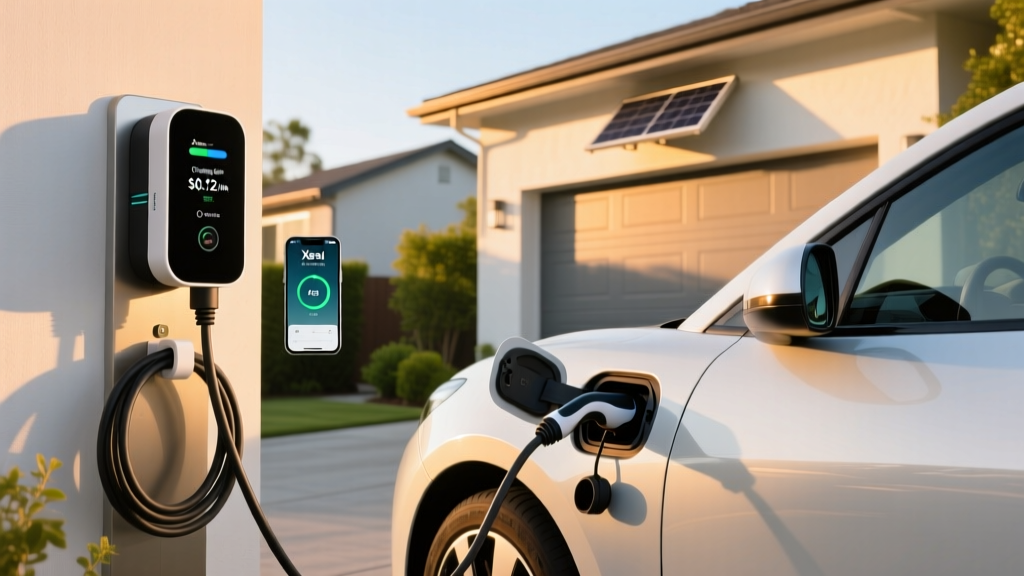
The term "xeal charging cost" often appears in searches related to smart, managed charging solutions—platforms like Xeal that optimize when and how your EV draws power, potentially shifting consumption to off-peak utility windows where rates drop to $0.08–$0.13/kWh. If your utility offers time-of-use (TOU) pricing, pairing a smart charger with managed-charging software can reduce your effective xeal charging cost to well under $0.04/mile.
Home EV Charger Installation: Electrical Requirements and Cost Breakdown
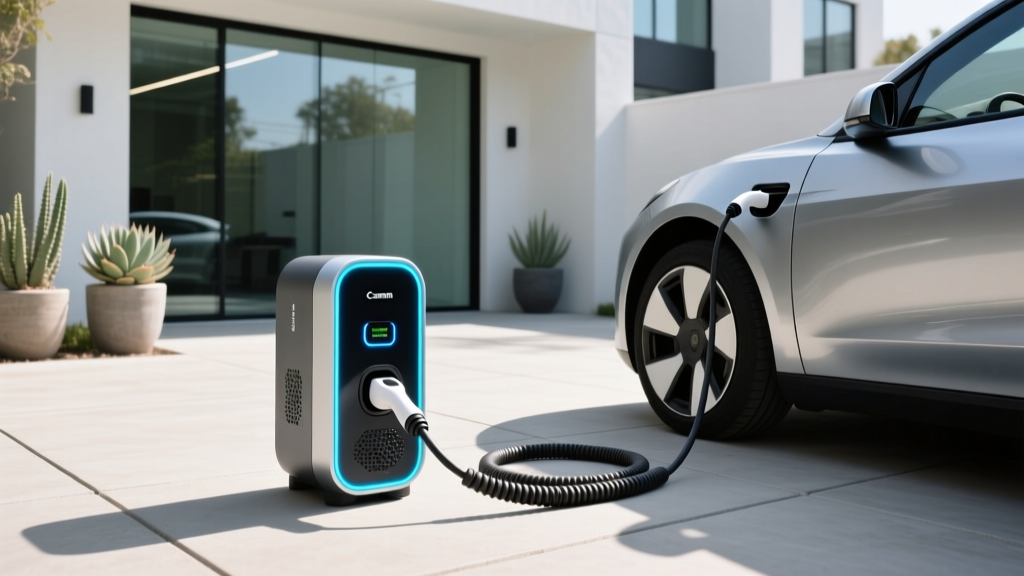
Installing a Level 2 home charger requires a dedicated 240V circuit, similar to what powers an electric dryer or oven. The most common setup is a 240V/48A circuit supporting a 40A continuous-draw charger (the National Electrical Code requires circuits to be rated 125% above continuous load). Here is what an actual installation looks like and what it costs.
Electrical Requirements
- Circuit: Dedicated 240V, 40A–60A breaker (depending on charger amperage)
- Wire gauge: 6 AWG copper for 48A circuits; 4 AWG for 60A circuits
- Outlet vs. hardwired: NEMA 14-50 outlet allows charger portability; hardwired avoids GFCI nuisance trips and is preferred for outdoor installs
- Panel capacity: Your main panel must have sufficient spare amperage. A 200A panel with an existing 160A calculated load can typically accommodate a 40A EV circuit. Older 100A panels almost always require an upgrade.
- Permit: Most jurisdictions require an electrical permit for new 240V circuits ($50–$200 depending on municipality)
- GFCI: NEC 2020+ requires GFCI protection on 240V receptacles in garages; hardwired installations bypass this requirement and are generally more reliable
| Component | Low-End | Typical | High-End / Complex |
|---|---|---|---|
| Level 2 charger (equipment) | $250 | $500–$650 | $700–$800 |
| Electrician labor (2–6 hrs) | $300 | $600–$1,200 | $1,500–$2,500 |
| Electrical permit | $50 | $100–$150 | $200 |
| Conduit, wire, breaker | $100 | $200–$400 | $600–$1,000 |
| Panel upgrade (if needed) | $0 | $0 | $1,500–$3,500 |
| Total | $700 | $1,400–$2,400 | $4,500–$8,000 |
Connector Compatibility: NACS, CCS1, and CHAdeMO in 2026
As of the 2025–2026 model year, the North American Charging Standard (NACS)—originally developed by Tesla—has become the dominant connector. Nearly every major automaker (Ford, GM, Rivian, Volvo, Polestar, Hyundai, Kia, BMW, Mercedes) has adopted NACS on new vehicles or provides CCS-to-NACS adapters. Here is the current landscape.
| Connector | Brands Using It (Native) | Adapter Needed? | DC Fast Network Access |
|---|---|---|---|
| NACS (Tesla) | Tesla (all), Ford, GM, Rivian, Volvo, Polestar, Hyundai (2025+), Kia (2025+) | No (native) | Tesla Supercharger, Electrify America (NACS stalls), EVgo |
| CCS1 | VW ID.4 (remaining), older Hyundai/Kia, BMW i4/iX (adapter included), Lucid | CCS-to-NACS adapter ($150–$250) for Supercharger access | Electrify America, EVgo, ChargePoint DC |
| CHAdeMO | Nissan Leaf (legacy only, discontinued new sales) | No direct adapter to NACS/CCS | Limited; shrinking network |
For home Level 2 charging, the J1772 connector remains the standard plug on most non-Tesla chargers. Tesla vehicles use a proprietary plug that accepts J1772 via the included adapter. Newer NACS-equipped EVs from Ford, GM, and others accept J1772 Level 2 charging through a NACS-to-J1772 adapter (typically $100–$180). When selecting a home charger, verify your vehicle's inlet and choose accordingly—or opt for a charger with a swappable connector.
Charging Time Examples: 10–80% for Common Battery Sizes
DC fast charging speed is not linear. Your vehicle's charge curve peaks at low SoC and tapers significantly above 80%, which is why 10–80% times are the industry-standard benchmark. Below are real-world estimates for popular 2025–2026 EVs.
| Vehicle | Battery (kWh usable) | Peak DC Rate (kW) | 10–80% Time | Charger Required |
|---|---|---|---|---|
| Tesla Model Y Long Range | 75 kWh (NMC) | 250 kW | ~22 min | 250 kW V3 Supercharger |
| Hyundai Ioniq 5 (AWD) | 77.4 kWh (NMC) | 240 kW | ~18 min | 350 kW charger (800V architecture) |
| Ford Mustang Mach-E ER | 91 kWh (NMC) | 150 kW | ~38 min | 150+ kW charger |
| Chevrolet Equinox EV 3RS | 85 kWh (NMC) | 150 kW | ~35 min | 150+ kW charger |
| Rivian R1T Dual-Motor | 106 kWh (NMC) | 220 kW | ~30 min | 200+ kW charger |
| BMW iX xDrive50 | 105 kWh (NMC) | 200 kW | ~34 min | 200+ kW charger |
On Level 2 at home (11.5 kW / 48A), a full 0–100% charge for a 77 kWh battery takes roughly 7 hours. Most EV owners charge from 20–80% daily, which at Level 2 takes about 4 hours—easily accomplished overnight with a scheduled charge window aligned to off-peak utility rates.
Recommended Home EV Chargers for 2026
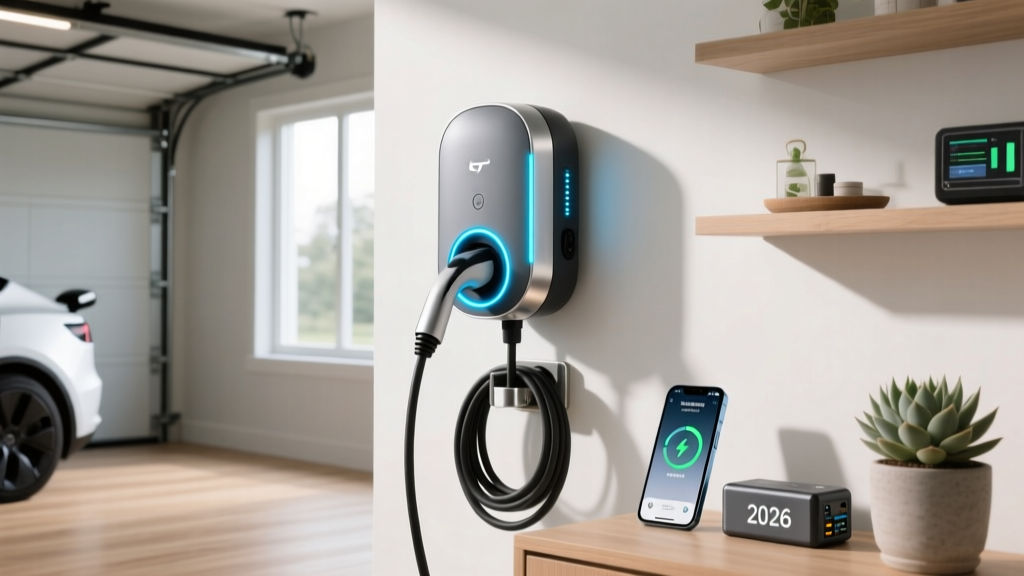
Not all Level 2 chargers are equal. Key differentiators include maximum power output (amperage), cable length, smart features (Wi-Fi scheduling, load management, energy tracking), connector type, and weatherproofing for outdoor installs. Below are top picks across budgets.
Best Overall: ChargePoint Home Flex
- Power: Up to 12 kW (50A, configurable 16–50A)
- Connector: J1772 (NACS adapter available)
- Cable: 23 ft
- Smart features: Wi-Fi, app scheduling, Alexa, energy dashboard
- Price: ~$549
- Best for: Flexible amperage lets you match your circuit capacity
Best for Tesla/NACS: Tesla Wall Connector
- Power: Up to 11.5 kW (48A)
- Connector: NACS native (J1772 adapter included in box)
- Cable: 24 ft
- Smart features: Wi-Fi, OTA updates, Power-Share load balancing between two units
- Price: ~$475
- Best for: Tesla owners and 2025+ NACS-native EVs
Budget Pick: Emporia Vue Level 2
- Power: Up to 11.5 kW (48A)
- Connector: J1772
- Cable: 24 ft
- Smart features: Wi-Fi, real-time energy monitoring, solar integration
- Price: ~$349
- Best for: Budget-conscious buyers who still want smart scheduling
Premium Pick: FLO Home X5
- Power: Up to 11.5 kW (48A)
- Connector: J1772 (NACS version available)
- Cable: 25 ft
- Smart features: Load sharing, rugged aluminum housing, -40°F rated
- Price: ~$699
- Best for: Cold-climate outdoor installs demanding extreme durability
Safety, Code, and Smart-Charging Considerations
Level 2 charger installation must comply with NEC Article 625 and local amendments. Key safety points every EV owner should verify:
- Dedicated circuit: Your EV charger must be on its own breaker—never shared with other appliances.
- Hardwired vs. outlet: Hardwired installations avoid NEC GFCI requirements on 240V receptacles, reducing nuisance tripping. If you use a NEMA 14-50 outlet, ensure your electrician installs a GFCI breaker (required by NEC 2020+ in garages).
- Outdoor rating: If mounting outside, the charger must carry a NEMA 4 or IP65 rating. All recommended chargers above meet this standard.
- Load management: If your panel is near capacity, consider a smart charger with built-in load management (e.g., FLO, ChargePoint with CT clamp). These devices monitor total home draw and throttle the charger to prevent breaker trips—avoiding a costly panel upgrade.
- Utility rebates: Many utilities offer $250–$1,000 rebates for smart Level 2 charger installations, particularly if you enroll in a managed-charging program. Check with your local utility before purchasing.
For EV owners exploring managed-charging platforms (including Xeal-style solutions that integrate with utility demand-response programs), the financial case strengthens further. By allowing the platform to shift your charging to overnight super-off-peak windows—often 12 AM to 5 AM—you can access rates as low as $0.06–$0.09/kWh in markets like California (PG&E EV2-A), Texas (Oncor EV rate), and New York (ConEd EV rate). This brings the real xeal charging cost for a 300-mile fill-up down to $5.40–$8.10, a fraction of the $36+ you'd spend on gasoline.
Frequently Asked Questions
How much does it cost to install a home EV charger?
A typical Level 2 home charger installation costs $1,400–$2,400 including equipment, electrician labor, wire, breaker, and permit. Costs rise to $4,500–$8,000 if your home requires a panel upgrade from 100A to 200A. Simple installs where the panel is close to the garage and has spare capacity can come in as low as $700–$900.
How fast will each charging level add range?
Level 1 (120V) adds 3–5 miles of range per hour. Level 2 (240V, 48A) adds roughly 30–40 miles per hour depending on vehicle efficiency. DC fast charging at 150–350 kW can add 150–1,000+ miles per hour at peak, though real-world charging curves taper significantly above 80% SoC.
Which connector/charger is compatible with my EV?
For 2025–2026 model-year vehicles, most new EVs use the NACS connector (Tesla, Ford, GM, Rivian, Hyundai, Kia, Volvo, Polestar). Remaining CCS1 vehicles (some VW, BMW, Lucid) can access Tesla Superchargers via a CCS-to-NACS adapter ($150–$250). For home Level 2 charging, J1772 is the universal plug on most chargers; NACS vehicles use an included adapter. CHAdeMO is effectively discontinued on new vehicles.
How much does charging cost per mile vs. gas?
Home Level 2 charging at off-peak rates ($0.13/kWh average) costs approximately $0.037/mile for a 3.5 mi/kWh EV—roughly 70% less than gasoline at $3.40/gallon and 28 MPG ($0.121/mile). Even public DC fast charging at $0.48/kWh ($0.137/mile) roughly matches gas costs while producing lower tailpipe emissions. The cheapest charging is always at home on a TOU rate plan.
What electrical upgrades might I need?
The most common upgrade is a panel capacity increase from 100A to 200A ($1,500–$3,500), required when your existing panel lacks spare amperage for a dedicated 40–48A EV circuit. You may also need a new conduit run if the panel is far from the garage (adding $200–$600 in wire and labor). Older homes with knob-and-tube or aluminum wiring may require partial rewiring. Always request a load calculation from a licensed electrician before purchasing equipment.
Is smart/managed charging worth it for reducing costs?
Yes, if your utility offers time-of-use rates. Managed-charging platforms can shift your EV's draw to off-peak windows (typically midnight to 5 AM) when electricity costs $0.06–$0.13/kWh instead of $0.20–$0.35/kWh during peak hours. Over a year of daily charging, this saves $200–$500 depending on your mileage and local rates. Some utilities also offer demand-response credits of $5–$15/month for participating.