Wireless charging for electric cars sounds like the ultimate convenience upgrade: park over a pad, walk away, and wake up to a full battery. No cables, no connectors, no fumbling in the rain. But in 2026, the technology remains largely in pilot programs and luxury aftermarket kits rather than mainstream availability. Before you invest in an inductive charging system — or wait for OEM-integrated wireless pads — you need to understand what the physics, pricing, and electrical requirements actually look like compared to a conventional plug-in Level 2 home charger.
This guide breaks down wireless EV charging technology alongside the wired charging ecosystem it competes with, so you can make an informed decision about your home charging setup.
What Is Wireless Charging for Electric Cars?
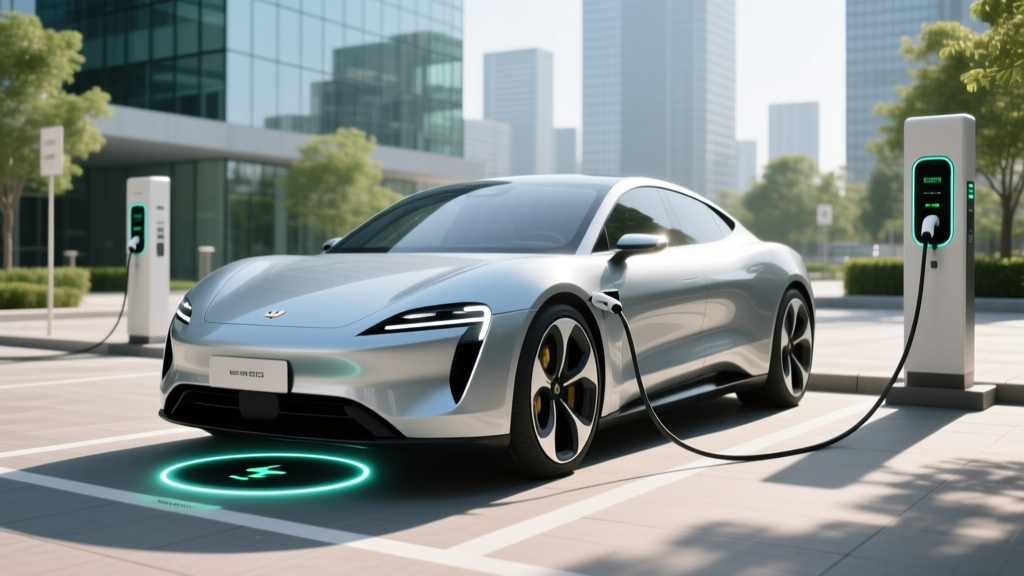
Wireless EV charging uses electromagnetic induction — the same principle behind wireless phone chargers, scaled up dramatically. A transmitter pad installed on your garage floor or driveway creates an alternating magnetic field. A receiver pad mounted to the underside of your EV converts that magnetic field back into electrical current to charge the battery.
The key players in 2026 include WiTricity (which licensed its resonant magnetic coupling technology to multiple automakers), Plugless Power (Evatran), and OEM pilot programs from BMW, Mercedes-Benz, and Genesis. The BMW 530e PHEV offered a factory wireless charging option in select markets starting in 2019, and Mercedes-Benz tested an S 580e wireless pad in limited deployment. Genesis demonstrated a wireless charging system for the GV60 concept. However, as of 2026, no mainstream mass-market EV sold in the U.S. includes wireless charging as a standard or widely available factory option.
The current generation of wireless EV chargers delivers between 3.6 kW and 11 kW of power transfer, with efficiency rates typically between 85% and 93% — meaning 7% to 15% of the energy is lost as heat during the inductive transfer. For comparison, a wired Level 2 charger operates at 97%+ efficiency from the wall to the vehicle's onboard charger.
Charging Levels Explained: Wireless vs. Wired Speeds
Whether you're plugging in or parking over a pad, charging speed is measured in kW (kilowatts) — the rate of power delivery. The battery capacity is measured in kWh (kilowatt-hours) — the total energy stored. Confusing these two is the single most common EV mistake. Think of kW as the flow rate of a hose and kWh as the size of the bucket.
| Charging Level | Voltage / Power | Typical kW Output | Miles of Range Added per Hour | Best For |
|---|---|---|---|---|
| Level 1 (120V household outlet) | 120V / 12-16A | 1.4 – 1.9 kW | 3 – 5 mi/hr | Overnight top-ups, PHEVs, low-mileage drivers |
| Level 2 (240V wired) | 240V / 32-48A | 7.7 – 11.5 kW | 25 – 44 mi/hr | Daily home charging, the standard for most EV owners |
| Level 2 Wireless (Inductive) | 240V / pad-to-pad | 3.6 – 11 kW | 12 – 40 mi/hr | Convenience-focused setups, garage parking, pilot programs |
| DC Fast Charging (Level 3) | 400V–800V DC | 50 – 350 kW | 150 – 1,000+ mi/hr (peak) | Road trips, commercial fleets, rapid top-ups |
A typical 77 kWh battery (like the one in a Ford Mustang Mach-E Extended Range) charging from 10% to 80% takes roughly:
- Level 1 (1.4 kW): ~54 hours — impractical for a full charge
- Level 2 wired (11.5 kW): ~5.5 hours — overnight ready
- Wireless (7 kW typical): ~8.5 hours — feasible overnight, but slower
- DC Fast (150 kW peak): ~30 minutes (10–80%), though the charge curve tapers significantly above 80% SoC
How Much Does a Home EV Charger Cost to Install?
Whether you're installing a wired Level 2 charger or a wireless inductive pad, the electrical work is the major cost variable. A wireless pad still requires a hardwired 240V circuit — the pad replaces the cable, not the electrical infrastructure.
| Component | Wired Level 2 Charger | Wireless Inductive Pad |
|---|---|---|
| Equipment (charger/pad + receiver) | $350 – $750 | $2,500 – $4,500 (pad + vehicle receiver kit) |
| Electrician labor (240V circuit run) | $500 – $2,000 | $600 – $2,200 |
| Permit and inspection | $100 – $400 | $100 – $400 |
| Electrical panel upgrade (if needed) | $1,500 – $4,000 | $1,500 – $4,000 |
| Total typical range | $950 – $3,150 | $4,700 – $11,100 |
Panel upgrade reality check: Homes built before 2000 often have 100A electrical panels. Adding a 40A or 50A dedicated EV circuit to an already-loaded 100A panel may require upgrading to 200A service — a $1,500 to $4,000 job that includes a new panel, utility coordination, and re-inspection. Some jurisdictions now require a NEC Article 625-compliant load calculation before approving an EV circuit permit. A licensed electrician should perform this assessment before you purchase any equipment.
Wireless Charging Equipment: What's Available Now
The wireless EV charging market in 2026 is narrow but growing. Here's what's realistically obtainable for a residential installation:
Plugless Power L2 Wireless Charging System
- Power output: 7.2 kW (transmitter pad)
- Receiver: Vehicle-specific adapter plate (available for select Tesla Model 3/Y, BMW i3, Nissan LEAF)
- Connector: N/A — fully inductive, no plug
- Cable length: N/A (pad-to-pad, ~4 inch ground clearance max)
- Smart features: App monitoring, auto-alignment feedback, energy tracking
- Efficiency: ~90–91% pad-to-battery
- Price: ~$3,500–$4,200 (complete kit including receiver install)
WiTricity Halo-Based Aftermarket Kit
- Power output: Up to 11 kW (depending on receiver)
- Receiver: Custom-fit underbody receiver (limited vehicle compatibility)
- Connector: N/A — resonant magnetic coupling
- Cable length: N/A
- Smart features: Foreign object detection (FOD), living object protection, alignment assist
- Efficiency: ~92–93% (SAE J2954 compliant)
- Price: $4,000–$6,000+ (professional install required)
For Comparison: ChargePoint Home Flex (Wired Level 2)
- Power output: Up to 12 kW (50A, configurable down to 16A)
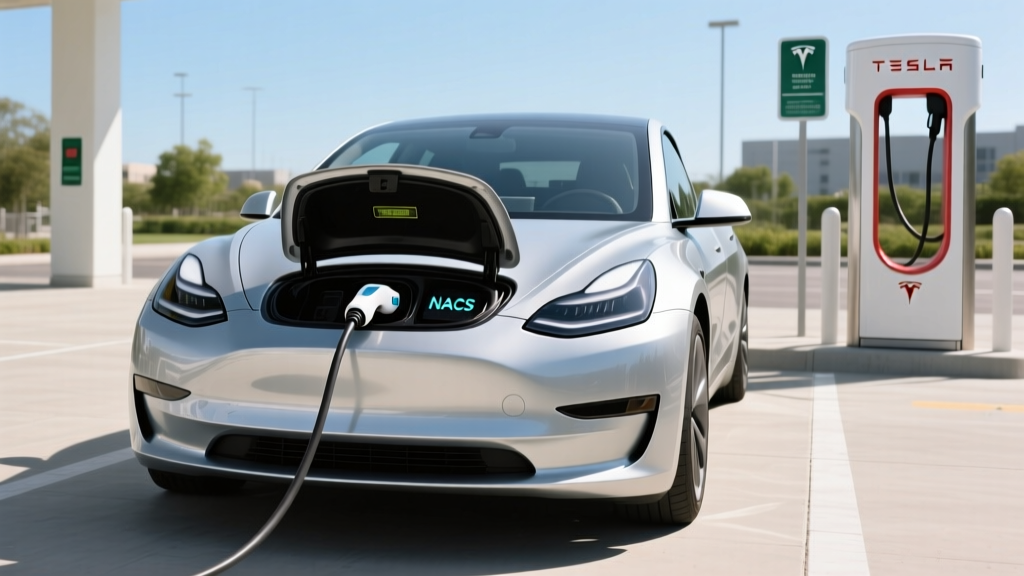
- Connector: NACS (Tesla) or J1772 (CCS vehicles via adapter)
- Cable length: 23 feet
- Smart features: Wi-Fi, app scheduling, Alexa integration, energy reports
- Efficiency: ~98%+ wall-to-vehicle
- Price: ~$550–$650 (equipment only)
The cost gap is stark: a premium wired Level 2 charger installed runs roughly $1,500–$2,500 all-in for most homes. A wireless system starts around $4,700 and can exceed $10,000 if a panel upgrade is needed. The value proposition for wireless rests entirely on convenience, not economics.
Connector Compatibility: What Fits Your EV?
This is where wireless charging introduces a unique complication. Unlike a plug-in charger that connects to your vehicle's standardized charge port, a wireless system requires a receiver pad physically mounted to your vehicle's undercarriage. That receiver must be engineered for your specific model's ground clearance, battery architecture, and mounting points.
| Connector / System | Vehicles Using It | Wireless Receiver Available? | Adapter Needed? |
|---|---|---|---|
| NACS (Tesla / North American Charging Standard) | Tesla Model 3, Y, S, X; Ford F-150 Lightning, Mustang Mach-E (2025+); Rivian R1T/R1S; GM Ultium vehicles (2025+) | Aftermarket only (Plugless Power for select Tesla models) | N/A for wireless; CCS-to-NACS adapter for wired DCFC on non-Tesla |
| CCS1 (Combined Charging System) | Hyundai Ioniq 5/6, Kia EV6/EV9, VW ID.4, BMW iX, most legacy non-Tesla EVs | Very limited aftermarket (Plugless Power for select models) | N/A for wireless |
| CHAdeMO | Nissan LEAF, Mitsubishi Outlander PHEV (legacy) | Limited (Plugless Power LEAF kit existed; availability varies) | N/A |
| SAE J2954 Wireless (Inductive) | BMW 530e (limited markets), Mercedes S 580e (pilot), Genesis GV60 (concept/demonstration) | Factory-integrated on pilot vehicles only | No adapter — pad-to-pad |
If your EV doesn't have a factory-integrated wireless receiver — and almost none sold in the U.S. do as of 2026 — you'll need an aftermarket receiver kit specific to your vehicle. This limits the practical market to a handful of popular models and adds significant cost. For the vast majority of EV owners, a wired Level 2 charger with the correct connector (NACS for Tesla and the growing NACS-adopting fleet, J1772/CCS for others) remains the practical choice.
Cost to Charge: Wireless, Wired, and Gas Compared
Wireless charging's lower efficiency means you'll pay slightly more per kWh delivered to the battery. Here's how the scenarios break down:
| Scenario | Cost per kWh (delivered to battery) | Cost per mile (250 Wh/mi EV) | Annual fuel cost (12,000 mi) |
|---|---|---|---|
| Home Level 2 wired (off-peak utility rate) | $0.13/kWh | $0.033/mi | $390 |
| Home wireless (7 kW, ~90% efficiency) | $0.144/kWh (effective) | $0.036/mi | $432 |
| Public Level 2 (ChargePoint, EVgo, etc.) | $0.25–$0.49/kWh | $0.063–$0.123/mi | $750–$1,470 |
| DC Fast Charging (Electrify America, Tesla Supercharger) | $0.30–$0.55/kWh | $0.075–$0.138/mi | $900–$1,650 |
| Gasoline vehicle (28 MPG combined, $3.40/gal) | N/A | $0.121/mi | $1,457 |
The wireless efficiency penalty is real but modest at residential electricity rates — roughly $42 more per year compared to a wired Level 2 charger for a driver covering 12,000 miles. The gap widens if your utility charges higher rates or if the wireless system operates at the lower end of its efficiency range due to pad misalignment.
Even with the efficiency loss, home wireless charging still undercuts gasoline by a factor of three to four per mile. The U.S. Department of Energy's fueleconomy.gov calculator can help you compare your specific vehicle's kWh/100mi rating against local electricity and gas prices.
Safety, Code, and Electrical Requirements
Both wired and wireless home EV chargers must comply with NEC Article 625 (National Electrical Code, Electric Vehicle Charging Equipment). Here's what your installation must address:
- Dedicated circuit: A Level 2 charger (wired or wireless) requires a dedicated 240V circuit — typically 40A or 50A. Sharing this circuit with other appliances is a code violation and a fire hazard.
- GFCI protection: The 2023 NEC update (and carried forward into 2026 local adoptions) requires GFCI (Ground Fault Circuit Interrupter) protection for all EV charging outlets. Hardwired installations may have different GFCI requirements depending on jurisdiction — your electrician will know the local amendment.
- Outdoor rating: Wireless pads are inherently outdoor-rated (IP67 or IP68) since they sit on the ground. Wired chargers installed outdoors must carry a NEMA 4 or NEMA 4X rating. The NFPA NEC standards govern these requirements.
- Foreign object detection (FOD): SAE J2954-compliant wireless systems include sensors that detect metal objects or living creatures on the pad and shut down power transfer. This is a critical safety feature — verify FOD compliance before purchasing any wireless system.
- Ground clearance: Wireless pads require consistent alignment between the ground transmitter and vehicle receiver, typically within 4–8 inches of vertical gap. Vehicles with adjustable air suspension may need to be set to a specific ride height for charging to initiate.
- Permit and inspection: Most jurisdictions require an electrical permit for any new 240V circuit. The inspection verifies wire gauge, breaker sizing, grounding, and GFCI compliance. Budget $100–$400 for this step — skipping it risks insurance claim denials and code enforcement fines.
Is Wireless EV Charging Worth It in 2026?
Choose wireless charging if:
- You value the convenience of cord-free charging enough to pay a $3,000–$7,000 premium over wired
- Your EV has a compatible aftermarket receiver kit available
- You park in a fixed garage spot with consistent pad alignment
- You're willing to accept ~10% efficiency loss and slightly longer charge times
Choose a wired Level 2 charger if:
- You want maximum charging speed per dollar (11.5 kW for ~$600 equipment)
- Your EV doesn't have a wireless receiver option
- You need to charge multiple vehicles with different connector types
- You want proven reliability, broad compatibility, and simpler maintenance
Wireless charging for electric cars is legitimate technology with a clear use case, but in 2026 it remains a premium convenience product rather than a mainstream necessity. The SAE J2954 standard provides a solid technical foundation, and as more automakers integrate factory receiver pads — likely starting with luxury models and trickling down over the next 3–5 years — the cost and compatibility gaps will narrow. Until then, a high-quality wired Level 2 home charger delivers faster charging, higher efficiency, broader vehicle compatibility, and a fraction of the installation cost.
Frequently Asked Questions
How much does it cost to install a wireless EV charger at home?
A complete wireless EV charging system — including the ground pad, vehicle receiver kit, 240V circuit installation, permits, and electrician labor — typically costs between $4,700 and $11,100 in 2026. The wide range reflects variables like panel upgrades, circuit run length, and vehicle-specific receiver pricing. By comparison, a wired Level 2 charger installation runs $950 to $3,150.
How fast does wireless charging add range compared to plugging in?
Current wireless EV chargers deliver 3.6 to 11 kW, adding roughly 12 to 40 miles of range per hour depending on vehicle efficiency. A comparable wired Level 2 charger at 11.5 kW adds 25 to 44 miles per hour. The wireless efficiency gap (~90% vs. ~98%) means you'll wait about 10–15% longer for the same charge level.
Can any electric car use a wireless charger?
No. Your EV needs a receiver pad mounted to its undercarriage. As of 2026, only a few vehicles (BMW 530e in limited markets, Mercedes S 580e pilot programs) have factory wireless receivers. Aftermarket kits from Plugless Power and WiTricity partners are available for select popular models, but compatibility is limited. Check with the wireless charger manufacturer before purchasing.
Does wireless charging damage my EV's battery?
No. Wireless charging delivers power at rates well within the battery's acceptance capability (similar to Level 2 wired charging), and the thermal management system handles any heat generated. The slightly lower efficiency means some energy is lost as heat at the pad interface, but this heat is managed by the pad's cooling system, not transferred to the battery pack.
Will wireless charging become standard on EVs?
The SAE J2954 standard is finalized, and several automakers have demonstrated production-ready systems. However, widespread OEM integration is likely still 3–5 years away for mainstream models. The added cost, weight (~25–40 lbs for the receiver), and ground-clearance engineering challenges mean automakers are prioritizing it for luxury and premium segments first.
What electrical upgrades might I need for any home EV charger?
If your home has a 100A electrical panel that's already near capacity, adding a 40A or 50A EV charging circuit may require a panel upgrade to 200A service — a $1,500 to $4,000 project. Homes with 200A panels and available breaker slots typically need only a new dedicated circuit run from the panel to the charger location. A licensed electrician's load calculation will determine your specific requirement. Some utilities offer make-ready programs that offset the cost of panel upgrades for EV adoption.