If you're new to electric vehicles, the question "what's EV charging?" opens up a whole ecosystem of kilowatts, connectors, and electrical panels. Unlike filling a gas tank in five minutes, EV charging happens across three distinct speed tiers, uses different plug standards depending on the vehicle, and often requires an electrical upgrade at home. This guide gives you the exact numbers — charge rates in kW, miles added per hour, installation costs down to the breaker, and the per-mile cost compared to gasoline — so you can plan your charging setup with confidence.
The Three Levels of EV Charging Explained
EV charging is categorized into three levels based on voltage, power delivery, and where you'll typically find them. The critical distinction to internalize first: kW (kilowatts) measures power — how fast energy flows into your battery. kWh (kilowatt-hours) measures energy — the total capacity of your battery. Think of kW as the width of a hose and kWh as the size of the bucket. A wider hose (higher kW) fills the bucket faster.
| Level | Voltage | Max Power (kW) | Miles of Range Added per Hour | Typical Location | Best For |
|---|---|---|---|---|---|
| Level 1 | 120V AC | 1.4–1.9 kW | 3–5 mi/hr | Standard household outlet | Overnight top-ups, PHEVs, low-mileage drivers |
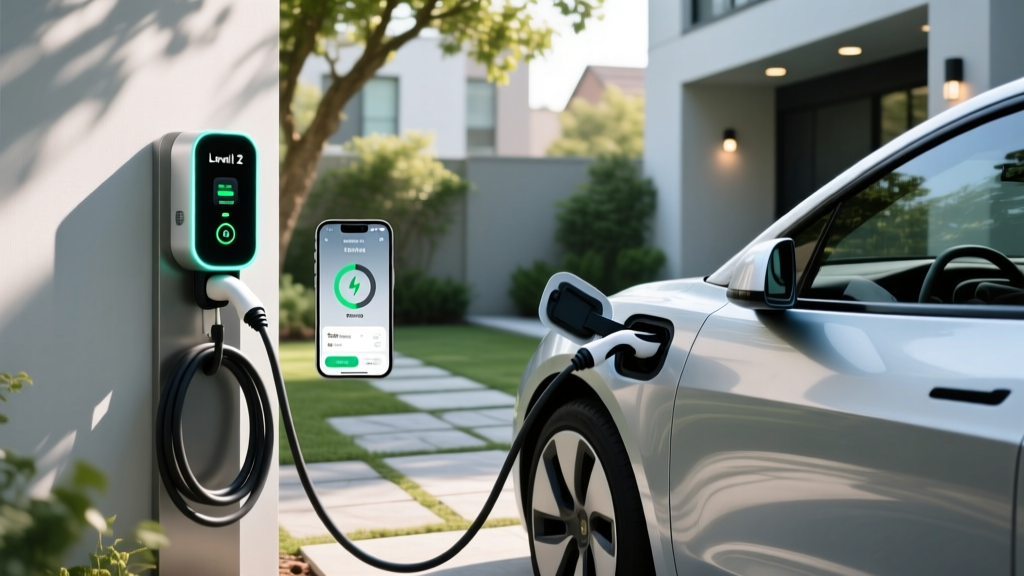
| Level 2 | 240V AC | 7.2–19.2 kW | 20–60 mi/hr | Home (installed), workplaces, public destinations | Daily home charging, full overnight replenishment |
| DC Fast Charging (Level 3) | 400–900V DC | 50–350 kW | 150–1,000+ mi/hr (peak) | Highway corridors, dedicated stations | Road trips, rapid top-ups (10–80% in 15–30 min) |
A few real-world nuances these numbers don't capture: Level 2 speeds depend on both the charger's output and your vehicle's onboard charger limit. A 19.2 kW charger won't charge a vehicle with an 11.5 kW onboard charger any faster than 11.5 kW. And DC fast charging follows a charge curve — you'll see peak kW only at a low state of charge (typically 10–30% SoC), with the rate tapering significantly above 80% to protect battery health. A charger rated at 250 kW might average only 120–150 kW across a full 10–80% session.
How Much Does It Cost to Install a Home EV Charger?
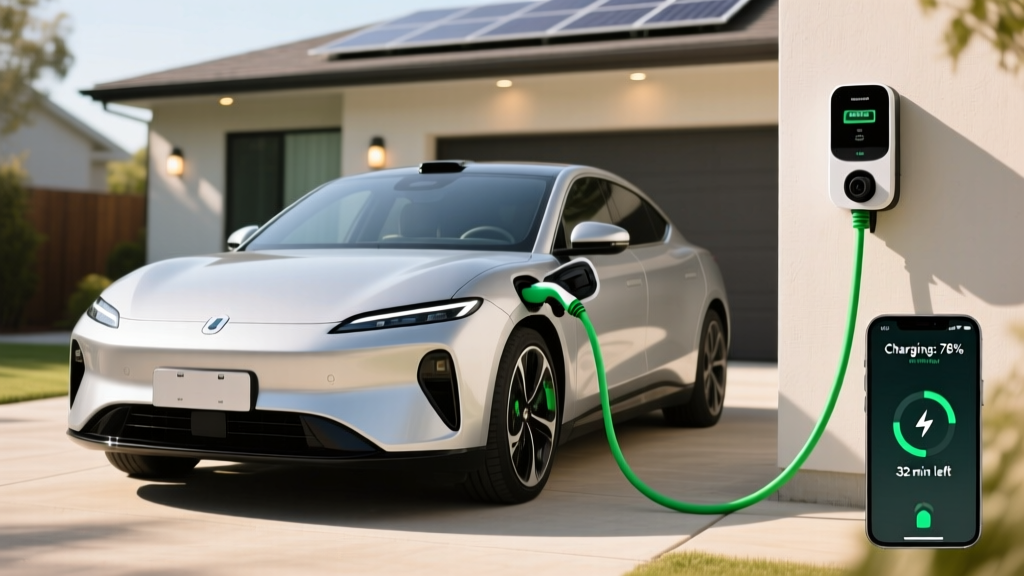
Home Level 2 charging is where most EV owners do 80–90% of their charging. But installation costs vary enormously depending on your home's electrical panel, the distance from the panel to your garage or driveway, and local permit requirements. Here's a realistic breakdown for a typical 240V / 48A hardwired Level 2 charger installation in 2026:
| Component | Typical Cost Range | Notes |
|---|---|---|
| Level 2 Charger (Equipment) | $350–$750 | Smart Wi-Fi-enabled 40–48A units; basic models from $250 |
| Electrician Labor | $500–$2,000 | Depends on run length, conduit needs, wall type; $75–$150/hr typical |
| Electrical Permit | $50–$300 | Varies by municipality; some jurisdictions bundle with inspection |
| Panel Upgrade (if needed) | $1,500–$4,000+ | Required if your panel is 100A or near capacity; 200A service recommended |
| Additional Materials | $100–$500 | Conduit, wiring (6 AWG copper typical), junction boxes, GFCI breaker |
| Total (No Panel Upgrade) | $900–$3,050 | Most homes with 200A panels fall in this range |
| Total (With Panel Upgrade) | $2,500–$7,000+ | Older homes with 100A or 60A service |
The panel-upgrade gotcha: Homes built before the 1990s often have 100-amp or even 60-amp electrical service. A 48A EV charger draws roughly 11.5 kW continuously — that's a significant load on a panel already serving HVAC, an electric dryer, an oven, and lighting. A licensed electrician will perform a load calculation (per NEC Article 220) to determine if your panel can handle the circuit. If not, upgrading to 200A service is a major but worthwhile investment that also benefits future electrification (heat pumps, solar, etc.).
Electrical Requirements and Safety Code Essentials
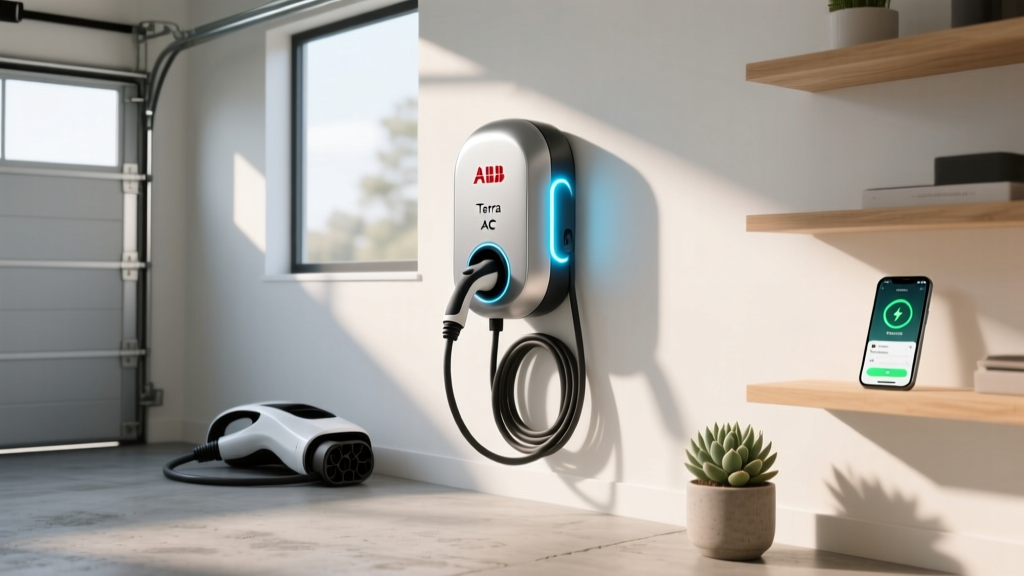
A proper Level 2 installation isn't just about plugging in — it needs to meet the National Electrical Code (NEC) and local amendments. Here's what your installation must address:
- Dedicated circuit: Your EV charger requires its own dedicated double-pole breaker — typically 50A for a 40A charger or 60A for a 48A charger (NEC requires circuits rated at 125% of the continuous load).
- Wire gauge: 6 AWG copper (THHN in conduit or NM-B for indoor runs) is standard for 48A circuits. Longer runs may require 4 AWG to minimize voltage drop.
- GFCI protection: NEC 2020 and later require GFCI protection for outlets in garages. Hardwired chargers may bypass this requirement in some jurisdictions, which is one reason many electricians recommend hardwiring over a NEMA 14-50 receptacle.
- Outdoor rating: If your charger is mounted outside, both the unit and any conduit fittings must carry a NEMA 4 (watertight) or IP65+ rating. Most major chargers are rated for outdoor use, but verify before purchasing.
- Permit and inspection: Nearly all jurisdictions require a permit for a new 240V circuit. The inspection ensures proper grounding, breaker sizing, and conduit fill — don't skip this step, as unpermitted work can void home insurance claims.
Which Connector Is Compatible with My EV?
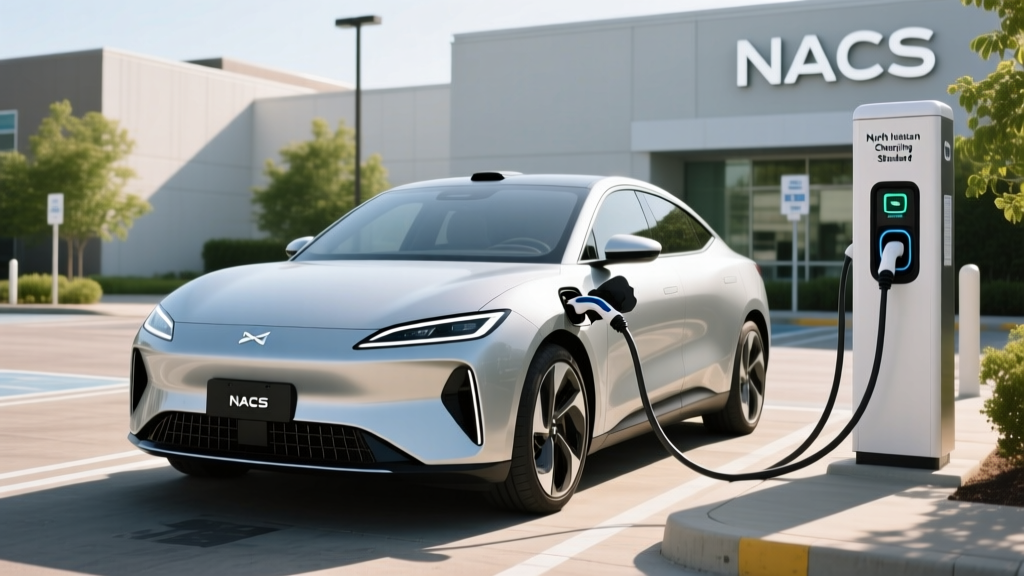
The EV industry has undergone a major connector consolidation since 2023, when Ford, GM, Rivian, and most other automakers committed to adopting Tesla's North American Charging Standard (NACS). By 2026, NACS is the dominant connector for new EVs sold in North America, though CCS1 vehicles remain on the road and CHAdeMO persists on older Nissan Leafs and Mitsubishi Outlander PHEVs.
| Connector | Brands Using It (2026) | AC Level 2? | DC Fast? | Adapter Needed? |
|---|---|---|---|---|
| NACS (Tesla standard) | Tesla, Ford, GM, Rivian, Hyundai/Kia, BMW, Mercedes, Volvo/Polestar, Lucid, Subaru | Yes | Yes | CCS→NACS adapters available for legacy CCS vehicles |
| CCS1 (Combo) | Volkswagen ID.4 (legacy), Stellantis/Jeep (some), older Hyundai/Kia/Ford/GM models | Yes | Yes | NACS→CCS adapters available; many public stations now offer both |
| CHAdeMO | Nissan Leaf (discontinued 2025, still on road), Mitsubishi Outlander PHEV | Yes | Yes | Limited adapter options; CHAdeMO stations declining |
Practical advice for 2026 buyers: If you're purchasing a new EV, it almost certainly comes with a NACS port. For home charging, buy a NACS-connector Level 2 charger. If you own a CCS1 vehicle, you can either buy a CCS-connector charger or use a NACS-to-CCS adapter (such as the Lectron or A2Z adapter, typically $150–$250) to access the rapidly expanding Tesla Supercharger network, which now serves non-Tesla vehicles at thousands of locations.
How Fast Will Each Charging Level Add Range? Real-World Times
Charging speed depends on battery size, chemistry, thermal management, and the charger's output. Below are realistic 10–80% charging times for common battery sizes you'll find in popular 2026 EVs. Note that DC fast charging times assume the battery is preconditioned (warmed to optimal temperature) and that you're using a charger capable of the vehicle's peak rate.
| Battery Size (usable kWh) | Example Vehicles | Level 1 (1.4 kW) | Level 2 (11.5 kW / 48A) | DC Fast (Peak kW → Avg) |
|---|---|---|---|---|
| ~60 kWh | Chevy Equinox EV, base Tesla Model 3 | ~30 hours | ~4 hours | ~18–22 min (150–170 kW avg) |
| ~75 kWh | Tesla Model Y LR, Hyundai Ioniq 5 | ~38 hours | ~5 hours | ~18–25 min (170–220 kW avg) |
| ~85–90 kWh | Ford F-150 Lightning Ext Range, BMW iX | ~45 hours | ~6 hours | ~22–30 min (175–250 kW avg) |
| ~100+ kWh | GMC Hummer EV, Rivian R1S Max Pack | ~55+ hours | ~7.5 hours | ~30–45 min (200–320 kW avg) |
How Much Does Charging Cost Per Mile vs. Gas?
One of the strongest economic arguments for EVs is lower per-mile fuel cost — but the savings depend heavily on where and when you charge. Electricity rates vary by state, time of day, and utility plan. Here's a breakdown of common scenarios using the national average EV efficiency of roughly 3.0 miles per kWh (about 33 kWh/100 miles, per fueleconomy.gov):
| Charging Scenario | Cost per kWh | Cost per Mile (at 3 mi/kWh) | Equivalent Gas Price (at 30 MPG) |
|---|---|---|---|
| Home — Off-Peak / Time-of-Use Rate | $0.08–$0.12 | $0.027–$0.040 | $0.80–$1.20/gal |
| Home — Standard Residential Rate | $0.14–$0.18 | $0.047–$0.060 | $1.40–$1.80/gal |
| Public Level 2 (Workplace, Shopping) | $0.20–$0.35 | $0.067–$0.117 | $2.00–$3.50/gal |
| DC Fast Charging (Electrify America, EVgo, Tesla) | $0.30–$0.55 | $0.100–$0.183 | $3.00–$5.50/gal |
| Gasoline Baseline (2026 avg, 30 MPG vehicle) | — | $0.107–$0.127 | $3.20–$3.80/gal |
The bottom line: Home charging on an off-peak utility rate is dramatically cheaper than gasoline — typically one-third to one-quarter the per-mile cost. Even standard residential rates beat gas. But frequent DC fast charging at premium public rates can match or exceed gasoline costs. The economic case for EVs is strongest when you can charge at home. According to the U.S. Department of Energy, over 80% of EV charging happens at home, which is why investing in a Level 2 installation pays for itself quickly.
Recommended Home Level 2 Chargers (2026)
The home charger market has matured significantly. Here are four well-regarded options across price points, all Wi-Fi-enabled with smart scheduling features to take advantage of off-peak utility rates:
Emporia Level 2 Smart Charger
- Power: 48A / 11.5 kW (hardwired) or 40A / 9.6 kW (NEMA 14-50)
- Connector: NACS (J3400)
- Cable Length: 24 ft
- Smart Features: App scheduling, energy monitoring, solar integration, load management
- Price: ~$399
- Best for: Budget-conscious buyers who want full smart features
ChargePoint Home Flex
- Power: Up to 50A / 12 kW (adjustable via DIP switches for panel compatibility)
- Connector: NACS or CCS1 (configurable)
- Cable Length: 23 ft
- Smart Features: App scheduling, Alexa/Google integration, flexible amperage
- Price: ~$599
- Best for: Homes needing adjustable amperage to match panel capacity
Tesla Wall Connector
- Power: 48A / 11.5 kW (hardwired, requires 60A breaker)
- Connector: NACS (native Tesla)
- Cable Length: 24 ft
- Smart Features: Wi-Fi updates, power sharing (link up to 6 units on one circuit), access control
- Price: ~$450
- Best for: Tesla and NACS-vehicle owners wanting OEM integration
Grizzl-E Smart
- Power: 40A / 9.6 kW (adjustable to 16/24/32/40A)
- Connector: NACS or J1772
- Cable Length: 24 ft
- Smart Features: OCPP-compatible, app control, extreme-cold rated (-40°F)
- Price: ~$549
- Best for: Cold-climate and outdoor installations; built in Canada
Frequently Asked Questions
How much does it cost to install a home EV charger?
A typical Level 2 home charger installation costs $900–$3,050 when your electrical panel has sufficient capacity. This includes the charger unit ($350–$750), electrician labor ($500–$2,000), permit ($50–$300), and materials ($100–$500). If your home needs a panel upgrade from 100A to 200A service, add $1,500–$4,000+ to the total. Always get a load calculation from a licensed electrician before committing to a specific charger amperage.
How fast will each charging level add range?
Level 1 (120V) adds roughly 3–5 miles of range per hour — sufficient for plug-in hybrids and low-mileage drivers who charge overnight. Level 2 (240V, 48A) adds 20–40 miles per hour depending on vehicle efficiency, fully replenishing most EV batteries in 4–7 hours. DC fast charging adds 150–1,000+ miles per hour at peak rate, but the real-world metric that matters is 10–80% time: typically 18–30 minutes for modern EVs on a 150–350 kW charger.
Which connector/charger is compatible with my EV?
For 2026 model-year EVs, the NACS (J3400) connector is now the standard across Tesla, Ford, GM, Hyundai/Kia, Rivian, BMW, and most other brands. CCS1 is found on older models and a few remaining vehicles. CHAdeMO is essentially legacy, limited to older Nissan Leafs and the Mitsubishi Outlander PHEV. Check your vehicle's charge port or owner's manual to confirm. For home charger purchases, match the connector to your vehicle — or buy an adapter if you anticipate switching vehicles.
How much does charging cost per mile vs. gas?
Home charging on a standard residential rate ($0.14–$0.18/kWh) costs roughly $0.05–$0.06 per mile for an average EV — about half the per-mile cost of a 30 MPG gasoline car at $3.50/gallon. Off-peak home rates ($0.08–$0.12/kWh) drop the cost to $0.03–$0.04 per mile, equivalent to paying under $1.20 per gallon of gas. Public DC fast charging ($0.30–$0.55/kWh) can match or exceed gasoline costs, so the economics strongly favor home charging.
What electrical upgrades might I need?
The most common upgrade is a panel capacity increase. If your home has a 100A main panel that's already serving central AC, an electric dryer, and an electric range, a 48A EV charger (which draws ~11.5 kW continuously) may exceed your panel's safe capacity per NEC load calculations. Upgrading to a 200A panel typically costs $1,500–$4,000. Other potential upgrades include adding a sub-panel in the garage (if the main panel is far away), replacing aluminum wiring with copper, or upgrading the service drop from the utility. Your electrician will identify these needs during the initial assessment.