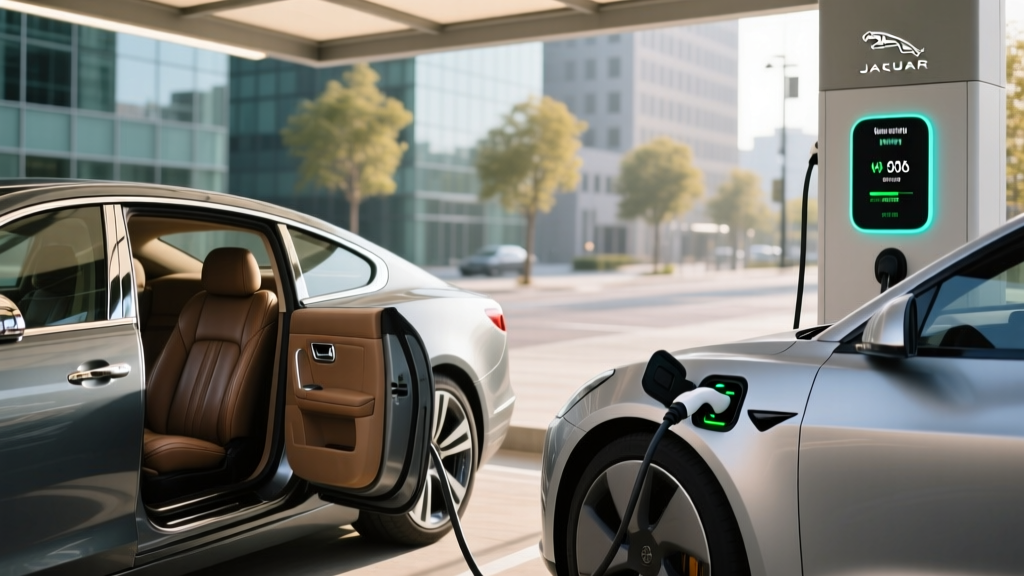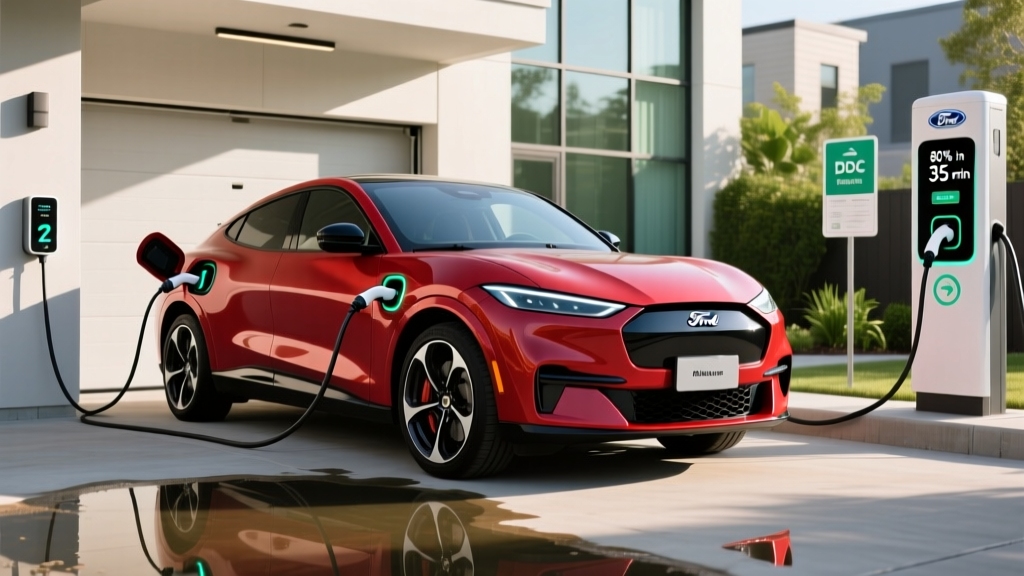
If you've seen the term "Supercharger" online or on road trips and wondered how it fits into the broader EV charging picture, you're not alone. The phrase has become shorthand for fast charging, but the reality is more nuanced. A Supercharger is Tesla's proprietary DC fast-charging network — and as of 2026, it's increasingly open to non-Tesla EVs via the North American Charging Standard (NACS). But whether you drive a Tesla, a Ford F-150 Lightning, a Hyundai Ioniq 5, or a Chevrolet Equinox EV, understanding the full charging ecosystem — from trickle-charging at a standard outlet to 350 kW DC fast chargers — is the single most important thing you can learn as an EV owner.
This guide breaks down exactly what a Supercharger is, how every charging level works, what home installation actually costs, which connector your car needs, and how charging expenses compare to gasoline. We'll use real numbers: kilowatts (kW) for charge speed, kilowatt-hours (kWh) for battery capacity, and exact minutes for 10–80% charging sessions. No marketing fluff — just the data you need to plan your charging life.
What Exactly Is a Supercharger?
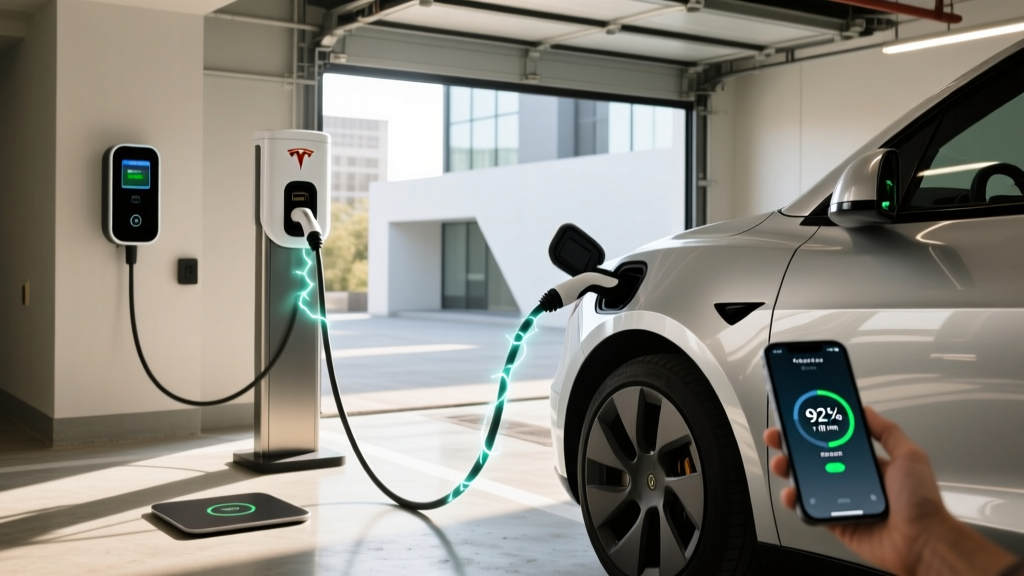
A Supercharger is Tesla's branded DC fast-charging station. These stations deliver direct current (DC) electricity directly to the vehicle's battery, bypassing the car's onboard charger and enabling much higher power levels than home AC charging. As of early 2026, the Tesla Supercharger network includes over 6,500 stations and 60,000+ individual charging stalls across North America, making it the largest and most reliable fast-charging network on the continent.
Here's what makes Superchargers distinct:
- Power output: V2 Superchargers peak at 150 kW; V3 Superchargers peak at 250 kW; V4 Superchargers (deployed starting 2024–2025) support up to 350 kW for compatible vehicles.
- Connector: Originally Tesla-proprietary, the connector is now standardized as NACS (North American Charging Standard, SAE J3400). Nearly every major automaker — Ford, GM, Rivian, Hyundai, Kia, BMW, Mercedes-Benz, and others — has adopted NACS for new vehicles starting with 2025–2026 model years.
- Access: Tesla opened select Supercharger locations to non-Tesla NACS-equipped vehicles through the "Open Supercharging" program. Availability varies by station and region.
- Real-world charge speed: A Tesla Model Y Long Range (75 kWh usable battery) can add roughly 200 miles of range in 15 minutes at a V3 Supercharger under ideal conditions. Expect 10–80% in approximately 22–28 minutes depending on battery temperature and state of charge.
The Three Charging Levels: Speeds, Power & Range Added
Every EV charging scenario falls into one of three levels. Understanding the difference between kW (kilowatts — the rate of power delivery, like water pressure from a hose) and kWh (kilowatt-hours — the total energy stored, like gallons in a tank) is essential. You charge in kW; your battery holds kWh.
| Level | Voltage | Power (kW) | Miles of Range / Hour | Typical Use Case |
|---|---|---|---|---|
| Level 1 | 120V AC | 1.0–1.4 kW | 3–5 mi/hr | Overnight top-up, emergency, low-mileage commuters |
| Level 2 | 240V AC | 3.3–19.2 kW | 12–75 mi/hr | Home charging, workplace, hotels, shopping centers |
| DC Fast Charging | 400–800V DC | 50–350 kW | 150–1,000+ mi/hr | Road trips, highway corridors, Superchargers, Electrify America |
Practical example: A Hyundai Ioniq 5 with a 77.4 kWh battery (EPA range 305 miles) charging at a 48-amp Level 2 home station (11.5 kW) will go from 10% to 100% in roughly 7 hours — adding about 37 miles of range per hour. That same car at a 350 kW Electrify America station can charge from 10–80% in approximately 18 minutes under ideal conditions, thanks to its 800V architecture.
Home Charger Installation: Requirements, Costs & Electrical Upgrades
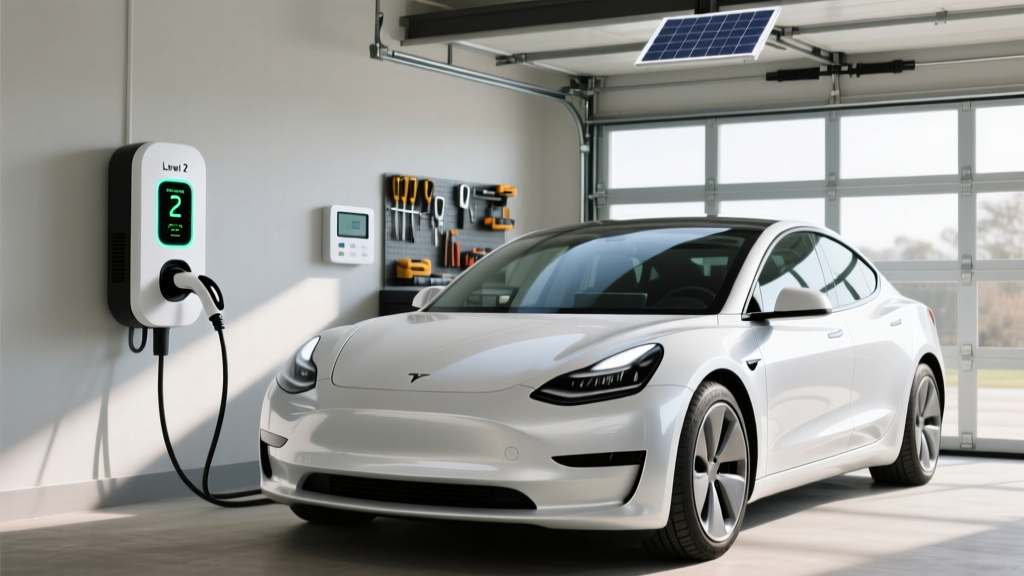
Installing a Level 2 home charger is the single biggest quality-of-life upgrade for EV ownership. Wake up every morning with a "full tank." But the cost varies enormously depending on your home's electrical infrastructure.
Electrical Requirements
Most Level 2 home chargers require a 240-volt dedicated circuit, similar to what an electric dryer or oven uses. Common configurations:
- 40-amp circuit / 32-amp continuous — delivers 7.7 kW. Suitable for most EVs with daily driving under 60 miles.
- 50-amp circuit / 40-amp continuous — delivers 9.6 kW. The sweet spot for most homeowners; charges a 75 kWh battery overnight.
- 60-amp circuit / 48-amp continuous — delivers 11.5 kW. Ideal for larger batteries (Ford F-150 Lightning 131 kWh, Rivian R1T 149 kWh).
- 80-amp circuit / 64-amp continuous — delivers 15.3–19.2 kW. Requires a hardwired connection and significant panel capacity. Overkill for most homes.
Do You Need a Panel Upgrade?
Here's the question that separates a $600 install from a $3,500+ install. Most homes built after 1990 have a 200-amp electrical panel, which usually has enough spare capacity for a 50-amp EV circuit. But older homes with 100-amp or 150-amp panels may need a panel upgrade to 200 amps before adding an EV charger — especially if you already run electric heat, an electric dryer, and an electric oven.
A licensed electrician will perform a load calculation (per NEC Article 220) to determine if your panel can handle the additional draw. Some homes can use a smart load-management device (like the Emporia Smart Panel or Span Drive) to avoid a full panel upgrade by dynamically limiting charger draw when other appliances are running.
| Component | Simple Install (panel nearby) | Complex Install (long run, conduit) | Panel Upgrade Required |
|---|---|---|---|
| Level 2 Charger (equipment) | $300–$700 | $300–$700 | $300–$700 |
| Electrician labor & wiring | $300–$600 | $800–$2,000 | $500–$1,200 |
| Permit & inspection | $50–$200 | $100–$300 | $150–$400 |
| Panel upgrade (200A) | N/A | N/A | $1,500–$3,500 |
| TOTAL ESTIMATE | $650–$1,500 | $1,200–$3,000 | $2,450–$5,800 |
Pro tip: The federal Alternative Fuel Vehicle Refueling Property Credit (IRS Form 8911) can cover up to 30% of home charger equipment and installation costs, capped at $1,000. Eligibility depends on your census tract meeting certain income or rural-area criteria. Check with a tax professional before claiming.
Connector Compatibility: NACS, CCS, CHAdeMO & Adapters
The connector landscape has shifted dramatically. As of 2026, NACS is the dominant standard in North America, but CCS1 and CHAdeMO vehicles are still on the road and at public chargers. Here's what fits what:
| Connector | Brands Using It (2026 Models) | DC Fast-Charge Networks | Adapter Needed? |
|---|---|---|---|
| NACS (J3400) | Tesla (all), Ford, GM, Rivian, Hyundai, Kia, BMW, Mercedes, Volvo, Polestar, Lucid, Toyota | Tesla Supercharger, Electrify America (select), EVgo, ChargePoint (new installs) | No (native on 2025+ models) |
| CCS1 | 2024 and older models from VW, Audi, Ford, GM, Hyundai, Kia, BMW, Stellantis | Electrify America, EVgo, ChargePoint, Ionity (Europe) | CCS-to-NACS adapter (~$200–$250) for Tesla Superchargers |
| CHAdeMO | Nissan Leaf (discontinued 2025), Mitsubishi Outlander PHEV (older models) | Legacy Electrify America stations, select EVgo | CHAdeMO-to-CCS adapters available but limited; network support declining |
If you're buying a 2026 model-year EV, it almost certainly has a NACS port. If you own a 2023–2024 CCS-equipped vehicle, you can purchase a NACS adapter from Tesla, Ford, or third-party manufacturers to access Supercharger stations that support non-Tesla vehicles. Always verify adapter compatibility with your specific model and model year before purchasing.
Charging Cost Per Mile: Home vs. Public vs. Gasoline
The economics of EV charging depend heavily on where you charge. Home charging on a residential electricity rate is dramatically cheaper than public DC fast charging, and both are generally cheaper than gasoline per mile.
| Scenario | Rate ($/kWh) | Cost for 75 kWh Fill | Cost / Mile (at 3.5 mi/kWh) |
|---|---|---|---|
| Home (national avg. residential) | $0.17 | $12.75 | $0.049 |
| Home (off-peak time-of-use) | $0.09 | $6.75 | $0.026 |
| Public Level 2 (ChargePoint, etc.) | $0.25–$0.49 | $18.75–$36.75 | $0.071–$0.140 |
| DC Fast (Tesla Supercharger avg.) | $0.28–$0.36 | $21.00–$27.00 | $0.080–$0.103 |
| DC Fast (Electrify America) | $0.43–$0.56 | $32.25–$42.00 | $0.123–$0.160 |
| Gasoline (30 MPG avg., $3.40/gal) | $0.113/mi | — | $0.113 |
The takeaway: home charging is roughly half the per-mile cost of gasoline, while public DC fast charging can approach or even exceed gasoline costs depending on the network and location. If 80%+ of your charging happens at home, your fuel savings are substantial. If you rely exclusively on public fast charging, the economic advantage shrinks considerably.
Real-World Charge Times: 10–80% for Popular EVs
Charge time depends on battery size (kWh), the vehicle's maximum charge acceptance rate (kW), the charger's output, and battery temperature. Here are real-world estimates for common 2026 models charging from 10% to 80% SoC:
- Tesla Model Y Long Range (75 kWh, peak 250 kW): ~22–26 minutes at a V3 Supercharger
- Hyundai Ioniq 5 (77.4 kWh, peak 238 kW, 800V): ~18–22 minutes at a 350 kW station
- Ford F-150 Lightning Extended Range (131 kWh, peak 150 kW): ~42–50 minutes at a 150 kW DC charger
- Chevrolet Equinox EV (85 kWh, peak 150 kW): ~32–38 minutes at a 150 kW charger
- BMW iX xDrive50 (105.2 kWh, peak 195 kW): ~34–40 minutes at a 200 kW charger
- Rivian R1T Dual-Motor (149 kWh Max Pack, peak 220 kW): ~48–55 minutes at a 200+ kW charger
Best Home EV Chargers: Equipment Picks for 2026
Not all Level 2 chargers are created equal. Here are top picks based on power output, build quality, smart features, connector type, and value:
ChargePoint Home Flex
- Power: Up to 12 kW (50A) — configurable down to 16A
- Connector: NACS (2025+ models), J1772 (older)
- Cable: 23 feet
- Smart features: Wi-Fi, app scheduling, Alexa, energy tracking
- Price: ~$549–$649
- Best for: Flexible amperage settings for older panels
Tesla Wall Connector
- Power: Up to 11.5 kW (48A)
- Connector: NACS native
- Cable: 24 feet
- Smart features: Wi-Fi, OTA updates, power sharing (multiple units on one circuit)
- Price: ~$475
- Best for: Tesla and NACS-equipped vehicles; best value for power
Emporia Vue Level 2 Charger
- Power: Up to 11.5 kW (48A)
- Connector: J1772 (NACS adapter included)
- Cable: 24 feet
- Smart features: Integration with Emporia energy monitoring, solar-aware charging, load management
- Price: ~$399–$449
- Best for: Solar homes and energy-monitoring enthusiasts
Grizzl-E Smart
- Power: Up to 9.6 kW (40A)
- Connector: J1772 or NACS
- Cable: 24 feet
- Smart features: OCPP-compatible, app control, built in Canada for extreme cold (-40°F rated)
- Price: ~$449–$549
- Best for: Cold-climate garages and outdoor installations
Safety, Code & Installation Best Practices
EV charging involves sustained high-current draw — more like running a welder for 8 hours than plugging in a lamp. Safety and code compliance are non-negotiable.
- Dedicated circuit: Your EV charger must be on its own dedicated breaker. Never share a circuit with other major appliances.
- GFCI protection: NEC 2023 and later require GFCI (Ground Fault Circuit Interrupter) protection for all EV charging outlets. Hardwired units typically have built-in GFCI; receptacle installations need a GFCI breaker.
- NEMA 14-50 receptacle vs. hardwired: A NEMA 14-50 outlet offers flexibility (you can take the charger when you move) but requires a GFCI breaker (~$50–$100 extra). Hardwired installations eliminate the receptacle failure point and are required for circuits above 60 amps.
- Outdoor rating: If your charger is installed outside or in an unsealed garage, ensure it carries a NEMA 4 (weatherproof) rating. Most quality chargers are rated for outdoor use, but cables and connectors should be stored off the ground.
- Permit and inspection: Most jurisdictions require an electrical permit for EV charger installation. Skipping the permit can void your homeowner's insurance in the event of an electrical fire. Budget $50–$400 for permit fees depending on your municipality.
- Wire gauge: For a 50-amp circuit, electricians typically use 6 AWG copper wire. For runs over 50 feet, 4 AWG may be required to prevent voltage drop. Your electrician will calculate this per NEC guidelines.
For detailed electrical specifications and local code requirements, always consult a licensed electrician familiar with EV charging installations. The National Electrical Code (NEC) Article 625 governs EV charging infrastructure.
Frequently Asked Questions
Can I charge a non-Tesla at a Supercharger?
Yes — if your vehicle has a NACS charge port (standard on most 2025–2026 models from Ford, GM, Hyundai, Kia, Rivian, BMW, and others) and the Supercharger station is part of Tesla's Open Supercharging program. Not all Supercharger locations are open to non-Tesla vehicles yet; check the Tesla app or your vehicle's built-in navigation for station eligibility. CCS-equipped vehicles need a certified CCS-to-NACS adapter.
How much does it cost to install a home EV charger?
A straightforward Level 2 home charger installation (short wire run, adequate panel capacity) typically costs $650–$1,500 including equipment, electrician labor, and permit. Complex installations with long conduit runs can reach $1,200–$3,000. If your home needs a 200-amp panel upgrade, expect the total project to land between $2,450–$5,800. The federal Alternative Fuel Vehicle Refueling Property Credit may cover up to 30% of costs (max $1,000) if you're in an eligible census tract.
Is a Supercharger the same as a DC fast charger?
A Supercharger is a type of DC fast charger — specifically Tesla's branded network. "DC fast charger" is the generic term for any station that delivers direct current at 50 kW or higher. Other DC fast-charging networks include Electrify America, EVgo, and ChargePoint. All Superchargers are DC fast chargers, but not all DC fast chargers are Superchargers.
How fast will a Level 2 charger charge my EV at home?
A typical 48-amp Level 2 charger (11.5 kW on a 240V circuit) adds roughly 37–42 miles of range per hour for an efficient EV like the Tesla Model 3 or Hyundai Ioniq 6. For a large-battery truck like the F-150 Lightning Extended Range, the same charger adds about 20–25 miles per hour. Most EVs with 75–85 kWh batteries will fully recharge overnight (8–10 hours) on a 48-amp Level 2 unit.
Does frequent Supercharging damage my battery?
Modern EV battery management systems are sophisticated enough to handle regular DC fast charging without significant accelerated degradation. However, EPA and DOE research suggests that exclusively using DC fast charging (never using Level 2) may slightly increase long-term degradation compared to primarily Level 2 charging. Best practice: use Level 2 for daily charging and reserve DC fast charging for road trips. Most manufacturers warranty batteries for 8 years/100,000 miles with a minimum 70% capacity retention threshold.
What's the difference between kW and kWh?
This is the most common point of confusion for new EV owners. kW (kilowatts) measures power — the rate at which electricity flows, analogous to water pressure from a hose. kWh (kilowatt-hours) measures energy — the total amount of electricity stored or consumed, analogous to gallons of water in a bucket. A 250 kW Supercharger delivers energy at a rate of 250 kilowatts; a 75 kWh battery stores 75 kilowatt-hours of energy. You fill your battery (kWh) using a charger that delivers power (kW).