What Does "Long Range" Actually Mean on a Tesla?
When Tesla badges a vehicle as "Long Range," it's signaling a larger battery pack and extended EPA-rated range compared to the standard or rear-wheel-drive variants. For the 2026 Model Y Long Range All-Wheel Drive, that translates to an EPA-estimated 337 miles of range from a 78.1 kWh usable battery pack (NMC chemistry). The Model 3 Long Range AWD carries an EPA-estimated 341 miles from a similar capacity pack. But "Long Range" isn't just about how far you can drive — it fundamentally changes your charging behavior, home electrical requirements, and per-mile cost compared to shorter-range EVs.
The critical distinction every new EV owner must internalize: kW (kilowatts) measures power — how fast energy flows into your car. kWh (kilowatt-hours) measures energy — how much the battery holds. A 78.1 kWh battery charged at 11.5 kW (Level 2) takes roughly 6.8 hours from empty; at 250 kW (DC fast), it can add significant range in minutes. Confusing these two units is the single most common mistake in EV ownership.
Charging Levels Explained: How Fast Each Adds Range
A Long Range Tesla's large battery means charging times scale accordingly. Here's what each level delivers:
| Level | Voltage / Amperage | Power (kW) | Miles Added per Hour | Best Use Case |
|---|---|---|---|---|
| Level 1 | 120V / 12A | ~1.4 kW | ~3–4 mi/hr | Emergency top-ups, overnight trickle |
| Level 2 | 240V / 48A | ~11.5 kW | ~33–44 mi/hr | Daily home charging |
| DC Fast Charge | 400V+ DC | Up to 250 kW (V3 Supercharger) | ~1,000+ mi/hr (peak) | Road trips, rapid top-ups |
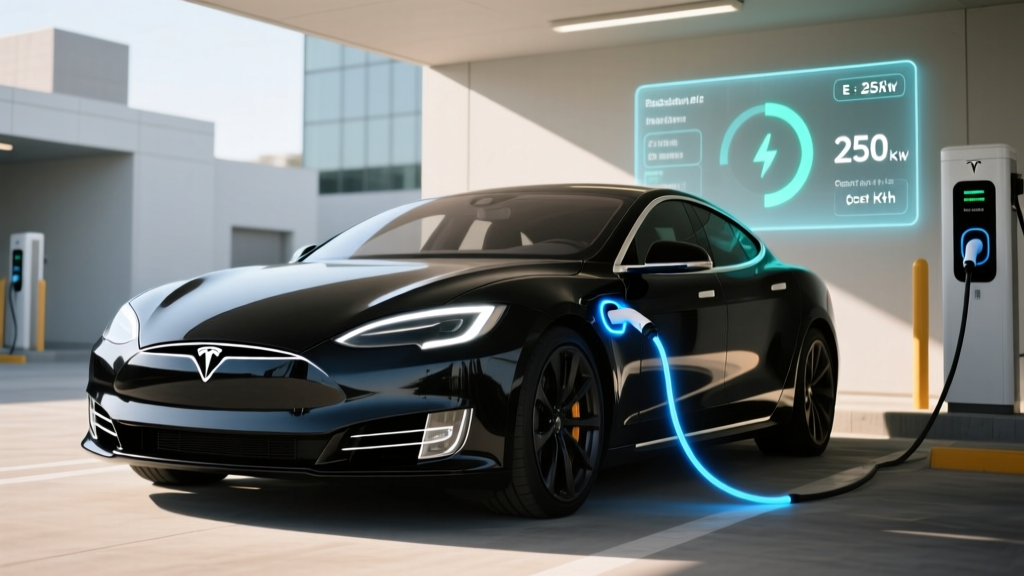
For a 78.1 kWh Long Range battery, Level 1 charging from 10% to 80% would take roughly 40+ hours — essentially useless as a primary strategy. Level 2 at 11.5 kW accomplishes the same 10–80% session in approximately 5.5 hours, ideal for overnight charging. On a V3 Supercharger peaking at 250 kW, a 10–80% charge takes approximately 25–30 minutes, though the charge curve tapers significantly above 80% to protect battery health.
Understanding the charge curve is essential: a Long Range Tesla doesn't pull 250 kW for the entire session. Peak power occurs between roughly 10–30% SoC, then progressively tapers. By 60%, you might see ~150 kW; by 80%, perhaps ~60 kW. This is why manufacturers quote 10–80% times rather than 0–100%.
Home Charger Installation: Electrical Requirements and Costs
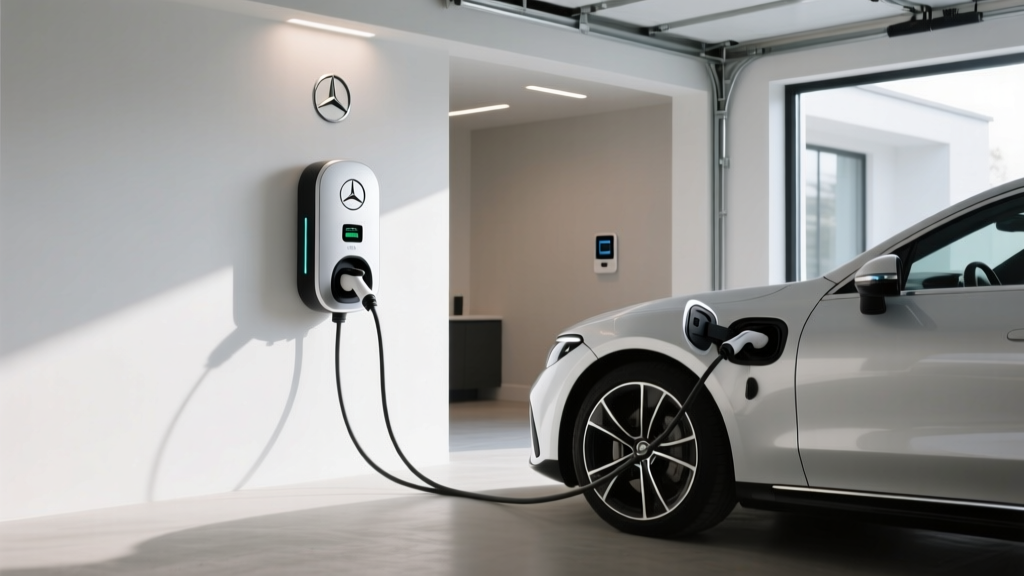
To unlock Level 2 charging at home for a Long Range Tesla, you'll need a 240-volt dedicated circuit. The Tesla Wall Connector supports up to 48 amps (11.5 kW on a 60-amp breaker), which aligns with the Model Y and Model 3 Long Range's onboard charger maximum of 11.5 kW.
Electrical Specifications
- Voltage: 240V (split-phase, standard US residential)
- Amperage: 48A continuous draw requires a 60A breaker (NEC requires 125% headroom for continuous loads)
- Wire gauge: Typically 6 AWG copper (THHN in conduit) or 4 AWG aluminum
- Circuit: Dedicated — no sharing with other appliances
- GFCI protection: Required by NEC 2020+ for EV outlets in garages; hardwired chargers like the Wall Connector have built-in ground fault protection
Installation Cost Breakdown
| Component | Low Estimate | High Estimate | Notes |
|---|---|---|---|
| Tesla Wall Connector (Gen 3) | $475 | $475 | 24-foot cable, Wi-Fi enabled |
| Electrician labor (standard install) | $600 | $1,200 | Panel within 20 ft of garage |
| Electrical permit | $50 | $200 | Varies by municipality |
| Panel upgrade (if needed) | $1,500 | $3,500 | 100A to 200A service upgrade |
| Total (no panel upgrade) | $1,125 | $1,875 | |
| Total (with panel upgrade) | $2,625 | $5,175 |
The panel upgrade gotcha: Homes built before 2000 often have 100-amp or 150-amp electrical service. Adding a 60A EV circuit may exceed your panel's capacity, requiring a service upgrade to 200A. A licensed electrician will perform a load calculation (NEC Article 220) to determine if your existing panel can handle the additional draw. Never skip this step — overloading a panel is a fire hazard.
Safety and Code Considerations
- Outdoor rating: The Tesla Wall Connector is rated NEMA 3R (suitable for outdoor installation). If mounting outside, ensure the conduit and connections are also weather-rated.
- Hardwired vs. plug: The Wall Connector is hardwired (no plug), which eliminates the need for a NEMA 14-50 receptacle and its associated GFCI breaker (~$100–$150 extra). Hardwired installations also avoid nuisance GFCI trips that some EV owners experience with plug-in setups.
- Conduit: Required for any wiring run through walls, attics, or exterior surfaces. EMT (metal) or PVC schedule 80 are common.
- Inspection: Most jurisdictions require a post-installation electrical inspection. Factor 1–3 weeks for scheduling.
Connector Compatibility: NACS, CCS, and Adapters
Tesla vehicles use the North American Charging Standard (NACS) connector — the same proprietary plug Tesla has used since 2012, now adopted as an industry standard. As of 2025–2026, most major automakers (Ford, GM, Rivian, Volvo, Hyundai, and others) have switched to NACS on new vehicles, making it the dominant connector in North America.
| Connector | Used By | AC Level 2? | DC Fast? | Tesla Adapter Needed? |
|---|---|---|---|---|
| NACS (Tesla) | Tesla (all), Ford, GM, Rivian, Volvo, Hyundai (2025+) | Yes | Yes | None — native |
| CCS1 (Combo) | Legacy non-Tesla EVs (2024 and earlier models) | No (uses J1772 for AC) | Yes | Tesla CCS Adapter (~$175) |
| CHAdeMO | Nissan Leaf (legacy), Mitsubishi Outlander PHEV | No | Yes | No Tesla adapter available |
| J1772 | All non-Tesla EVs (AC Level 2 only) | Yes | No | Tesla J1772 Adapter (included with vehicle) |
Every Tesla ships with a J1772 adapter (for non-Tesla Level 2 public chargers) and a Mobile Connector. The optional Tesla CCS Combo 1 Adapter (~$175) unlocks Electrify America and other CCS networks — useful for road trips into areas with limited Supercharger coverage. However, with the Supercharger network now exceeding 70,000 stalls globally and opening to non-Tesla vehicles, most Long Range Tesla owners rarely need CCS access.
Cost to Charge: Home vs. Public vs. Gas Comparison
The Long Range Tesla's efficiency is a key ownership advantage. The 2026 Model Y Long Range AWD achieves an EPA-rated 123 MPGe combined, consuming approximately 27 kWh per 100 miles (per fueleconomy.gov). This efficiency figure lets you calculate exact per-mile costs.
| Scenario | Rate ($/kWh) | Cost per 100 Miles | Cost per Mile | Annual (12,000 mi) |
|---|---|---|---|---|
| Home off-peak (utility TOU rate) | $0.09 | $2.43 | $0.024 | $292 |
| Home standard rate | $0.16 | $4.32 | $0.043 | $518 |
| Tesla Supercharger (avg) | $0.32 | $8.64 | $0.086 | $1,037 |
| Public Level 2 (ChargePoint, etc.) | $0.25 | $6.75 | $0.068 | $810 |
| Gas vehicle (28 MPG avg, $3.40/gal) | — | $12.14 | $0.121 | $1,457 |
Even at Supercharger rates, the Long Range Model Y costs roughly 29% less per mile than a comparable gas SUV at 28 MPG. At home off-peak rates, the savings are dramatic — roughly 80% less per mile. Over five years and 60,000 miles, home charging saves approximately $5,800–$6,900 versus gasoline, offsetting a significant portion of the vehicle's purchase premium.
Time-of-use (TOU) utility rates are the key to minimizing home charging costs. Most utilities offer off-peak rates between 10 PM and 6 AM. The Tesla Wall Connector and in-car scheduling can automatically delay charging to these windows.
Equipment Recommendations: Best Chargers for a Long Range Tesla
Since the Model 3 and Model Y Long Range accept up to 11.5 kW on Level 2, you want a charger that can deliver the full 48 amps to minimize overnight charge time.
Tesla Wall Connector (Gen 3) — Best Overall
- Power Output: Up to 11.5 kW (48A / 240V)
- Connector: NACS (native Tesla)
- Cable Length: 24 feet
- Smart Features: Wi-Fi, OTA updates, Power Sharing (link multiple units), Tesla app integration
- Price: $475
- Verdict: Seamless integration, best value for Tesla owners. No J1772 adapter needed for non-Tesla guests if you also keep a J1772 unit.
ChargePoint Home Flex — Best for Multi-EV Households
- Power Output: Up to 12 kW (50A / 240V) — configurable via DIP switches
- Connector: NACS (2025+ models) or J1772 (older); use Tesla's included adapter with J1772 version
- Cable Length: 24 feet
- Smart Features: Wi-Fi, ChargePoint app scheduling, Alexa integration, energy reports
- Price: ~$599 (NACS version)
- Verdict: Ideal if you have a non-Tesla EV alongside your Long Range Tesla. The 50A output slightly exceeds Tesla's 48A onboard limit — no harm, just caps at 11.5 kW.
Emporia Vue EV Charger — Best Budget Smart Charger
- Power Output: Up to 11.5 kW (48A / 240V)
- Connector: J1772 (use Tesla's included adapter) or NACS (2025+ version)
- Cable Length: 24 feet
- Smart Features: Wi-Fi, Emporia app, solar integration, real-time energy monitoring
- Price: ~$399
- Verdict: Strong value with solar-panel integration for homeowners with rooftop PV. Requires J1772-to-NACS adapter for direct Tesla plugging on the J1772 version.
Long Range Charging Time Examples: What to Expect
Using the 2026 Model Y Long Range's 78.1 kWh usable battery and 27 kWh/100mi efficiency:
| Scenario | Energy Needed | Charge Method | Approximate Time |
|---|---|---|---|
| 10% → 80% (daily road trip top-up) | ~54.7 kWh | V3 Supercharger (250 kW peak, tapered curve) | ~25–30 minutes |
| 20% → 80% (typical overnight) | ~46.9 kWh | Level 2, 11.5 kW (Tesla Wall Connector) | ~4 hours 5 minutes |
| 10% → 100% (full charge) | ~70.3 kWh | Level 2, 11.5 kW | ~6.5 hours (taper above 90%) |
| Add 100 miles of range | ~27 kWh | Level 2, 11.5 kW | ~2 hours 20 minutes |
| Add 200 miles of range | ~54 kWh | V3 Supercharger | ~20–25 minutes |
For daily driving (30–50 miles), a Level 2 charger replenishes your overnight usage in roughly 1.5–2.5 hours. You don't need to charge every night — Tesla's battery management system and LFP/NMC chemistry are designed for daily use between 20–80% SoC to maximize longevity. Set your charge limit to 80% for daily driving and 100% only for road trips.
Tax Credits and Incentives for Home Charging
The IRS §30C Alternative Fuel Vehicle Refueling Property Credit covers 30% of home EV charger equipment and installation costs, up to $1,000. This applies to the Tesla Wall Connector and the electrician's labor, but only if your home is located in an eligible census tract (designated as low-income or non-urban under the Inflation Reduction Act). Check your eligibility using the IRS tool or consult a tax professional — census tract eligibility is specific and changes periodically.
Additionally, many utilities offer rebates of $200–$500 for installing a smart Level 2 charger, and some provide free or discounted TOU rate enrollment. Check with your local utility before purchasing equipment.
Frequently Asked Questions
How much does it cost to install a home EV charger for a Long Range Tesla?
Expect $1,125–$1,875 for a standard installation (Tesla Wall Connector + electrician + permit) if your electrical panel has sufficient capacity. If your home needs a 200A panel upgrade, add $1,500–$3,500, bringing the total to $2,625–$5,175. Always get a load calculation from a licensed electrician before committing.
How fast will each charging level add range to a Long Range Tesla?
Level 1 (120V): ~3–4 miles per hour. Level 2 (240V/48A): ~33–44 miles per hour. DC Fast Charge (V3 Supercharger at 250 kW peak): effectively ~1,000+ miles per hour at peak, adding roughly 200 miles in 20–25 minutes before the charge curve tapers above 80%.
Which connector and charger is compatible with my Long Range Tesla?
All Tesla vehicles use the NACS connector natively. For home charging, the Tesla Wall Connector is the simplest option. For public Level 2 chargers with J1772 connectors, use the J1772 adapter included with your Tesla. For non-Tesla DC fast chargers (Electrify America), the optional Tesla CCS Combo 1 Adapter (~$175) is required.
How much does charging a Long Range Tesla cost per mile vs. gas?
At home off-peak rates ($0.09/kWh), the Model Y Long Range costs approximately $0.024 per mile. At Supercharger rates ($0.32/kWh), it's about $0.086 per mile. A comparable gas SUV at 28 MPG with $3.40/gallon fuel costs roughly $0.121 per mile. Home charging saves 80% per mile versus gasoline.
What electrical upgrades might I need for a Level 2 home charger?
A Level 2 charger at 48A requires a dedicated 60-amp, 240-volt circuit. Homes with 100A or 150A electrical service may need a panel upgrade to 200A ($1,500–$3,500) if the existing panel lacks capacity after a NEC Article 220 load calculation. Homes with 200A service typically have sufficient headroom. Older wiring, aluminum service conductors, or panels from recalled manufacturers (e.g., Federal Pacific, Zinsco) may also require replacement.
Does the Long Range Tesla battery degrade faster with DC fast charging?
Tesla's battery management system actively manages thermal load during Supercharging, and modern NMC chemistry is robust. Data from large fleet studies suggests that vehicles using primarily DC fast charging see roughly 2–5% additional degradation over 100,000 miles compared to Level 2-only charging. For maximum longevity, prioritize Level 2 home charging for daily use and reserve Supercharging for road trips. Tesla's battery warranty covers 8 years / 120,000 miles with a minimum 70% capacity retention threshold.