What Is the Supercharger — and Why It Dominates EV Charging
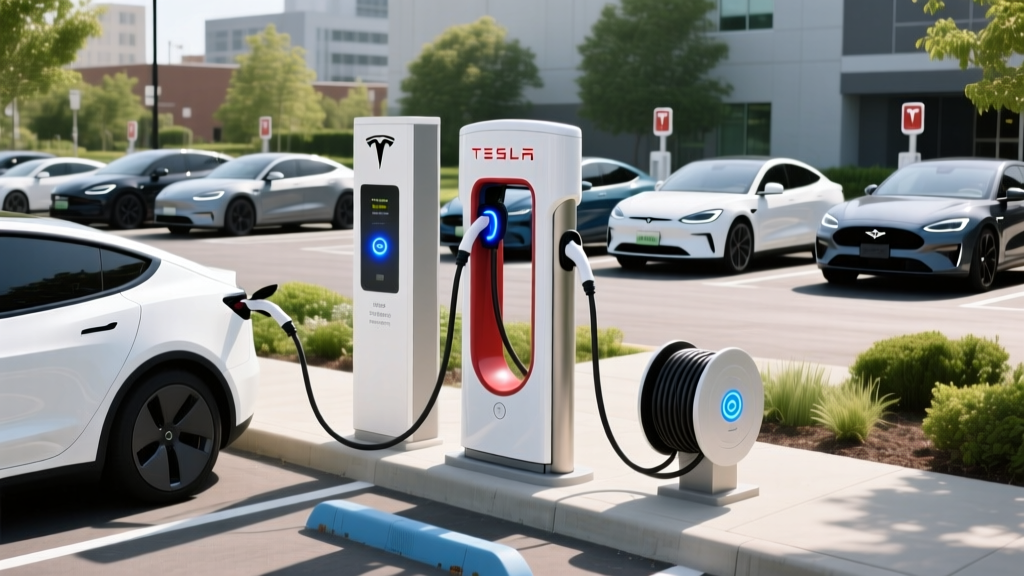
When EV owners ask "what is the Supercharger," they're usually trying to understand Tesla's proprietary DC fast-charging network and how it compares to the broader charging ecosystem. The Tesla Supercharger network is a global system of high-power DC fast-charging stations purpose-built for electric vehicles. Originally exclusive to Tesla vehicles, the network has progressively opened to non-Tesla EVs equipped with the North American Charging Standard (NACS) connector or via a Tesla-approved adapter.
As of 2026, Supercharger V4 stalls deliver peak rates up to 350 kW, though most existing V3 stalls peak at 250 kW. That translates to roughly 200 miles of range added in 15 minutes on a compatible vehicle like the Tesla Model 3 Long Range. But the Supercharger is only one piece of the EV charging puzzle. To make an informed ownership decision, you need to understand all three charging levels, what home installation actually costs, and how connector standards have consolidated around NACS.
The Three Charging Levels: Speeds, Power, and Range Added
Every EV owner interacts with three distinct charging tiers. Understanding the difference between kW (kilowatts — the rate of power delivery, like water pressure from a hose) and kWh (kilowatt-hours — the total energy stored in your battery, like gallons in a tank) is essential. A 75 kWh battery charged at 11.5 kW (Level 2) takes roughly 6.5 hours from empty; that same battery at 150 kW (DC fast) reaches 80% in about 30 minutes.
| Level | Voltage | Power (kW) | Miles of Range Per Hour | Typical Use Case |
|---|---|---|---|---|
| Level 1 (120V AC) | 120V | 1.0–1.8 kW | 3–5 mi/hr | Overnight trickle, PHEV top-ups |
| Level 2 (240V AC) | 240V | 3.3–19.2 kW | 12–75 mi/hr | Home daily charging, workplace |
| DC Fast Charging | 400–800V DC | 50–350 kW | 150–1,200+ mi/hr | Road trips, rapid top-ups |
Level 1 uses a standard household 120V outlet. It's adequate for plug-in hybrids with small batteries (say, 15–20 kWh) or for BEV owners who drive under 30 miles daily. Expect 3–5 miles of range per hour — a full charge on an 80 kWh battery would take over 50 hours.
Level 2 is the backbone of practical EV ownership. A 240V circuit — the same voltage as your electric dryer — delivers enough power to fully recharge most EVs overnight. A 48-amp (11.5 kW) Level 2 charger adds roughly 40–45 miles of range per hour, easily replenishing a day's driving in 2–3 hours.
DC Fast Charging (including Superchargers, Electrify America, and EVgo stations) bypasses your vehicle's onboard charger and feeds DC current directly to the battery. This is what enables road-trip charging, but repeated use at maximum power accelerates battery degradation slightly. Most manufacturers recommend limiting DC fast charging to 80% SoC for daily use.
Home Charger Installation: Electrical Requirements and Real Costs
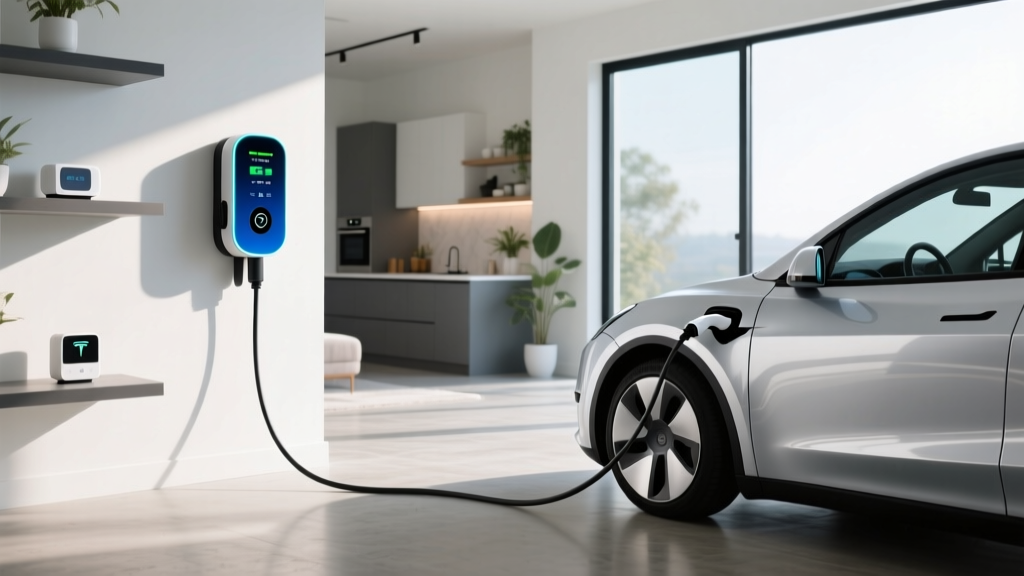
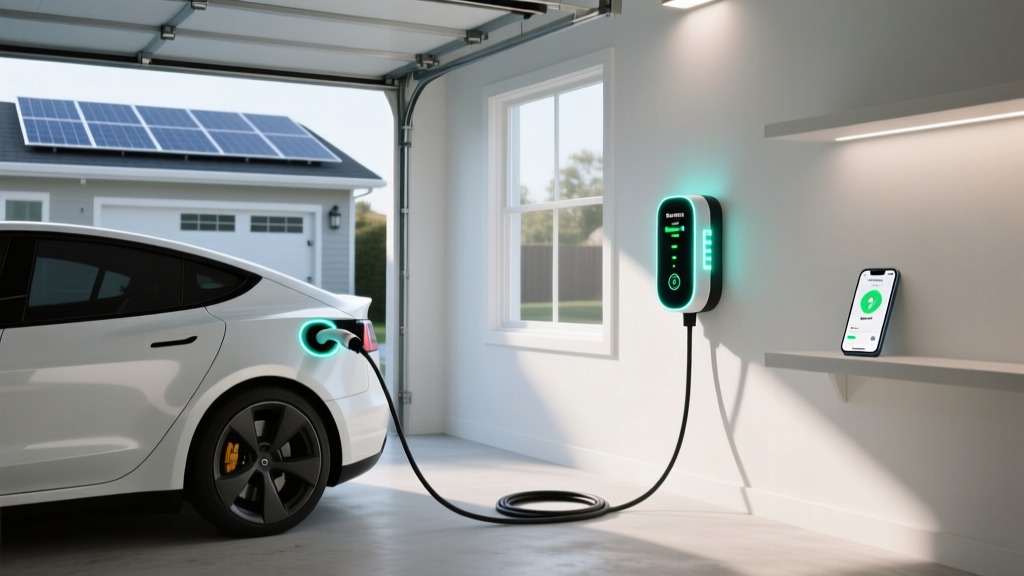
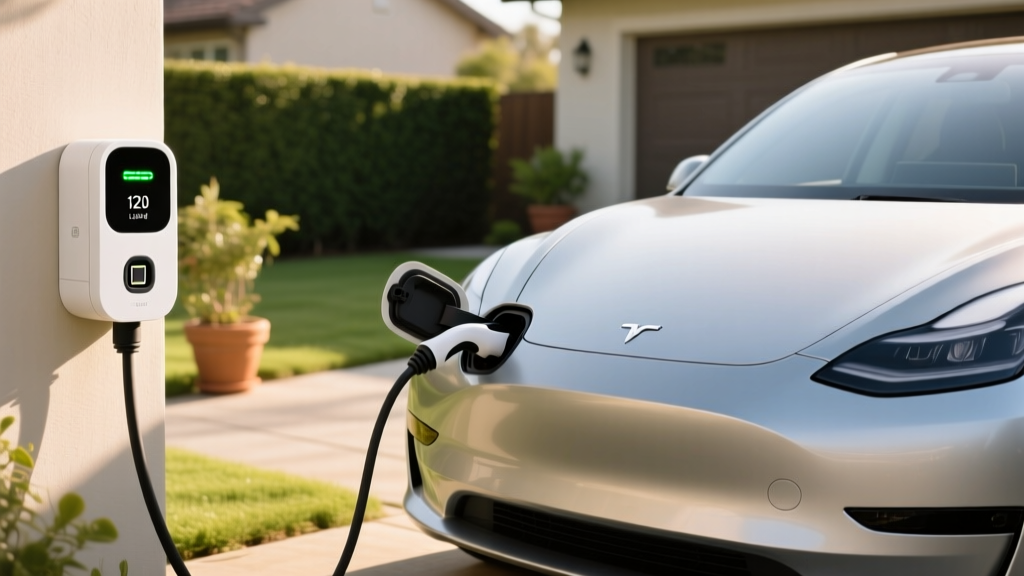
Installing a Level 2 home charger is the single biggest ownership upgrade for most EV buyers. But costs vary enormously depending on your electrical panel's capacity, the distance from panel to charger location, and local permit requirements.
Electrical Requirements
A typical Level 2 home charger requires a dedicated 240V circuit on a breaker sized to 125% of the charger's continuous draw. For a 48-amp charger (the most common high-power residential unit), you need a 60-amp breaker. Smaller 32-amp units require a 40-amp breaker. Hardwired installations are preferred over NEMA 14-50 outlets for chargers drawing above 40 amps, as continuous high-current use can overheat receptacles not rated for sustained EV loads.
Panel upgrade reality: Many homes built before 2000 have 100-amp main service panels. Adding a 60-amp EV circuit to an already-loaded 100A panel may require a panel upgrade to 200 amps, which adds $1,500–$3,500 to your project. Homes with 200-amp panels usually have sufficient headroom. A licensed electrician will perform a load calculation before recommending an upgrade.
| Component | Typical Cost Range | Notes |
|---|---|---|
| Level 2 Charger (Equipment) | $300–$750 | Varies by brand, power, smart features |
| Electrician Labor (standard install) | $500–$1,500 | Short run from panel, no upgrades needed |
| Electrical Panel Upgrade (if needed) | $1,500–$3,500 | 100A → 200A service upgrade |
| Permit & Inspection | $50–$300 | Varies by municipality |
| Conduit, Wiring, Misc. Materials | $100–$500 | Longer runs cost more |
| Total (no panel upgrade) | $950–$3,050 | Most homes with 200A panels |
| Total (with panel upgrade) | $2,450–$6,550 | Older homes with 100A service |
Some utilities offer rebates of $250–$1,000 for Level 2 installations, and certain states provide additional incentives. The federal residential clean energy credit (IRS §25D) may cover 30% of charger equipment and installation costs up to $1,000 through 2032, though eligibility depends on specific requirements — consult a tax professional and verify current-year rules on irs.gov.
Connector Compatibility: NACS, CCS, and CHAdeMO in 2026
The connector landscape has consolidated dramatically. Tesla's North American Charging Standard (NACS) has been adopted by Ford, GM, Rivian, Hyundai, Kia, BMW, and most major automakers for their 2025–2026 model-year EVs. The Combined Charging System (CCS1) remains on older vehicles and some current models, while CHAdeMO is effectively legacy-only (Nissan Leaf being the last notable holdout).
| Connector | Brands Using It (2026 Models) | Network Access | Adapter Needed? |
|---|---|---|---|
| NACS (Tesla) | Tesla, Ford, GM, Rivian, Hyundai, Kia, BMW, Volvo, Polestar | Tesla Supercharger + most new public DC stations | None for NACS-native vehicles |
| CCS1 | VW ID.4 (older), some Stellantis models, legacy EVs | Electrify America, EVgo, ChargePoint DC | NACS-to-CCS adapter for Supercharger access |
| CHAdeMO | Nissan Leaf (legacy) | Limited; stations being phased out | No practical adapter to NACS |
If you own a CCS-equipped EV from model years 2020–2024, a NACS-to-CCS adapter (approximately $200–$300) unlocks access to Tesla's Supercharger network. Ford and GM provide these adapters to qualifying owners. Going forward, virtually all new EVs sold in North America will ship with native NACS ports.
Charging Time Examples: 10–80% by Battery Size and Charger Type
Charging time depends on battery capacity (kWh), peak charge rate (kW), and the vehicle's charge curve. Below are representative 10–80% times for common configurations. Remember: the last 20% (80–100%) charges far more slowly due to battery management system protections — this is why DC fast charging sessions typically target 80%.
| Vehicle Example | Battery (kWh) | Peak DC Rate | 10–80% DC Fast | Level 2 (11.5 kW) 0–100% |
|---|---|---|---|---|
| Tesla Model 3 Long Range | 75 kWh (NMC) | 250 kW | ~25 min (V3 Supercharger) | ~6.5 hours |
| Hyundai Ioniq 5 (Long Range) | 77.4 kWh (NMC) | 238 kW | ~18 min (350 kW station) | ~6.7 hours |
| Ford F-150 Lightning (Ext. Range) | 131 kWh (NMC) | 150 kW | ~42 min | ~11.4 hours |
| Chevrolet Equinox EV | 85 kWh (NMC) | 150 kW | ~35 min | ~7.4 hours |
Cold-weather caveat: In sub-freezing temperatures, expect 10–80% DC fast charge times to increase by 30–50% unless you precondition the battery. Most modern EVs precondition automatically when you navigate to a charger — always use built-in navigation for charging stops to enable this.
Cost to Charge: Home vs. Public vs. Gasoline per Mile
Charging economics vary dramatically based on where and when you plug in. Home charging on a time-of-use (TOU) plan remains the cheapest option by far, while DC fast charging on road trips can approach or exceed the per-mile cost of gasoline in some regions.
| Scenario | Rate ($/kWh) | Vehicle Efficiency | Cost per Mile | Equivalent Gas MPG at $3.50/gal |
|---|---|---|---|---|
| Home (off-peak TOU) | $0.08–$0.12 | 3.5 mi/kWh | $0.023–$0.034 | 103–152 MPG |
| Home (standard rate) | $0.14–$0.18 | 3.5 mi/kWh | $0.040–$0.051 | 69–88 MPG |
| Public Level 2 (ChargePoint, etc.) | $0.20–$0.35 | 3.5 mi/kWh | $0.057–$0.100 | 35–61 MPG |
| DC Fast (Electrify America) | $0.35–$0.55 | 3.5 mi/kWh | $0.100–$0.157 | 22–35 MPG |
| Tesla Supercharger (varies by location/time) | $0.25–$0.45 | 3.5 mi/kWh | $0.071–$0.129 | 27–49 MPG |
| Gasoline (30 MPG combined) | — | — | $0.117 | 30 MPG |
For a driver covering 12,000 miles annually and charging primarily at home on off-peak rates, annual "fuel" cost runs roughly $275–$410 — compared to $1,400 for a 30 MPG gas vehicle at $3.50/gallon. Even exclusive DC fast charging at $0.45/kWh yields about $1,543/year, roughly comparable to gasoline. The economic case for EVs is strongest when you can charge at home.
Recommended Home Level 2 Chargers for 2026
The home charger market has matured significantly. Here are proven units across price and feature tiers, all supporting NACS natively or via included adapters. Every recommendation below lists exact power output, connector type, and key features.
Best Overall: Tesla Wall Connector (Gen 4)
- Power: 48A / 11.5 kW (hardwired, 60A breaker)
- Connector: Native NACS
- Cable Length: 24 feet
- Smart Features: Wi-Fi, OTA updates, load sharing with multiple units, Power-Share with home solar/battery
- Price: ~$475
- Best For: Tesla and NACS-native EV owners wanting maximum simplicity
Best Universal: ChargePoint Home Flex
- Power: Configurable 16A–50A / up to 12 kW (hardwired or NEMA 14-50)
- Connector: NACS (2025+ models); CCS available
- Cable Length: 23 feet
- Smart Features: Wi-Fi, app scheduling, Alexa integration, utility demand-response compatible
- Price: ~$550–$650
- Best For: Multi-EV households, utility TOU plan users
Budget Pick: Emporia Level 2 EV Charger
- Power: 48A / 11.5 kW (hardwired) or 40A / 9.6 kW (NEMA 14-50)
- Connector: NACS or J1772 (with adapter)
- Cable Length: 24 feet
- Smart Features: Wi-Fi, app monitoring, solar integration with Emporia energy monitor
- Price: ~$350–$400
- Best For: Cost-conscious buyers who still want 48A output and smart scheduling
Safety, Code, and Installation Best Practices
EV charging places sustained high-current loads on your home's electrical system — far more demanding than intermittent appliances like dryers or ovens. Corner-cutting here creates fire risk. Follow these non-negotiable guidelines:
- Dedicated circuit: Your Level 2 charger must be on its own dedicated breaker — never shared with other loads.
- Breaker sizing: NEC Article 625 requires the breaker to be rated at 125% of the charger's continuous amperage. A 48A charger requires a 60A breaker; a 32A charger requires a 40A breaker.
- GFCI protection: Outdoor receptacles (NEMA 14-50) require GFCI breakers per NEC 2020+. Hardwired chargers have built-in ground-fault protection and typically don't require a GFCI breaker — which avoids nuisance tripping issues common with GFCI breakers on EV circuits.
- Outdoor rating: If installing outdoors, ensure the charger carries a NEMA 4 or IP65 weather rating. Most major units (Tesla Wall Connector, ChargePoint Home Flex) are rated for outdoor use.
- Permit and inspection: Virtually all jurisdictions require an electrical permit for a new 240V circuit. The inspection verifies wire gauge, breaker sizing, grounding, and clearances. Skipping the permit voids homeowner's insurance coverage for related incidents.
- Wire gauge: A 60A circuit requires 6 AWG copper (THHN in conduit) or 4 AWG NM-B (Romex) — your electrician will specify based on run length and local code.
Always hire a licensed electrician familiar with EV charger installations. Per NFPA 70 (National Electrical Code), Article 625 governs EV charging system installation specifically. Ask your electrician to perform a written load calculation before committing to a circuit size.
Frequently Asked Questions
How much does it cost to install a home EV charger?
A standard Level 2 installation (48A charger, short wire run, 200A panel with spare capacity) typically costs $950–$3,050 including equipment, electrician labor, and permit. If your home needs a panel upgrade from 100A to 200A service, add $1,500–$3,500, bringing the total to roughly $2,450–$6,550. Get at least three quotes and confirm the electrician has EV-specific experience.
How fast will each charging level add range?
Level 1 (120V) adds 3–5 miles per hour — suitable only for PHEVs or very low-mileage drivers. Level 2 (240V, 48A) adds roughly 40–45 miles per hour, fully recharging most EVs overnight. DC fast charging (including Superchargers at 150–250 kW) can add 150–200+ miles in 15–20 minutes, though the charge curve tapers significantly above 80% SoC.
Which connector or charger is compatible with my EV?
For 2025–2026 model-year EVs from Tesla, Ford, GM, Rivian, Hyundai, Kia, and most other brands, the connector is NACS. Older CCS-equipped EVs (2020–2024) can access the Supercharger network with a NACS-to-CCS adapter ($200–$300). Nissan Leaf owners with CHAdeMO are limited to remaining CHAdeMO public stations, which are declining in availability.
How much does charging cost per mile vs. gas?
Home charging at off-peak rates ($0.08–$0.12/kWh) costs roughly $0.02–$0.03 per mile — the equivalent of 100–150 MPG in a gas car. Public DC fast charging ($0.35–$0.55/kWh) costs $0.10–$0.16 per mile, comparable to a 22–35 MPG gas vehicle. The more you charge at home, the stronger the economic advantage.
What electrical upgrades might I need?
The most common upgrade is a panel replacement from 100A to 200A service, needed in older homes with insufficient spare capacity. This costs $1,500–$3,500 and typically takes one day. Some homes also need a new conduit run if the garage is far from the panel. In rare cases, the utility may need to upgrade the service drop to your home. Your electrician's load calculation will identify any required upgrades before work begins.