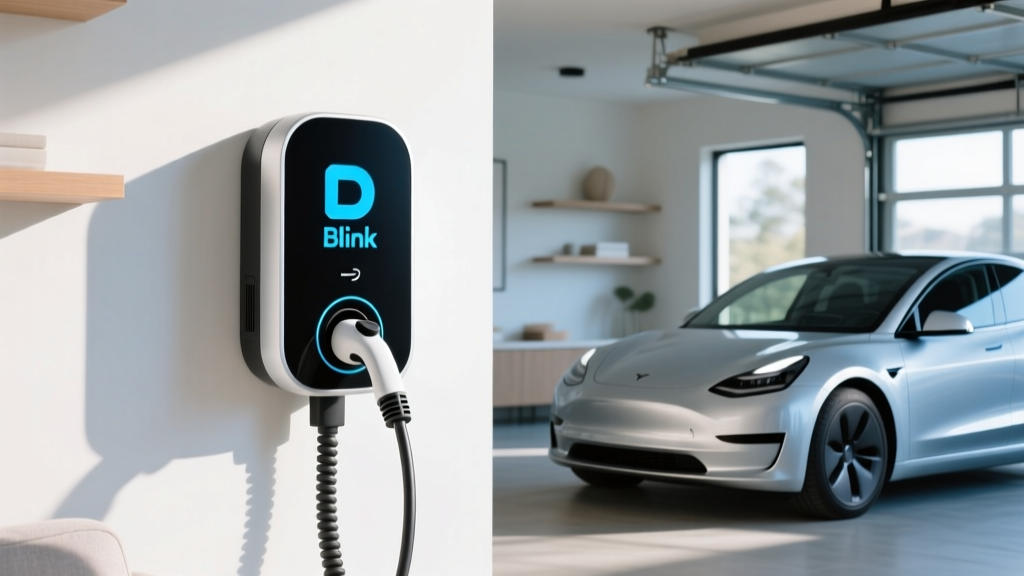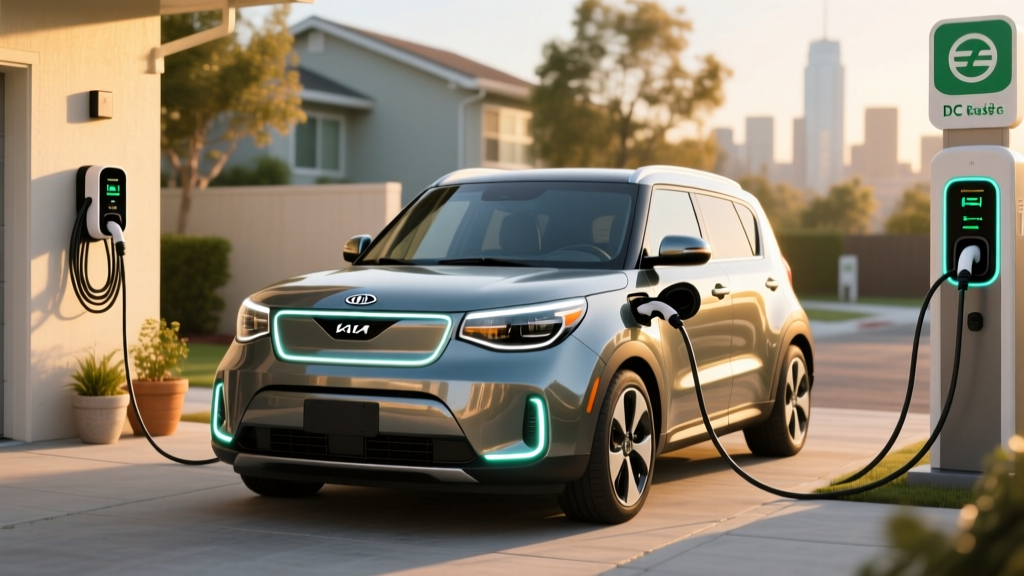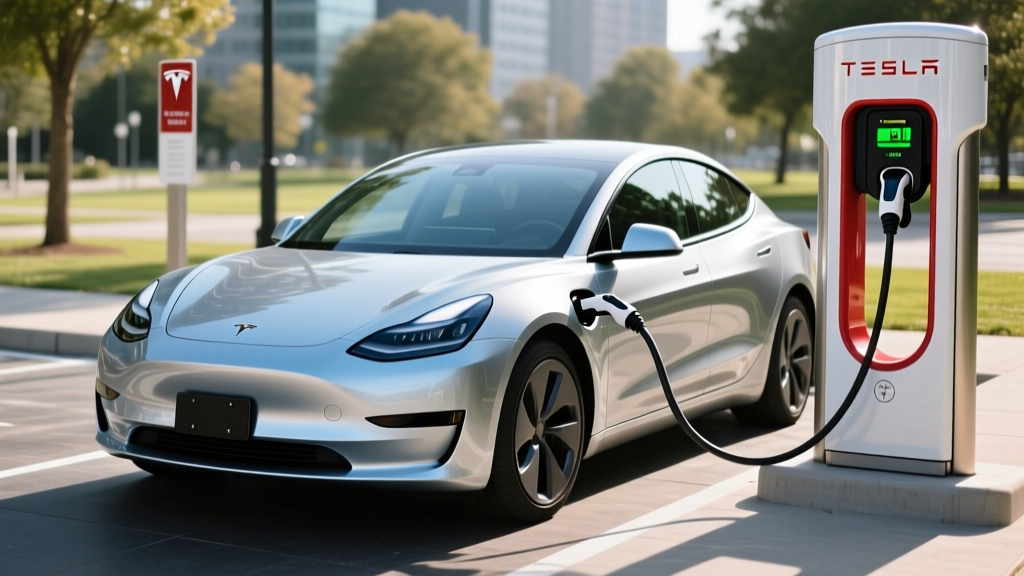
If you've browsed EV forums or watched Tesla videos, you've likely encountered the term "supercharged" and wondered: is this just marketing jargon, or does it describe something technically different from regular EV charging? The short answer is that "Supercharger" is Tesla's branded name for its DC fast-charging network — but the physics behind it apply to every electric vehicle on the road. In this guide, we'll unpack exactly what supercharging means, how it compares to Level 1 and Level 2 charging, what it costs to charge at home versus in public, and what you'll need to install a home charger in 2026.
What Does "Supercharged" Actually Mean for an EV?
When someone asks "what is a supercharged EV," they're usually conflating two things: Tesla's proprietary Supercharger network and the broader concept of DC fast charging (sometimes called Level 3 charging). Here's the distinction:
- Tesla Supercharger: A specific network of DC fast-charging stations built and operated by Tesla. As of early 2026, there are over 6,500 Supercharger stations in North America, many now open to non-Tesla EVs via the NACS (North American Charging Standard) connector or a built-in Magic Dock adapter.
- DC Fast Charging (DCFC): The generic term for high-power charging that bypasses the vehicle's onboard charger and feeds direct current straight into the battery pack. Networks like Electrify America, EVgo, and ChargePoint all offer DCFC — they just don't call it "supercharging."
The critical concept here is the difference between kW (kilowatts) and kWh (kilowatt-hours). Think of kW as the speed of energy flow — like water pressure in a hose — and kWh as the total amount of energy delivered — like gallons in a bucket. A 250 kW Supercharger pushes energy into your battery much faster than a 7.2 kW home charger, but both ultimately deliver energy measured in kWh. Your battery's capacity is rated in kWh (e.g., 75 kWh usable); the charger's output is rated in kW.
The Three Charging Levels: Speeds, Power, and Range Added
Every EV owner needs to understand the three charging levels. The table below summarizes what each delivers in real-world terms:
| Level | Voltage | Power (kW) | Miles of Range Added Per Hour | Typical Use Case |
|---|---|---|---|---|
| Level 1 | 120V AC | 1.0–1.4 kW | 3–5 mi/hr | Overnight trickle; PHEVs; emergency top-ups |
| Level 2 | 240V AC | 3.3–19.2 kW | 12–75 mi/hr | Home daily charging; workplace; hotels |
| DC Fast (Level 3) | 400–900V DC | 50–350+ kW | 150–1,200+ mi/hr (peak) | Road trips; highway corridor stops |
A few real-world nuances matter here:
- Level 2 sweet spot: Most home chargers deliver 7.2–11.5 kW (32–48 amps on a 240V circuit). A vehicle like the Hyundai Ioniq 5 (84 kWh usable battery) gains roughly 30–38 miles of range per hour at 11.5 kW — enough to fully replenish overnight.
- DC fast charging isn't linear: A 350 kW Electrify America stall may peak at 350 kW for the first few minutes, but as the battery fills, the charge rate tapers. The Ioniq 5 can sustain ~230 kW from 10–80% in roughly 18 minutes under ideal conditions, but above 80% the rate drops dramatically to protect battery health. That's why you'll see "10–80%" times quoted rather than "0–100%."
- Cold weather penalty: Battery chemistry slows down in cold temperatures. Expect 20–40% longer DC fast-charge times below freezing unless your vehicle has an active battery preconditioning system (Tesla, Hyundai/Kia, and BMW all include this).
Home Charger Installation: Electrical Requirements and Costs
Installing a Level 2 home charger is the single biggest quality-of-life upgrade for EV ownership. Here's what's involved electrically and financially.
Electrical Requirements
A typical Level 2 home charger requires a dedicated 240-volt circuit, similar to what an electric dryer or oven uses. The specific amperage depends on the charger:
- 32-amp charger (7.7 kW): Requires a 40-amp breaker (NEC code mandates the circuit be rated 125% of continuous load).
- 40-amp charger (9.6 kW): Requires a 50-amp breaker.
- 48-amp charger (11.5 kW): Requires a 60-amp breaker.
- 64-amp/80-amp chargers (15.3–19.2 kW): Require 80–100 amp breakers; often need upgraded wiring (2 AWG or larger copper) and may exceed what a standard 200-amp service panel can spare.
Do You Need a Panel Upgrade?
This is the question that catches many homeowners off guard. If your home has a 100-amp or 150-amp main electrical panel (common in homes built before 1990), adding a 40–60 amp EV circuit may push you past safe capacity. Signs you might need a panel upgrade:
- Your panel is already near capacity with existing appliances (electric range, dryer, central AC, hot tub).
- You have no spare breaker slots.
- Your utility service entrance is rated below 200 amps.
A panel upgrade from 100A to 200A typically costs $1,500–$3,500 depending on your municipality, the distance from the utility transformer, and whether new service conductors are needed. A full upgrade to 400A (for homes with multiple EVs or heavy electric loads) runs $3,000–$7,000. Always get a load calculation from a licensed electrician before assuming your panel can handle the addition.
| Component | Cost Range | Notes |
|---|---|---|
| Level 2 Charger (hardwired or plug-in) | $300–$750 | Smart WiFi-enabled models; basic models from $200 |
| Electrical Permit | $50–$250 | Varies by municipality; some jurisdictions waive for EV |
| Electrician Labor (standard install) | $400–$1,200 | Short run from panel to garage; assumes 200A panel with space |
| Electrician Labor (long run/conduit) | $1,200–$3,000+ | Charger far from panel; trenching; attic/crawlspace runs |
| Panel Upgrade (if needed) | $1,500–$3,500 | 100A to 200A service upgrade |
| NEMA 14-50 Outlet (optional, for plug-in chargers) | $100–$300 | Allows charger portability; GFCI breaker required by NEC 2023+ |
| Total (no panel upgrade, short run) | $750–$2,200 | Most common scenario for newer homes |
| Total (with panel upgrade) | $2,500–$6,500 | Older homes or heavy-load households |
Safety and Code Considerations
The National Electrical Code (NEC) has specific requirements for EV charging circuits that your electrician must follow:
- Dedicated circuit: Your EV charger must have its own breaker — no sharing with other outlets or appliances.
- GFCI protection: NEC 2023 and later requires ground-fault circuit interrupter protection for EV outlets. Hardwired chargers may have built-in GFCI, but plug-in units on NEMA 14-50 outlets require a GFCI breaker (adding $50–$120 to the panel cost).
- Outdoor rating: If your charger is mounted outside, it must carry a NEMA 4 or NEMA 4X weather rating. Most reputable chargers (ChargePoint, Emporia, Wallbox) are rated for outdoor use.
- Wire gauge: A 48-amp charger on a 60-amp circuit requires at minimum 6 AWG copper wire (THHN in conduit) or 4 AWG if using NM-B (Romex) cable, which has a lower ampacity rating.
Connector Compatibility: NACS, CCS, and CHAdeMO in 2026
The connector landscape has consolidated significantly since 2023, when Ford and GM announced they would adopt Tesla's NACS plug. Here's where things stand for 2026 model-year vehicles:
| Connector | Brands Using It | Notes |
|---|---|---|
| NACS (Tesla) | Tesla, Ford, GM, Rivian, Volvo, Polestar, Mercedes-Benz, Nissan (new models), Hyundai/Kia (select 2026+ models) | Access to Tesla Supercharger network; compact plug; no CCS Combo coupling |
| CCS1 (Combo) | Volkswagen, BMW, Stellantis, Hyundai/Kia (remaining models), Lucid, legacy Nissan Leaf replacements | Standard on Electrify America, EVgo; adapters to NACS available from Tesla and third parties ($150–$250) |
| CHAdeMO | Nissan Leaf (legacy), Mitsubishi Outlander PHEV (older) | Effectively discontinued for new vehicles; stations still operational but dwindling |
Adapter reality: If you own a CCS-equipped EV and want to use Tesla Superchargers, Tesla sells an official CCS-to-NACS adapter for approximately $200. Third-party adapters from brands like Lectron and A2Z are also available. Conversely, NACS-equipped Fords and Rivians can access Electrify America stations using a NACS-to-CCS adapter. Always check your vehicle manufacturer's compatibility list before purchasing an adapter — not all adapters support all charge rates.
What Charging Actually Costs: Home vs. Public vs. Gas
The economics of EV charging depend heavily on where you charge. Here's a realistic cost breakdown for 2026:
| Charging Scenario | Cost per kWh | Cost per Mile | Annual Cost (12,000 mi) |
|---|---|---|---|
| Home (national avg. electricity, 16¢/kWh) | $0.16 | $0.046 | $552 |
| Home (off-peak utility rate, 8¢/kWh) | $0.08 | $0.023 | $276 |
| Home (California peak, 35¢/kWh) | $0.35 | $0.10 | $1,200 |
| Public Level 2 (ChargePoint/EVgo) | $0.25–$0.49 | $0.07–$0.14 | $840–$1,680 |
| DC Fast Charging (Electrify America) | $0.35–$0.55 | $0.10–$0.16 | $1,200–$1,920 |
| Tesla Supercharger (avg. national) | $0.28–$0.36 | $0.08–$0.10 | $960–$1,200 |
| Gas vehicle (25 MPG, $3.40/gal) | — | $0.136 | $1,632 |
Key takeaway: If you charge primarily at home on a standard or off-peak rate, your fuel cost per mile is roughly one-quarter to one-third that of a 25 MPG gasoline car. Even frequent DC fast charging tends to match or slightly beat gasoline on a per-mile basis. The savings disappear only in high-cost electricity markets (parts of California, Hawaii, the Northeast) where residential rates exceed 30¢/kWh and you rarely use off-peak plans.
Many utilities now offer time-of-use (TOU) plans specifically designed for EV owners, with super off-peak rates between midnight and 6 AM. If your utility offers one, enrolling can cut your charging cost by 40–60% compared to a flat rate. Check fueleconomy.gov for efficiency data on specific EV models to calculate your personal cost per mile.
Charging Times for Common Battery Sizes
How long does it actually take to charge? Here are real-world estimates for popular 2025–2026 EV battery sizes:
| Vehicle (Battery kWh) | Level 1 (1.2 kW) 10–80% | Level 2 (11.5 kW) 10–80% | DC Fast (Peak kW) 10–80% |
|---|---|---|---|
| Chevrolet Equinox EV (85 kWh) | ~49 hours | ~5.1 hours | ~30 min (150 kW peak) |
| Hyundai Ioniq 5 (84 kWh) | ~49 hours | ~5.0 hours | ~18 min (230 kW peak, 800V) |
| Tesla Model Y LR (75 kWh) | ~44 hours | ~4.5 hours | ~25 min (250 kW V3 Supercharger) |
| Ford F-150 Lightning Ext. (131 kWh) | ~76 hours | ~7.9 hours | ~41 min (150 kW peak) |
| BMW iX xDrive50 (111 kWh) | ~65 hours | ~6.7 hours | ~31 min (200 kW peak) |
| Chevrolet Bolt EV (65 kWh) | ~38 hours | ~3.9 hours | ~55 min (55 kW peak — limited DCFC) |
Notice how dramatically DC fast-charge times vary based on the vehicle's charge architecture. The Ioniq 5's 800-volt system enables sustained high-power charging that 400-volt vehicles (like the Bolt EV or base Equinox EV) simply can't match. If road trips are a priority, the vehicle's DC fast-charge capability matters as much as its EPA range.
Recommended Home Chargers for 2026
ChargePoint Home Flex
- Power: Up to 12 kW (50 amps), configurable down to 16A
- Connector: NACS or CCS1 (J1772 with adapter)
- Cable: 23 feet
- Smart features: WiFi, app scheduling, Alexa integration, energy tracking
- Price: ~$550–$650
- Best for: Most homeowners; flexible amperage lets you match your circuit capacity
Emporia Vue EV Charger
- Power: Up to 11.5 kW (48 amps)
- Connector: NACS or J1772
- Cable: 24 feet
- Smart features: WiFi, real-time energy monitoring, solar integration, load management
- Price: ~$400–$500
- Best for: Budget-conscious buyers; solar-panel homes; integrates with Emporia Vue energy monitor
Tesla Wall Connector (Gen 4)
- Power: Up to 11.5 kW (48 amps)
- Connector: NACS native; includes J1772 adapter in box
- Cable: 24 feet
- Smart features: WiFi, power sharing (link multiple units on one circuit), OTA updates
- Price: ~$475
- Best for: Tesla owners; households with multiple Teslas (power-sharing feature)
Wallbox Pulsar Plus
- Power: Up to 11.5 kW (48 amps)
- Connector: J1772 (CCS1 via adapter) or NACS
- Cable: 25 feet
- Smart features: WiFi + Bluetooth, Eco-Smart mode (solar matching), Power Sharing
- Price: ~$500–$600
- Best for: Compact design; solar homes; tight garage spaces
All four chargers above are UL-listed, NEMA 4 rated for outdoor installation, and compatible with the residential clean energy provisions under IRS guidelines. Note: the federal §30D tax credit applies to vehicle purchases; however, a separate 30C Alternative Fuel Infrastructure Tax Credit may cover up to 30% of home charger equipment and installation costs (capped at $1,000 for residential) if you live in an eligible census tract. Consult a tax professional for your specific eligibility.
Frequently Asked Questions
How much does it cost to install a home EV charger?
For a straightforward installation in a home with a 200-amp panel and the charger located near the panel, expect to pay $750–$2,200 total (charger + electrician + permit). If your home needs a panel upgrade from 100A to 200A, total costs typically land between $2,500–$6,500. Long wire runs (over 50 feet from panel to charger), trenching, or attic conduit work push costs toward the higher end. Always get at least two quotes from licensed electricians.
How fast will each charging level add range?
Level 1 (standard 120V outlet) adds roughly 3–5 miles per hour — adequate for plug-in hybrids with small batteries but painfully slow for full EVs. Level 2 (240V home charger) adds 12–75 miles per hour depending on the charger's kW output and the vehicle's onboard charger acceptance rate. DC fast charging can add 150–1,200+ miles of range per hour at peak, but sessions are typically measured in minutes (10–80% in 18–45 minutes) because the rate tapers significantly above 80% state of charge.
Which connector/charger is compatible with my EV?
Check your vehicle's charge port. For 2026 models: Tesla, Ford, GM, Rivian, and select Hyundai/Kia models use the NACS connector. Volkswagen, BMW, Stellantis, and remaining Hyundai/Kia models use CCS1. The older CHAdeMO standard is found only on legacy Nissan Leafs and Mitsubishi PHEVs. For home Level 2 charging, all vehicles accept J1772 or NACS; most chargers come with the appropriate plug or an adapter. Consult your owner's manual or the manufacturer's website for the exact connector and maximum onboard charger acceptance rate (this determines your maximum Level 2 speed).
How much does charging cost per mile vs gas?
At the national average electricity rate of ~16¢/kWh and an average EV efficiency of 3.5 miles per kWh, you'll pay approximately $0.046 per mile charging at home. A comparable gasoline vehicle getting 25 MPG at $3.40/gallon costs $0.136 per mile. That's roughly a 66% savings per mile. Even public DC fast charging at $0.45/kWh ($0.13/mile) matches or beats gasoline. The savings are most dramatic if you can charge on off-peak utility rates ($0.08/kWh or less), bringing your cost below $0.03 per mile.
What electrical upgrades might I need?
The most common upgrade is a panel capacity increase (100A to 200A) for older homes. You may also need: a new dedicated breaker and correctly sized wiring (6 AWG for 48A circuits); a GFCI breaker if using a NEMA 14-50 plug-in outlet (required by NEC 2023+); or a smart load-management system (like the Emporia Vue or Span smart panel) that allows the EV charger to dynamically reduce power when other appliances are running — this can avoid a panel upgrade entirely in some cases. A licensed electrician should perform a load calculation per NEC Article 220 before any installation.
Is "supercharging" bad for my EV battery?
Frequent exclusive use of DC fast charging can accelerate battery degradation compared to Level 2 charging — but the effect is smaller than commonly feared. Studies from NREL and real-world fleet data suggest that modern battery thermal management systems (liquid cooling) mitigate most of the heat-related stress. Tesla's own data shows vehicles that Supercharge frequently retain roughly 90–92% battery capacity after 100,000 miles, versus 93–95% for primarily Level 2-charged vehicles. The practical advice: use DC fast charging for road trips and Level 2 for daily charging. Avoid routinely charging to 100% on DCFC — stop at 80% for the best combination of speed and battery longevity.
Can I install a home charger myself?
While a plug-in charger connected to an existing NEMA 14-50 outlet is technically a DIY connection, we strongly recommend hiring a licensed electrician for any new circuit installation. EV charging draws continuous high current for hours, which is more demanding than intermittent loads like a dryer. Improper wire sizing, loose connections, or missing GFCI protection create fire risk. Additionally, most municipalities require a permit and inspection for new 240V circuits, and unpermitted work can void your homeowner's insurance in the event of an electrical fire. Budget electrician quotes typically include permit handling.