What Is Range Anxiety — and Why Most EV Owners Get Over It Fast
Range anxiety is the fear that an electric vehicle will run out of battery before reaching a destination or a charger. It consistently ranks as the top reason buyers hesitate before going electric. But here's what the data shows: according to fueleconomy.gov, the median EPA range of new EVs sold in 2026 exceeds 280 miles — more than enough for the average American's 37-mile daily round-trip commute with plenty of buffer.
The real antidote to range anxiety isn't a bigger battery. It's understanding how charging works, installing reliable home charging, and knowing where to plug in on the road. This guide breaks down every charging level, the true cost to install and operate, connector compatibility, and the equipment that actually delivers.
Charging Levels Explained: Speeds, Power, and Miles Added Per Hour
EV charging falls into three tiers. The critical distinction: kW (kilowatts) measures power — how fast energy flows into the battery. kWh (kilowatt-hours) measures energy — how much the battery holds. A 75 kWh battery charged at 11.5 kW takes roughly 6.5 hours from empty to full. Confusing these two is the most common EV literacy mistake.
| Level | Voltage | Power (kW) | Miles of Range Per Hour | Best For |
|---|---|---|---|---|
| Level 1 | 120V AC | 1.0–1.4 kW | 3–5 mi/hr | Overnight top-ups, PHEVs, low-mileage drivers |
| Level 2 | 240V AC | 3.3–19.2 kW | 12–75 mi/hr | Daily home charging, workplace, shopping centers |
| DC Fast Charge | 400–900V DC | 50–350 kW | 150–1,000+ mi/hr | Road trips, highway corridors, rapid top-ups |
Charging Time Examples by Battery Size
Charge times below reflect a 10–80% session (the practical fast-charging window, since charge speed tapers sharply above 80% to protect battery health):
- 60 kWh battery (e.g., base Tesla Model 3 RWD): ~25 min on a 250 kW Supercharger; ~4.5 hrs on an 11.5 kW Level 2
- 82 kWh battery (e.g., Hyundai Ioniq 5 Long Range): ~18 min on a 350 kW charger (800V architecture); ~6 hrs on an 11.5 kW Level 2
- 100 kWh battery (e.g., Ford F-150 Lightning Extended): ~35 min on a 150 kW charger; ~8 hrs on an 11.5 kW Level 2
Peak charge rates are never sustained across the full session. A vehicle rated at 250 kW may hold that peak for only 5–10 minutes before tapering. The 10–80% time is the honest metric to compare.
Home Charger Installation: Requirements, Costs, and Panel Upgrades
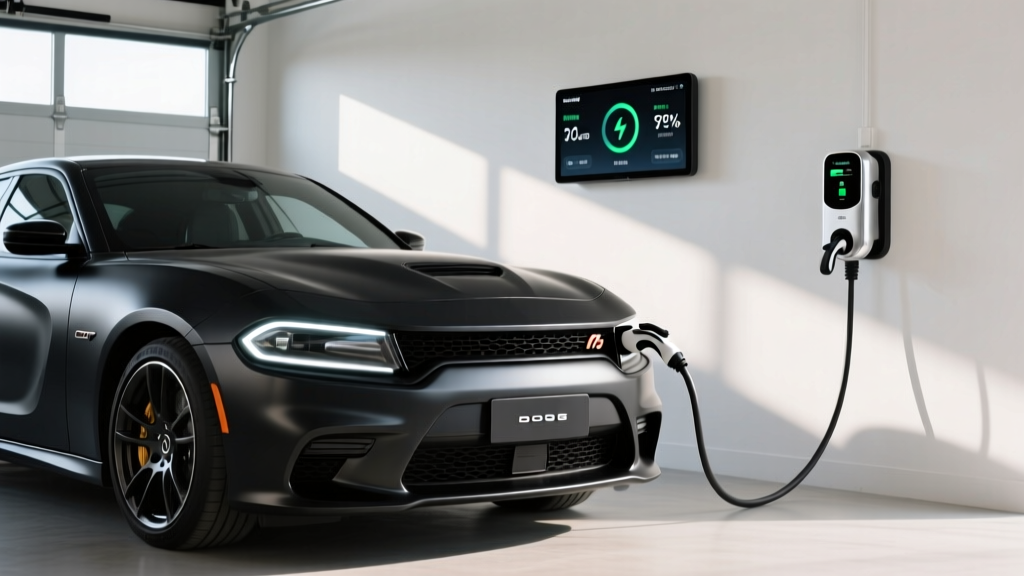
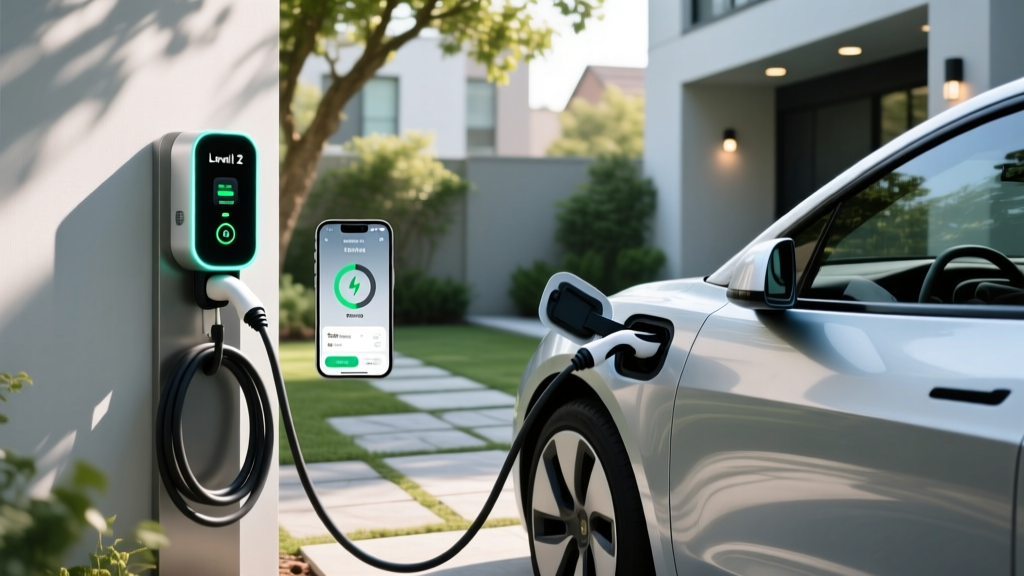
Installing a Level 2 home charger is the single most effective way to eliminate range anxiety. You wake up every morning with a full battery, and the cost per mile is a fraction of gasoline. But installation complexity and cost vary widely depending on your home's electrical panel.
Electrical Requirements
A typical Level 2 charger requires a dedicated 240V circuit. The most common configurations:
- 40-amp circuit / 32-amp continuous: Delivers 7.7 kW — adequate for most EVs overnight
- 50-amp circuit / 40-amp continuous: Delivers 9.6 kW — recommended for larger batteries (80+ kWh)
- 60-amp circuit / 48-amp continuous: Delivers 11.5 kW — optimal for heavy daily use and large-battery trucks/SUVs
The National Electrical Code (NEC) requires EV chargers to be treated as continuous loads, meaning the circuit must be rated at 125% of the charger's maximum draw. A 48-amp charger needs a 60-amp breaker.
Installation Cost Breakdown
| Component | Simple Install (panel nearby) | Complex Install (panel far / upgrade needed) |
|---|---|---|
| Level 2 charger (hardware) | $350–$700 | $350–$700 |
| Electrician labor | $300–$800 | $1,000–$2,500 |
| Electrical permit | $50–$150 | $50–$200 |
| Panel upgrade (100A → 200A) | $0 | $1,500–$3,500 |
| Conduit/wiring (long runs) | $100–$300 | $500–$1,500 |
| Total estimated cost | $800–$1,950 | $3,400–$8,400 |
Homes built before 1990 often have 100-amp panels that may lack capacity for a dedicated 50–60 amp EV circuit alongside existing loads like electric dryers, ovens, and HVAC. A licensed electrician will perform a load calculation (NEC Article 220) to determine whether a panel upgrade is necessary. Don't skip this step — it's both a safety and code requirement.
Safety and Code Considerations
- Dedicated circuit: The EV charger must have its own breaker — no sharing with other appliances
- GFCI protection: NEC 2023/2026 requires GFCI breakers for outdoor receptacles; many hardwired installations bypass this requirement, which is both safer and more reliable (GFCI nuisance trips are a known issue with some EVSE units on receptacles)
- Outdoor rating: If the charger is mounted outside, ensure the unit carries a NEMA 4 or NEMA 4X rating for weather resistance
- Hardwired vs. plug: Hardwired chargers (no plug) are generally preferred for 48A+ installations — they eliminate the NEMA 14-50 receptacle as a failure point and may not require GFCI breakers in some jurisdictions
Connector Compatibility: NACS, CCS1, and CHAdeMO
The connector landscape has consolidated significantly. Tesla's North American Charging Standard (NACS) has been adopted by nearly every major automaker for 2025+ models, but CCS1 remains widely deployed on existing vehicles and public infrastructure.
| Connector | Brands Using It (2026 models) | Public Network Availability |
|---|---|---|
| NACS (Tesla) | Tesla, Ford, GM, Rivian, Hyundai, Kia, BMW, Mercedes, Volvo, Polestar, and most new models | Tesla Supercharger (25,000+ stalls), plus growing third-party networks |
| CCS1 | Legacy models (pre-2025 VW ID.4, older Bolt EV, earlier Ioniq 5), some commercial vehicles | Electrify America, EVgo, ChargePoint — widely available |
| CHAdeMO | Nissan Leaf (discontinued), Mitsubishi Outlander PHEV (older) | Declining — most networks phasing out |
If your EV has a CCS1 port but you want access to Tesla Superchargers, a CCS-to-NACS adapter (approximately $200–$250 from Tesla or approved third parties) unlocks the largest fast-charging network in North America. Most 2025+ models with native NACS ports can use both Tesla Superchargers and CCS stations via the included NACS-to-CCS adapter.
Cost to Charge: Home vs. Public vs. Gas
One of the strongest arguments against range anxiety is economics: charging at home is dramatically cheaper than gasoline per mile, and even public DC fast charging often beats gas on a cost-per-mile basis.
| Scenario | Rate ($/kWh) | Cost for 300-Mile Fill (75 kWh battery) | Cost Per Mile |
|---|---|---|---|
| Home Level 2, off-peak utility rate | $0.08–$0.13 | $6.00–$9.75 | $0.02–$0.03 |
| Home Level 2, standard residential rate | $0.14–$0.18 | $10.50–$13.50 | $0.035–$0.045 |
| Public Level 2 (workplace, shopping) | $0.20–$0.35 | $15.00–$26.25 | $0.05–$0.09 |
| DC Fast Charge (Electrify America, EVgo) | $0.35–$0.55 | $26.25–$41.25 | $0.09–$0.14 |
| Tesla Supercharger (varies by location) | $0.25–$0.40 | $18.75–$30.00 | $0.06–$0.10 |
| Gasoline (25 MPG avg, $3.40/gal) | — | $40.80 | $0.136 |
At a national average residential rate of ~$0.16/kWh (per EIA data), charging a 75 kWh battery at home costs roughly $12 — about 70% less than a comparable gasoline fill-up. Even at the most expensive public DC fast chargers, EVs often match or beat gasoline per mile.
Pro tip: many utilities offer time-of-use (TOU) plans with off-peak rates as low as $0.06–$0.08/kWh overnight. Scheduling your EV to charge between midnight and 5 AM can cut your fuel cost to under $5 for a full battery.
Recommended Home Chargers: Power, Features, and Price
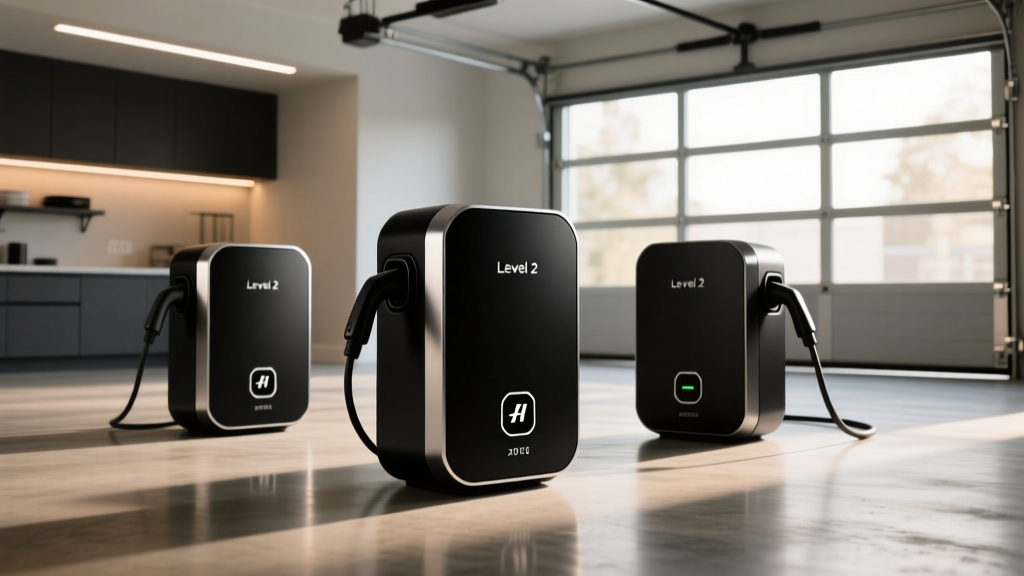
After testing dozens of Level 2 units across multiple homes and vehicles, these are the chargers that consistently deliver reliable daily performance:
Best Overall: ChargePoint Home Flex
- Power output: Up to 12 kW (50A circuit) — adjustable down to 16A for lower-capacity panels
- Connector: NACS or J1772 (configurable at purchase)
- Cable length: 23 ft (standard)
- Smart features: Wi-Fi, app scheduling, Alexa integration, energy tracking
- Price: ~$550–$650
Best for Tesla / NACS Homes: Tesla Wall Connector
- Power output: Up to 11.5 kW (48A / 60A circuit)
- Connector: Native NACS — no adapter needed for Tesla or NACS-equipped vehicles
- Cable length: 24 ft
- Smart features: Wi-Fi, over-the-air updates, power sharing between multiple units
- Price: ~$420–$475
Best Budget: Emporia Level 2 EV Charger
- Power output: Up to 11.5 kW (48A)
- Connector: J1772 (NACS adapter available)
- Cable length: 24 ft
- Smart features: Wi-Fi, app control, solar integration with Emporia energy monitor
- Price: ~$350–$400
Best Heavy-Duty: Grizzl-E Smart
- Power output: Up to 10 kW (40A)
- Connector: J1772 or NACS
- Cable length: 24 ft
- Smart features: OCPP-compatible, works with multiple energy management platforms
- Price: ~$450–$550
- Note: Built in Canada, rated to -40°F — ideal for cold-climate garages and outdoor installs
Public Charging: Networks, Reliability, and Trip Planning
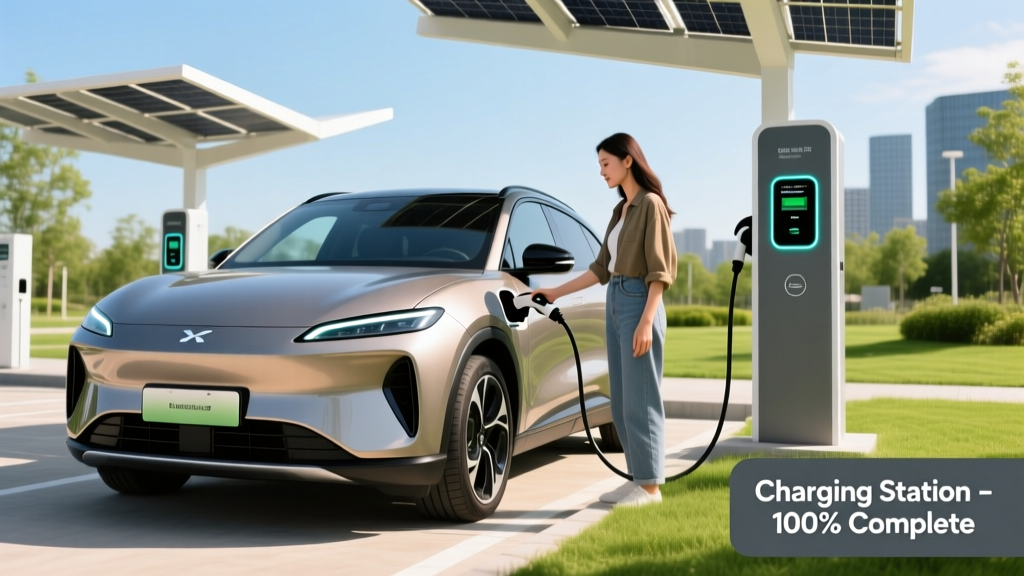
For road trips, public DC fast charging infrastructure has expanded considerably. The major networks in 2026:
- Tesla Supercharger: 25,000+ stalls in North America, now open to non-Tesla NACS vehicles. Consistently highest reliability scores in J.D. Power EV charging satisfaction studies.
- Electrify America: ~1,000 stations, 350 kW capable on many stalls. CCS1 native; NACS availability growing.
- EVgo: ~1,100 stations, strong urban and highway coverage, partnerships with GM and Ford.
- ChargePoint: Largest network by station count, but mix of Level 2 and DC fast — check the app for DC availability before planning a stop.
Trip planning apps like A Better Route Planner (ABRP) and built-in vehicle navigation (Tesla, Rivian, GM Ultium-based vehicles) automatically factor in battery state of charge, elevation, temperature, and charger availability to minimize stops and range anxiety.
FAQ: Your Range Anxiety Questions Answered
How much does it cost to install a home EV charger?
A straightforward Level 2 installation with the electrical panel close to the garage typically costs $800–$1,950 total (charger + electrician + permit). Complex installations requiring long conduit runs or a panel upgrade from 100A to 200A can range from $3,400–$8,400. Get at least two quotes from licensed electricians and confirm they include the permit in their estimate.
How fast will each charging level add range?
Level 1 (120V) adds 3–5 miles per hour — fine for PHEVs and low-mileage days. Level 2 (240V) adds 12–75 miles per hour depending on the charger's kW output and your vehicle's onboard charger limit. DC fast charging adds 150–1,000+ miles per hour at peak, though the charge curve tapers significantly above 80% state of charge.
Which connector/charger is compatible with my EV?
Check your vehicle's charge port. 2025+ models from Ford, GM, Hyundai, Kia, Rivian, BMW, and others use NACS. Older models (pre-2025 VW ID.4, Chevy Bolt, earlier Hyundai/Kia EVs) use CCS1. The Nissan Leaf uses CHAdeMO, which is being phased out. For home Level 2 charging, most vehicles accept J1772 or NACS — verify your vehicle's AC charging port type before buying a wall unit.
How much does charging cost per mile vs gas?
Home charging at the national average residential rate (~$0.16/kWh) costs roughly $0.035–$0.045 per mile for a typical EV consuming 3–4 miles per kWh. Gasoline at $3.40/gal in a 25 MPG vehicle costs $0.136 per mile. Home EV charging is approximately 65–75% cheaper per mile. Even public DC fast charging at $0.40/kWh ($0.10–$0.14/mi) matches or beats gasoline.
What electrical upgrades might I need?
If your home has a 100-amp electrical panel (common in homes built before 1990), you may need a panel upgrade to 200 amps to safely add a 50–60 amp dedicated EV circuit. An electrician will perform a NEC Article 220 load calculation. Alternatives include installing a lower-amperage charger (32A/7.7 kW) that fits within existing panel capacity, or using a smart panel device like the Span drive or Emporia smart breaker that dynamically manages EV charging load alongside other household demand.
Does cold weather make range anxiety worse?
Yes. Lithium-ion batteries lose 15–30% of their EPA-rated range in temperatures below 20°F, primarily due to cabin heating demand and reduced battery efficiency. Vehicles with heat pumps (standard on most 2024+ EVs from Hyundai, Kia, Tesla, and VW) recover 5–10% of that loss. Preconditioning the battery while plugged in — warming it using grid power before departure — preserves range and enables faster DC charging.
Is range anxiety still a real problem in 2026?
For daily driving with home charging, range anxiety is effectively solved — you start every day with a full battery. For road trips, it's manageable with proper planning. The 2026 EV fleet averages 280+ miles of EPA range, and DC fast-charging coverage along interstate corridors is robust. The remaining friction points are rural charging deserts, apartment/condo dwellers without home charging access, and extreme cold-weather road trips. For these scenarios, a PHEV or a well-planned route with backup chargers is the practical solution.