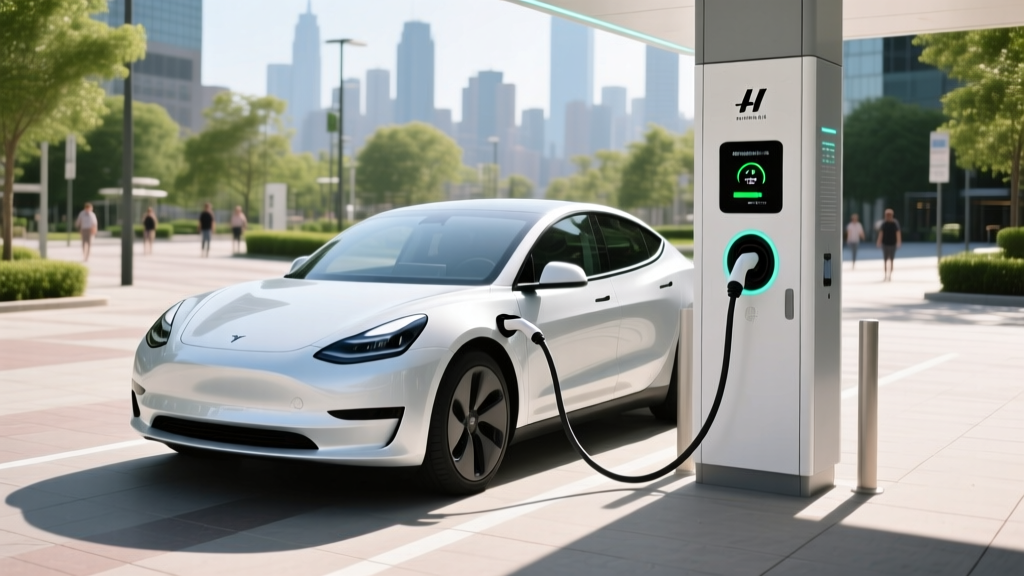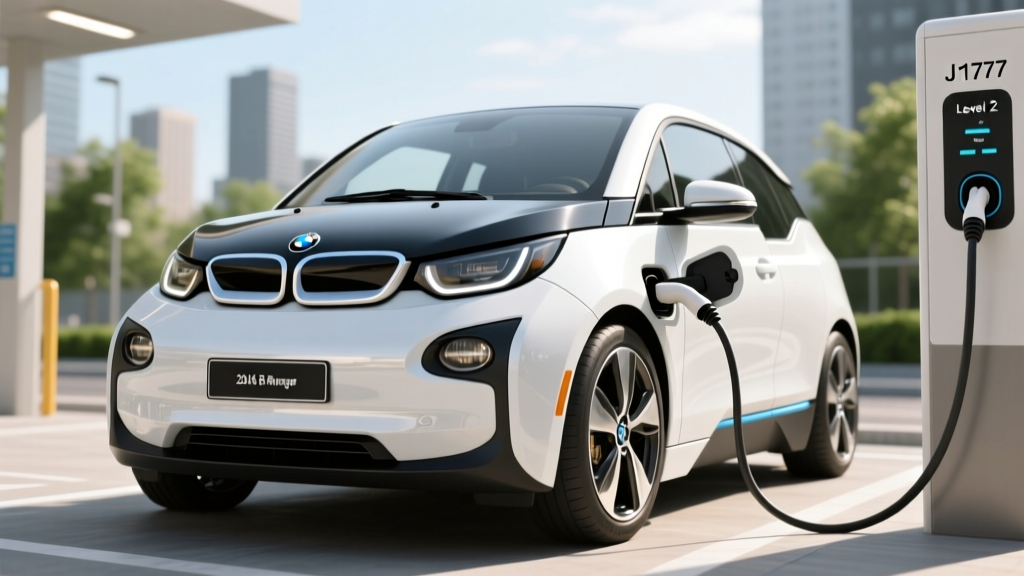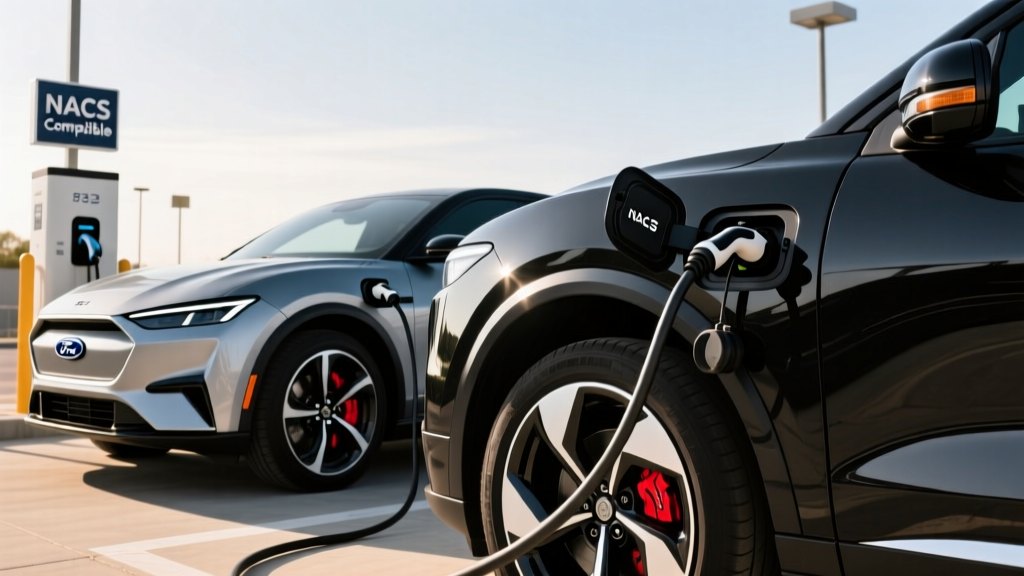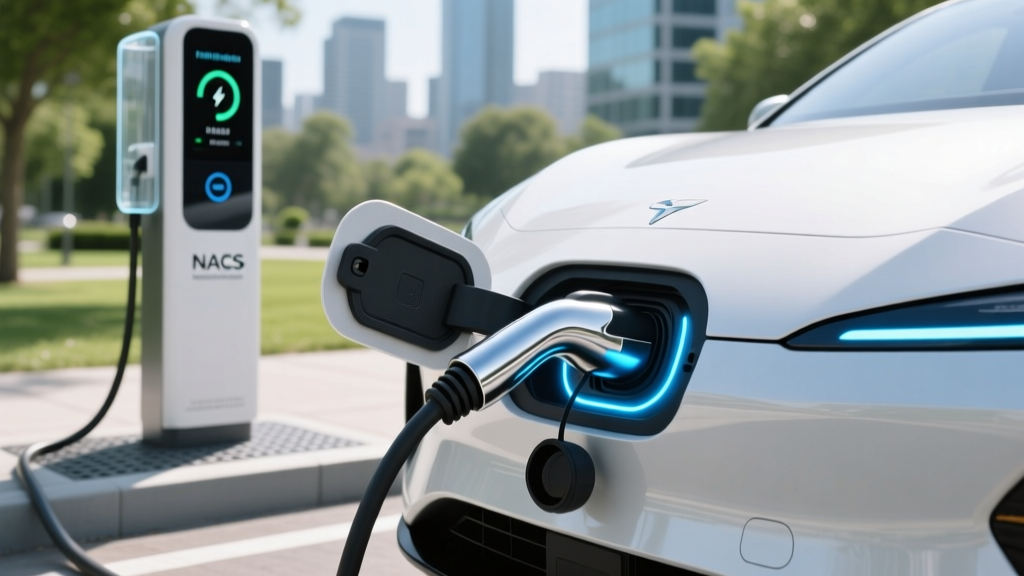
The Connector War Is Over: NACS Won
If you've shopped for an electric vehicle in the last two years, you've probably encountered the acronym NACS and wondered what it means for your charging future. NACS stands for the North American Charging Standard, a connector and communication protocol originally developed by Tesla and now adopted by nearly every major automaker selling EVs in North America.
As of 2026, NACS has effectively replaced CCS1 (Combined Charging System) as the dominant DC fast-charging connector for new EVs in the United States and Canada. Ford, GM, Rivian, Hyundai, Kia, BMW, Mercedes-Benz, and others now equip their vehicles with native NACS ports or offer CCS-to-NACS adapters for access to Tesla's Supercharger network — the largest and most reliable public fast-charging network in North America, with over 28,000 stalls.
But what does this mean if you're buying an EV today, installing a home charger, or planning a road trip? This guide covers everything you need to know about NACS, how it compares to legacy connectors, and how to set up your charging infrastructure correctly.
Charging Levels Explained: How Fast Can You Add Range?
EV charging happens at three distinct levels, each with different power requirements, speeds, and use cases. Understanding these is essential before choosing a home charger or planning public charging stops.
| Level | Voltage / Power | Typical kW Output | Miles of Range Per Hour | Best Use Case |
|---|---|---|---|---|
| Level 1 | 120V AC / 12-16A | 1.4 – 1.9 kW | 3 – 5 mi/hr | Overnight trickle; PHEVs; emergency top-ups |
| Level 2 | 240V AC / 16-80A | 3.8 – 19.2 kW | 12 – 75 mi/hr | Daily home charging; workplace; destination |
| DC Fast Charging | 200-900V DC / 100-500A | 50 – 350 kW | 150 – 1,000+ mi/hr (peak) | Road trips; rapid top-ups; fleet operations |
Real-world charging time examples: A 75 kWh battery (common in vehicles like the Tesla Model Y Long Range or Hyundai Ioniq 5) charging from 10% to 80%:
- Level 1 (1.9 kW): ~29 hours — impractical for BEVs, acceptable for PHEVs with smaller batteries
- Level 2 at 11.5 kW (48A): ~4.5 hours — ideal overnight charge
- Level 2 at 7.7 kW (32A): ~6.5 hours — common for homes with 40A circuits
- DC Fast at 250 kW peak (e.g., Tesla V3 Supercharger): 10-80% in ~18-22 minutes, though sustained rate tapers significantly above 50-60% SoC
- DC Fast at 350 kW peak (e.g., Electrify America Hyper Charger): 10-80% in ~15-18 minutes for vehicles with 800V architectures like the Ioniq 5 or Porsche Taycan
The charge curve matters: most EVs accept peak kW only between roughly 10-40% State of Charge, then taper to protect battery health. A charger rated for 250 kW doesn't deliver 250 kW for the entire session — expect a sustained average of about 100-140 kW for a typical 10-80% session on a 75 kWh battery.
NACS vs CCS1 vs CHAdeMO: Connector Compatibility Breakdown
NACS uses a physically smaller, lighter connector than CCS1, with the same pins handling both AC Level 2 and DC fast charging. CCS1 requires separate pin configurations for AC and DC, resulting in a bulkier plug. CHAdeMO, developed by Japanese automakers, is now largely legacy — Nissan switched the 2025+ Leaf to NACS.
| Connector | AC Charging | DC Fast Charging | Key Vehicles (2025-2026) | Adapter Needed? |
|---|---|---|---|---|
| NACS (J3400) | Yes — single connector | Yes — up to 350+ kW | Tesla (all), Ford F-150 Lightning, GM Ultium vehicles, Hyundai Ioniq 5/6 (2025+), Rivian, BMW iX/i4 (2025+) | CCS1→NACS adapter for non-Tesla DC chargers (some networks) |
| CCS1 | J1772 portion | Yes — up to 350 kW | VW ID.4 (2024 and earlier), older Hyundai/Kia models, legacy CCS vehicles | NACS→CCS adapter to use Tesla Superchargers |
| CHAdeMO | Separate J1772 port | Yes — up to 100 kW typically | Nissan Leaf (2024 and earlier), Mitsubishi Outlander PHEV (older) | No widely available adapter; network declining |
For home Level 2 charging: NACS vehicles charge natively via a NACS wall connector. CCS1 vehicles use a J1772 connector (the AC portion of CCS). Most Level 2 home chargers ship with J1772, and Tesla includes a J1772 adapter with every vehicle. If you buy a NACS-native vehicle, you'll want a NACS-equipped home charger or use the J1772-to-NACS adapter that comes with the car.
For DC fast charging on road trips: Tesla Superchargers (now open to non-Tesla EVs via the Tesla app at select stalls) use NACS exclusively. Electrify America, EVgo, and ChargePoint are adding NACS cables to new and retrofitted stations, but many existing stalls still have CCS1 cables. If your EV has a NACS port, carry a NACS-to-CCS1 adapter (approximately $200-$250) to ensure access to all networks.
Home Charger Installation: Electrical Requirements and Costs
Installing a Level 2 home charger is the single biggest quality-of-life upgrade for EV ownership. You wake up every morning with a full battery, and your cost per mile drops dramatically. But the installation is a real electrical project — not a simple plug-in — and costs vary widely depending on your home's electrical panel.
Electrical Requirements for Level 2 Charging
A Level 2 charger requires a dedicated 240V circuit, similar to what an electric dryer or oven uses. The circuit amperage must be rated at 125% of the charger's continuous draw (per National Electrical Code). Common configurations:
- 40A circuit → 32A continuous charging (7.7 kW): Most common residential setup; adds ~25-30 miles of range per hour
- 50A circuit → 40A continuous charging (9.6 kW): Good for larger batteries; adds ~32-38 mi/hr
- 60A circuit → 48A continuous charging (11.5 kW): Maximum for most home chargers; adds ~40-45 mi/hr
- 100A circuit → 80A continuous charging (19.2 kW): Requires significant panel capacity; rare in residential; adds ~60-75 mi/hr
Panel Upgrade: The Hidden Cost
Most homes built before 2000 have a 100A or 150A main electrical panel. Adding a 40-60A dedicated EV circuit may exceed your panel's remaining capacity, especially if you already run electric heat, a dryer, an oven, and central AC. A licensed electrician will perform a load calculation to determine whether your panel can handle the additional draw.
If a panel upgrade is needed — typically from 100A/150A to 200A service — expect to add $1,500 to $4,000 to your project cost. In rare cases (older homes with 60A service or knob-and-tube wiring), the upgrade can exceed $5,000.
| Cost Component | Simple Install (Panel Has Capacity) | Complex Install (Panel Upgrade Needed) |
|---|---|---|
| Level 2 Charger Equipment | $350 – $700 | $350 – $700 |
| Electrician Labor (2-6 hours) | $400 – $1,200 | $800 – $2,000 |
| Permit and Inspection | $50 – $250 | $100 – $400 |
| Panel Upgrade (if needed) | $0 | $1,500 – $4,000 |
| Conduit/Wiring (long runs >50 ft) | $0 – $200 | $200 – $800 |
| TOTAL RANGE | $800 – $2,350 | $2,950 – $7,900 |
Pro tip: Some utilities offer rebates of $250-$1,000 for Level 2 charger installation, particularly if you enroll in a time-of-use (TOU) rate plan. Check with your local utility before scheduling work.
Safety and Code Considerations
Your installation must comply with the National Electrical Code (NEC) Article 625, which governs EV charging systems. Key requirements:
- Dedicated circuit: Your EV charger must have its own breaker — no sharing with other appliances
- GFCI protection: Required for outdoor installations; some jurisdictions now require it indoors as well (NEC 2023+)
- Outdoor rating: If mounted outside, the charger must carry a NEMA 4 or NEMA 4X rating for weather resistance
- Permit and inspection: Required in virtually all jurisdictions — do not skip this, as unpermitted work can void insurance and cause issues at resale
- Cable management: The NEC requires the charging cable not create a tripping hazard; wall-mounted retractors or cord organizers are recommended
Charging Cost Per Mile: EV vs Gasoline
One of the strongest economic arguments for EV ownership is the fuel-cost advantage — but the savings depend heavily on where and when you charge. Let's run real numbers.
| Charging Scenario | Avg $/kWh | Cost Per Mile (3.5 mi/kWh EV) | Annual Cost (12,000 mi) |
|---|---|---|---|
| Home — Off-Peak TOU Rate | $0.08 – $0.12 | $0.023 – $0.034 | $275 – $410 |
| Home — Standard Residential Rate | $0.14 – $0.18 | $0.040 – $0.051 | $480 – $620 |
| Public Level 2 (ChargePoint, etc.) | $0.20 – $0.35 | $0.057 – $0.100 | $685 – $1,200 |
| DC Fast Charging (Electrify America, EVgo) | $0.35 – $0.55 | $0.100 – $0.157 | $1,200 – $1,885 |
| Gasoline Car (28 MPG avg, $3.40/gal) | — | $0.121 | $1,457 |
The takeaway is clear: home charging on off-peak rates delivers the lowest per-mile cost in any vehicle, electric or gas — roughly one-quarter the cost of gasoline. However, exclusive reliance on DC fast charging can actually cost more than gas, which is why home Level 2 access remains the economic foundation of EV ownership.
According to fueleconomy.gov, a 2026 Tesla Model Y Long Range achieves 122 MPGe combined (about 3.5-3.8 miles per kWh), while a comparable gas-powered Toyota RAV4 AWD returns roughly 28 MPG combined. At national average electricity and gas prices, the Model Y saves approximately $800-$1,100 per year in fuel costs when charged primarily at home.
Best Home EV Chargers: Equipment Recommendations
The home charger market has matured significantly. Here are top-performing units across different needs and budgets, all hardwired (the safer, code-preferred method over plug-in NEMA 14-50 outlets for continuous high-draw use).
Tesla Wall Connector (Gen 3)
- Power Output: Up to 11.5 kW (48A continuous on 60A circuit)
- Connector: NACS native
- Cable Length: 24 feet
- Smart Features: Wi-Fi, OTA updates, power sharing (load balance between two units on one circuit), access control via Tesla app
- Price: ~$475
- Best For: Tesla owners; NACS-native EVs; homes with adequate panel capacity
ChargePoint Home Flex
- Power Output: Up to 12 kW (50A continuous, adjustable from 16A-50A via DIP switches)
- Connector: J1772 (works with all EVs; Tesla owners use included adapter)
- Cable Length: 23 feet
- Smart Features: Wi-Fi, Alexa/Google integration, scheduled charging, energy tracking via ChargePoint app, amperage adjustable to match circuit
- Price: ~$550 – $650
- Best For: Multi-EV households (mixed Tesla + non-Tesla); flexible amperage for limited panels
Emporia Level 2 EV Charger
- Power Output: Up to 11.5 kW (48A on 60A circuit)
- Connector: J1772 (NACS adapter available)
- Cable Length: 24 feet
- Smart Features: Wi-Fi, integration with Emporia Vue energy monitor for whole-home load tracking, solar-aware charging, TOU scheduling
- Price: ~$400 – $450
- Best For: Budget-conscious buyers; solar homes; energy monitoring enthusiasts
Grizzl-E Smart
- Power Output: Up to 10 kW (40A on 50A circuit)
- Connector: J1772 (NACS version available)
- Cable Length: 24 feet
- Smart Features: Wi-Fi, OCPP-compatible, adjustable amperage, built-in GFCI, extreme cold-rated (-40°F)
- Price: ~$500 – $600
- Best For: Cold climates; outdoor installs; Canadian/Northern US homes
What to look for in a charger: Energy Star certification (for utility rebate eligibility), hardwired installation (safer than plug-in for 40A+), a cable at least 18-24 feet long, and smart scheduling to align charging with off-peak utility rates. Avoid cheap, unbranded chargers lacking UL or ETL certification — these may not meet NEC requirements and could void insurance coverage.
What Does NACS Mean for Your Next EV Purchase?
If you're buying a new EV in 2026, NACS compatibility should factor into your decision — but it's not a dealbreaker for CCS1 vehicles either. Here's the practical breakdown:
- Buying new (2025-2026 model year): Most new EVs now ship with NACS ports natively. You get seamless access to Tesla Superchargers and a growing number of NACS-equipped public stations. This is the future-proof choice.
- Buying a slightly used CCS1 vehicle (2022-2024): Still a solid option. You'll need a NACS-to-CCS adapter ($200-$250) for Tesla Supercharger access, and Electrify America/EVgo stations with CCS cables remain widely available. The savings on a used EV can far outweigh the adapter cost.
- Buying a used CHAdeMO vehicle (older Leaf, etc.): Proceed with caution. CHAdeMO infrastructure is shrinking, and no adapter ecosystem exists to access NACS or CCS stations. Fine as a second car or city runabout with reliable home charging, but not recommended as a primary road-trip vehicle.
For home charging specifically, NACS-native vehicles paired with a Tesla Wall Connector or NACS-equipped ChargePoint offer the cleanest, adapter-free experience. But remember: Level 2 home charging speed depends on your circuit amperage and your vehicle's onboard charger capacity, not the connector type. A 48A NACS charge and a 48A J1772 charge deliver the same 11.5 kW.
Choose Your Charging Setup
Choose NACS-native + Tesla Wall Connector if: You're buying a 2025+ EV with a NACS port, want the simplest adapter-free home setup, and plan to use Tesla Superchargers for road trips.
Choose J1772 charger + adapter if: Your household has mixed EV brands (one Tesla, one non-Tesla), or you're buying a slightly used CCS1 vehicle and want maximum home-charging flexibility.
Invest in a panel upgrade if: Your electrician's load calculation shows less than 40A of spare capacity, you plan to add solar or a heat pump in the next 5 years, or you want to future-proof for 80A charging.
Frequently Asked Questions
How much does it cost to install a home EV charger?
A straightforward Level 2 installation on an existing panel with spare capacity typically runs $800 to $2,350 all-in (charger, electrician, permit). If your panel needs upgrading to 200A service, total costs range from $2,950 to $7,900. Get at least three quotes from licensed electricians, and confirm they'll pull a permit — unpermitted work can cause insurance and resale issues.
How fast will each charging level add range?
Level 1 (120V) adds roughly 3-5 miles per hour — fine for PHEVs, too slow for most BEVs. Level 2 (240V) at 32A adds ~25 mi/hr; at 48A adds ~40 mi/hr. DC fast charging at 150+ kW can add 150-250 miles in a 20-30 minute session, though the charge curve tapers significantly above 60-70% SoC. For daily driving, Level 2 overnight charging is the practical standard.
Which connector and charger is compatible with my EV?
Check your vehicle's charge port. If it's a 2025+ Tesla, Ford, GM, Hyundai, Kia, Rivian, or BMW, it likely has a NACS port. Older non-Tesla EVs typically use CCS1 (J1772 for AC + two DC pins below). The Nissan Leaf uses CHAdeMO. For home charging, any J1772 Level 2 charger works with all EVs (Tesla owners use the included J1772-to-NACS adapter). For DC fast charging, match your vehicle's port to the station's connector — or carry an adapter.
How much does charging cost per mile compared to gas?
Home charging on off-peak rates costs roughly $0.02-$0.03 per mile, versus about $0.12 per mile for a 28 MPG gas car at $3.40/gallon. That's a 75-80% savings per mile. However, DC fast charging at $0.40-$0.55/kWh costs $0.11-$0.16 per mile — comparable to or slightly more than gasoline. The economics strongly favor home charging.
What electrical upgrades might I need?
The most common upgrade is a panel upgrade from 100A or 150A to 200A service ($1,500-$4,000) if your existing panel lacks spare capacity for a 40-60A dedicated EV circuit. Other potential upgrades include: running new conduit for long wire runs from the panel to the garage ($200-$800), adding a GFCI breaker if required by local code ($50-$150), or installing a sub-meter or EV-specific TOU meter if your utility offers discounted EV charging rates (some utilities require a separate meter, $200-$500). Always have a licensed electrician perform a load calculation before committing to a charger amperage.
Is NACS the same as the Tesla connector?
Yes — NACS is the standardized, SAE-published version (officially SAE J3400) of the proprietary connector Tesla has used since 2012. Tesla opened the specification in November 2022, and SAE formalized it as a standard in 2023. Electrically and physically, it's the same connector, but the "NACS" name indicates it's now an industry-wide standard, not a Tesla-only proprietary system.
Do I need a NACS adapter for public charging?
If your EV has a NACS port (most 2025+ EVs), you can use Tesla Superchargers natively but may need a NACS-to-CCS1 adapter (~$200-$250) for Electrify America, EVgo, or ChargePoint stations that only have CCS1 cables. If your EV has a CCS1 port (older non-Tesla EVs), you'll need a CCS1-to-NACS adapter to access Tesla Superchargers. Tesla sells these adapters, and some automakers include them with new vehicle purchases. As of 2026, most major charging networks are actively adding NACS cables, reducing the need for adapters over time.
Sources: fueleconomy.gov — EPA EV efficiency data; SAE International J3400 — NACS standard specification; IRS.gov — Clean vehicle credit and home charger credit rules. Pricing and availability reflect 2026 model year data; verify current figures with manufacturers and your local utility.