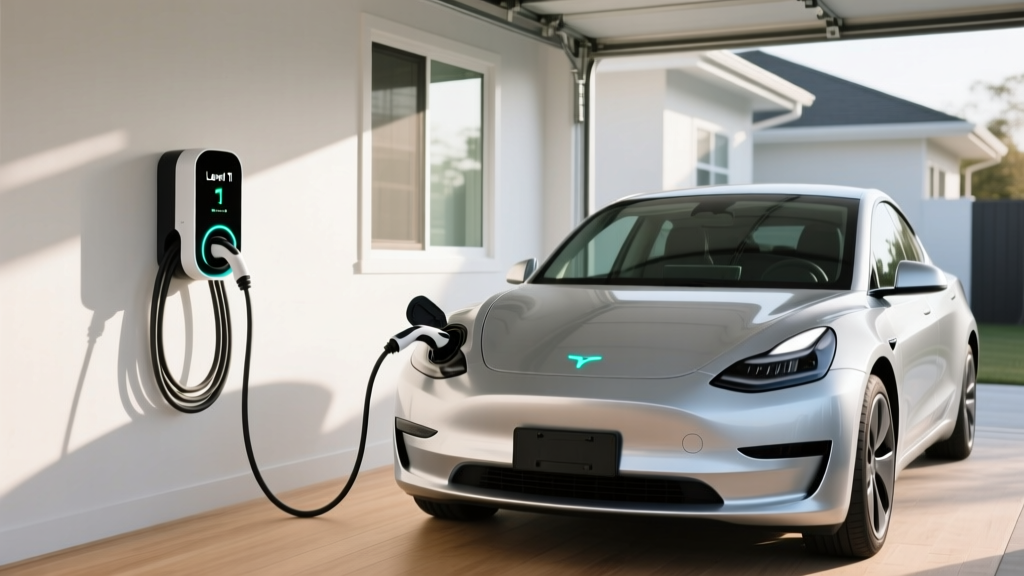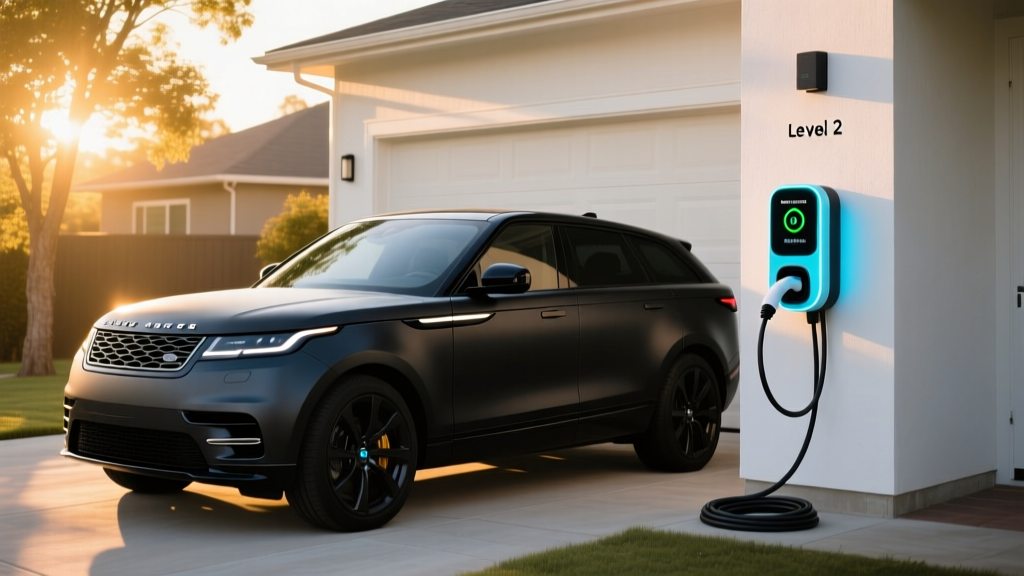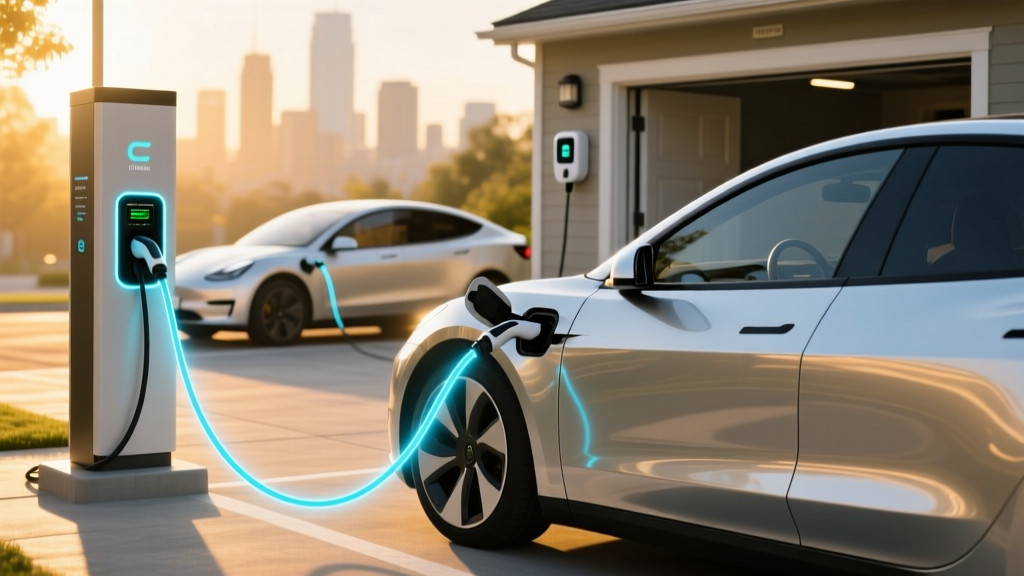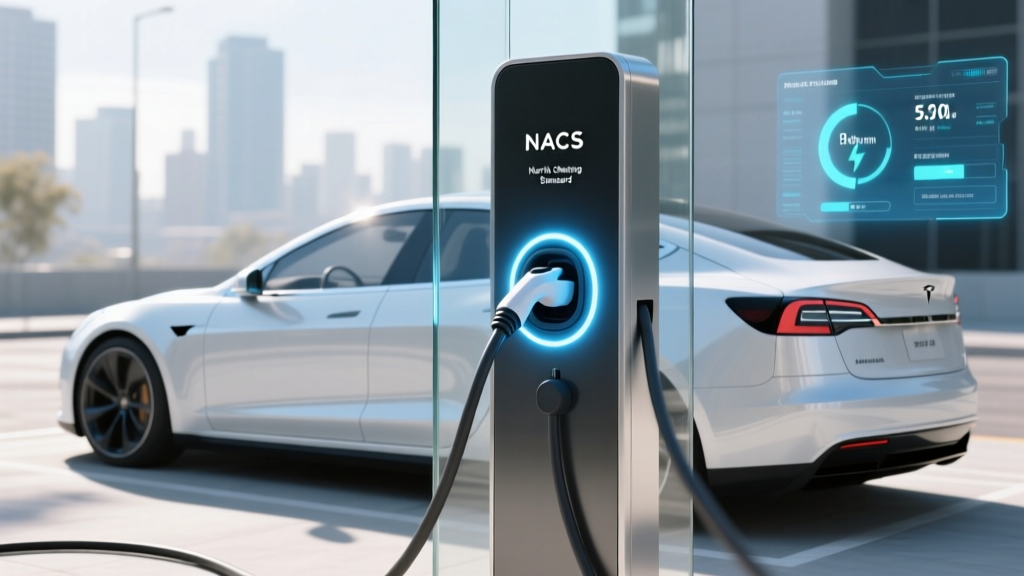
The Quick Answer: What Is a NACS Charge Port?
A NACS (North American Charging Standard) charge port is the electric vehicle charging connector originally developed by Tesla and now adopted as the dominant charging standard across North America. Physically, it's a compact, lightweight plug roughly half the size of the older CCS1 (Combined Charging System) connector, yet it handles everything from slow 120V Level 1 trickle charging to 350+ kW DC fast charging through a single port.
As of 2026, NACS has effectively won the connector war in North America. Ford, GM, Rivian, Hyundai, Kia, BMW, Mercedes-Benz, and nearly every major automaker now equip their EVs with native NACS ports. If you're shopping for a new EV today, understanding what a NACS charge port is—and how it affects your home charging setup and public charging access—is essential.
Charging Levels Explained: Speeds in kW and Miles Per Hour
Regardless of whether your EV uses NACS, CCS1, or CHAdeMO, charging happens at three distinct levels. Here's what each delivers in real-world terms:
| Level | Voltage / Amperage | Power (kW) | Miles of Range Added Per Hour | Typical Use Case |
|---|---|---|---|---|
| Level 1 | 120V / 12A | 1.4 kW | 3–5 miles/hr | Overnight top-up, emergency |
| Level 2 | 240V / 32A–48A | 7.7–11.5 kW | 25–44 miles/hr | Home daily charging, workplace |
| DC Fast Charge | 400V–800V DC | 50–350 kW | 150–1,000+ miles/hr (peak) | Road trips, rapid top-ups |
Most EV owners do 80% or more of their charging at home on Level 2. A typical 77 kWh battery (like the one in the Ford Mustang Mach-E Extended Range) will charge from 10% to 80% in roughly 6–7 hours on an 11.5 kW Level 2 home charger—easily done overnight. On a 250 kW DC fast charger, that same 10–80% session takes approximately 18–22 minutes, depending on the vehicle's charge curve and battery temperature.
Real-world charging curve note: DC fast charging does not sustain peak kW for the entire session. A vehicle rated for 250 kW peak may only hold that rate between 10–40% State of Charge (SoC), then taper progressively. This is why manufacturers and reviewers cite 10–80% times rather than peak kW figures alone. Always precondition your battery before arriving at a DC fast charger—most EV navigation systems do this automatically when you route to a charging station.
NACS vs CCS1 vs CHAdeMO: Connector Compatibility in 2026
Understanding what a NACS charge port is requires knowing how it compares to legacy connectors still found on older EVs and some public infrastructure.
| Connector | Native Vehicles (2026) | AC Level 2 Support | DC Fast Charge Support | Adapter Needed? |
|---|---|---|---|---|
| NACS (Tesla standard) | Tesla (all), Ford, GM, Rivian, Hyundai, Kia, BMW, Mercedes, Volvo, Polestar, Nissan (new models) | Yes — single port handles AC and DC | Yes — up to 350 kW (vehicle-dependent) | CCS-to-NACS adapter for older CCS stations |
| CCS1 | Legacy models: 2020–2024 VW ID.4, older Bolt EUV, some Stellantis PHEVs | Via J1772 inlet (separate from DC pins) | Yes — up to 350 kW | NACS-to-CCS adapter for Tesla Superchargers |
| CHAdeMO | Nissan Leaf (discontinued 2025), Mitsubishi Outlander PHEV (older) | Via J1772 inlet | Yes — typically 50–100 kW max | Limited adapters; infrastructure declining |
The defining advantage of NACS is its single-port design. CCS1 requires a bulky connector with separate AC (J1772) and DC pins combined into one large plug. NACS handles both AC Level 2 and DC fast charging through the same compact port, reducing weight and simplifying the vehicle's charge inlet. Tesla has offered this unified design since 2012; the rest of the industry is now catching up.
If you own a CCS1-equipped EV: Most Tesla Supercharger networks now support CCS1 vehicles via a built-in CCS cable or through Tesla's CCS-to-NACS adapter (approximately $250). Check the Tesla app or Tesla's official adapter page for compatibility with your specific model.
How Much Does It Cost to Install a Home EV Charger?
Home Level 2 charging is the backbone of practical EV ownership. Here's a realistic breakdown of what you'll spend to install a 240V NACS-compatible home charger in 2026:
| Component | Low-End Estimate | High-End Estimate | Notes |
|---|---|---|---|
| Level 2 Charger (hardware) | $350 | $750 | 32A–48A, NACS connector, 18–25 ft cable |
| Electrician labor (240V circuit install) | $400 | $1,200 | Depends on run length from panel to garage |
| Electrical permit | $50 | $200 | Varies by municipality |
| Electrical panel upgrade (if needed) | $1,500 | $3,500 | 100A → 200A service; common in pre-1990 homes |
| Total (no panel upgrade) | $800 | $2,150 | Most homes with 200A service |
| Total (with panel upgrade) | $2,300 | $5,650 | Older homes with 100A service |
Electrical requirements for a typical 48A Level 2 charger: You need a dedicated 240V/60A circuit (the National Electrical Code requires circuits to be rated at 125% of the continuous load, so a 48A charger requires a 60A breaker). The charger should be hardwired for 48A units—NEMA 14-50 outlets are rated for 50A and are appropriate for 40A chargers only.
Panel upgrade reality check: If your home has a 100-amp electrical panel (common in homes built before 1990), adding a 60A EV circuit may push you past the panel's safe capacity—especially if you also run electric dryers, ovens, or HVAC. A licensed electrician will perform a load calculation per NEC Article 220 to determine whether an upgrade is necessary. Don't skip this step; overloading a panel is a fire hazard.
What Electrical Upgrades Might I Need for Home EV Charging?
Beyond the panel itself, here are the electrical considerations your installer will evaluate:
- Dedicated circuit: Your EV charger must have its own dedicated circuit—not shared with other appliances. This prevents breaker trips when the dryer and charger run simultaneously.
- GFCI protection: The 2023 NEC update requires GFCI (Ground Fault Circuit Interrupter) protection for all EV charging outlets. Hardwired chargers with built-in ground-fault protection may exempt you from this requirement, but check with your local inspector.
- Outdoor rating: If your charger is installed outside (carport, driveway), it must carry a NEMA 4 or IP65 weatherproof rating. Most quality chargers meet this, but verify before purchasing.
- Wire gauge: A 60A circuit requires 6 AWG copper wire (or 4 AWG aluminum). Longer runs from the panel may require thicker wire to prevent voltage drop—your electrician will calculate this.
- Smart load management: Some homes opt for smart panels (like the SPAN Panel) or load-management devices (like the Emporia Load Management) that dynamically share amperage between the EV charger and other circuits, avoiding a full panel upgrade.
Home Charger Equipment Picks for NACS Vehicles (2026)
Here are three NACS-compatible Level 2 chargers we recommend based on real-world reliability, feature sets, and value:
Tesla Wall Connector (Gen 4)
Power: 11.5 kW (48A)
Connector: Native NACS
Cable length: 24 ft
Smart features: Wi-Fi, OTA updates, load sharing between multiple units, access control
Price: ~$475
Best for: Tesla owners and NACS-native EVs who want seamless integration. Load-sharing allows two Wall Connectors on a single 60A circuit.
Emporia Level 2 EV Charger
Power: 11.5 kW (48A)
Connector: NACS (2025+ models); J1772 with adapter for older
Cable length: 24 ft
Smart features: Wi-Fi, energy monitoring via Emporia Vue, scheduled charging, solar integration
Price: ~$399
Best for: Budget-conscious buyers who want detailed energy tracking and solar-aware charging.
ChargePoint Home Flex (NACS)
Power: Up to 12 kW (50A) — configurable 16A–50A
Connector: NACS (2025+); J1772 with adapter option
Cable length: 23 ft
Smart features: Wi-Fi, app scheduling, Alexa integration, flexible amperage to match circuit
Price: ~$699
Best for: Homes with varying circuit capacities—the adjustable amperage means you can set it to 32A on a 40A circuit or 48A on a 60A circuit without swapping hardware.
All three chargers are UL-listed (or ETL-listed to UL standards), carry NEMA 4 outdoor ratings, and support firmware updates. Avoid unbranded chargers from online marketplaces that lack proper safety certifications—the risk of electrical fire or vehicle damage isn't worth saving $100.
How Much Does Charging Cost Per Mile vs Gas?
The economics of EV charging depend heavily on where and when you charge. Here's a realistic comparison using a mid-size EV averaging 3.0 miles per kWh (roughly 112 MPGe combined, typical for vehicles like the Hyundai Ioniq 5 or Tesla Model Y):
| Charging Scenario | Rate ($/kWh) | Cost Per Mile | Annual Cost (12,000 mi) |
|---|---|---|---|
| Home (off-peak utility rate) | $0.08–$0.14 | $0.03–$0.05 | $360–$600 |
| Home (standard rate, no TOU) | $0.14–$0.20 | $0.05–$0.07 | $600–$840 |
| Public Level 2 (ChargePoint, EVgo) | $0.25–$0.49 | $0.08–$0.16 | $960–$1,920 |
| DC Fast Charge (Electrify America, Tesla Supercharger) | $0.30–$0.55 | $0.10–$0.18 | $1,200–$2,160 |
| Gasoline (28 MPG combined, $3.40/gal) | — | $0.12/mi | $1,440 |
The bottom line: Home charging on off-peak rates delivers the strongest savings—roughly 70% less per mile than gasoline. Exclusive reliance on public DC fast charging narrows the gap considerably, and in some high-cost markets (California peak rates, certain airport-adjacent chargers), it can briefly exceed gasoline costs. This is why home Level 2 access remains the single biggest factor in EV ownership satisfaction and economics.
Many utilities offer time-of-use (TOU) plans that drop rates to $0.05–$0.08/kWh between 10 PM and 6 AM. If your utility offers this, schedule your charger to activate during those hours through the charger's app or your vehicle's built-in scheduling.
Charging Time Examples: 10–80% for Common Battery Sizes
Here's how long real charging sessions take across popular EV battery sizes, assuming optimal conditions (preconditioned battery, ambient temperature 65–80°F):
- 62 kWh battery (Nissan Ariya, base Chevy Equinox EV): ~18–22 minutes on a 150 kW DC fast charger; ~4.5 hours on an 11.5 kW home charger.
- 77 kWh battery (Ford Mustang Mach-E ER, Hyundai Ioniq 5): ~18–20 minutes on a 250 kW charger (Ioniq 5's 800V architecture excels here); ~5.5 hours on an 11.5 kW home charger.
- 82–100 kWh battery (Tesla Model Y Long Range, Rivian R1S, BMW iX): ~22–28 minutes on a 250 kW charger; ~7–8 hours on an 11.5 kW home charger.
- 123+ kWh battery (GMC Hummer EV, Chevy Silverado EV Max Range): ~35–45 minutes on a 350 kW charger; ~10–11 hours on an 11.5 kW home charger (these massive batteries benefit significantly from high-power DC charging).
Cold-weather caveat: In sub-freezing temperatures, expect DC fast charging sessions to take 20–40% longer unless the vehicle has active battery preconditioning. Tesla, Hyundai/Kia (E-GMP platform), and GM (Ultium) all include robust thermal preconditioning. Always navigate to your charging stop using the vehicle's built-in nav to trigger preconditioning automatically.
Frequently Asked Questions
Is NACS the same as a Tesla charger?
NACS is the connector standard that Tesla developed and opened to other automakers in late 2022. All Tesla vehicles use NACS ports, but now so do Ford, GM, Rivian, Hyundai, Kia, and most other brands. The term "Tesla charger" can refer to either the Tesla Wall Connector (home charger) or the Tesla Supercharger network (public DC fast charging). Both now serve non-Tesla NACS vehicles.
Can I charge a NACS vehicle on a CCS station?
Yes, with an adapter. Several manufacturers sell CCS-to-NACS adapters (typically $150–$250) that allow NACS-equipped vehicles to use CCS1 DC fast chargers. Tesla sells an official adapter, and third-party options from companies like Lectron and A2Z are also available. However, as of 2026, most new public charging installations use NACS connectors natively, reducing the need for adapters over time.
Do I need a Tesla to use a Supercharger?
No. Tesla opened its Supercharger network to non-Tesla EVs through the "Charge Your Non-Tesla Vehicle" program available in the Tesla app. Any NACS-equipped vehicle can use Superchargers directly. CCS1-equipped vehicles can access select Supercharger locations that have a built-in CCS cable or "Magic Dock" adapter. Pricing for non-Tesla vehicles is typically 10–25% higher than Tesla member rates, though Tesla's membership plan ($12.99/month) equalizes pricing.
Will NACS replace CCS entirely?
For North America, essentially yes. The SAE J3400 standard formally codified NACS in 2024, and the U.S. Federal Highway Administration now recognizes it for federally funded charging infrastructure. CCS1 will persist on legacy vehicles for years, and adapters will remain available, but all new EV models sold in North America from 2025 onward are either shipping with NACS or will transition by 2027. In Europe and Asia, CCS2 and GB/T remain dominant—NACS is a North American standard.
What's the federal tax credit for home charger installation?
The IRS Residential Clean Energy Credit (IRC §25C) covers 30% of home EV charger equipment and installation costs, up to $1,000 per year. This credit is available for equipment placed in service through 2032. It applies to both the charger hardware and the electrical work. Note: this is separate from the §30D vehicle purchase credit. Consult a tax professional to confirm eligibility based on your tax liability and specific installation details.
For official EPA range and efficiency data on any EV, visit fueleconomy.gov. For the latest federal charging incentive rules, see irs.gov. Always consult a licensed electrician before proceeding with home charger installation.