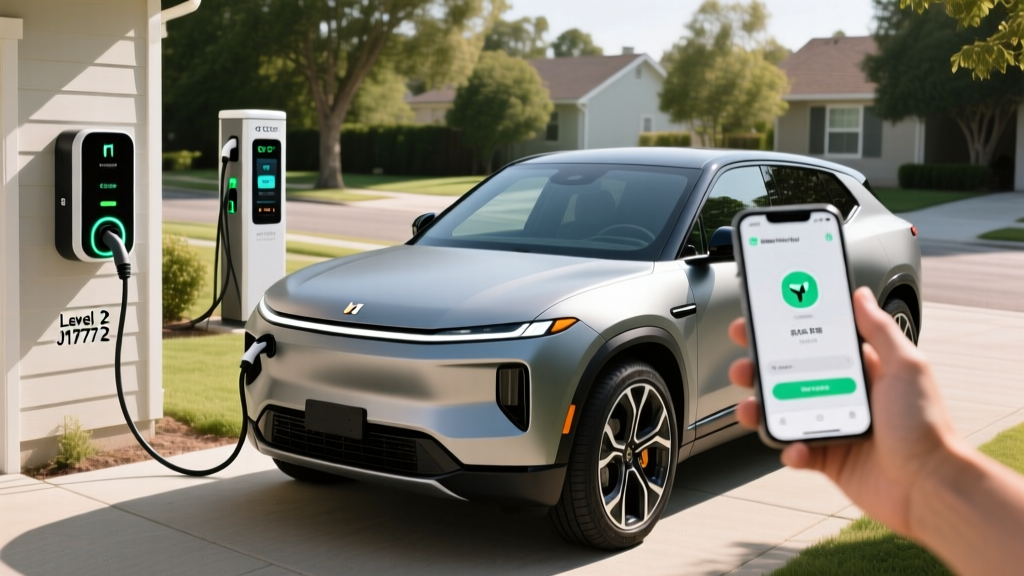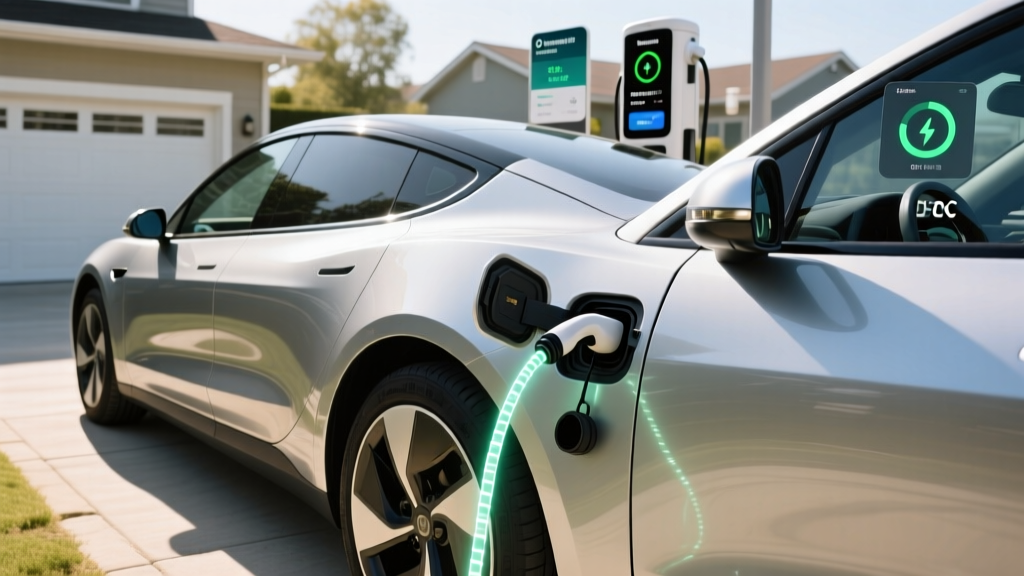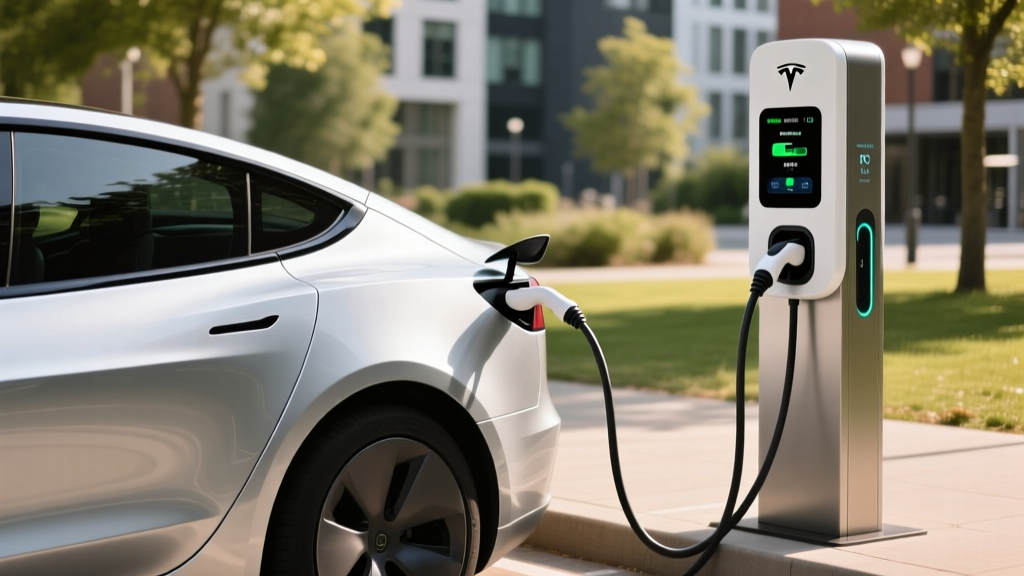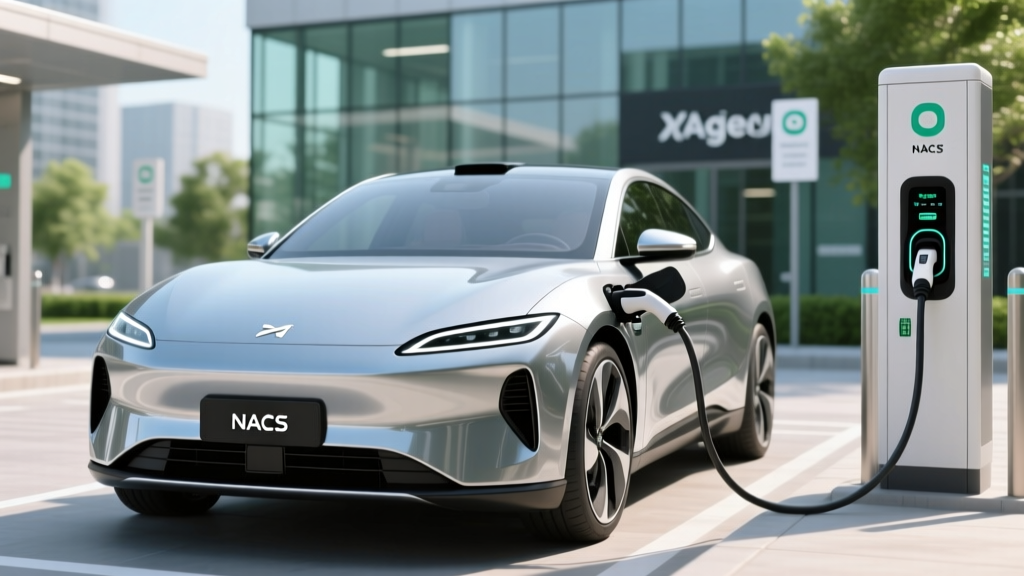
If you've shopped for an electric vehicle in the last year, you've likely seen the term "NACS adapter" pop up in reviews, forums, and manufacturer announcements. With nearly every major automaker adopting Tesla's charging connector as the new industry standard, understanding what a NACS adapter is — and whether you need one — has become essential for both new and current EV owners.
This guide breaks down the North American Charging Standard (NACS), explains how it affects your home and public charging setup, and walks through the real costs of installing a Level 2 charger in 2026. Whether you drive a Ford Mustang Mach-E, a Hyundai IONIQ 5, or a brand-new Tesla, you'll leave knowing exactly what hardware you need and what to budget.
What Is a NACS Adapter, Exactly?
NACS stands for North American Charging Standard — the charging connector originally developed by Tesla and now adopted by Ford, GM, Rivian, Volvo, Polestar, Mercedes-Benz, BMW, Hyundai, Kia, and most other major automakers for their 2025 and 2026 model-year EVs.
A NACS adapter is a physical dongle that allows a non-Tesla EV (which was originally built with a CCS1 or CHAdeMO port) to plug into a NACS/Tesla-style connector — most critically, into Tesla's Supercharger network. Conversely, some newer NACS-equipped vehicles may need a CCS adapter to use legacy public chargers that haven't yet upgraded.
Here's the practical reality for 2026:
- New 2025–2026 EVs from Ford, GM, Rivian, and others now ship with a native NACS port — no adapter needed at Superchargers.
- 2022–2024 model-year EVs with CCS1 ports require a CCS-to-NACS adapter (sometimes provided free by the automaker) to access Tesla Superchargers.
- Tesla owners traveling to CCS-only chargers (some Electrify America or older ChargePoint stations) may need a NACS-to-CCS adapter, though these are becoming rarer as networks retrofit.
| Brand | Native Port | Supercharger Access | Adapter Needed? |
|---|---|---|---|
| Tesla (all models) | NACS | Native | None for Superchargers; CCS adapter for legacy stations |
| Ford (2025+ Mach-E, F-150 Lightning) | NACS | Native | None |
| Ford (2022–2024 Mach-E/Lightning) | CCS1 | Via adapter | CCS-to-NACS adapter (Ford-provided) |
| GM (2025+ Equinox EV, Blazer EV, Silverado EV) | NACS | Native | None |
| GM (2024 Blazer EV, earlier) | CCS1 | Via adapter | CCS-to-NACS adapter (GM-provided) |
| Rivian (2025+ R1T, R1S) | NACS | Native | None |
| Rivian (2022–2024 R1T, R1S) | CCS1 | Via adapter | CCS-to-NACS adapter (Rivian-provided) |
| Hyundai/Kia (2025+ IONIQ 5, EV6, EV9) | NACS | Native | None |
| Hyundai/Kia (2022–2024) | CCS1 | Via adapter | CCS-to-NACS adapter (check automaker program) |
| VW ID.4 (2025+) | NACS | Native | None |
| Nissan Ariya / Leaf | CCS1 / CHAdeMO (Leaf) | Via adapter (varies) | Check Nissan; Leaf CHAdeMO limits Supercharger access |
Key takeaway: If your EV was built before the 2025 model year and has a CCS1 port, you almost certainly need a CCS-to-NACS adapter to use Tesla Superchargers, which now number over 28,000 stalls across North America. Many automakers shipped these adapters to owners at no cost — check your brand's owner portal or contact your dealer.
Charging Levels Explained: Speeds, Power, and Range Added
Before choosing equipment or adapters, you need to understand the three charging levels available to EV owners. A critical distinction: kW (kilowatts) measures power — how fast energy flows into your battery — while kWh (kilowatt-hours) measures energy — how much total capacity your battery holds. Think of kW as the width of a hose and kWh as the size of the bucket.
| Level | Voltage | Power (kW) | Miles of Range Added per Hour | Typical Use Case |
|---|---|---|---|---|
| Level 1 | 120V AC | 1.0–1.9 kW | 3–5 miles/hour | Overnight trickle; PHEVs; emergency backup |
| Level 2 | 240V AC | 3.3–19.2 kW | 12–75 miles/hour | Home daily charging; workplace; public AC stations |
| DC Fast Charging | 400–800V DC | 50–350 kW | 150–1,000+ miles/hour (peak) | Road trips; highway corridor charging |
Real-world context: A Level 2 charger delivering 11.5 kW (48 amps on a 60-amp circuit) will fully recharge a 77 kWh battery (Ford Mach-E Extended Range) in roughly 7–8 hours — ideal for overnight. A 350 kW DC fast charger can take that same battery from 10% to 80% in approximately 20–25 minutes, though actual speed depends on the vehicle's charge curve, battery temperature, and state of charge.
Charge curve reality check: No EV sustains peak charging speed for the entire session. A vehicle advertising "240 kW peak" may only hold that rate between 10–40% state of charge, then taper to 150 kW, then 80 kW, and finally 25 kW above 85%. This is why manufacturers quote 10–80% times rather than 0–100% times — charging above 80% is painfully slow and generally not worth the wait on a road trip.
How Much Does It Cost to Install a Home EV Charger?
Home Level 2 charging is where most EV owners do 80–90% of their charging. But the sticker price of the charger itself is only part of the equation. Here's a realistic breakdown of what to expect in 2026:
| Item | Typical Cost Range | Notes |
|---|---|---|
| Level 2 Charger (hardware) | $300–$750 | 32A–48A smart chargers; Tesla Wall Connector is ~$425 |
| Electrician labor | $500–$2,000 | Depends on run length from panel to garage/driveway |
| Electrical permit | $50–$250 | Varies by municipality; required in most jurisdictions |
| Panel upgrade (if needed) | $1,500–$4,000 | Older 100A panels often need upgrade to 200A |
| Conduit/wiring materials | $100–$500 | Longer runs and outdoor conduit increase cost |
| Total (no panel upgrade) | $850–$3,000 | Average for most homes with adequate panel capacity |
| Total (with panel upgrade) | $2,500–$6,500 | Common in pre-2000 homes with 100A service |
The panel upgrade gotcha: Many homes built before 2000 have 100-amp electrical panels that simply don't have the spare capacity for a 40-amp or 60-amp dedicated EV circuit. An electrician will perform a load calculation to determine if your panel can handle the additional draw. If not, a 200-amp upgrade is required — and this is the single biggest variable in your installation cost.
Electrical requirements for a typical 48-amp Level 2 charger:
- 240V dedicated circuit
- 60-amp breaker (NEC requires circuits to be rated at 125% of continuous load, so a 48A charger needs a 60A breaker)
- 6 AWG copper wire (or 4 AWG aluminum) for runs up to ~50 feet
- NEMA 14-60 outlet (for plug-in chargers) or hardwired connection (often required for 48A+ chargers and preferred for outdoor installs)
- GFCI protection — required by NEC 2020/2023 for outdoor receptacles; hardwired units often have built-in ground fault protection
Federal incentive: The IRS residential clean energy credit may cover 30% of the cost of home EV charging equipment and installation (up to $1,000) through the end of 2032. Eligibility depends on your census tract meeting certain income or rural criteria — consult a tax professional and review IRS guidelines before claiming.
Which Connector and Charger Is Compatible With My EV?
The connector landscape has simplified dramatically in 2026 compared to the fragmented mess of 2022–2023. Here's where things stand:
NACS (North American Charging Standard): The dominant connector for 2025–2026 model-year EVs. Smaller and lighter than CCS1, it handles both AC Level 2 and DC fast charging through a single port. Tesla Superchargers, Electrify America, EVgo, and ChargePoint are all adding NACS cables to their stations.
CCS1 (Combined Charging System): The previous standard for non-Tesla EVs. Still present on 2022–2024 models and supported by existing public charging infrastructure. Being phased out on new vehicles but will remain on public chargers for years.
CHAdeMO: Legacy Japanese standard used by the Nissan Leaf and older Mitsubishi Outlander PHEV. Effectively discontinued for new vehicles. CHAdeMO stations are increasingly rare, and adapters to NACS are limited and expensive.
Do you need an adapter? Check your vehicle's production year and port type against the compatibility table above. If you're buying a 2025 or 2026 EV from a major brand, it almost certainly has a native NACS port and needs no adapter for Supercharger access. If you own a 2022–2024 model, contact your automaker — many have shipped free adapters to registered owners.
How Much Does Charging Cost per Mile vs. Gas?
This is where EV ownership economics either shine or disappoint — and it depends almost entirely on where and when you charge.
| Scenario | Rate | Vehicle Efficiency | Cost per Mile |
|---|---|---|---|
| Home charging (off-peak utility rate) | $0.09/kWh | 3.0 mi/kWh (e.g., Tesla Model Y) | $0.030 |
| Home charging (average US rate) | $0.17/kWh | 3.0 mi/kWh | $0.057 |
| Public Level 2 (ChargePoint, etc.) | $0.25/kWh | 3.0 mi/kWh | $0.083 |
| DC Fast Charging (Electrify America) | $0.48/kWh | 3.0 mi/kWh | $0.160 |
| Tesla Supercharger (average 2026) | $0.32/kWh | 3.0 mi/kWh | $0.107 |
| Gas vehicle (28 MPG combined) | $3.30/gallon | 28 MPG | $0.118 |
| Gas vehicle (22 MPG, truck/SUV) | $3.30/gallon | 22 MPG | $0.150 |
The verdict: Home charging on an off-peak rate is roughly 75% cheaper per mile than driving an average gas car. Even public DC fast charging at premium rates is roughly comparable to or slightly cheaper than gas. The economics break down only if you rely exclusively on expensive public DC fast chargers — which is why home charging access remains the single most important factor in EV satisfaction.
For a driver covering 12,000 miles per year, the annual fuel cost difference looks like this:
- Home-charged EV (average rate): ~$684/year
- Gas vehicle (28 MPG): ~$1,414/year
- Annual savings: ~$730
Level 2 Home Charger Recommendations for 2026
Not all Level 2 chargers are equal. Here are four proven options across price points, all compatible with NACS-equipped vehicles (and usable with CCS vehicles via adapter or appropriate cable):
Tesla Wall Connector (Gen 4)
- Power output: 11.5 kW (48 amps)
- Connector: NACS native
- Cable length: 24 feet
- Smart features: Wi-Fi, OTA updates, load sharing with Powerwall, access control
- Price: ~$425
- Best for: Tesla owners and NACS-equipped EVs; cleanest integration with Tesla ecosystem
ChargePoint Home Flex
- Power output: Up to 12 kW (50 amps, configurable)
- Connector: NACS (2025+ models); J1772 with adapter for older versions
- Cable length: 23 feet
- Smart features: Wi-Fi, app scheduling, Alexa integration, amperage adjustment via dip switch
- Price: ~$550–$650
- Best for: Multi-EV households; flexible amperage for older panels
Emporia Level 2 EV Charger
- Power output: 11.5 kW (48 amps)
- Connector: NACS (2025+); J1772 (older)
- Cable length: 24 feet
- Smart features: Wi-Fi, energy monitoring, solar integration, load management
- Price: ~$350–$400
- Best for: Budget-conscious buyers who still want smart features and energy tracking
Ford Charge Station Pro
- Power output: 19.2 kW (80 amps) — requires 100A circuit
- Connector: NACS (2025+ models)
- Cable length: 25 feet
- Smart features: FordPass integration, bidirectional charging (V2H with F-150 Lightning)
- Price: ~$1,300
- Best for: F-150 Lightning owners wanting maximum home charge speed and home backup power
Important note on NACS connectors: As of 2025–2026, most major charger manufacturers now ship with NACS connectors natively. If you purchase a charger with a J1772 connector (the previous AC standard), you'll need a J1772-to-NACS adapter for a NACS-equipped vehicle. These adapters are widely available for $100–$200.
Charging Time Examples for Common Battery Sizes
How long does a charge session actually take? Here are real-world estimates for popular EVs using common charging scenarios:
| Vehicle | Battery (kWh usable) | Level 2 at 11.5 kW | DC Fast (peak rate) | 10–80% DC Fast Time |
|---|---|---|---|---|
| Tesla Model Y Long Range | 75 kWh | ~5.2 hours (10–100%) | 250 kW | ~22 minutes |
| Ford Mustang Mach-E ER | 77 kWh | ~5.5 hours (10–100%) | 150 kW | ~32 minutes |
| Hyundai IONIQ 5 (2026) | 84 kWh | ~6.0 hours (10–100%) | 350 kW (800V) | ~18 minutes |
| Chevrolet Equinox EV | 85 kWh | ~6.0 hours (10–100%) | 150 kW | ~34 minutes |
| Rivian R1T (Dual Max) | 141 kWh | ~10.0 hours (10–100%) | 200 kW | ~45 minutes |
| BMW iX xDrive50 | 105 kWh | ~7.5 hours (10–100%) | 200 kW | ~31 minutes |
Why these times matter: For daily home charging, the Level 2 time is mostly irrelevant — you plug in when you get home and wake up to a full battery every morning. The DC fast time is what matters on road trips. The Hyundai IONIQ 5's 800V architecture and 350 kW peak rate make it one of the fastest-charging EVs available, adding roughly 200 miles of range in 15 minutes at a compatible station.
Safety, Electrical Code, and Installation Best Practices
A Level 2 EV charger draws sustained high current for hours — this is the most demanding continuous load in most homes. Cutting corners on installation creates fire risk. Here's what the National Electrical Code (NEC) and best practices require:
- Dedicated circuit: Your EV charger must be on its own dedicated breaker — it cannot share a circuit with other appliances or outlets.
- 125% rule: EV charging is classified as a "continuous load" under NEC Article 625. The circuit must be rated at 125% of the charger's maximum draw. A 48-amp charger requires a 60-amp breaker; a 32-amp charger requires a 40-amp breaker.
- GFCI protection: Required for all outdoor receptacles (NEC 2020 and later). Hardwired chargers often incorporate internal ground fault protection, which may satisfy code without an external GFCI breaker. Your electrician will determine compliance for your jurisdiction.
- Outdoor rating: If your charger is installed outdoors, it must carry a NEMA 4 (weather-resistant) rating. Most modern Level 2 chargers meet this standard, but verify before purchasing for an exterior install.
- Permit and inspection: Most municipalities require an electrical permit for EV charger installation. The work must pass inspection before use. Unpermitted work can void insurance claims and cause issues during a home sale.
- Wire gauge: Undersized wire creates heat and fire risk. For a 60-amp circuit, 6 AWG copper (THHN in conduit) is standard for runs under 50 feet. Longer runs may require 4 AWG to minimize voltage drop.
Hire a licensed electrician. This is not a DIY project for anyone without electrical training. A qualified electrician will perform a load calculation, pull permits, install to code, and ensure your charger operates safely for years. Many utilities maintain lists of vetted EV charger installers and may offer rebates that offset installation costs — check with your local provider.
Frequently Asked Questions
Is a NACS adapter the same as a Tesla adapter?
Yes, in practical terms. "NACS adapter" is the formal term for what many people call a "Tesla adapter" — a device that bridges the connector difference between your EV's port and Tesla's Supercharger plug. The term NACS became standard after Tesla opened its connector specification in late 2022 and SAE International formalized it as J3400.
Can I use a NACS adapter for home Level 2 charging?
If your EV has a CCS1 port and your home charger has a NACS connector, yes — a NACS-to-CCS adapter will allow Level 2 AC charging. However, it's generally better to match your charger's connector to your vehicle's native port to avoid adapter wear and potential connection issues. For 2025+ NACS-equipped vehicles, buy a NACS-native charger and skip the adapter entirely.
Do NACS adapters affect charging speed?
For Level 2 AC charging, a quality adapter introduces negligible speed loss. For DC fast charging, a properly rated adapter will pass through the vehicle's maximum accepted rate. However, cheap or poorly manufactured adapters can introduce resistance, heat, or communication errors that throttle speed or prevent charging. Always use adapters approved or provided by your automaker.
How much does a CCS-to-NACS adapter cost?
Retail prices range from $150 to $300 for a quality CCS-to-NACS adapter. However, many automakers (Ford, GM, Rivian) have provided these adapters free of charge to registered owners of affected model-year vehicles. Check your automaker's owner portal before purchasing one.
Will CCS chargers disappear entirely?
Not anytime soon. While new installations increasingly feature NACS connectors, thousands of existing CCS-equipped public chargers will remain operational for years. Major networks like Electrify America and EVgo are retrofitting stations with NACS cables alongside existing CCS cables. If you drive a 2025+ NACS-equipped EV, you may eventually want a NACS-to-CCS adapter for legacy stations — but the need will diminish over time.
What electrical upgrades might I need for a home charger?
The most common upgrade is a panel capacity increase from 100 amps to 200 amps, which costs $1,500–$4,000 depending on your home and utility requirements. Other potential upgrades include replacing a Federal Pacific or Zinsco panel (known safety hazards), adding a sub-panel in the garage, or upgrading the service mast and meter socket. A licensed electrician's load calculation will reveal exactly what your home needs.
How fast will each charging level add range?
Level 1 (120V): approximately 3–5 miles per hour. Level 2 (240V, 48A): approximately 30–40 miles per hour for most EVs. DC Fast Charging (150–350 kW): can add 150–300+ miles in a 20-minute session, depending on the vehicle's peak charge rate and battery temperature. For daily driving, Level 2 at home is the sweet spot — most EV owners never need more.
Sources: fueleconomy.gov for vehicle efficiency data; IRS.gov for residential clean energy credit rules; manufacturer specification pages for Tesla, Ford, Hyundai, GM, Rivian, and ChargePoint.