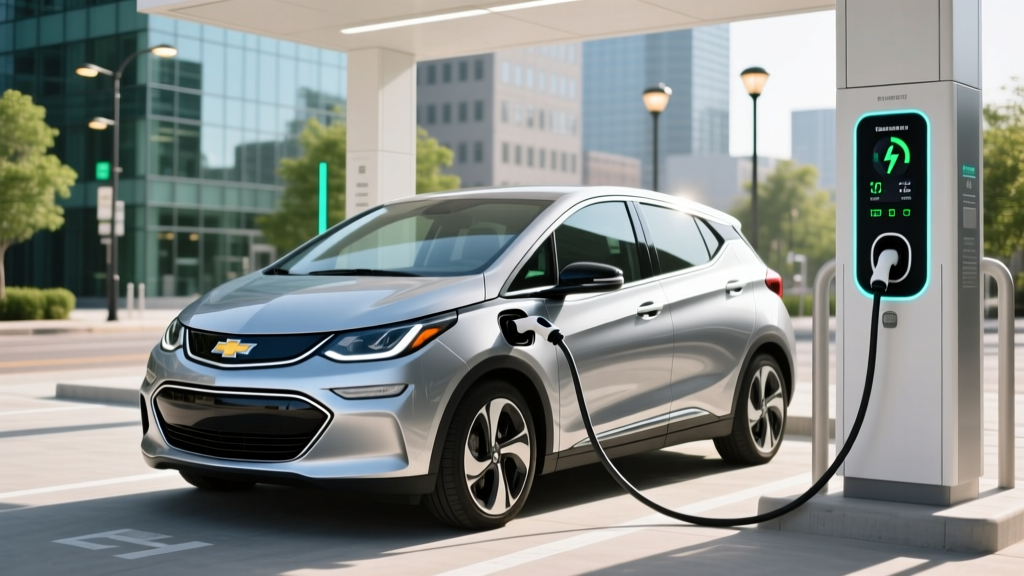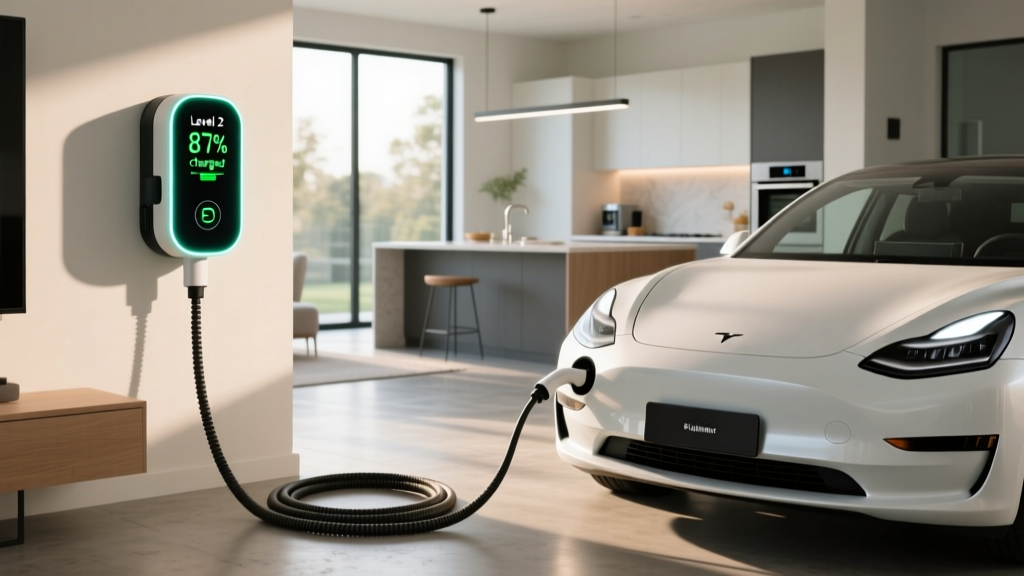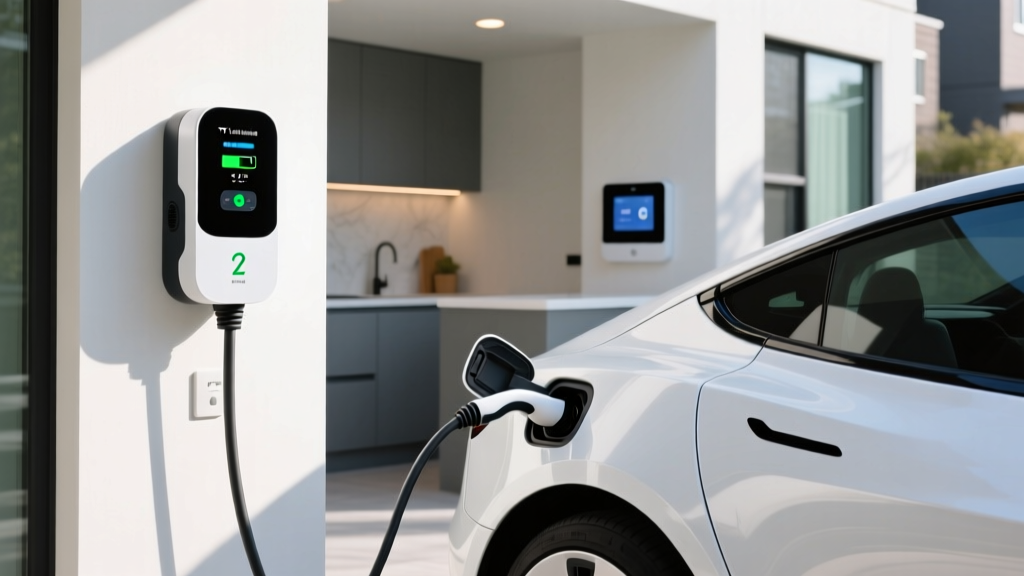
Plug in, add electrons, drive away — the basic idea behind electric vehicle charging is simple. But the details matter enormously when you're deciding whether to buy an EV, planning a home charging setup, or trying to understand why one station adds 200 miles in 20 minutes and another takes 14 hours. This guide answers the core question — what is EV charging? — with the exact numbers, real-world speeds, and installation realities you need to make confident decisions.
At its core, EV charging is the transfer of electrical energy (measured in kWh, kilowatt-hours — the size of your battery's "tank") from the grid into your vehicle's battery pack, at a rate determined by the charger's power output (measured in kW, kilowatts — how fast the electrons flow). Confusing these two units is the single most common mistake new EV owners make. A 75 kWh battery charged at 7.5 kW takes roughly 10 hours from empty. That same battery on a 150 kW DC fast charger can reach 80% in about 30 minutes. The math is straightforward once you know which number means what.
The Three EV Charging Levels: Speed, Power, and Real-World Range Gains
Every EV charging scenario falls into one of three categories. The U.S. Department of Energy classifies them by voltage, power delivery, and typical use case. Here's how they compare with concrete numbers:
| Level | Voltage | Power (kW) | Miles of Range Added Per Hour | Typical Use Case |
|---|---|---|---|---|
| Level 1 | 120V AC | 1.2–1.8 kW | 3–5 miles | Overnight trickle; emergency top-ups |
| Level 2 | 240V AC | 3.3–19.2 kW | 14–75 miles | Home daily charging; workplace; public destinations |
| DC Fast Charging (Level 3) | 400–900V DC | 50–350+ kW | 150–1,000+ miles (peak rate) | Road trips; highway corridors; quick top-ups |
A few real-world nuances matter here. Level 1 charging from a standard household outlet is genuinely viable only for plug-in hybrids with small batteries (10–20 kWh) or for BEV owners who drive fewer than 30 miles per day and can leave the car plugged in for 12+ hours. A full charge on a 75 kWh battery at Level 1 takes roughly 50–60 hours — impractical for most buyers.
Level 2 is where the vast majority of daily EV charging happens. A 48-amp (11.5 kW) home charger will fully replenish a 75 kWh overnight in about 7 hours, which covers nearly every daily driving scenario. This is the sweet spot for homeowners with garage or driveway access.
DC fast charging bypasses the vehicle's onboard AC-to-DC converter and feeds direct current straight into the battery at high power. However, peak kW is not sustained kW. A charger rated at 250 kW may deliver that rate only between 10–40% state of charge (SoC), then taper significantly. A typical charging curve on a modern 800V architecture vehicle (like the Hyundai Ioniq 5 or Kia EV6) peaks around 240 kW and charges 10–80% in approximately 18 minutes. A 400V vehicle on the same charger might peak at 150 kW and take 25–35 minutes for the same 10–80% session.
What Is EV Charging at Home? Electrical Requirements and Installation Costs
Installing a Level 2 home charger is the single biggest quality-of-life upgrade an EV owner can make. Wake up every morning with a full "tank," never visit a gas station, and pay residential electricity rates (typically $0.10–$0.18/kWh depending on your utility and time-of-use plan) instead of public charging premiums. But installation costs vary enormously based on your home's electrical panel, the distance from panel to charger location, and local permitting requirements.
Electrical Requirements for Level 2 Home Charging
Most Level 2 home chargers require a 240V dedicated circuit, identical to what a clothes dryer or electric range uses. The specific amperage depends on the charger:
- 32-amp charger (7.7 kW): Requires a 40-amp breaker (NEC code requires circuits to be rated 125% of continuous load)
- 40-amp charger (9.6 kW): Requires a 50-amp breaker
- 48-amp charger (11.5 kW): Requires a 60-amp breaker — the most popular choice for future-proofing
- 80-amp charger (19.2 kW): Requires a 100-amp breaker — needs a 200A+ panel with ample spare capacity
If your home has a 100-amp main panel that's already near capacity (common in homes built before 2000), you'll likely need a panel upgrade to 200 amps, which adds $1,500–$3,500 to your installation cost. Newer homes with 200-amp panels often have enough spare capacity for a 60-amp EV circuit without an upgrade.
Home EV Charger Installation Cost Breakdown
Here's what you can realistically budget for a Level 2 home charger installation in 2026, based on national averages. Your mileage will vary based on local labor rates, permit fees, and the complexity of the wire run:
| Component | Simple Install (panel nearby) | Complex Install (long run / panel upgrade) |
|---|---|---|
| Level 2 charger hardware (48A smart charger) | $400–$700 | $400–$700 |
| Electrician labor (licensed) | $300–$600 | $800–$1,800 |
| Materials (conduit, wire, junction box) | $50–$150 | $200–$600 |
| Permit and inspection fee | $50–$200 | $100–$300 |
| Panel upgrade (if needed) | $0 (not needed) | $1,500–$3,500 |
| Total estimated cost | $800–$1,650 | $3,000–$6,900 |
The "simple install" scenario assumes your electrical panel is in the garage or on the same wall as the charger location, with a short wire run (under 20 feet) and sufficient spare breaker slots. The "complex install" covers long wire runs through finished walls, conduit runs along exterior walls, or the need for a panel upgrade. Always get at least two quotes from licensed electricians and confirm they have EV charger installation experience — it's a specialized job with specific NEC (National Electrical Code) requirements.
Safety and Code Requirements
The National Electrical Code (NEC Article 625) governs EV charging installations. Key requirements include:
- Dedicated circuit: Your EV charger must have its own breaker — no sharing with other appliances
- GFCI protection: Required for outdoor installations and in many jurisdictions for garages as well (NEC 2020 and later)
- Outdoor-rated equipment: If mounted outside, the charger and all connectors must carry a NEMA 3R or NEMA 4 weather rating
- Proper wire gauge: 6 AWG copper for 48-amp circuits, 4 AWG for 60-amp — undersized wire is a fire hazard
- Permit and inspection: Nearly all jurisdictions require an electrical permit and a post-install inspection — skip this and you risk voiding your homeowner's insurance coverage for electrical fires
Connector Compatibility: NACS, CCS1, CHAdeMO, and the Adapter Landscape
Not all EV plugs are the same, and the connector landscape has shifted dramatically since 2023 when Ford and GM adopted Tesla's North American Charging Standard (NACS). Here's where things stand for 2026 model-year vehicles:
| Connector | Brands Using It (Native) | DC Fast Charge Availability | Adapter Needed For |
|---|---|---|---|
| NACS (Tesla standard) | Tesla, Ford, GM (Cadillac, Chevrolet, GMC), Rivian, Volvo, Polestar, Mercedes-Benz, BMW, Hyundai, Kia, Genesis | Tesla Supercharger network (250–350 kW); growing third-party NACS stations | CCS1 → NACS adapter for legacy CCS vehicles charging at Tesla Superchargers |
| CCS1 (Combined Charging System) | Legacy models from VW, Audi, older Ford/GM/Hyundai/Kia vehicles pre-NACS transition | Electrify America, EVgo, ChargePoint DC stations (50–350 kW) | NACS → CCS adapter (rare); most CCS vehicles now use a CCS-to-NACS adapter for Supercharger access |
| CHAdeMO | Nissan Leaf (discontinued), Mitsubishi Outlander PHEV | Limited and shrinking network; primarily older stations | No practical adapter to NACS/CCS for DC charging |
The practical takeaway for 2026 buyers: if you're purchasing a new EV, it almost certainly has a NACS port or will have one by the time it ships. The CCS-to-NACS adapter situation has stabilized — most automakers provide or sell a certified adapter that allows CCS-equipped vehicles to access Tesla Superchargers. Always verify adapter compatibility with your specific model year before relying on it for road trips.
For Level 2 home charging, the connector question is simpler: NACS-equipped vehicles use the NACS connector, and you should buy a NACS home charger. CCS vehicles use the J1772 connector for AC Level 2 charging (the top portion of the CCS plug). NACS-to-J1772 adapters are available if you have a J1772 charger and a NACS vehicle, but buying a native NACS charger is the cleaner solution in 2026.
Charging Time Examples: 10–80% for Common Battery Sizes
The 10–80% metric is the industry standard for measuring practical DC fast charging time, because charging above 80% slows dramatically to protect battery health (the "charge curve taper"). Here are representative times for popular 2026 EVs across different charging scenarios:
| Vehicle (Battery Size) | Level 2 at 11.5 kW (Home) | 150 kW DC Fast Charger | 250–350 kW DC Fast Charger |
|---|---|---|---|
| Tesla Model Y Long Range (75 kWh usable) | ~6.5 hours | ~30 minutes | ~18 minutes (peak 250 kW) |
| Hyundai Ioniq 5 (77.4 kWh, 800V) | ~6.7 hours | ~28 minutes | ~18 minutes (peak 240 kW) |
| Ford F-150 Lightning Ext. Range (131 kWh) | ~11.4 hours | ~52 minutes | ~41 minutes (peak 180 kW sustained) |
| Chevrolet Equinox EV (85 kWh) | ~7.4 hours | ~35 minutes | ~24 minutes (peak 190 kW) |
Real-world charging reality check: These 10–80% times assume optimal battery temperature (preconditioned), a station capable of delivering peak power, and a battery starting at 10% SoC. In cold weather (below 32°F / 0°C), DC fast charging can be 30–50% slower unless the vehicle has preconditioned its battery — a process that warms the pack using navigation to the charger. Always precondition before a fast-charge stop.
What Does EV Charging Cost? Per-Mile Comparison vs. Gasoline
The economic case for EV charging hinges on where and when you charge. Home charging on an off-peak utility rate is dramatically cheaper than gasoline; DC fast charging on a road trip can approach or even exceed gas costs per mile. Here's a realistic breakdown using 2026 electricity and fuel prices:
| Charging Scenario | Rate ($/kWh) | Cost Per Mile (at 3 mi/kWh efficiency) | Annual Cost (12,000 miles) |
|---|---|---|---|
| Home — off-peak utility rate | $0.10–$0.14 | $0.033–$0.047 | $400–$560 |
| Home — standard residential rate | $0.15–$0.20 | $0.050–$0.067 | $600–$800 |
| Public Level 2 (workplace / shopping) | $0.20–$0.35 | $0.067–$0.117 | $800–$1,400 |
| DC fast charging (road trips) | $0.30–$0.55 | $0.100–$0.183 | $1,200–$2,200 |
| Gasoline comparison (28 MPG avg at $3.40/gal) | — | $0.121 | $1,457 |
The numbers make the case clearly: if you can charge at home on a time-of-use plan (charging overnight when rates are lowest), your fuel cost drops to roughly one-quarter to one-third of what a comparable gasoline vehicle costs. Even at standard residential rates, EV charging saves most drivers $600–$1,000 per year. The savings erode if you rely primarily on DC fast charging — which is why home charging access remains the single most important factor in EV ownership satisfaction.
Many utilities now offer EV-specific time-of-use (TOU) rates that make overnight charging even cheaper. Check with your local utility about EV rate programs — some offer rates as low as $0.06–$0.08/kWh between 11 PM and 6 AM, further widening the cost advantage.
Equipment Recommendations: Best Level 2 Home Chargers for 2026
The home charger market has matured significantly, with reliable smart chargers now available from $350 to $700. Here are three models we recommend based on real-world reliability, feature sets, and compatibility:
Emporia Vue Level 2 Smart Charger
- Power output: 48 amps (11.5 kW)
- Connector: NACS (also available in J1772)
- Cable length: 24 feet
- Smart features: Wi-Fi connected, energy monitoring via Emporia app, solar integration, scheduled charging, load management
- Price: ~$399
- Best for: Budget-conscious buyers who want smart scheduling and energy tracking
ChargePoint Home Flex (2nd Gen)
- Power output: Up to 50 amps (12 kW) — adjustable down to 16A for lower-capacity panels
- Connector: NACS or J1772 (swappable pigtail)
- Cable length: 23 feet
- Smart features: Wi-Fi, Alexa/Google Home integration, ChargePoint app scheduling, flexible amperage setting
- Price: ~$599
- Best for: Homes with older panels that need adjustable amperage; strong app ecosystem
Tesla Wall Connector
- Power output: 48 amps (11.5 kW)
- Connector: NACS native (includes J1772 adapter in box for non-Tesla vehicles)
- Cable length: 24 feet
- Smart features: Wi-Fi updates, power sharing between two Wall Connectors on one circuit, Tesla app integration
- Price: ~$475
- Best for: Tesla owners and multi-EV households; cleanest NACS-native solution
All three chargers are UL-listed, outdoor-rated (NEMA 4), and eligible for the federal Residential Clean Energy Credit (IRS §25D), which covers 30% of the cost of home EV charging equipment through 2032. Some states and utilities offer additional rebates on top of the federal credit — check your local utility's EV program page and the AFDC state incentives database for specifics in your area.
Public Charging Networks: Where to Charge on the Road
While home charging handles 80–90% of most EV owners' needs, public charging infrastructure matters for road trips and apartment dwellers. The 2026 public charging landscape is significantly more reliable than it was even two years ago, driven by the expansion of the Tesla Supercharger network (now open to non-Tesla vehicles via the "Magic Dock" CCS adapter at select stalls) and the NEVI-funded buildout of highway fast-charging corridors.
The major networks and their characteristics:
- Tesla Supercharger: 250–350 kW V4 stalls; highest uptime (~99%); NACS native with Magic Dock CCS adapters at select locations; pricing typically $0.25–$0.40/kWh
- Electrify America: Up to 350 kW CCS chargers; improved reliability after 2024–2025 hardware refresh; Plug&Charge payment; $0.31–$0.48/kWh
- EVgo: 50–350 kW chargers; strong urban and retail presence; Autocharge+ for payment; $0.30–$0.45/kWh
- ChargePoint: Largest Level 2 network; DC fast chargers at select locations; strong workplace and retail deployment; pricing varies by site host
For road trip planning, apps like A Better Routeplanner (ABRP) and PlugShare aggregate real-time station availability, user reviews, and charger power levels. Always check recent station reviews before relying on a specific charger — a station listed as "available" may have been down for weeks.
Frequently Asked Questions About EV Charging
How much does it cost to install a home EV charger?
A straightforward Level 2 home charger installation (panel nearby, short wire run, no panel upgrade needed) typically costs $800–$1,650 total including equipment, electrician labor, materials, and permit fees. Complex installations requiring long wire runs, conduit, or a 200-amp panel upgrade can range from $3,000–$6,900. The federal §25D tax credit covers 30% of equipment costs, and many utilities offer additional rebates of $250–$500.
How fast will each charging level add range?
Level 1 (120V) adds roughly 3–5 miles of range per hour. Level 2 (240V, 48A) adds approximately 30–40 miles per hour for most EVs. DC fast charging at 150 kW adds roughly 150–200 miles in 15–20 minutes at peak rate, while 250–350 kW chargers can add 100+ miles in under 10 minutes for compatible vehicles. Actual speeds depend on battery size, state of charge, battery temperature, and the vehicle's maximum charge acceptance rate.
Which connector and charger is compatible with my EV?
For 2026 model-year vehicles, most new EVs use the NACS connector (Tesla, Ford, GM, Rivian, Hyundai, Kia, BMW, Mercedes, Volvo, and others). Older or legacy models may use CCS1. The Nissan Leaf uses CHAdeMO. Check your vehicle's charge port — if it's a small, compact connector, it's likely NACS. If it's a larger connector with two DC pins below the AC pins, it's CCS1. Buy a home charger with the matching connector, or use a certified adapter.
How much does EV charging cost per mile compared to gasoline?
Home charging at off-peak rates ($0.10–$0.14/kWh) costs roughly $0.03–$0.05 per mile for an efficient EV — about one-quarter to one-third the cost of gasoline at $3.40/gallon and 28 MPG. Standard residential rates ($0.15–$0.20/kWh) bring the cost to $0.05–$0.07 per mile. Public DC fast charging ($0.30–$0.55/kWh) costs $0.10–$0.18 per mile, approaching or exceeding gas costs. The economic advantage of EVs is strongest when you charge at home overnight.
What electrical upgrades might I need for a home charger?
Homes with a 200-amp electrical panel and spare breaker capacity usually need no upgrades — just a dedicated 40–60 amp circuit. Homes with 100-amp panels, or panels already near capacity (common with electric HVAC, water heaters, and dryers), may require a panel upgrade to 200 amps ($1,500–$3,500). Some utilities offer "make-ready" programs that cover part of the panel upgrade cost for EV adopters. A licensed electrician can assess your panel's spare capacity during a site visit — most offer free or low-cost estimates.
Can I use a regular household outlet to charge my EV?
Yes — that's Level 1 charging, using a standard 120V outlet. However, it adds only 3–5 miles of range per hour, meaning a full charge of a 75 kWh battery takes 50+ hours. Level 1 is practical for PHEVs with small batteries or for BEV owners who drive very short daily distances and can leave the car plugged in overnight. For anything beyond that, a 240V Level 2 installation is strongly recommended.
Does fast charging damage my EV battery?
Modern EV battery management systems (BMS) carefully control charging speed, temperature, and voltage to minimize degradation from DC fast charging. While exclusive reliance on DC fast charging may accelerate degradation slightly compared to Level 2 charging, the effect is modest for most chemistries — expect perhaps 1–3% additional capacity loss over 100,000 miles. LFP (lithium iron phosphate) batteries, used in many 2026 Teslas and other models, are particularly resilient to frequent fast charging. For daily use, Level 2 home charging is optimal; use DC fast charging for road trips without significant worry.