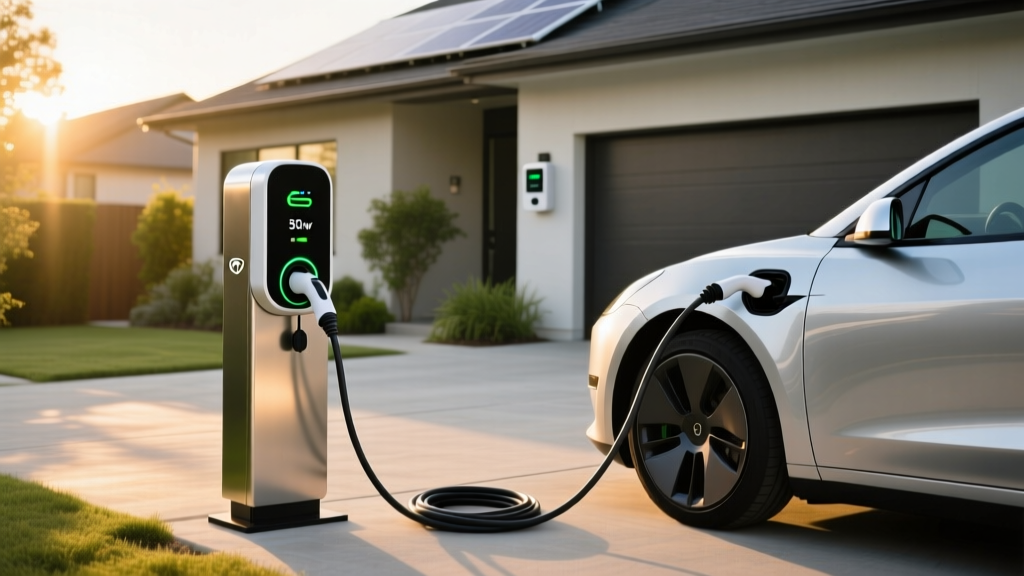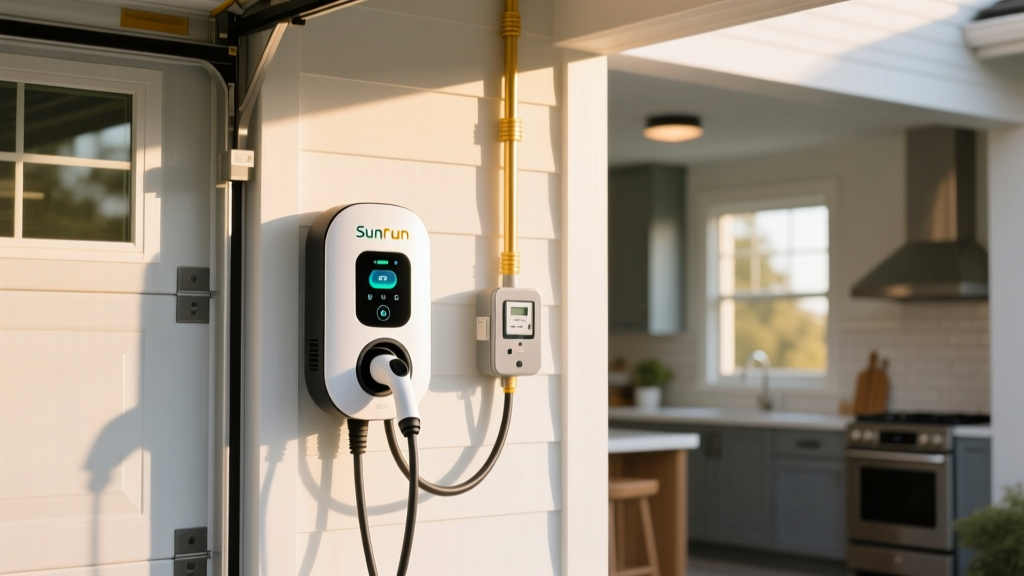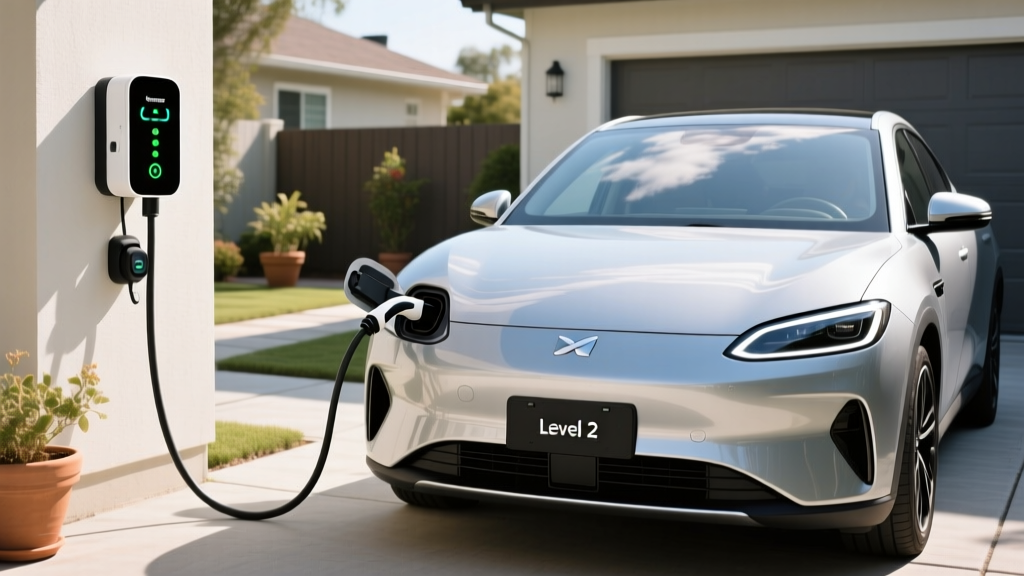
The Fundamentals: Power (kW) vs. Energy (kWh)
Before plugging in anything, you need to understand the single most important distinction in EV ownership: kW (kilowatts) measures power — how fast electricity flows into your car at any given moment. kWh (kilowatt-hours) measures energy — the total amount of electricity stored in your battery. Think of it like plumbing: kW is the width of the pipe (flow rate), and kWh is the size of the tank you're filling.
A 75 kWh battery charged at 11.5 kW (a typical Level 2 home charger) takes roughly 6.5 hours from empty to full. That same battery on a 150 kW DC fast charger can go from 10% to 80% in about 25–30 minutes — but only while the car's battery management system allows peak power. Charging curves taper significantly above 80% state of charge to protect battery health, which is why you'll rarely see a DC fast charging session quoted beyond 80%.
Charging Levels Explained: Speeds, Use Cases, and Real-World Range Gains
Every EV sold in the United States supports three tiers of charging. The level you use daily versus on road trips will differ dramatically.
| Level | Voltage | Typical Power (kW) | Miles of Range Added Per Hour | Best For |
|---|---|---|---|---|
| Level 1 | 120V AC | 1.0–1.4 kW | 3–5 miles | Overnight top-ups, PHEVs, low-mileage drivers |
| Level 2 | 240V AC | 3.3–19.2 kW | 12–75 miles | Daily home charging, workplace, destination |
| DC Fast Charging | 400–800V DC | 50–350 kW | 150–1,000+ miles (equivalent/hr) | Road trips, quick top-ups, fleet depots |
Level 1 uses a standard household outlet. Every EV ships with a mobile cord that supports Level 1. It's painfully slow for a large-battery BEV — adding maybe 40 miles overnight — but entirely adequate for a plug-in hybrid with 30–45 miles of electric range (like the Toyota RAV4 Prime or Jeep Wrangler 4xe).
Level 2 is where most EV owners live day to day. A 48-amp Level 2 charger on a 60-amp dedicated circuit delivers up to 11.5 kW, which replenishes roughly 35–45 miles of range per hour for a mid-size crossover like the Hyundai Ioniq 5 or Tesla Model Y. An overnight session (8–10 hours) fully refills most EV batteries.
DC Fast Charging bypasses the car's onboard charger and feeds DC current directly to the battery. Peak speeds vary enormously: a 2026 Hyundai Ioniq 5 on an 800V architecture can peak at 240 kW and hit 10–80% in approximately 18 minutes under ideal thermal conditions. A Chevrolet Equinox EV on a 400V system peaks around 150 kW and takes roughly 30 minutes for the same 10–80% window. Always check both the peak kW rating and the sustained charge curve — peak power is typically only maintained between 10–50% SoC.
- 60 kWh battery (Nissan Leaf, base Volvo EX30): ~22 min at 150 kW DCFC, ~5.5 hrs at 11.5 kW Level 2
- 75 kWh battery (Tesla Model Y, Ford Mustang Mach-E): ~25 min at 250 kW DCFC, ~6.5 hrs at 11.5 kW Level 2
- 100 kWh battery (Rivian R1S, GMC Sierra EV): ~35 min at 350 kW DCFC (800V), ~9 hrs at 11.5 kW Level 2
Note: DC fast times assume optimal battery temperature via preconditioning and a charger capable of sustaining the vehicle's peak rate. Cold batteries can double charging times.
Home Charger Installation: Electrical Requirements, Costs, and Panel Upgrades
Installing a Level 2 home charger is the single most impactful upgrade an EV owner can make. But the cost varies enormously depending on your home's electrical infrastructure.
Electrical Requirements
A typical high-output Level 2 charger draws 48 amps continuously. The National Electrical Code (NEC) requires that continuous loads use only 80% of a circuit's rated capacity, meaning a 48A charger needs a 60-amp dedicated circuit on a 240V line. Smaller 32A chargers need a 40A circuit; 40A chargers need a 50A circuit.
Your home's electrical panel must have sufficient spare capacity. Most modern homes with 200-amp service can accommodate a 60A EV circuit without issue. Older homes with 100-amp service — common in houses built before the 1990s — often require a panel upgrade to 200 amps, which is the single largest variable in installation cost.
Installation Cost Breakdown
| Component | Simple Install (Panel Adjacent) | Complex Install (Long Run / Panel Upgrade) |
|---|---|---|
| Level 2 Charger Equipment | $400–$700 | $400–$700 |
| Electrician Labor (240V circuit) | $300–$600 | $800–$2,000 |
| Conduit, Wiring, and Materials | $100–$200 | $300–$800 |
| Permit and Inspection | $50–$200 | $50–$200 |
| Panel Upgrade (if needed) | N/A | $1,500–$4,000 |
| Total Estimated Cost | $850–$1,700 | $3,050–$7,700 |
The "simple" scenario assumes your panel has spare capacity, the charger location is within 10–20 feet of the panel, and no structural obstacles complicate the wire run. The "complex" scenario accounts for long conduit runs (garage on the opposite side of the house from the panel), panel upgrades, or trenching for detached garages.
Always hire a licensed electrician and pull a permit. Unpermitted EV charger installations can void homeowner's insurance claims and create fire risk. According to the National Fire Protection Association, EV charging circuits must comply with NEC Article 625, which covers dedicated circuits, GFCI protection for outdoor installations, and proper cable management.
What Electrical Upgrades Might You Need?
Beyond the dedicated 240V circuit, consider these potential upgrades:
- Panel upgrade (100A → 200A): Required if your existing panel lacks spare breaker slots or amperage headroom. Cost: $1,500–$4,000.
- Sub-panel installation: If your main panel is full but has capacity, adding a sub-panel near the garage can be cheaper than a full upgrade. Cost: $500–$1,500.
- Smart load management: Devices like the Emporia VUE or Span smart panel can dynamically share amperage between the EV charger and other high-draw appliances, avoiding a panel upgrade entirely.
- Utility service upgrade: In rare cases, the utility's drop line to your home may need upgrading. Contact your utility early — some cover this cost.
Connector Compatibility: NACS, CCS1, CHAdeMO, and Adapters
The North American charging landscape has consolidated significantly. As of 2026, the North American Charging Standard (NACS) — originally Tesla's proprietary connector — has become the dominant standard, adopted by Ford, GM, Rivian, Volvo, Hyundai/Kia, and most major automakers starting with 2025–2026 model-year vehicles.
| Connector | Used By | DC Fast Charge Support | Adapter Availability |
|---|---|---|---|
| NACS (Tesla) | Tesla (all years), Ford, GM, Rivian, Hyundai, Kia, Volvo, BMW (2025+), most new EVs | Yes — up to 350 kW at V4 Superchargers | CCS→NACS and NACS→CCS adapters widely available ($150–$300) |
| CCS1 (Combo) | VW ID.4 (pre-2026), some legacy models, Electrify America native | Yes — up to 350 kW | NACS→CCS adapters available; CCS vehicles can access Superchargers via adapter |
| CHAdeMO | Nissan Leaf (legacy), Mitsubishi Outlander PHEV (older) | Yes — up to 100 kW (most stations 50 kW) | No practical adapter to NACS/CCS; network declining |
For 2026 buyers: If your new EV has a NACS port, you'll have native access to Tesla's Supercharger network (over 30,000 stalls in North America) plus growing third-party NACS chargers. If you own a CCS-equipped vehicle from 2022–2025, a NACS adapter (sold by Tesla, Ford, and third parties like Lectron) grants Supercharger access. CHAdeMO owners face the most limited public charging options as networks retire those connectors.
For Level 2 home and destination charging, nearly all non-Tesla chargers use a J1772 connector. Tesla vehicles include a J1772 adapter in the glovebox, and most aftermarket Level 2 chargers now ship with NACS connectors or offer them as an option.
The Cost of Charging: Home vs. Public vs. Gas
Charging cost is where EV ownership economics diverge sharply from gasoline — but only if you charge smart.
| Scenario | Typical $/kWh | Cost Per Mile (3.5 mi/kWh EV) | Equivalent Gas Cost (30 MPG @ $3.50/gal) |
|---|---|---|---|
| Home — Off-Peak Utility Rate | $0.08–$0.14 | $0.02–$0.04 | $0.12/mile |
| Home — Standard Residential Rate | $0.14–$0.20 | $0.04–$0.06 | $0.12/mile |
| Public Level 2 (ChargePoint, EVgo L2) | $0.25–$0.45 | $0.07–$0.13 | $0.12/mile |
| DC Fast Charging (Electrify America, Tesla Supercharger) | $0.30–$0.55 | $0.09–$0.16 | $0.12/mile |
| DC Fast Charging — Peak Idle/Demand Pricing | $0.55–$0.70 | $0.16–$0.20 | $0.12/mile |
The takeaway: home charging on off-peak rates is 3–6× cheaper per mile than gasoline. Public DC fast charging, while convenient on road trips, can approach or exceed gas-car fuel costs in high-demand urban areas. According to fueleconomy.gov, the average EV achieves 3–4 miles per kWh, making home charging at $0.12/kWh roughly $0.03–$0.04 per mile.
Many utilities offer time-of-use (TOU) plans that discount electricity to $0.06–$0.10/kWh between midnight and 6 AM. If your utility offers a TOU or EV-specific rate, schedule your charging sessions overnight. Over 12,000 miles of annual driving, the difference between off-peak home charging ($0.03/mi) and exclusive DC fast charging ($0.14/mi) is roughly $1,320 per year.
Recommended Home Level 2 Chargers (2026)
ChargePoint Home Flex
- Power Output: Up to 12 kW (50A) / configurable down to 16A
- Connector: NACS or J1772 (select at purchase)
- Cable Length: 23 feet
- Smart Features: Wi-Fi, app scheduling, Alexa, utility TOU integration, energy tracking
- Price: $549–$649
- Best For: Most EV owners wanting a reliable, smart, UL-listed charger with flexible amperage
Tesla Wall Connector
- Power Output: Up to 11.5 kW (48A)
- Connector: NACS native; J1772 adapter included
- Cable Length: 24 feet
- Smart Features: Wi-Fi, over-the-air updates, Power-Share (load balancing between two units), Tesla app integration
- Price: $475
- Best For: Tesla owners and households with multiple Teslas needing load sharing
Emporia Vue Level 2 EV Charger
- Power Output: Up to 11.5 kW (48A)
- Connector: NACS or J1772
- Cable Length: 24 feet
- Smart Features: Integrated whole-home energy monitoring, solar-aware charging, TOU scheduling, app control
- Price: $399–$499
- Best For: Solar-panel owners and budget-conscious buyers wanting energy visibility
All three chargers above are UL-listed (or ETL-listed to UL standards), a non-negotiable safety requirement. Avoid unlisted chargers from unknown brands on Amazon — they may lack proper overcurrent protection, thermal cutoffs, or ground-fault detection. For outdoor installations, confirm the charger carries a NEMA 4 or IP65 weather-resistance rating.
Safety, Code Compliance, and Installation Best Practices
EV charging draws sustained high current for hours — more similar to an electric oven than a phone charger. Proper installation isn't optional.
- Dedicated circuit: Your Level 2 charger must have its own breaker — never share a circuit with other appliances. NEC Article 625 mandates this.
- GFCI protection: Required for all outdoor receptacles and increasingly for indoor garage installations per 2023 NEC updates. Many modern EV chargers include built-in GFCI protection; confirm with your electrician to avoid nuisance tripping from double-GFCI configurations.
- Outdoor rating: If mounting outside, the charger must be rated NEMA 4 (weatherproof). Use a retractable cable management system to prevent tripping hazards and cable damage.
- Wire gauge: A 60A circuit requires 6 AWG copper wire (or 4 AWG aluminum). Your electrician will size this correctly — but verify on the permit documentation.
- Hardwired vs. plug: Hardwired installations (no plug) are preferred for circuits above 40A, as NEMA 14-50 receptacles can overheat under sustained EV loads if not installed with industrial-grade outlets (Hubbell or Bryant brand). The NHTSA has noted instances of melting 14-50 receptacles under continuous EV charging loads with consumer-grade outlets.
Frequently Asked Questions
How much does it cost to install a home EV charger?
A straightforward Level 2 installation with an adequate electrical panel and short wire run costs $850–$1,700 including equipment, electrician labor, and permit. Complex installations requiring a 200A panel upgrade, long conduit runs, or trenching can reach $3,000–$7,700. The federal Alternative Fuel Vehicle Refueling Property Credit (IRS Form 8911) may cover up to 30% of equipment and installation costs (capped at $1,000 for residential), subject to income and census-tract eligibility.
How fast will each charging level add range?
Level 1 (120V) adds 3–5 miles of range per hour. Level 2 (240V, 48A) adds 30–45 miles per hour depending on vehicle efficiency. DC fast charging adds 150–300+ miles in a 20–30 minute session, though speed tapers significantly above 80% state of charge. Efficiency varies: a Hyundai Ioniq 6 (4.2 mi/kWh) gains range faster than a GMC Hummer EV (1.8 mi/kWh) at the same kW rate.
Which connector is compatible with my EV?
All 2025–2026 model-year EVs from Ford, GM, Rivian, Hyundai, Kia, BMW, and Volvo use the NACS connector natively and access Tesla Superchargers directly. Older CCS-equipped vehicles (2022–2024) can use a NACS adapter ($150–$300) for Supercharger access. Nissan Leaf and older Mitsubishi PHEVs use CHAdeMO, which has declining public infrastructure. For home Level 2 charging, all non-Tesla chargers use J1772, and Tesla includes a J1772 adapter with every vehicle.
How much does charging cost per mile vs. gas?
Home charging at average residential rates ($0.14/kWh) costs roughly $0.04 per mile for an EV averaging 3.5 mi/kWh. Gasoline at $3.50/gallon in a 30 MPG vehicle costs $0.12 per mile — three times more. However, exclusive reliance on public DC fast charging ($0.35–$0.55/kWh) raises EV costs to $0.10–$0.16 per mile, approaching or exceeding gasoline costs. The savings case for EVs depends heavily on reliable home or workplace charging access.
What electrical upgrades might I need?
The most common upgrade is a new 60-amp, 240V dedicated circuit with appropriate wire gauge and breaker. Homes with 100-amp electrical service may need a panel upgrade to 200 amps ($1,500–$4,000) to safely support EV charging alongside existing loads like electric ranges, dryers, and HVAC. Smart load-management devices can sometimes avoid a panel upgrade by dynamically sharing amperage. Always get a load calculation from your electrician before assuming you need a panel upgrade — many 100A panels have more headroom than owners assume.