Understanding Destination Charging: The Middle Ground Between Home and Fast Charging
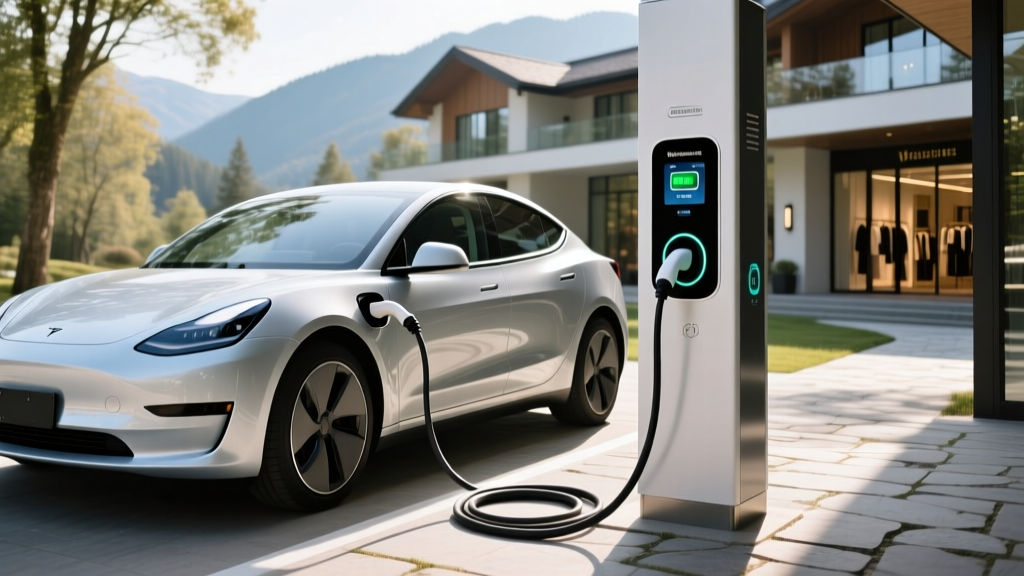
Destination charging fills a critical gap in the EV ecosystem. Unlike DC fast chargers designed for quick highway stops or Level 1 home charging that takes overnight, destination charging refers to Level 2 charging infrastructure installed at locations where you're already planning to spend time: hotels, restaurants, shopping centers, workplaces, and vacation rentals.
The concept is straightforward—charge your EV while you do something else. A typical destination charger delivers 7-19 kW of power, adding 20-60 miles of range per hour depending on your vehicle's onboard charger capacity. For a 4-hour dinner or an overnight hotel stay, that's enough to fully replenish most EV batteries without the premium pricing of DC fast charging.
How Destination Charging Compares to Other Charging Levels
To understand where destination charging fits, here's how the three main charging levels stack up:
| Charging Level | Power Output | Miles Added Per Hour | Typical Use Case | 10-80% Charge Time (75 kWh Battery) |
|---|---|---|---|---|
| Level 1 (120V) | 1.4-1.9 kW | 3-5 miles | Overnight home charging, emergency top-ups | 30-40 hours |
| Level 2 (240V) - Destination | 7-19 kW | 20-60 miles | Hotels, restaurants, workplaces, shopping | 4-8 hours |
| Level 2 (240V) - Home | 7-11.5 kW | 20-40 miles | Overnight home charging | 6-10 hours |
| DC Fast Charging | 50-350 kW | 150-1,000+ miles | Highway travel, quick stops | 18-45 minutes |
Destination charging operates at the same voltage and amperage as home Level 2 charging (240V, typically 30-80 amps), but the key difference is location and convenience. You're paying for the privilege of charging where you're already spending time and money.
How Much Does Destination Charging Cost?
Destination charging costs vary dramatically based on the venue and local electricity rates. Here's what to expect in 2026:
- Complimentary: Many hotels, upscale restaurants, and shopping centers offer free destination charging as a customer amenity. This is common at luxury properties and EV-friendly businesses trying to attract customers.
- Per-kWh pricing: $0.20-$0.50 per kWh is typical for paid destination chargers. At $0.35/kWh, fully charging a 75 kWh battery from 10-80% costs about $18-20.
- Per-hour or session fees: Some venues charge $2-5 per hour or a flat $10-20 session fee regardless of energy consumed.
- Idle fees: Networks like Tesla and Electrify America charge $0.50-$1.00 per minute if you remain plugged in after charging completes—a necessary deterrent at limited-space locations.
Compare this to DC fast charging, which typically costs $0.35-$0.60 per kWh, or home charging at $0.12-$0.20 per kWh depending on your utility's time-of-use rates. Destination charging often hits a sweet spot: more expensive than home charging but cheaper than highway fast charging, with the convenience of charging while you eat, shop, or sleep.
Finding Destination Chargers: Networks and Apps
Several networks dominate the destination charging landscape:
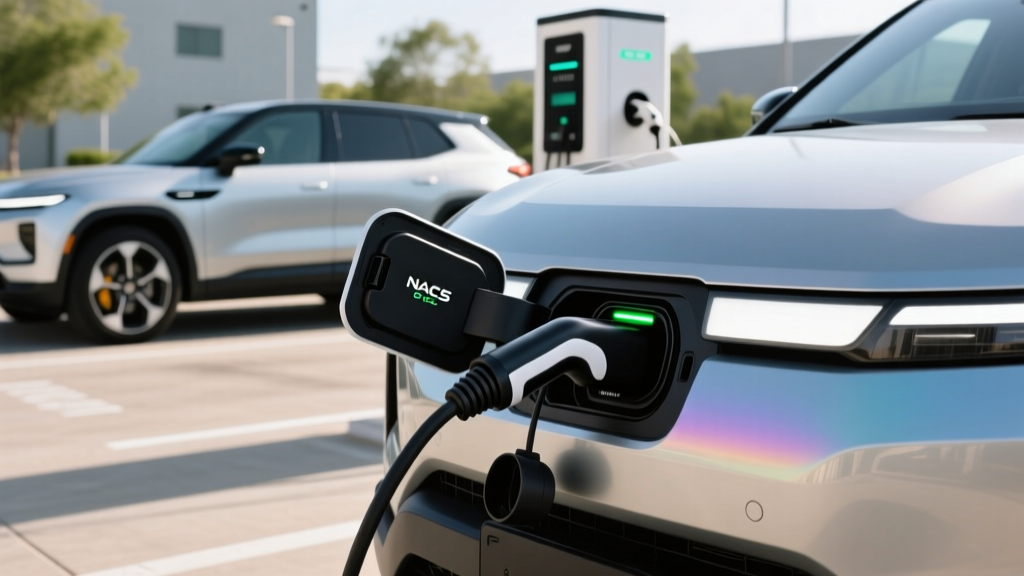
- Tesla Destination Charging: The largest network with 50,000+ connectors globally at hotels, restaurants, and attractions. Many now feature NACS connectors compatible with all EVs (with adapters for non-Tesla vehicles).
- ChargePoint: Extensive Level 2 network at workplaces, shopping centers, and municipalities. Their app shows real-time availability and pricing.
- EVgo and Electrify America: Primarily known for DC fast charging, both networks also operate Level 2 destination chargers at partner locations.
- PlugShare and A Better Routeplanner: Aggregator apps that map destination chargers across all networks, with user reviews and reliability ratings.
Before traveling, check your destination's website or call ahead. Many hotels list EV charging as an amenity, but availability isn't guaranteed—some properties have only 2-4 chargers that fill quickly.
Destination Charging Speed: What to Expect
Your actual charging speed at a destination charger depends on two factors: the charger's power output and your vehicle's onboard charger capacity.
Most destination chargers deliver 7-11 kW (30-48 amps at 240V). However, some older installations max out at 3.3 kW (16 amps), while newer high-power units can deliver 19.2 kW (80 amps).
Your vehicle's onboard charger—the component that converts AC power from the charger to DC power for the battery—has its own limit. Common 2026 EV onboard charger capacities:
- Tesla Model 3/Y: 11.5 kW (48 amps)
- Ford Mustang Mach-E: 10.5 kW (44 amps)
- Hyundai Ioniq 5: 10.9 kW (45 amps)
- Chevrolet Equinox EV: 11.5 kW (48 amps)
- Rivian R1S/R1T: 11.5 kW (48 amps)
- BMW i4: 11 kW (46 amps)
If you plug a vehicle with an 11.5 kW onboard charger into a 7 kW destination charger, you'll charge at 7 kW. If you plug into a 19 kW charger, you'll still max out at 11.5 kW. The charging speed is always limited by the weaker link.
Connector Compatibility: Will It Fit Your EV?
Destination chargers in North America use three main connector types:
| Connector Type | Vehicles Using It | Adapter Needed For | Availability at Destination Chargers |
|---|---|---|---|
| NACS (Tesla) | All Tesla vehicles; Ford, GM, Rivian, Volvo, and others starting 2025-2026 | CCS1 vehicles need NACS-to-CCS adapter ($150-250) | Most common, especially at Tesla Destination Charging locations |
| CCS1 (J1772 + DC pins) | Most non-Tesla EVs through 2024; some 2025-2026 models | Tesla vehicles need J1772 adapter (included with most Teslas) | Widely available at ChargePoint, EVgo, and municipal chargers |
| CHAdeMO | Nissan Leaf, Mitsubishi Outlander PHEV (legacy) | No adapter available for NACS/CCS vehicles | Declining availability; mostly at older installations |
The industry is rapidly standardizing on NACS. By 2027, most new EVs will ship with NACS ports, and destination chargers are following suit. If you drive a CCS1 vehicle, carrying a NACS-to-CCS adapter (available from Tesla, Lectron, or A2Z) opens up thousands of additional destination charging locations.
Destination Charging vs. Home Charging: When to Use Each
Destination charging complements rather than replaces home charging. Here's when each makes sense:
Use home charging when:
- You have access to a Level 2 home charger (the most cost-effective option at $0.12-0.20/kWh)
- Your daily driving is under 200 miles and overnight charging fully replenishes your battery
- You want the convenience of a "full tank" every morning without planning
Use destination charging when:
- You're traveling beyond your EV's range and need to top up at your overnight stop
- You live in an apartment or lack home charging access
- You're spending extended time at a venue (4+ hours) and can charge while you're there
- You want to avoid the higher cost and battery wear of frequent DC fast charging
For apartment dwellers without home charging, destination charging at workplaces, gyms, or grocery stores can serve as a primary charging strategy—though it requires more planning and typically costs 2-3x more than home charging.
Maximizing Destination Charging Efficiency
A few strategies help you get the most from destination chargers:
- Precondition your battery: If your EV offers battery preconditioning (Tesla, Porsche, Hyundai/Kia), enable it before arriving. A warm battery charges faster, especially in cold weather.
- Charge to 80%, not 100%: Charging slows dramatically above 80% state of charge. Unless you need maximum range for the next leg of your trip, unplugging at 80% saves time and is better for long-term battery health.
- Check charger power before you go: Apps like PlugShare list charger power output. A 3 kW charger will be frustratingly slow for a large battery; aim for 7+ kW when possible.
- Arrive with a low state of charge: EVs charge fastest when the battery is below 20%. If you're at 60% SoC, charging will be slower than if you arrive at 15%.
The Future of Destination Charging
Destination charging infrastructure is expanding rapidly. In 2026, several trends are reshaping the landscape:
- Higher power Level 2: New 19.2 kW (80-amp) destination chargers are appearing at premium locations, cutting charge times in half for vehicles with large onboard chargers.
- Integrated payment: RFID cards and app-based payment are replacing credit card readers, reducing maintenance costs and improving reliability.
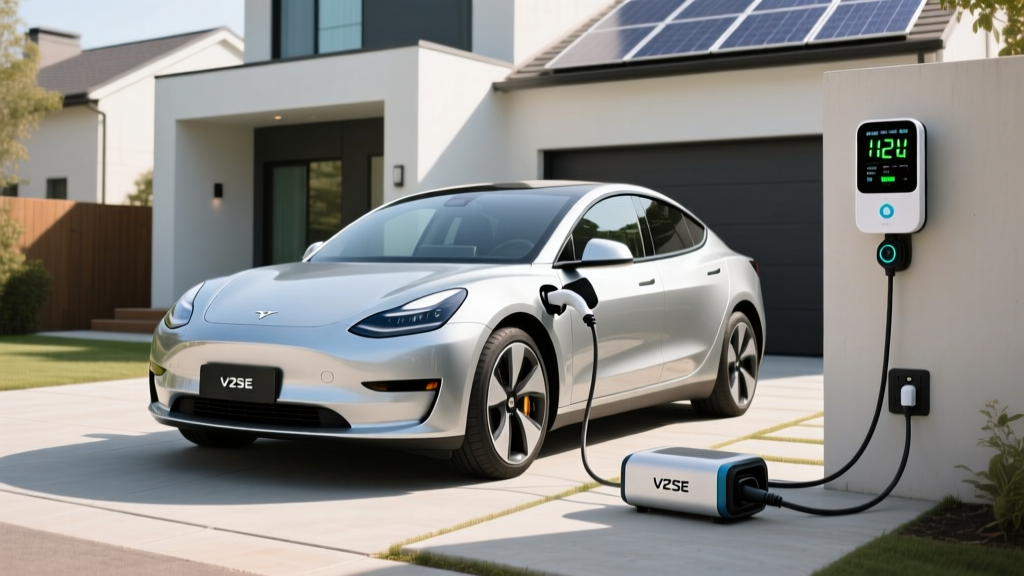
- Vehicle-to-grid (V2G):strong> Some destination chargers now support bidirectional charging, allowing EVs to sell power back to the grid during peak demand—potentially earning EV owners money while parked.
- Wireless charging: Inductive charging pads (no plug required) are being tested at select locations, though adoption remains limited in 2026.
For EV owners, destination charging represents a practical middle ground: slower than DC fast charging but more convenient and often cheaper. As the network expands and standardizes on NACS, finding a compatible charger at your destination will become increasingly seamless.
Frequently Asked Questions
Is destination charging free?
Sometimes. Many hotels, restaurants, and shopping centers offer complimentary destination charging as a customer amenity. Others charge $0.20-$0.50 per kWh or a flat session fee. Always check the network app or venue website before assuming it's free.
How long does destination charging take?
At a typical 7-11 kW destination charger, expect to add 20-40 miles of range per hour. Fully charging a 75 kWh battery from 10-80% takes 4-8 hours—perfect for overnight hotel stays or long dinners, but too slow for quick stops.
Can I use a Tesla destination charger with a non-Tesla EV?
Increasingly, yes. Tesla has opened many destination chargers to non-Tesla vehicles, though you'll need a NACS-to-CCS adapter if your EV has a CCS port. Check the Tesla app or PlugShare to confirm which locations are open to all EVs.
Is destination charging bad for my battery?
No. Level 2 destination charging is actually gentler on your battery than frequent DC fast charging. The slower charge rate generates less heat, which is better for long-term battery health. Just avoid routinely charging to 100% unless necessary.
What if the destination charger is broken when I arrive?
This happens more often than you'd expect. Always have a backup plan: identify 2-3 alternative chargers in the area using PlugShare or your vehicle's navigation. For critical trips, call the venue ahead to confirm the charger is operational.