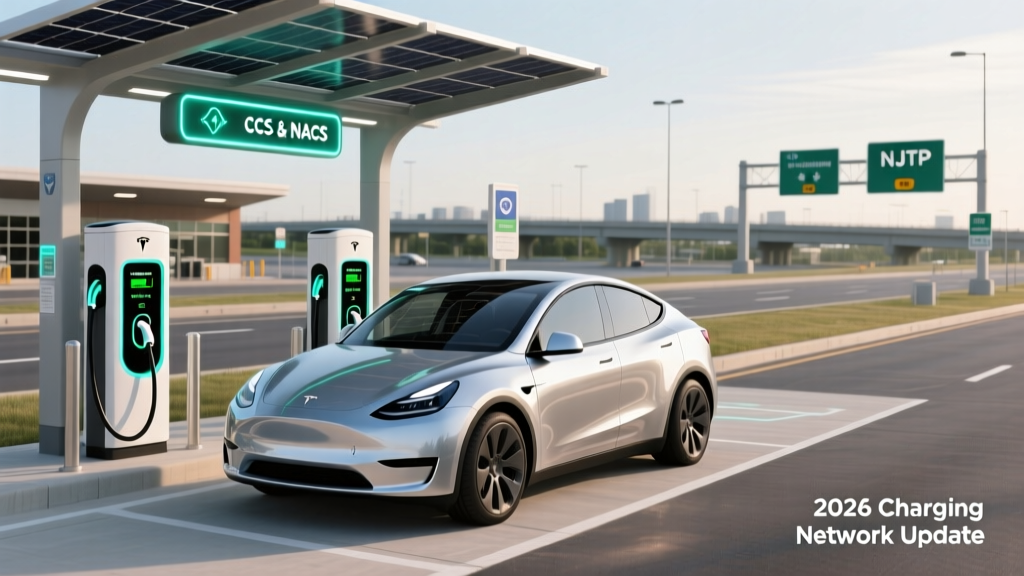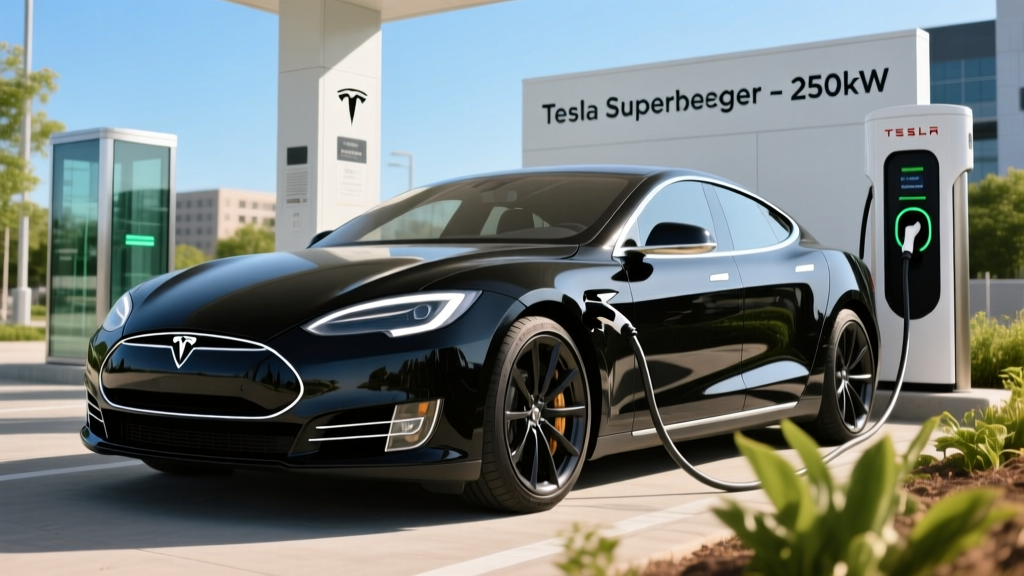
If you've seen Tesla's red-and-white charging stalls along highways and wondered what does a Supercharger do that a regular outlet can't, you're asking the right question. A Supercharger is Tesla's branded DC fast-charging network, capable of delivering up to 250–350 kW of direct-current power straight to an EV's battery — adding up to 200 miles of range in roughly 15 minutes. But "Supercharger" is just one name in a broader ecosystem of EV charging that every owner needs to understand.
This guide covers every charging level, the real cost to install a home charger, which connector your car needs, and exactly what you'll pay per mile compared to gasoline. All figures reflect 2026 pricing, current IRS §30D rules, and the latest hardware from major networks.
The Three EV Charging Levels: What Each One Actually Does
EV charging is categorized into three levels based on power delivery. The key distinction: kW (kilowatts) measures the rate of power flow — how fast energy moves into your battery. kWh (kilowatt-hours) measures total energy stored — your battery's capacity. Think of kW as water pressure and kWh as the size of the tank.
| Level | Voltage | Power (kW) | Miles of Range Added/Hour | Typical Use Case |
|---|---|---|---|---|
| Level 1 (120V AC) | 120V | 1.0–1.4 kW | 3–5 mi/hr | Overnight trickle, PHEVs, emergency |
| Level 2 (240V AC) | 240V | 3.3–19.2 kW | 12–75 mi/hr | Home daily charging, workplace, hotels |
| DC Fast Charging | 400–800V DC | 50–350 kW | 150–1,000+ mi/hr (peak) | Highway road trips, quick top-ups |
Level 1 uses a standard household 120V outlet. It's included with most EVs via a mobile connector. At ~1.3 kW, charging a 75 kWh battery from 10% to 80% takes roughly 40+ hours — impractical for a BEV but sufficient for a PHEV with a 15–40 kWh battery.
Level 2 is the backbone of daily EV ownership. A 240V circuit (like a dryer outlet) delivers 7.7–11.5 kW through most home wall connectors, fully replenishing a typical 75–100 kWh battery overnight in 7–10 hours. This is where 80%+ of all EV charging happens for homeowners.
DC Fast Charging — including Tesla Superchargers, Electrify America, EVgo, and Ionity stations — bypasses the car's onboard charger and sends high-voltage DC directly to the battery. A Tesla V4 Supercharger at 350 kW can add ~200 miles to a compatible vehicle in 15 minutes. However, peak rates only hold at low state of charge (SoC); charging speed tapers significantly above 80% to protect battery health.
What Does a Supercharger Do Differently From Other DC Fast Chargers?
Tesla's Supercharger network operates on the same DC fast-charging principles as Electrify America or EVgo, but with key differences:
- Connector: Tesla uses the NACS (North American Charging Standard) plug, now adopted by Ford, GM, Rivian, Hyundai, and most major automakers for 2025–2026 models. Non-Tesla EVs with native NACS can use Superchargers directly; CCS-equipped EVs need a Tesla-approved adapter.
- Reliability: Tesla reports >99.9% uptime across its 70,000+ global Superchargers. Third-party networks average 80–90% uptime according to J.D. Power's 2025 EV charging study.
- V4 Architecture: Tesla's newest V4 Supercharger cabinets support up to 350 kW for 800V-architecture vehicles (e.g., Cybertruck) and include integrated cable management for CCS/NACS adapters at the stall.
- Plug & Charge: No app or RFID card needed for Tesla vehicles — the car authenticates automatically when plugged in.
For non-Tesla EVs, Electrify America's 350 kW chargers, EVgo's 350 kW stalls, and ChargePoint's Express Plus deliver comparable peak speeds, though real-world throughput depends on your vehicle's max charge rate and battery preconditioning.
Home EV Charger Installation: Requirements, Costs & Electrical Upgrades
Installing a Level 2 home charger is the single biggest quality-of-life upgrade for EV ownership. Here's what's involved electrically and financially.
Electrical Requirements
A typical Level 2 home charger requires:
- Circuit: Dedicated 240V circuit, 40A–60A breaker (rated for continuous 80% load, so a 48A charger needs a 60A breaker)
- Wire gauge: 6 AWG copper for 50A circuits; 4 AWG for 60A (per NEC Article 625)
- Panel capacity: Most homes need at least a 200A main service panel. Adding a 60A EV circuit to an older 100A panel often requires a panel upgrade ($1,500–$3,500).
- GFCI protection: NEC 2023/2026 requires GFCI breakers for EV circuits in garages and all outdoor installations
- Permit: Required in most jurisdictions; typically $50–$250
Installation Cost Breakdown
| Component | Standard Install (panel nearby) | Complex Install (panel upgrade / long run) |
|---|---|---|
| Level 2 charger hardware | $400–$700 | $400–$700 |
| Electrician labor (2–4 hrs standard) | $300–$800 | $1,200–$2,500 |
| Electrical panel upgrade (if needed) | $0 | $1,500–$3,500 |
| Permit & inspection | $50–$150 | $100–$250 |
| Conduit/wiring (50+ ft run) | $0–$200 | $400–$1,200 |
| Total | $750–$1,850 | $3,600–$8,150 |
Federal Tax Credit for Home Charging
The IRS §30D Alternative Fuel Vehicle Refueling Property Credit covers 30% of home charger hardware and installation costs, up to $1,000. Eligibility requires the charger to be installed at your primary residence in a qualifying census tract (many suburban and rural areas qualify; many urban tracts do not). Check current eligibility at IRS.gov. This credit is separate from the $7,500 vehicle purchase credit.
Connector Compatibility: Which Plug Fits Your EV?
The connector landscape shifted dramatically in 2024–2025 when nearly every major automaker adopted Tesla's NACS standard. Here's where things stand in 2026:
| Connector | Brands Using It (Native) | Max DC Speed | Adapter Needed For |
|---|---|---|---|
| NACS (J3400) | Tesla, Ford, GM, Rivian, Hyundai/Kia (2025+), Volvo, Polestar, BMW, Mercedes, Nissan (2026+) | Up to 350 kW | CCS stations (with CCS-to-NACS adapter, ~$200–$250) |
| CCS1 | VW ID.4 (carry-over), older BMW i4/iX, Stellantis, legacy models | Up to 350 kW | Tesla Superchargers (with NACS-to-CCS adapter, ~$200–$250; Tesla-approved required) |
| CHAdeMO | Nissan Leaf (legacy only; discontinued 2025) | Up to 100 kW | CCS or NACS stations (adapters rare, $300+) |
Practical advice: If you're buying a 2025–2026 EV, prioritize a native NACS port. It gives you access to Tesla's Supercharger network (the most reliable and extensive in North America) without adapters. If you own a CCS-equipped EV, purchase the automaker-approved adapter — third-party adapters may not support Plug & Charge authentication and can void warranty coverage on the charge port.
Charging Cost Per Mile: EV vs. Gasoline
The economics of EV charging depend entirely on where and when you charge. Here's a realistic breakdown using a mid-size crossover EV averaging 3.0 mi/kWh (roughly 112 MPGe) versus a comparable gas SUV at 28 MPG combined.
| Charging Scenario | Rate ($/kWh) | Cost per Mile (EV) | Equivalent Gas Price (at 28 MPG) |
|---|---|---|---|
| Home Level 2 — off-peak utility rate | $0.08–$0.12 | $0.027–$0.040 | $0.75–$1.12/gal |
| Home Level 2 — standard residential rate | $0.14–$0.18 | $0.047–$0.060 | $1.31–$1.68/gal |
| Public Level 2 (ChargePoint, Blink) | $0.25–$0.49 | $0.083–$0.163 | $2.33–$4.57/gal |
| DC Fast Charging (Electrify America, EVgo) | $0.35–$0.58 | $0.117–$0.193 | $3.27–$5.41/gal |
| Tesla Supercharger (varies by location/time) | $0.25–$0.40 | $0.083–$0.133 | $2.33–$3.73/gal |
| Gasoline (national avg, Jan 2026) | — | $0.114/mi (at $3.20/gal) | $3.20/gal |
The takeaway: Home off-peak charging is 65–75% cheaper per mile than gasoline. Even DC fast charging at public rates is often comparable to or slightly cheaper than gas — but if you rely exclusively on public DC fast charging, your savings narrow considerably. The EV cost advantage is largest for homeowners with time-of-use (TOU) utility plans.
Charging Time Examples: How Long Does a Full Session Take?
Charge times depend on battery capacity, chemistry, and the charger's sustained output. Below are real-world estimates accounting for charge-curve taper (speeds drop above 80% SoC to protect cell health).
| Battery Size / Example Vehicle | Level 1 (1.3 kW) | Level 2 Home (11.5 kW) | DC Fast (150 kW peak) | DC Fast (250–350 kW peak) |
|---|---|---|---|---|
| 40 kWh (PHEV / small BEV) | 22 hrs | 2.5 hrs | ~18 min | ~12 min |
| 75 kWh (Tesla Model Y, Ford Mustang Mach-E) | 40 hrs | 4.5 hrs | ~28 min | ~18 min |
| 100 kWh (Ford F-150 Lightning Ext., Rivian R1T) | 54 hrs | 6 hrs | ~38 min | ~25 min |
| 123 kWh (GMC Sierra EV, Silverado EV Max) | 66 hrs | 7.5 hrs | ~45 min | ~28 min |
Best Home Level 2 Chargers for 2026: Equipment Picks
Based on power output, build quality, smart features, and connector compatibility, here are the top home chargers for 2026:
Tesla Wall Connector (Gen 4)
- Power: 11.5 kW (48A) on a 60A circuit
- Connector: NACS native; J1772 adapter included
- Cable: 24 ft
- Smart features: Wi-Fi, OTA updates, load sharing (pair two units on one circuit), Tesla app scheduling
- Price: ~$475
- Best for: Tesla owners; NACS-native EVs
ChargePoint Home Flex (2nd Gen)
- Power: Up to 12 kW (50A) on a 60A circuit; adjustable 16–50A via DIP switches
- Connector: NACS or J1772 (select at purchase)
- Cable: 23 ft
- Smart features: Wi-Fi, Alexa/Google integration, flexible amperage, ChargePoint app with detailed session data
- Price: ~$599 (NACS) / ~$549 (J1772)
- Best for: Multi-EV households, panel-limited homes (adjustable amperage)
Emporia Vue Level 2 Charger
- Power: 11.5 kW (48A) on a 60A circuit
- Connector: J1772 (NACS adapter available separately)
- Cable: 24 ft
- Smart features: Wi-Fi, integrates with Emporia energy monitoring for solar/load tracking, TOU scheduling
- Price: ~$399
- Best for: Budget-conscious buyers, solar homes
Grizzl-E Smart (United Chargers)
- Power: 10 kW (40A) on a 50A circuit
- Connector: J1772 or NACS
- Cable: 24 ft
- Smart features: Wi-Fi, OCPP compatibility, built-in load balancing, extreme cold rating (-40°F)
- Price: ~$499
- Best for: Cold-climate owners, outdoor installs (IP67 rated aluminum enclosure)
Safety, Code & Installation Best Practices
EV charging circuits carry sustained high-current loads — more similar to running a welder than plugging in a lamp. Follow these non-negotiable safety practices:
- Dedicated circuit only: Never share an EV charger circuit with other appliances. NEC 625.40 requires a dedicated branch circuit.
- Hardwired vs. plug-in: Hardwired chargers (directly wired, no plug) are preferred for circuits above 40A. NEMA 14-50 receptacles are acceptable for 40A chargers but must use an industrial-grade receptacle (Hubbell/Bryant) — cheap $10 receptacles can overheat under sustained EV loads.
- GFCI protection: Required for all garage and outdoor installations per NEC 2023/2026. Use a GFCI breaker, not a GFCI receptacle, for 240V circuits.
- Outdoor rating: If mounting outside, ensure the charger is rated IP65 or higher. All recommended units above meet this standard.
- Permit and inspection: Always pull a permit. An inspector will verify wire gauge, breaker sizing, grounding, and GFCI compliance. Skipping this risks fire hazard and insurance claim denial.
- Never use extension cords: No extension cord is rated for sustained 40A+ loads at 240V. This is a fire risk.
Frequently Asked Questions
How much does it cost to install a home EV charger?
A standard Level 2 home charger installation costs $750–$1,850 when your electrical panel has adequate capacity and the charger is within 20 feet of the panel. If you need a panel upgrade (common in homes with 100A service), total costs range from $3,600–$8,150. The IRS §30D credit covers 30% of costs up to $1,000, subject to census-tract eligibility.
How fast will each charging level add range?
Level 1 (120V) adds 3–5 miles per hour. Level 2 (240V, 11.5 kW typical) adds 30–45 miles per hour. DC fast charging at 150–250 kW adds 150–400+ miles per hour at peak, though speeds taper significantly above 80% SoC. For practical purposes: Level 2 overnight is sufficient for daily driving; DC fast is for road trips.
Which connector/charger is compatible with my EV?
For 2025–2026 models: Tesla, Ford, GM, Rivian, Hyundai/Kia, Volvo, and BMW use NACS. Older VW, Stellantis, and legacy models use CCS1. The Nissan Leaf (now discontinued) used CHAdeMO. Check your vehicle's charge port or owner's manual. For home charging, buy a wall connector matching your car's native plug — or use an automaker-approved adapter.
How much does charging cost per mile vs. gas?
Home off-peak charging costs $0.03–$0.04 per mile — roughly 65–75% cheaper than gasoline at $3.20/gal in a 28 MPG vehicle ($0.114/mi). Standard residential rates bring EV costs to $0.05–$0.06/mi. Public DC fast charging at $0.35–$0.58/kWh costs $0.12–$0.19/mi, which is comparable to or slightly more than gas. The biggest savings come from charging at home.
What electrical upgrades might I need?
If your home has a 200A service panel with available capacity, you likely need only a new 60A breaker and wiring run. Homes with 100A or 150A panels, or panels already near capacity from electric HVAC, ranges, and dryers, may need a panel upgrade ($1,500–$3,500) or a smart panel/energy management system like the Span drive panel or Emporia smart breaker that dynamically limits EV circuit draw to stay within panel capacity.
Can I use a Supercharger with a non-Tesla EV?
Yes. As of 2025–2026, Tesla has opened thousands of Supercharger stalls to non-Tesla EVs with NACS connectors. Ford, GM, Rivian, and other NACS-equipped EVs can use Superchargers directly. CCS-equipped vehicles need a Tesla-approved NACS adapter (~$200–$250 from the automaker). Check coverage and availability at Tesla's Supercharger page or your automaker's charging app.
Sources: U.S. Department of Energy fueleconomy.gov, IRS Alternative Fuel Vehicle Refueling Property Credit, National Electrical Code (NEC) Articles 220 & 625, manufacturer specifications.