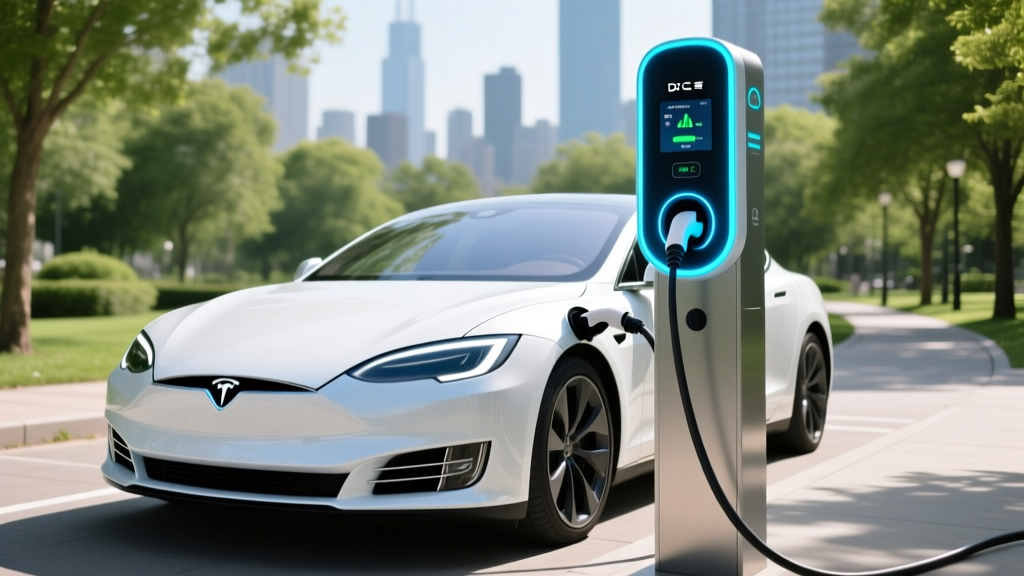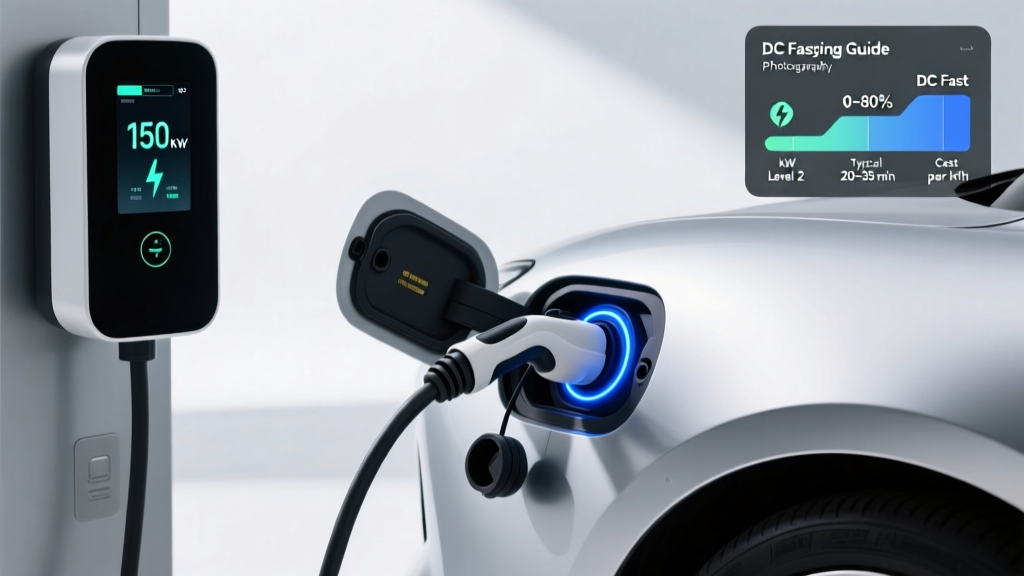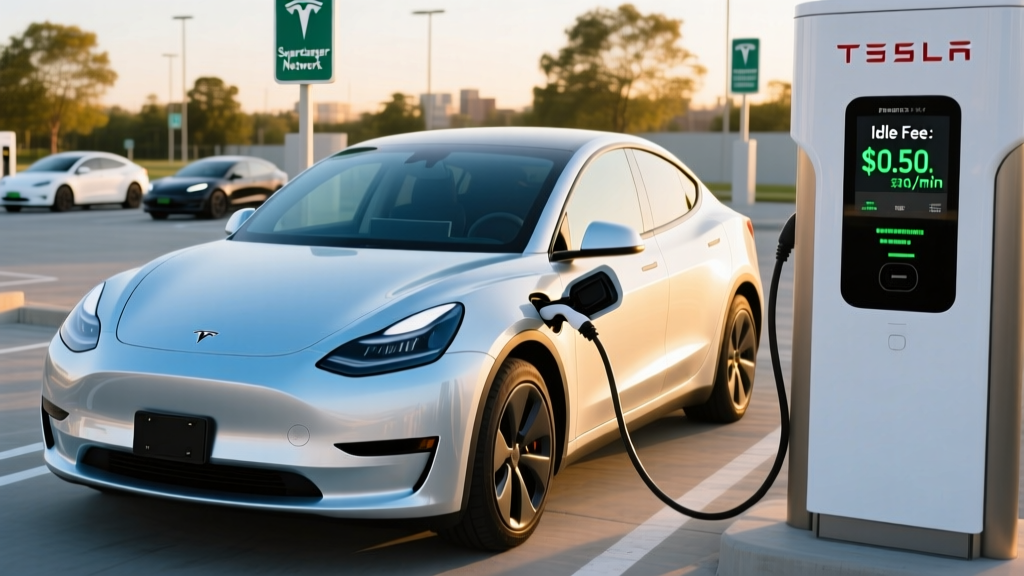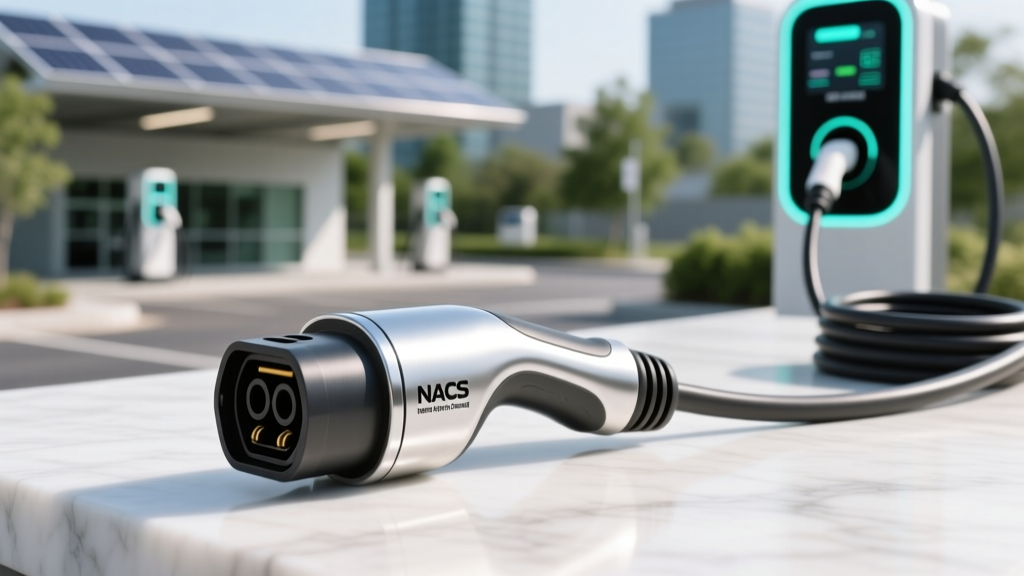
If you've been shopping for an electric vehicle or a home charger in 2025–2026, you've almost certainly encountered the acronym NACS on spec sheets, charging apps, and forum threads. But what does NACS stand for, and why has it effectively won the connector war in North America? This guide decodes the standard, maps every connector type to the vehicles that use them, and walks you through the real math of home charging installation — down to the panel upgrade most older homes will need.
What NACS Stands For and Why It Matters
NACS stands for North American Charging Standard. Originally developed by Tesla as its proprietary charging connector, the design was open-sourced in late 2022 and subsequently adopted by nearly every major automaker selling EVs in the United States and Canada. By the 2025 model year, manufacturers including Ford, GM, Rivian, Hyundai, Kia, BMW, and Volvo had transitioned new EVs to native NACS ports, replacing or supplementing the older CCS1 (Combined Charging System) connector.
The practical implication: NACS is now the dominant connector for both Level 2 AC charging and DC fast charging across North America. The SAE J3400 standard formally ratified the design, giving it the same institutional backing CCS1 had through SAE J1772 and J3068. If you're buying a new EV in 2026, it almost certainly has a NACS port — and if it doesn't, an adapter is available.
Charging Levels Explained: Speeds in kW and Miles Per Hour
Before matching connectors to chargers, you need to understand the three charging tiers. The critical distinction: kW (kilowatts) measures power — how fast energy flows into your battery. kWh (kilowatt-hours) measures energy capacity — the size of your battery. Think of kW as the width of the hose and kWh as the size of the bucket.
| Level | Power Source | Typical kW Output | Miles of Range Added Per Hour | Best For |
|---|---|---|---|---|
| Level 1 | 120V household outlet | 1.0–1.4 kW | 3–5 mi/hr | Overnight top-ups, PHEVs, low-mileage drivers |
| Level 2 | 240V dedicated circuit | 7.2–19.2 kW | 25–75 mi/hr | Daily home/workplace charging, full battery replenishment overnight |
| DC Fast Charging | 480V+ commercial supply | 50–350 kW (peak) | 150–1,200+ mi/hr (at peak) | Road trips, rapid top-ups, fleet operations |
A few real-world anchors: A Tesla Model Y Long Range (75 kWh usable battery, ~310 miles EPA) charging on a 48-amp (11.5 kW) Level 2 circuit will go from 10% to 80% in roughly 5.5 hours — perfect for overnight replenishment. That same vehicle on a 250 kW DC fast charger (V4 Supercharger or equivalent NACS station) will hit 10–80% in approximately 22–25 minutes, though the charge curve tapers significantly above 60% state of charge. Peak kW is never sustained across the full session — a 250 kW peak typically averages 120–150 kW over a 10–80% session.
Connector Compatibility: NACS, CCS1, and CHAdeMO Mapped
North America has three active DC fast-charging connector standards, though the field has consolidated heavily toward NACS. Here's what fits what in 2026:
| Connector | Brands Using It (Native) | Adapter Needed For |
|---|---|---|
| NACS (SAE J3400) | Tesla (all), Ford (2025+), GM (2025+), Rivian (2025+), Hyundai/IONIQ (2025+), Kia (2025+), BMW, Volvo, Polestar, Mercedes (2026+), Nissan (2025+) | CCS1 stations require NACS-to-CCS adapter (widely available, ~$200–$300) |
| CCS1 (J1772 combo) | Legacy models: pre-2025 Hyundai/Kia, VW ID.4 (through 2024), older Ford Mustang Mach-E, Chevy Bolt (discontinued) | NACS Superchargers require CCS-to-NACS adapter (Tesla sells official adapter, ~$250) |
| CHAdeMO | Nissan Leaf (legacy, no new models planned), Mitsubishi Outlander PHEV (older) | Essentially a legacy standard; adapters to NACS exist but are expensive (~$400+) and limited |
The Tesla CCS-to-NACS adapter is the most critical accessory for owners of pre-2025 CCS1-equipped EVs, unlocking access to the Supercharger network — which remains the most reliable DC fast-charging infrastructure in North America by uptime metrics. Ford and GM began shipping complimentary adapters with early-transition vehicles; check your owner's portal for eligibility.
Home Charger Installation: Costs, Electrical Requirements, and Panel Upgrades
Installing a Level 2 home charger is the single highest-impact upgrade an EV owner can make. But the total cost varies enormously depending on your home's electrical panel, the distance from panel to charger location, and local permitting requirements.
Electrical Requirements for Level 2 Charging
Most residential Level 2 chargers require a 240-volt dedicated circuit, similar to what an electric dryer or oven uses. The most common configurations:
- 40-amp circuit / 32-amp continuous = 7.7 kW output — sufficient for most EVs, adds ~30 miles per hour
- 50-amp circuit / 40-amp continuous = 9.6 kW output — the sweet spot for 2026 EVs with larger batteries
- 60-amp circuit / 48-amp continuous = 11.5 kW output — recommended for trucks and large SUVs (F-150 Lightning, Rivian R1S, Tahoe EV)
- 80-amp circuit / 64-amp continuous = 15.4–19.2 kW output — requires hardwired installation and a robust panel; supported by the Tesla Wall Connector and a handful of premium units
The National Electrical Code (NEC) requires that continuous loads (including EV charging) not exceed 80% of a circuit's rated capacity. That's why a 50-amp breaker delivers 40 amps of continuous charging current.
Installation Cost Breakdown
| Component | Simple Install (Panel Nearby, No Upgrade) | Complex Install (Long Run, Panel Upgrade) |
|---|---|---|
| Level 2 charger equipment (40–48A, NACS) | $400–$650 | $400–$650 |
| Electrician labor (2–4 hrs simple / 6–12 hrs complex) | $400–$1,200 | $1,200–$3,500 |
| Electrical panel upgrade (100A → 200A service, if needed) | $0 (not needed) | $1,500–$3,500 |
| Permit and inspection (local jurisdiction) | $50–$200 | $100–$400 |
| Conduit, wiring, mounting hardware | $100–$300 | $300–$800 |
| Total estimated cost | $950–$2,350 | $3,500–$8,850 |
The panel upgrade is the variable that catches homeowners off guard. Many homes built before 2000 have 100-amp or even 60-amp main service panels that simply cannot support a 50-amp dedicated EV circuit alongside existing loads (HVAC, electric range, dryer). A licensed electrician will perform a load calculation per NEC Article 220 to determine whether your panel has headroom. If not, a service upgrade to 200 amps (or occasionally 400 amps for homes with multiple EVs and heat pumps) is required before the charger can be installed.
Alternative path: If a panel upgrade is prohibitively expensive, some homeowners opt for a smart panel-level load management device (such as the Span smart panel or a NeoCharge smart splitter) that dynamically shares capacity between the EV charger and other high-draw appliances, avoiding the need for a full service upgrade. These add $400–$1,200 to the project but can save thousands on panel work.
What Charging Actually Costs: Per-Mile Math vs. Gasoline
The economics of EV charging depend heavily on where and when you charge. Here are realistic 2026 scenarios for a midsize EV averaging 3.5 miles per kWh (roughly the efficiency of a Tesla Model Y, Hyundai Ioniq 5, or Ford Mustang Mach-E):
| Charging Scenario | Typical $/kWh | Cost Per Mile (at 3.5 mi/kWh) | Equivalent Gas Price at 30 MPG |
|---|---|---|---|
| Home, off-peak utility rate (overnight) | $0.08–$0.14 | $0.023–$0.040 | $0.69–$1.20/gal |
| Home, standard residential rate | $0.14–$0.22 | $0.040–$0.063 | $1.20–$1.89/gal |
| Public Level 2 (workplace, retail, ChargePoint) | $0.20–$0.35 | $0.057–$0.100 | $1.71–$3.00/gal |
| DC fast charging (Electrify America, EVgo, Tesla Supercharger) | $0.30–$0.55 | $0.086–$0.157 | $2.58–$4.71/gal |
| Gasoline vehicle (30 MPG combined, $3.50/gal) | — | $0.117 | $3.50/gal (baseline) |
The takeaway: Home charging on off-peak rates delivers fuel costs equivalent to gasoline at under $1 per gallon — a roughly 70–80% reduction in per-mile fuel spend. DC fast charging on road trips narrows the gap and, on networks with peak pricing, can approach gasoline parity. But most EV owners do 80–90% of their charging at home, so the blended annual cost heavily favors electricity. According to fueleconomy.gov, the average EV driver saves $600–$1,200 annually on fuel compared to a 27 MPG gasoline vehicle, depending on local rates and mileage.
Recommended Home Chargers for 2026 (NACS-Native)
With NACS now the standard, the best home chargers ship with a native NACS plug — no adapter required for 2025+ EVs. Here are three proven units across price tiers:
Tesla Wall Connector (Gen 4)
- Power output: Up to 11.5 kW (48A on 60A circuit); configurable down to 16A
- Connector: Native NACS
- Cable length: 24 feet
- Smart features: Wi-Fi, OTA updates, load sharing between multiple Wall Connectors, power-level scheduling via Tesla app
- Price: ~$475
- Best for: Tesla owners and anyone wanting the most proven NACS hardware at a reasonable price. Hardwired only (no plug option).
Emporia Vue Level 2 EV Charger
- Power output: Up to 11.5 kW (48A); adjustable via dip switches
- Connector: Native NACS (2025+ model); CCS1 version also available
- Cable length: 24 feet
- Smart features: Integrated energy monitoring (pairs with Emporia Vue home energy monitor), time-of-use scheduling, solar-aware charging, Alexa integration
- Price: ~$400
- Best for: Budget-conscious buyers who want energy monitoring and solar integration. Available in both hardwired and NEMA 14-50 plug versions.
ChargePoint Home Flex (NACS version)
- Power output: Up to 12 kW (50A on 60A circuit); adjustable from 16A–50A
- Connector: Native NACS (2025+ refresh)
- Cable length: 23 feet
- Smart features: ChargePoint app with detailed session history, Alexa/Google Home integration, flexible amperage via dial switch, works with utility demand-response programs
- Price: ~$550–$600
- Best for: Drivers who want the broadest app ecosystem and utility-program compatibility. NEMA 14-50 plug or hardwired.
Safety, Code, and Installation Non-Negotiables
EV charging draws sustained high current for hours — it's the most demanding continuous load in most homes. Cutting corners on installation creates fire risk and may void your homeowner's insurance. Key requirements:
- Dedicated circuit: Your Level 2 charger must have its own breaker — not shared with any other outlet or appliance.
- GFCI protection: NEC 2023 (and carried into 2026 code cycles) requires GFCI protection for all EV charging outlets. Hardwired installations may exempt the charger itself if the unit has built-in ground-fault protection (most quality units do), but receptacle-based installations (NEMA 14-50) require a GFCI breaker. Note: some EV charger manufacturers recommend against double GFCI (breaker + charger), as nuisance tripping can occur. Consult your electrician and the charger's installation manual.
- Outdoor rating: If your charger is mounted outside or in an unenclosed carport, it must carry a NEMA 4 (weather-resistant) rating. All three chargers recommended above meet this standard.
- Permit and inspection: Virtually every jurisdiction requires an electrical permit for EV charger installation. The inspection verifies correct wire gauge, breaker sizing, torque on connections, and proper grounding. Skipping the permit risks insurance denial in the event of an electrical fire.
- NEMA 14-50 receptacle quality: If you choose a plug-in charger over hardwired, use a commercial-grade (not residential-grade) 14-50 receptacle. Hubbell and Bryant brand receptacles are widely recommended by electricians for EV charging duty due to superior contact tension and heat resistance. Budget: $50–$90 for the receptacle itself.
Charging Time Examples: What to Expect with Common Battery Sizes
Charge times depend on battery capacity, the vehicle's onboard charger limit (for Level 2), and the DC fast-charge curve. Here are representative 10–80% times for popular 2026 EVs:
| Vehicle | Battery (usable kWh) | Level 2 at 11.5 kW (10–80%) | DC Fast Peak / Avg (10–80%) |
|---|---|---|---|
| Tesla Model Y Long Range | 75 kWh | ~4.5 hours | 250 kW peak / ~140 kW avg — ~23 min |
| Hyundai Ioniq 5 (Long Range) | 77.4 kWh | ~4.7 hours (10.9 kW onboard) | 238 kW peak / ~150 kW avg — ~20 min |
| Ford F-150 Lightning (Extended) | 131 kWh | ~8.0 hours | 150 kW peak / ~110 kW avg — ~55 min |
| Chevy Equinox EV (RS AWD) | 85 kWh | ~5.2 hours | 150 kW peak / ~105 kW avg — ~38 min |
| BMW iX xDrive50 | 105.2 kWh | ~6.4 hours | 200 kW peak / ~135 kW avg — ~35 min |
Two patterns emerge: (1) Level 2 home charging is always an overnight affair for large-battery EVs — plan for 5–8 hours for a near-full replenishment. (2) DC fast charging speeds vary significantly by vehicle architecture. Hyundai/Kia's 800V platform sustains higher charge rates longer than 400V architectures, which is why the Ioniq 5 charges from 10–80% faster than the F-150 Lightning despite the Lightning's larger battery.
Frequently Asked Questions
How much does it cost to install a home EV charger?
A straightforward Level 2 installation (panel has capacity, charger is near the panel) typically costs $950–$2,350 including equipment, labor, and permit. If your home needs an electrical panel upgrade from 100A to 200A service, total project cost can reach $3,500–$8,850. Always get a load calculation from a licensed electrician before committing.
How fast will each charging level add range?
Level 1 (120V) adds 3–5 miles per hour — suitable only for PHEVs or very low daily mileage. Level 2 (240V, 40–48A) adds 25–35 miles per hour for most EVs, fully replenishing a typical 75–85 kWh battery overnight. DC fast charging adds 150–300+ miles in 20–30 minutes at peak rates, though the charge curve slows significantly above 60–70% state of charge.
Which connector and charger is compatible with my EV?
If your EV is a 2025 or newer model from Tesla, Ford, GM, Hyundai, Kia, Rivian, BMW, or Volvo, it has a native NACS port. Buy a NACS home charger and you'll plug in directly. If your EV is a 2024 or older CCS1-equipped model, you can still use NACS chargers with a CCS-to-NACS adapter (~$200–$300) for DC fast charging, and a J1772-to-NACS adapter for Level 2. CHAdeMO vehicles (Nissan Leaf) are legacy; adapters exist but the charging network is shrinking.
How much does EV charging cost per mile compared to gas?
Home charging on average residential rates ($0.14–$0.22/kWh) costs $0.04–$0.06 per mile for a typical EV — equivalent to gasoline at $1.20–$1.89 per gallon for a 30 MPG vehicle. DC fast charging on road trips ($0.35–$0.55/kWh) costs $0.10–$0.16 per mile, which narrows the advantage but still typically undercuts gasoline at current prices. The annual fuel savings for a driver covering 12,000 miles is typically $600–$1,200, per fueleconomy.gov data.
What electrical upgrades might I need for a home charger?
The most common upgrade is a panel service increase from 100 amps to 200 amps ($1,500–$3,500), required when your existing panel can't support a 40–60 amp dedicated circuit alongside other household loads. Other potential upgrades include: replacing a Federal Pacific or Zinsco panel (known fire hazards, often required replacement by insurance anyway, $2,000–$4,000), running new conduit over a long distance from panel to garage ($15–$30 per foot), or installing a smart load-management device to avoid a panel upgrade entirely ($400–$1,200). An electrician's load calculation will determine exactly what's needed.
Does NACS work at non-Tesla charging stations?
Yes. As of 2025–2026, Electrify America, EVgo, ChargePoint, and most other major networks have deployed NACS connectors alongside or in place of CCS1 at new and retrofitted stations. The Supercharger network itself opened to non-Tesla NACS-equipped vehicles via the Tesla app. The transition is ongoing, so carry a CCS-to-NACS adapter if your travels include older stations that haven't been retrofitted.
Can I install a Level 2 charger myself?
If you're choosing a plug-in model (NEMA 14-50 receptacle) and the receptacle is already installed and permitted, you can plug the charger in yourself. However, installing the 240V receptacle, running conduit, and sizing the breaker are licensed electrical work that must be performed by a qualified electrician and permitted through your local building department. Hardwired chargers must always be installed by an electrician. DIY electrical work on 240V circuits carries serious shock and fire risk, and unpermitted work may void your homeowner's insurance.