If you're new to electric vehicles, the charging landscape can feel like learning a new language. Between kilowatts, connectors, and electrical panel requirements, the question of what chargers do electric cars use doesn't have a single simple answer — it depends on where you're charging, how fast you need to go, and what vehicle you drive.
This guide cuts through the confusion with exact numbers: charging speeds in kW, miles added per hour, real installation costs, and specific equipment recommendations for 2026. We'll also clarify the single most important distinction in EV charging: kW (kilowatts) measures power — how fast energy flows — while kWh (kilowatt-hours) measures energy — the total capacity of your battery. Think of kW as the width of a hose and kWh as the size of the bucket.
The Three Charging Levels Explained
Every EV sold in the US charges using one of three levels. The level determines the voltage, amperage, and ultimately how quickly your battery refills.
| Level | Voltage | Max Power (kW) | Miles of Range Added Per Hour | Typical Use Case |
|---|---|---|---|---|
| Level 1 | 120V AC | 1.4–1.9 kW | 3–5 miles | Overnight top-ups, PHEVs, emergencies |
| Level 2 | 240V AC | 7.2–19.2 kW | 20–60+ miles | Home daily charging, workplaces, public destinations |
| DC Fast Charge (Level 3) | 400–800V DC | 50–350 kW | 150–1,200+ miles (peak) | Road trips, highway corridors, rapid top-ups |
Level 1 plugs into a standard household outlet. It comes included with most EVs and PHEVs. At roughly 1.4 kW (12 amps on a 120V/15A circuit), you'll add about 3–5 miles of range per hour — enough for a plug-in hybrid with 30 miles of electric range, but painfully slow for a full battery electric vehicle (BEV) with a 75+ kWh battery. A full charge from empty could take 40–70 hours.
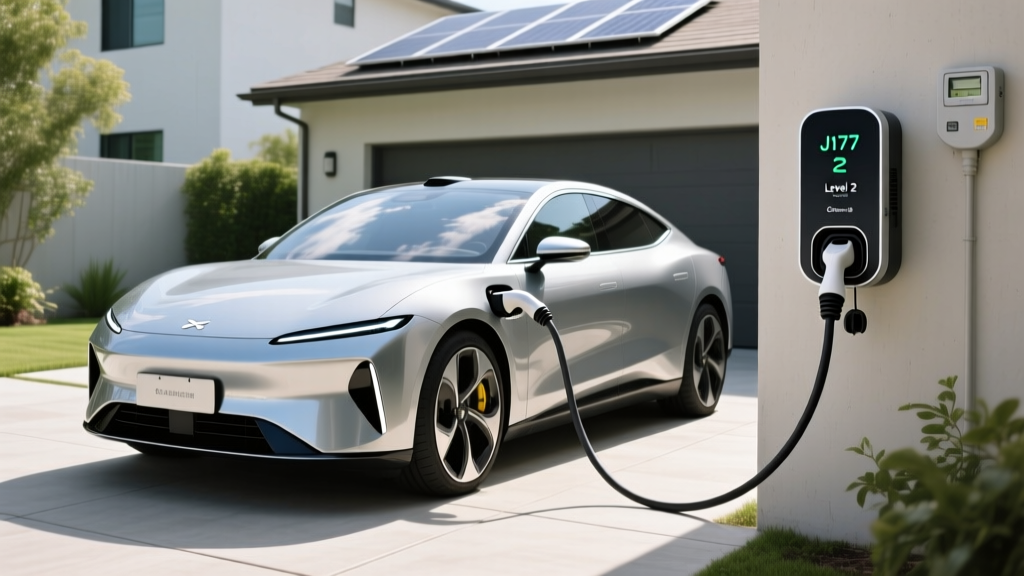
Level 2 requires a 240V circuit — the same voltage your electric dryer or oven uses. This is the backbone of home EV charging. At a common 48 amps (11.5 kW), you'll add roughly 35–45 miles of range per hour, enough to refill most EVs overnight in 6–10 hours. Some hardwired units push to 80 amps (19.2 kW), cutting that time significantly for larger batteries.
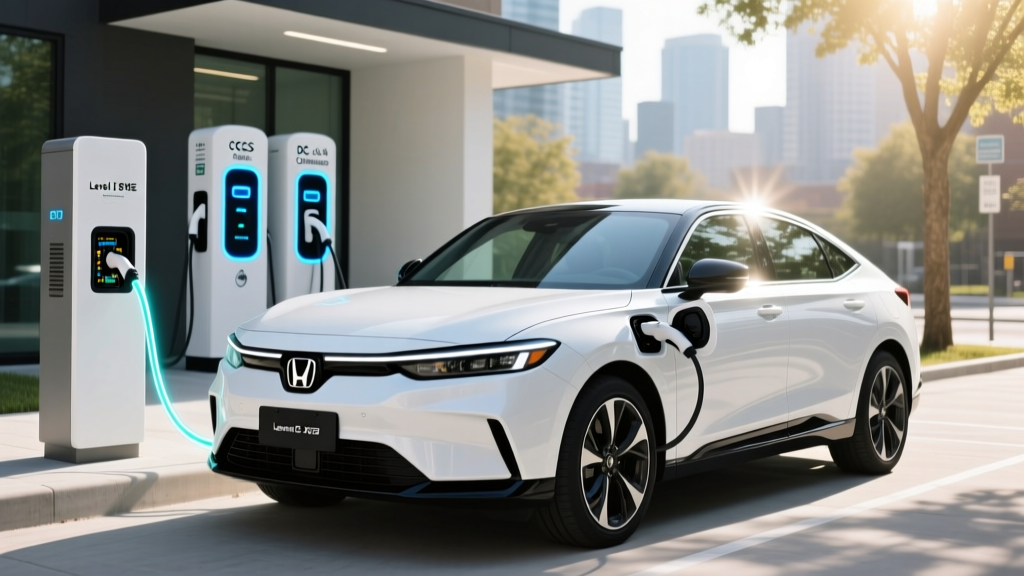
DC Fast Charging bypasses the car's onboard charger entirely, feeding direct current straight to the battery at 50 to 350 kW. At a 350 kW station, vehicles with 800V architectures like the Hyundai Ioniq 5 or Porsche Taycan can add up to 200 miles in under 10 minutes. However, peak rates are not sustained — charge curves taper significantly above 80% State of Charge (SoC) to protect battery health. Expect real-world 10–80% sessions to take 18–35 minutes depending on the vehicle and charger.
Which Connector Does Your EV Need?
Not all EVs share the same plug. As of 2026, the North American market has largely consolidated around two standards, with a legacy third still in use on older vehicles.
| Connector | Full Name | Used By | Max DC Fast Charge Rate | Notes |
|---|---|---|---|---|
| NACS | North American Charging Standard (Tesla connector) | Tesla (all models), Ford, GM, Rivian, Volvo, Polestar, Hyundai/Kia (2025+ models), most new 2026 BEVs | Up to 350 kW (at V4 Superchargers and third-party stations) | Industry standard by 2026; compact design. CCS vehicles need a NACS adapter for Supercharger access. |
| CCS1 | Combined Charging System (Combo) | VW ID.4 (pre-2025), older BMW i4/iX, older Hyundai/Kia, Stellantis EVs, legacy models | Up to 350 kW | Being phased out by most automakers in favor of NACS. Still supported at Electrify America and other networks. |
| CHAdeMO | CHAdeMO | Nissan Leaf (2011–2025), Mitsubishi Outlander PHEV (older) | Up to 100 kW | Effectively discontinued for new vehicles. Infrastructure declining; adapters limited. |
For Level 1 and Level 2 AC charging, all non-Tesla EVs use the J1772 connector. Tesla vehicles include a J1772 adapter in the glovebox, so any Level 2 destination charger works. Conversely, non-Tesla EVs with NACS ports (most 2026 models) can use Tesla's Mobile Connector with the included NACS plug.
For DC Fast Charging, the connector landscape in 2026 is dominated by NACS. Tesla's Supercharger network — over 30,000 stalls in North America — is now open to most major brands via native NACS ports or approved adapters. If you're buying a 2025+ model year EV, it likely ships with a NACS port. If you own a CCS-equipped vehicle, Tesla sells a CCS-to-NACS adapter (approximately $250) for Supercharger access, though not all Supercharger stalls support non-Tesla vehicles yet.
Adapter tip: When purchasing a third-party adapter for Supercharger use, only use Tesla-approved units. Uncertified adapters can cause communication errors, slow charge speeds, or void warranty coverage on the charge port.
Home EV Charger Installation: Requirements and Real Costs
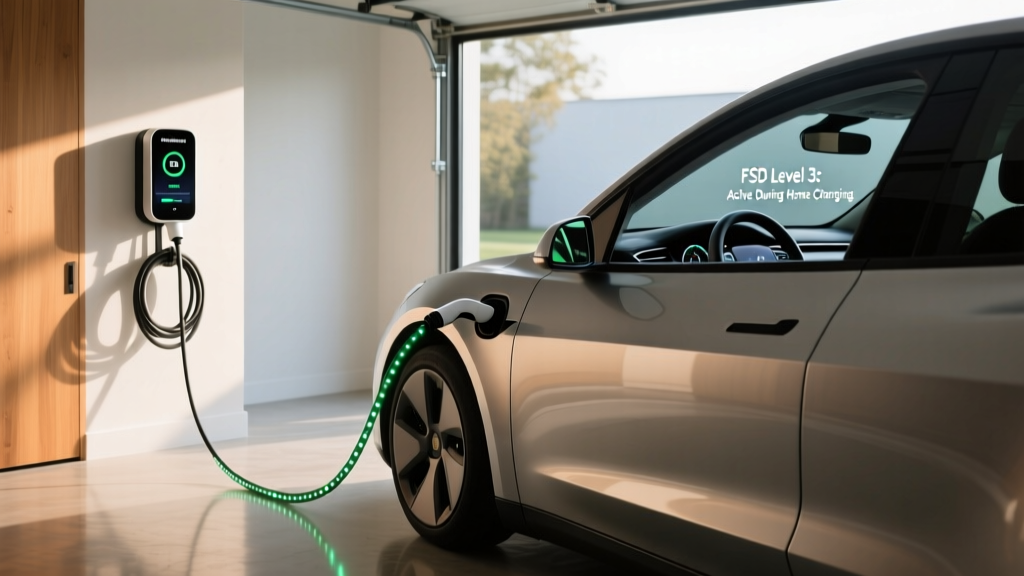
Installing a Level 2 home charger is the single biggest quality-of-life upgrade for EV ownership. Wake up every morning with a full "tank." But costs vary dramatically depending on your home's electrical panel, the distance from panel to charger location, and local permit requirements.
Electrical Requirements
A Level 2 charger requires a dedicated 240V circuit. The most common setups:
- 40-amp circuit / 32-amp continuous (9.6 kW) — Minimum practical setup for most BEVs. Uses a NEMA 14-50 outlet or hardwired connection.
- 50-amp circuit / 40-amp continuous (11.5 kW) — The sweet spot for most homes. Supports chargers like the ChargePoint Home Flex or Tesla Wall Connector at their common configuration.
- 60-amp circuit / 48-amp continuous (11.5 kW) — Standard for hardwired premium units.
- 100-amp circuit / 80-amp continuous (19.2 kW) — Requires a 200A+ main panel and significant wiring. Only practical for homes with ample panel capacity and larger-battery EVs like the Ford F-150 Lightning or Rivian R1T.
Continuous load rule: The National Electrical Code (NEC) requires that EV chargers — classified as continuous loads (running 3+ hours) — only use 80% of a circuit's rated capacity. A 50-amp breaker delivers a maximum of 40 amps continuous to the vehicle.
Panel Upgrade Reality
Many older homes have 100-amp main panels that are already near capacity. Adding a 40–50 amp EV circuit may require a panel upgrade to 200 amps, which costs $1,500–$4,000+ depending on your utility and municipality. A licensed electrician will perform a load calculation (NEC Article 220) to determine if your panel can handle the additional draw. Some homeowners opt for a smart panel or load-management device (like the Emporia VUE with smart breaker) that dynamically limits charger draw when other appliances are running, avoiding a full panel upgrade.
| Component | Typical Cost Range | Notes |
|---|---|---|
| Level 2 Charger (equipment) | $350–$750 | Varies by brand, power output, smart features |
| Electrician labor (standard install) | $500–$2,000 | Depends on panel-to-charger distance, wall type, conduit runs |
| Electrical permit | $50–$300 | Varies by municipality; some jurisdictions waive for EV installs |
| Panel upgrade (if needed) | $1,500–$4,000+ | 100A to 200A upgrade; not required for all homes |
| NEMA 14-50 outlet installation | $200–$600 | If not hardwiring; allows charger portability |
| Total (standard install, no panel upgrade) | $900–$3,050 | Most homeowners fall in $1,200–$2,200 range |
| Total (with panel upgrade) | $2,400–$7,050+ | Older homes with 100A service |
Federal incentive: The Residential Clean Energy Credit (IRS §25D) previously covered 30% of home EV charger equipment and installation costs up to $1,000. As of 2026, verify current-year eligibility on irs.gov, as this credit has specific expiration dates and differs from the §30D vehicle purchase credit. Some states and utilities also offer rebates — check your local utility's EV program page.
Charging Time Examples for Common Battery Sizes
Charging time depends on your battery's usable capacity (kWh) and the charger's sustained power output (kW). Here are real-world estimates for the 10–80% window — the practical charging range most EV owners use, since charging above 80% slows dramatically to protect battery longevity.
| Vehicle (Example) | Usable Battery | Level 2 at 11.5 kW (48A) | DC Fast (Peak Rate) | 10–80% DC Fast Time |
|---|---|---|---|---|
| Tesla Model Y (2026) | ~75 kWh | ~5.5 hours | 250 kW (V3 Supercharger) | ~22–25 min |
| Hyundai Ioniq 5 (2026) | ~77.4 kWh | ~5.5 hours | 350 kW (800V architecture) | ~18 min |
| Ford F-150 Lightning (ext. range) | ~131 kWh | ~9.5 hours | 150 kW (peak) | ~40–45 min |
| Chevrolet Equinox EV (2026) | ~85 kWh | ~6 hours | 150 kW | ~30–35 min |
| Toyota bZ4X (2026) | ~71.4 kWh | ~5 hours | 150 kW | ~28–32 min |
Why 10–80%? Lithium-ion batteries charge fastest between roughly 10% and 50% SoC. Above 80%, the Battery Management System (BMS) progressively reduces current to prevent lithium plating and excess heat. On a 250 kW charger, you might see 250 kW at 15% SoC, tapering to 80 kW by 70%, and 25 kW by 90%. This is the charge curve, and it's why manufacturers quote "10–80%" times rather than 0–100%.
Cold weather impact: Battery preconditioning matters. In temperatures below 40°F, a cold battery cannot accept peak charge rates. If your EV supports preconditioning (navigating to a charger in Tesla, Hyundai, Ford), the thermal management system warms the battery en route, enabling faster charging. Without preconditioning, expect 10–80% times to increase 30–50% in freezing conditions. According to fueleconomy.gov, cold weather can also reduce overall range by 20–40% when using cabin heating.
What Does Charging Cost Per Mile vs. Gas?
One of the strongest arguments for EV ownership is lower fueling cost — but the savings depend heavily on where and when you charge.
| Scenario | Rate | Cost per kWh | Cost per Mile (at 3 mi/kWh) | Annual Cost (12,000 mi) |
|---|---|---|---|---|
| Home charging (national avg. electricity) | Residential | $0.16/kWh | $0.053/mile | $640 |
| Home charging (off-peak TOU rate) | Time-of-use | $0.08–$0.12/kWh | $0.027–$0.040/mile | $320–$480 |
| Public Level 2 (ChargePoint, EVgo L2) | Varies | $0.25–$0.49/kWh | $0.083–$0.163/mile | $1,000–$1,960 |
| DC Fast Charging (Electrify America, EVgo) | Peak | $0.35–$0.69/kWh | $0.117–$0.230/mile | $1,400–$2,760 |
| Tesla Supercharger (avg. 2026) | Varies by location | $0.25–$0.40/kWh | $0.083–$0.133/mile | $1,000–$1,600 |
| Gas car (25 MPG combined, $3.40/gal) | — | — | $0.136/mile | $1,632 |
| Gas car (30 MPG combined, $3.40/gal) | — | — | $0.113/mile | $1,360 |
The takeaway: Home charging on an off-peak time-of-use (TOU) plan is dramatically cheaper than gas — often 60–75% less per mile. However, if you rely exclusively on public DC fast charging, your cost per mile can equal or exceed that of a fuel-efficient gas car. This is why home charging access is the single most important factor in EV ownership economics.
Efficiency note: Most modern EVs achieve 3–4 miles per kWh. A Hyundai Ioniq 5 (2026) rates at approximately 3.5 mi/kWh combined, while a Ford F-150 Lightning achieves closer to 2.0–2.3 mi/kWh. Heavier, less aerodynamic vehicles consume more kWh per mile, raising charging costs proportionally.
Recommended Home EV Chargers for 2026
These are proven, widely available Level 2 units we recommend based on power output, build quality, smart features, and value. All support the J1772 connector standard (or NACS for Tesla-specific units) and work with all EVs either natively or with the included adapter.
ChargePoint Home Flex (2nd Gen)
- Power Output: Up to 11.5 kW (48A) on a 60A circuit; configurable down to 16A
- Connector: J1772 (NACS adapter available separately)
- Cable Length: 23 feet
- Smart Features: Wi-Fi, scheduling, energy tracking, Alexa integration, load sharing with second unit
- Price: ~$549 (unit only)
- Best For: Most homeowners wanting flexibility and smart scheduling on TOU plans
Tesla Wall Connector (Gen 4)
- Power Output: Up to 11.5 kW (48A) on 60A circuit
- Connector: NACS native (J1772 adapter included for non-Tesla EVs)
- Cable Length: 24 feet
- Smart Features: Wi-Fi, firmware OTA updates, Power-Share load balancing between two units, Tesla app integration
- Price: ~$475
- Best For: Tesla owners or households with NACS-port EVs; cleanest installation aesthetic
Emporia Level 2 EV Charger
- Power Output: Up to 11.5 kW (48A)
- Connector: J1772
- Cable Length: 24 feet
- Smart Features: Wi-Fi, detailed energy monitoring, solar integration (pairs with Emporia VUE), TOU scheduling
- Price: ~$399
- Best For: Budget-conscious buyers and solar-panel owners wanting granular energy data
Ford Charge Station Pro
- Power Output: Up to 19.2 kW (80A) on 100A circuit
- Connector: NACS (2025+ models), CCS (older)
- Cable Length: 25 feet
- Smart Features: Wi-Fi, FordPass integration, Intelligent Backup Power (V2H with F-150 Lightning)
- Price: ~$1,300
- Best For: F-150 Lightning owners wanting max charge speed and vehicle-to-home capability; requires 200A+ panel
Hardwired vs. NEMA 14-50 outlet: Hardwired chargers eliminate the outlet, reducing one failure point and allowing higher amperage (up to 80A continuous on a 100A breaker). A NEMA 14-50 outlet gives you portability — useful if you may move or want to use the circuit for other 240V equipment. The NEC requires a GFCI breaker for receptacle-based installs in garages, which adds $50–$150 to the electrical cost and can occasionally cause nuisance trips with certain chargers. Hardwired installations are exempt from this GFCI requirement in most jurisdictions.
Safety, Code, and Installation Best Practices
EV charging draws significant current for extended periods. Cutting corners on installation creates fire risk. Follow these non-negotiable guidelines:
- Dedicated circuit: Your EV charger must be on its own dedicated breaker — never shared with other appliances.
- Permit and inspection: Most jurisdictions require an electrical permit and post-installation inspection. This protects your home insurance coverage and ensures code compliance. Per the NEC (NFPA 70), all EV supply equipment must meet Article 625 requirements.
- Outdoor rating: If installing outside, the charger must carry a NEMA 4 or NEMA 4X rating (weatherproof). All recommended units above carry outdoor ratings, but confirm before purchasing.
- Cable management: Use a wall-mounted holster or cable retractors to prevent tripping hazards and cable damage. Never run a charging cable across a driveway where vehicles will drive over it.
- Load calculation: A licensed electrician must perform a NEC Article 220 load calculation before installation to confirm your panel can handle the added circuit without overloading.
- Utility notification: Some utilities require notification before installing an EV charger, particularly for high-amperage circuits. They may also offer favorable TOU rates or demand-response programs that reduce your charging cost.
Frequently Asked Questions
How much does it cost to install a home EV charger?
A standard Level 2 installation (50-amp circuit, 20–30 foot conduit run, no panel upgrade) typically costs $1,200–$2,200 including the charger unit, electrician labor, and permit. Homes needing a 200-amp panel upgrade can expect total costs of $3,000–$7,000+. Get three quotes from licensed electricians — pricing varies significantly by region and job complexity.
How fast will each charging level add range?
Level 1 (120V) adds 3–5 miles per hour. Level 2 (240V, 48A) adds 30–45 miles per hour depending on vehicle efficiency. DC fast charging adds 150–1,200+ miles per hour at peak rates, but sustained rates taper above 50% SoC, so practical 10–80% sessions take 18–45 minutes depending on vehicle architecture and charger power.
Which connector/charger is compatible with my EV?
For 2026 model-year vehicles: most new EVs use the NACS connector for DC fast charging and accept J1772 for Level 2 AC (or include an adapter). Tesla vehicles use NACS natively. Older CCS-equipped vehicles (2024 and earlier from VW, BMW, etc.) use CCS1 for DC fast charging and J1772 for Level 2. CHAdeMO is found only on legacy Nissan Leaf and Mitsubishi models. Check your vehicle's charge port or owner's manual for the definitive answer.
How much does charging cost per mile vs. gas?
Home charging on a standard residential rate (~$0.16/kWh) costs about $0.05 per mile for an efficient EV — roughly 60–65% less than a 25 MPG gas car at $3.40/gallon. Off-peak TOU rates can drop that to $0.03–$0.04 per mile. Public DC fast charging at $0.35–$0.69/kWh costs $0.12–$0.23 per mile, which can exceed gas costs. Home charging access is the key variable.
What electrical upgrades might I need?
If your home has a 100-amp main panel that's already near capacity, you'll likely need a 200-amp panel upgrade ($1,500–$4,000+). Homes with 200-amp service usually have sufficient capacity for a 40–60 amp EV circuit. A smart load-management device can sometimes avoid a panel upgrade by dynamically reducing charger draw when other appliances cycle on. Always get a professional load calculation from a licensed electrician before committing to a charger amperage.
Can I use a portable Level 2 charger instead of a wall-mounted unit?
Yes. Units like the Tesla Mobile Connector ($200) or Lectron V-Box ($300–$400) plug into a NEMA 14-50 outlet and deliver up to 7.6–9.6 kW depending on the adapter and circuit. Portable units sacrifice some power compared to hardwired wall units but offer flexibility for renters or multi-vehicle households. Ensure your 14-50 outlet is on a dedicated 50-amp breaker and is properly wired with a GFCI breaker per current NEC requirements.
Do I need a smart charger, or is a basic unit fine?
A basic (non-Wi-Fi) charger works perfectly for charging. Smart features — scheduling, energy monitoring, load sharing — become valuable if your utility offers time-of-use rates (schedule charging for off-peak hours to save 40–60%), if you have solar panels (charge during peak production), or if you need to share a single circuit between two chargers. For most buyers, the $50–$100 premium for a smart charger pays for itself quickly through TOU savings.
Always verify current electrical codes with your local authority having jurisdiction (AHJ) and consult a licensed electrician for your specific installation. Federal and state incentive rules change frequently — check irs.gov and your state energy office for current eligibility. Range and efficiency data sourced from fueleconomy.gov and manufacturer specifications.