If you've searched for a Walmart Supercharger lately, you've likely noticed something: Tesla Supercharger stations at Walmart parking lots are expanding rapidly, but the full picture of where you can charge — and what it actually costs — goes far beyond a single retailer's lot. In 2026, Walmart hosts dozens of Tesla Supercharger stalls across the U.S., and the company's EV fast-charging network (powered by Electrify America and others) continues to grow alongside Tesla's own infrastructure. But for daily driving, the smartest charging strategy still starts at home.
This guide covers where Walmart Supercharger stations exist today, how DC fast charging compares to Level 2 home charging in real-world speed and cost, and exactly what it takes — electrically and financially — to install a home charger. Whether you drive a Tesla with a NACS port or a Hyundai, Ford, or BMW on CCS1, we'll map the connector landscape so you never pull up to the wrong stall.
Where to Find a Walmart Supercharger in 2026
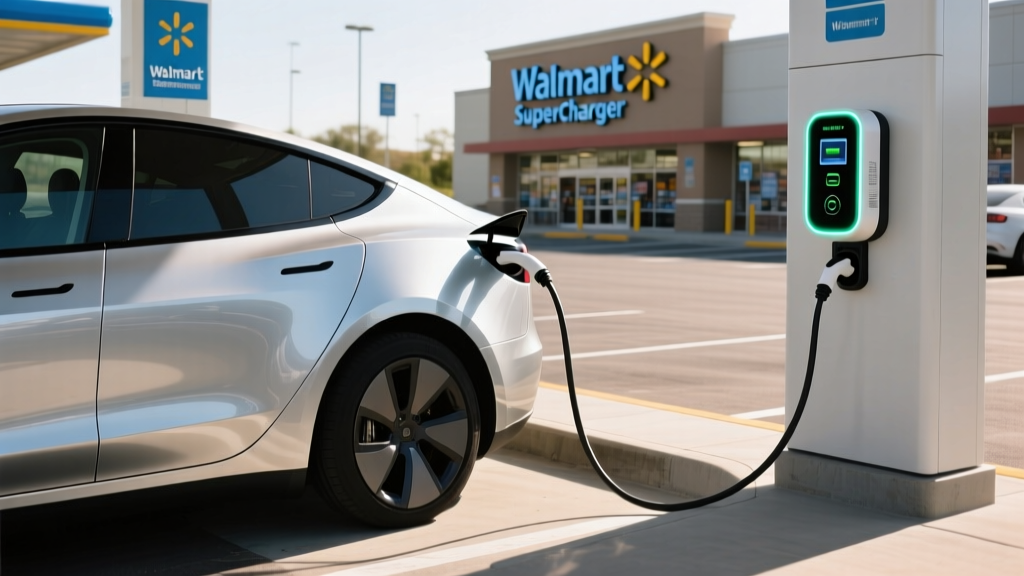
Tesla and Walmart have partnered on Supercharger installations at select Walmart and Sam's Club locations since 2023, and the footprint has grown steadily. As of early 2026, Tesla Supercharger stalls operate at Walmart locations in states including Texas, Florida, California, Georgia, and North Carolina, among others. Most of these stations feature V3 Superchargers capable of peak 250 kW DC fast charging, with newer V4 stalls (up to 350 kW for compatible vehicles) appearing at high-traffic corridors.
To find a specific Walmart Supercharger near you, the most reliable method is the Tesla Find Us map, which lists every active Supercharger stall with real-time availability. You can also use the Tesla in-car navigation, which routes through Superchargers automatically and preconditions the battery for optimal charge speed on arrival.
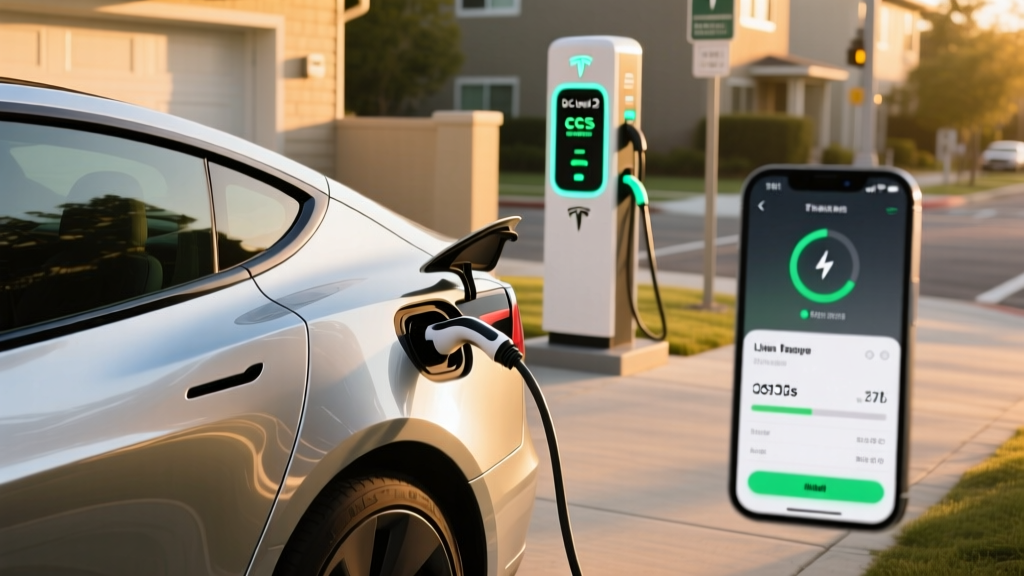
Important note for non-Tesla EVs: As of 2026, Tesla has opened many Supercharger stations to non-Tesla vehicles via the NACS (North American Charging Standard) connector or with a built-in CCS1 adapter (Magic Dock). However, not every Walmart Supercharger location supports non-Tesla vehicles. Check the Tesla app or the NACS compatibility page before relying on one for a non-Tesla EV.
Charging Levels Explained: Speed, Power, and Real-World Range Added
Before comparing Walmart Superchargers to home setups, let's clarify the three charging levels and what each delivers. Remember: kW (kilowatts) measures power — the rate of energy flow — while kWh (kilowatt-hours) measures energy — the total amount stored in your battery. A 250 kW charger delivers energy faster than a 7.2 kW home charger, but both add the same kWh over their respective timeframes.
| Level | Voltage | Power (kW) | Miles of Range Added per Hour | Typical Use Case |
|---|---|---|---|---|
| Level 1 | 120V AC | 1.0–1.4 kW | 3–5 miles/hr | Overnight trickle; PHEVs |
| Level 2 | 240V AC | 3.3–19.2 kW | 12–75 miles/hr | Home daily charging; workplace |
| DC Fast (Level 3) | 200–500V DC | 50–350 kW | 150–1,000+ miles/hr (peak) | Road trips; rapid top-ups |
At a Walmart Supercharger running V3 hardware at 250 kW peak, a Tesla Model Y (75 kWh battery, ~310 miles EPA range) can add roughly 175 miles of range in 15 minutes under ideal conditions. Real-world speed depends on battery state of charge (SoC), temperature, and the charge curve — charging slows significantly above 80% SoC to protect battery health.
- Tesla Model Y (75 kWh, NMC): ~25 min at 250 kW V3 Supercharger; ~8 hrs at 7.2 kW Level 2 home charger
- Hyundai Ioniq 5 (77.4 kWh, NMC): ~18 min at 350 kW Electrify America stall; ~10 hrs at 7.7 kW Level 2
- Ford F-150 Lightning Extended Range (131 kWh, NMC): ~41 min at 150 kW DC fast; ~17 hrs at 7.7 kW Level 2
- Chevrolet Equinox EV (85 kWh, NMC): ~30 min at 150 kW DC fast; ~11 hrs at 7.7 kW Level 2
How Much Does It Cost to Install a Home EV Charger?
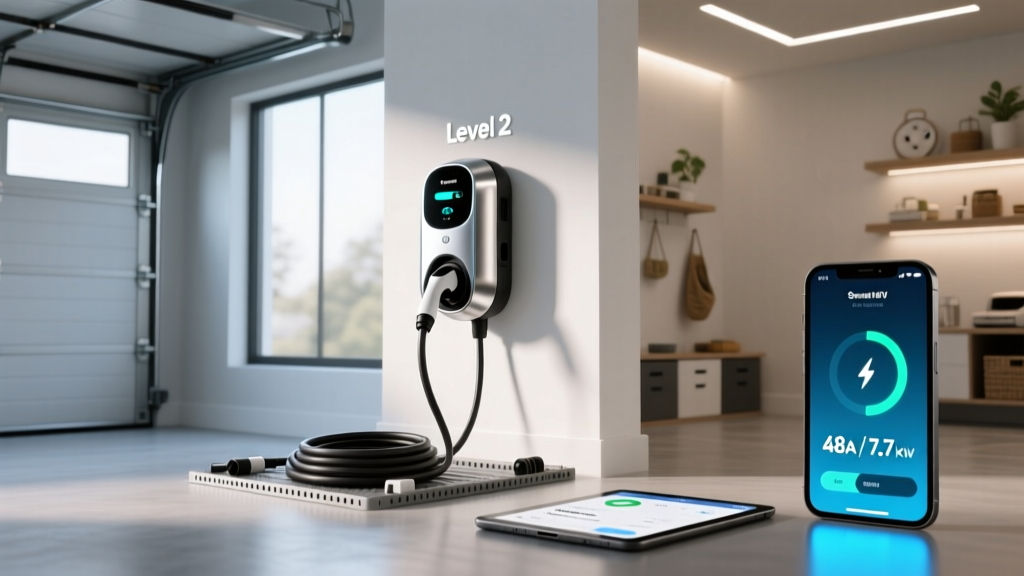
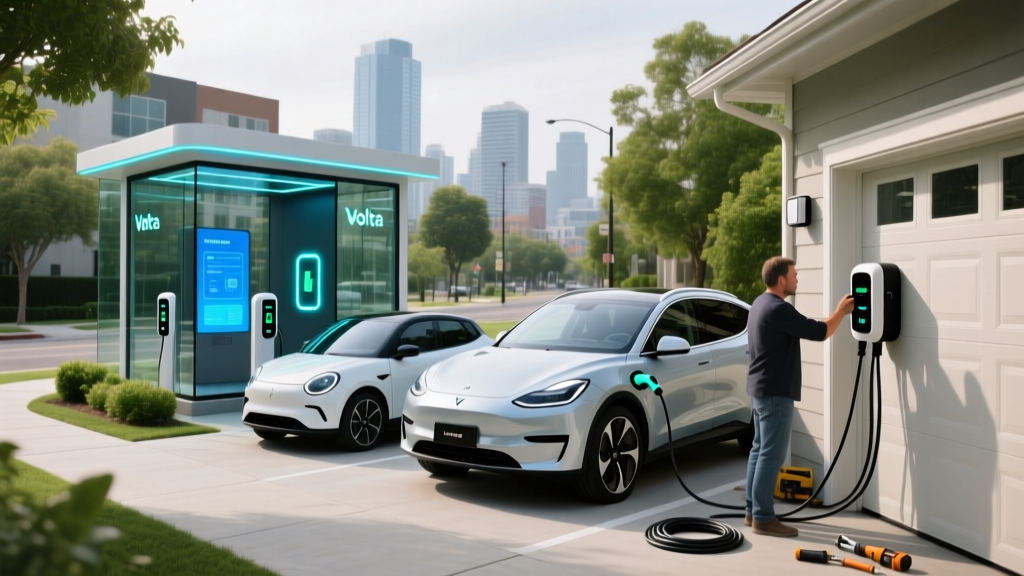
A Walmart Supercharger is convenient for road trips, but over 80% of EV charging happens at home. Installing a Level 2 home charger is the single most impactful upgrade for EV ownership — and the cost varies dramatically based on your home's electrical panel.
Here's a realistic breakdown for a 240V / 48A hardwired Level 2 charger installation in 2026:
| Component | Low Estimate | High Estimate | Notes |
|---|---|---|---|
| Level 2 Charger Equipment | $300 | $700 | Smart Wi-Fi chargers (Emporia, ChargePoint, Wallbox) |
| Electrician Labor | $500 | $2,000 | Depends on run length from panel to garage/driveway |
| Electrical Permit | $50 | $300 | Varies by municipality; required in most jurisdictions |
| Panel Upgrade (if needed) | $1,500 | $4,000 | Upgrading from 100A to 200A service; common in pre-1990 homes |
| Total (no panel upgrade) | $850 | $3,000 | Most homes with 200A service fall here |
| Total (with panel upgrade) | $2,350 | $7,000 | Older homes or those with high existing electrical load |
What Electrical Upgrades Might I Need?
A 48A Level 2 charger requires a dedicated 60A circuit on a 240V line (the National Electrical Code requires circuits rated at 125% of continuous load). If your home has a 200-amp electrical panel with available capacity, installation is usually straightforward: the electrician runs 6 AWG copper wire from a new double-pole breaker to your garage or exterior wall.
However, if your panel is already near capacity (common in homes with electric HVAC, electric water heaters, and electric dryers), you may need:
- Panel upgrade: Moving from 100A to 200A service, or from 200A to 400A in large homes
- Load management device: A smart panel (e.g., Emporia VUE or Span Drive) that dynamically allocates power, avoiding a full panel upgrade
- Utility service upgrade: In rare cases, your utility may need to upgrade the transformer or service drop to your home
Always have a licensed electrician perform a load calculation before committing to a charger. Most will do this for free or a small consultation fee.
Walmart Supercharger Cost vs. Home Charging: Price Per Mile Compared
One of the most common questions we hear: is it cheaper to charge at a Walmart Supercharger, another public DC fast station, or at home? The answer depends on your local electricity rates and how you charge.
| Scenario | Rate ($/kWh) | Cost to Add 200 Miles* | Cost Per Mile | Gas Equivalent (25 MPG, $3.40/gal) |
|---|---|---|---|---|
| Home (off-peak utility rate) | $0.09–$0.14 | $5.40–$8.40 | $0.027–$0.042 | $27.20 |
| Home (standard utility rate) | $0.15–$0.20 | $9.00–$12.00 | $0.045–$0.060 | $27.20 |
| Tesla Supercharger (avg. 2026) | $0.28–$0.36 | $16.80–$21.60 | $0.084–$0.108 | $27.20 |
| Electrify America / EVgo DC Fast | $0.32–$0.48 | $19.20–$28.80 | $0.096–$0.144 | $27.20 |
| Walmart Electrify America station | $0.31–$0.43 | $18.60–$25.80 | $0.093–$0.129 | $27.20 |
*Based on a vehicle averaging 3.5 miles per kWh (e.g., Tesla Model Y, Hyundai Ioniq 5). Vehicles with lower efficiency (e.g., F-150 Lightning at ~2.0 mi/kWh) will cost proportionally more.
The takeaway: home charging on an off-peak rate saves $15–$23 per 200 miles compared to DC fast charging. Over a year of 12,000 miles, that's $900–$1,380 in savings — enough to pay for a home charger installation in under two years. Public DC fast charging (including Walmart Superchargers and Electrify America stations at Walmart) remains essential for road trips but is not economical as a daily strategy.
Connector Compatibility: NACS, CCS1, and CHAdeMO in 2026
The connector landscape has consolidated significantly since Tesla opened the NACS standard. Here's where things stand for model year 2026 vehicles:
| Connector | Brands Using It (Native) | Walmart Supercharger Access? | Adapter Needed? |
|---|---|---|---|
| NACS (Tesla) | Tesla, Ford, Rivian, GM, Volvo, Polestar, Nissan (2026+), Honda (2026+) | Yes — native at all Superchargers | None for Tesla Superchargers |
| CCS1 | Hyundai, Kia, BMW, VW, Audi, Mercedes, Stellantis | Limited — only Superchargers with Magic Dock | NACS-to-CCS adapter (~$200–$250) for full Supercharger access |
| CHAdeMO | Nissan Leaf (legacy; 2025 was final model year) | No | No viable adapter; use Electrify America, EVgo CCS/CHAdeMO stalls |
If you drive a CCS1-equipped vehicle (most non-Tesla EVs through model year 2025), you'll need a NACS-to-CCS adapter to access the majority of Tesla Superchargers, including those at Walmart. Tesla sells an official adapter, and third-party options from Lectron and A2Z are also available. Ford, GM, and Rivian owners with native NACS ports need no adapter.
For Walmart locations hosting Electrify America stations (separate from Tesla Superchargers), both CCS1 and NACS connectors are typically available on-site, making them more universally compatible.
Best Level 2 Home Chargers for 2026: Equipment Picks
After testing dozens of home chargers across multiple EVs and electrical setups, here are our top recommendations based on reliability, smart features, and value:
Emporia Level 2 Smart Charger
- Power Output: 48A / 11.5 kW (hardwired) or 40A / 9.6 kW (NEMA 14-50 plug)
- Connector: NACS native; J1772 adapter included
- Cable Length: 24 ft
- Smart Features: Wi-Fi, scheduling, energy tracking via Emporia app, solar integration
- Price: ~$399
- Best For: Budget-conscious buyers who want smart scheduling and solar pairing
ChargePoint Home Flex
- Power Output: Up to 50A / 12 kW (adjustable 16A–50A)
- Connector: J1772 (NACS adapter available)
- Cable Length: 23 ft
- Smart Features: Wi-Fi, Alexa integration, flexible amperage, ChargePoint network access
- Price: ~$599
- Best For: Flexibility across different circuit sizes; strong app ecosystem
Tesla Wall Connector
- Power Output: 48A / 11.5 kW (hardwired, 60A circuit)
- Connector: NACS native; J1772 adapter version available
- Cable Length: 24 ft
- Smart Features: Wi-Fi, OTA updates, power sharing between two units, Tesla app integration
- Price: ~$420
- Best For: Tesla and NACS-native owners wanting seamless integration
Wallbox Pulsar Max
- Power Output: 48A / 11.5 kW (hardwired)
- Connector: J1772 or NACS (select at purchase)
- Cable Length: 25 ft
- Smart Features: Wi-Fi + Bluetooth, Eco-Smart solar mode, compact design, load balancing
- Price: ~$549
- Best For: Compact garages and solar-home integration
Safety, Electrical Code, and Installation Best Practices
Home EV charger installation is electrical work governed by the National Electrical Code (NEC) and local amendments. Here are the non-negotiable safety requirements:
- Dedicated circuit: Your Level 2 charger must have its own dedicated double-pole breaker — it cannot share a circuit with other appliances.
- GFCI protection: NEC 2020 and later require GFCI (Ground Fault Circuit Interrupter) protection for all EV charging outlets. Hardwired chargers with integrated GFCI satisfy this; plug-in units via NEMA 14-50 require a GFCI breaker.
- Outdoor rating: If mounting outdoors, the charger must carry a NEMA 4 (weatherproof) rating. All four chargers recommended above are rated for outdoor installation.
- Wire gauge: A 48A charger on a 60A circuit requires minimum 6 AWG copper wire for runs up to 50 feet; longer runs may need 4 AWG to prevent voltage drop.
- Permit and inspection: Most jurisdictions require an electrical permit and a post-installation inspection. Skipping this can void your homeowner's insurance coverage for electrical fires.
Do not attempt a DIY installation unless you are a licensed electrician. The 240V circuits involved carry lethal current, and improper installation is a leading cause of residential electrical fires.
Frequently Asked Questions
How much does it cost to install a home EV charger?
Expect to pay between $850 and $3,000 for a standard Level 2 charger installation in a home with adequate 200A electrical service. If your home needs a panel upgrade (common in homes built before 1990), the total can reach $2,350–$7,000. The charger unit itself costs $300–$700, with electrician labor and permits making up the rest.
How fast will each charging level add range?
Level 1 (120V) adds 3–5 miles per hour. Level 2 (240V) adds 12–75 miles per hour depending on amperage and vehicle acceptance rate. DC fast charging (50–350 kW) adds 150–1,000+ miles per hour at peak, though the charge curve tapers significantly above 80% SoC. For a typical 75 kWh battery, Level 2 takes 8–10 hours (10–80%), while DC fast charging takes 18–35 minutes.
Which connector is compatible with my EV?
If your EV is a 2025+ Tesla, Ford, Rivian, GM, Volvo, or Polestar, it has a native NACS connector and can use any Tesla Supercharger (including those at Walmart) without an adapter. If your EV uses CCS1 (most Hyundai, Kia, BMW, VW models through 2025), you'll need a NACS-to-CCS adapter (~$200–$250) for Supercharger access. CHAdeMO vehicles (Nissan Leaf) cannot use Superchargers and should rely on Electrify America or EVgo stations.
How much does charging cost per mile vs. gas?
Home charging on off-peak rates costs $0.03–$0.04 per mile — roughly 6–8× cheaper than a 25 MPG gas car at $3.40/gallon ($0.14/mile). Even public DC fast charging at $0.35/kWh costs $0.09–$0.11 per mile, still cheaper than gas. The savings are largest for home charging; frequent DC fast charging narrows the gap considerably.
Is there a Walmart Supercharger near me?
Walmart Supercharger availability varies by region. Use the Tesla Find Us map or in-car navigation to locate the nearest one. If you're driving a non-Tesla EV, verify NACS compatibility or Magic Dock availability before relying on a specific location. Walmart also hosts Electrify America DC fast stations at many locations, which support both CCS1 and NACS natively.
Can I charge a non-Tesla at a Walmart Supercharger?
It depends on the station. Tesla has opened select Superchargers to non-Tesla EVs via the Magic Dock (a built-in CCS adapter) or by requiring the driver to bring a NACS-to-CCS adapter. Not all Walmart Supercharger locations participate. Check the Tesla app for station-specific access details.