Walmart EV Charging Locations: What's Actually There in 2026?
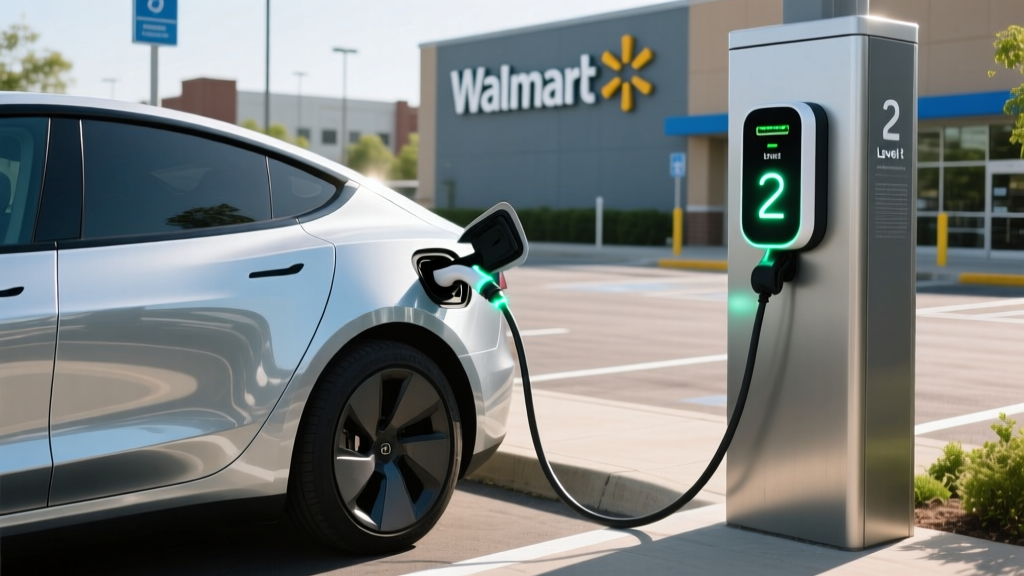
Walmart has become one of the most visible retail hosts for public EV charging in the United States, with over 1,000 charging stations across its store network as of early 2026. Most of these installations are DC fast chargers operated by third-party networks — primarily Electrify America, EVgo, and in some regions, ChargePoint — rather than Walmart-owned equipment. The draw is practical: you charge while you shop, and the parking lots are well-lit and familiar.
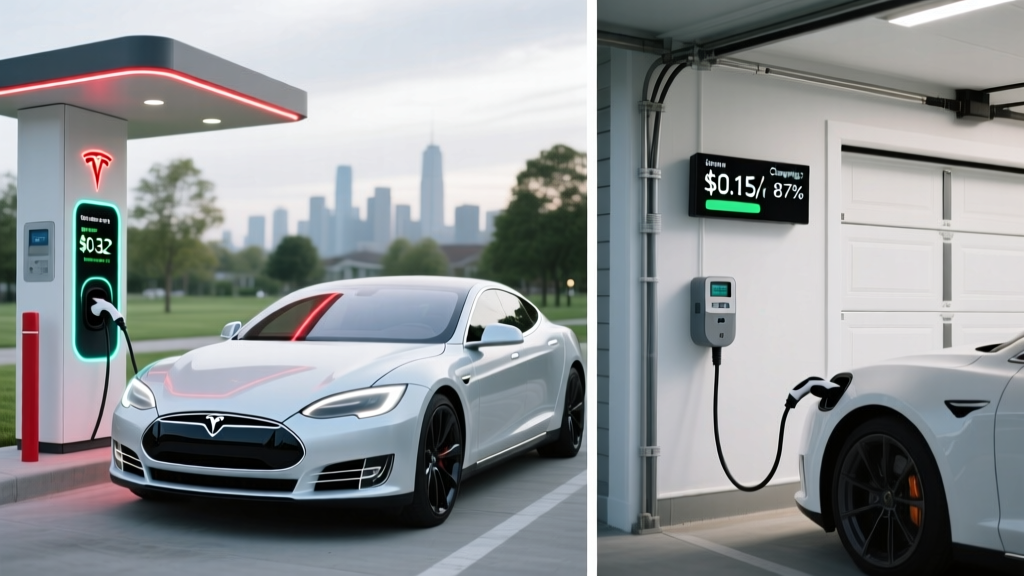
But relying on any public network — Walmart included — as your primary charging strategy gets expensive fast. DC fast charging at retail locations typically costs between $0.35 and $0.55 per kWh depending on your region and network membership. For a 75 kWh battery charged from 10% to 80%, that's roughly $19–$29 per session. Charge twice a week and you're spending $160–$230 monthly — approaching what many drivers pay for gasoline.
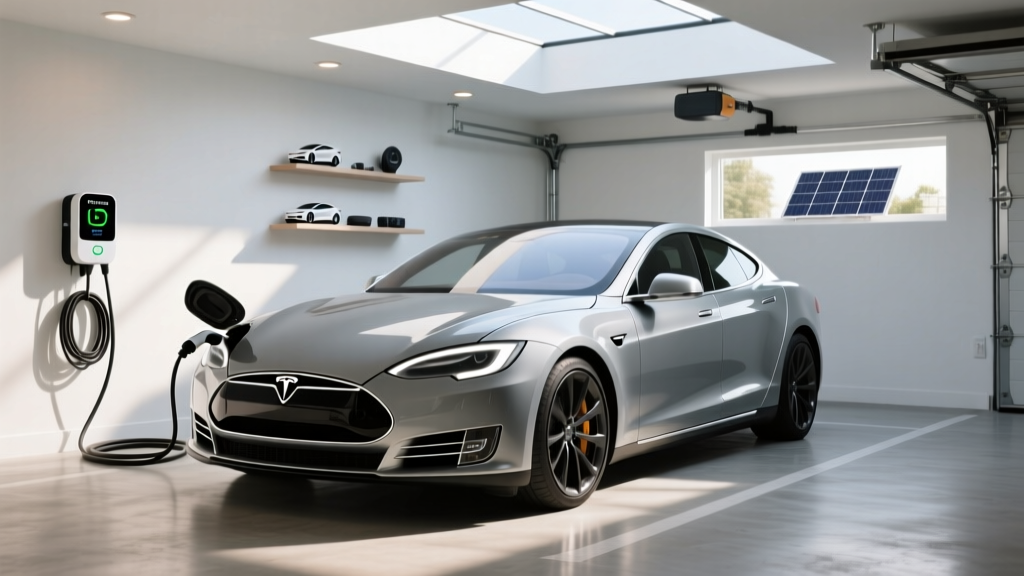
The real play? Use Walmart and other public DC fast chargers for road trips and occasional top-ups, then install a Level 2 home charger for daily driving. Home charging at off-peak utility rates typically costs $0.08–$0.15 per kWh — making your cost per mile a fraction of gasoline. This guide covers the Walmart network landscape, then walks through everything you need to set up reliable, affordable home charging.
Charging Levels Explained: Speeds, Power, and Miles Per Hour
Before evaluating any charging location — Walmart or otherwise — you need to understand the three charging levels and what they actually deliver. The critical distinction: kW (kilowatts) measures power — how fast energy flows into your car. kWh (kilowatt-hours) measures energy — the total capacity of your battery. Think of kW as the width of a pipe and kWh as the size of the tank you're filling.
| Level | Voltage | Power (kW) | Miles Added/Hour | Typical Use |
|---|---|---|---|---|
| Level 1 | 120V AC | 1.0–1.9 kW | 3–5 miles | Overnight trickle, PHEVs, low daily mileage |
| Level 2 | 240V AC | 3.3–19.2 kW | 12–75 miles | Daily home/workplace charging |
| DC Fast (Level 3) | 400–900V DC | 50–350 kW | 150–1,200+ miles (theoretical) | Road trips, quick top-ups |
Level 1 plugs into any standard household 120V outlet. It's slow — a 75 kWh battery (like a Tesla Model Y Long Range or Hyundai Ioniq 5) would take 40–60 hours from empty to full. For plug-in hybrids with 10–18 kWh batteries, Level 1 is often sufficient for overnight replenishment.
Level 2 requires a dedicated 240V circuit — the same voltage your electric dryer or oven uses. Most home chargers deliver 7.7 kW (32A), 9.6 kW (40A), or 11.5 kW (48A). At 11.5 kW, a 75 kWh battery charges from 10% to 80% in roughly 5 hours — more than enough to replenish overnight.
DC Fast Charging bypasses the car's onboard charger and sends DC current directly to the battery. This is what you'll find at Walmart locations. Speeds vary enormously based on the station's output and your vehicle's charge acceptance curve. A 350 kW Electrify America stall can add 200 miles to a Hyundai Ioniq 5 in about 18 minutes (10–80%), but only because the Ioniq 5's 800V architecture supports peak charging rates near 240 kW.
Walmart Charging Network: Connectors, Speeds, and What to Expect
Walmart partners with multiple charging networks, so the connector availability and charging speeds vary by location. Here's what you'll typically encounter:
| Connector | Typical Walmart Speed | Compatible Vehicles | Adapter Needed? |
|---|---|---|---|
| NACS (Tesla/J3400) | 150–350 kW | Tesla (all), Ford F-150 Lightning, Rivian (2025+), GM Ultium (2025+), Hyundai/Kia (2025+) | CCS-to-NACS adapter for non-Tesla at Electrify America |
| CCS1 (Combined Charging System) | 50–350 kW | VW ID.4, older Ford/GM/Hyundai/Kia EVs, BMW iX, most pre-2025 EVs | NACS-to-CCS adapter at Tesla Superchargers |
| CHAdeMO | 50–100 kW | Nissan Leaf, Mitsubishi Outlander PHEV (legacy) | Not available via adapter; network phasing out |
The industry-wide shift to NACS (now standardized as SAE J3400) means that by 2026, most new EVs ship with a NACS port natively. Electrify America has been retrofitting many Walmart-adjacent stations with NACS connectors alongside CCS1. If you drive a vehicle with a CCS1 port, you'll need a NACS-to-CCS adapter (typically $150–$250) to access Tesla Superchargers, which are increasingly appearing at Walmart-adjacent locations.
Real-world Walmart charging speeds: Don't assume a "350 kW" station delivers 350 kW to your car continuously. Most EVs peak at 150–250 kW and taper significantly above 80% state of charge. A realistic expectation for a 75 kWh battery at a 150 kW Walmart station: 10–80% in roughly 28–35 minutes. At a 350 kW stall with an 800V-capable vehicle (Ioniq 5/6, EV6, EV9): 10–80% in approximately 18–22 minutes.
How Much Does It Cost to Install a Home EV Charger?
This is the question that stops most prospective EV buyers. The honest answer: it depends heavily on your home's electrical panel capacity and the distance from your panel to your garage or parking spot. Here's the full breakdown:
| Component | Simple Install (Panel Adjacent) | Complex Install (Panel Upgrade + Long Run) |
|---|---|---|
| Level 2 Charger (hardware) | $350–$700 | $350–$700 |
| Electrical permit | $50–$200 | $100–$300 |
| Electrician labor (240V/50A circuit) | $400–$800 | $1,200–$2,500 |
| Conduit, wiring (6 AWG copper) | $100–$300 | $400–$900 |
| Electrical panel upgrade (100A → 200A) | N/A | $1,500–$3,500 |
| Utility service upgrade (if needed) | N/A | $2,000–$5,000 |
| Total | $900–$2,000 | $5,550–$12,900 |
The panel upgrade is the wildcard. Most homes built after 1990 have a 200-amp electrical panel with enough spare capacity for a 40A or 50A dedicated EV circuit. Older homes with 100A service may need an upgrade, especially if you already run electric heat, an electric dryer, and an electric oven. Your electrician will perform a load calculation (per NEC Article 220) to determine whether your panel can handle the additional draw.
What electrical requirements does a Level 2 charger need? A typical 48A charger requires a dedicated 60A breaker (NEC requires circuits be rated 125% of continuous load — so 48A × 1.25 = 60A). The circuit runs 240V using 6 AWG copper wire (or 4 AWG aluminum for longer runs). The outlet, if you choose a plug-in NEMA 14-50 receptacle rather than hardwiring, must be properly grounded and GFCI-protected per the 2023 NEC update (Article 625.40).
Federal incentive note: The §30D alternative fuel vehicle refueling property credit offers up to $1,000 (30% of cost, capped) for home charger installation, but eligibility depends on census-tract requirements and is subject to IRS rules. Consult IRS guidance on the refueling property credit or a tax professional before assuming eligibility.
Cost Per Mile: Home Charging vs. Public DC Fast vs. Gasoline
The economics of EV ownership hinge almost entirely on where you charge. Here's how the numbers compare for a mid-size EV averaging 3.0 miles per kWh (roughly 112 MPGe combined, similar to a Tesla Model Y or Hyundai Ioniq 5):
| Charging Scenario | Rate | Cost Per Mile | Annual Cost (12,000 mi) |
|---|---|---|---|
| Home Level 2 (off-peak utility rate) | $0.10/kWh | $0.033 | $400 |
| Home Level 2 (standard residential rate) | $0.15/kWh | $0.050 | $600 |
| Walmart DC fast (Electrify America) | $0.48/kWh | $0.160 | $1,920 |
| Public Level 2 (ChargePoint/Workplace) | $0.25/kWh | $0.083 | $1,000 |
| Gasoline vehicle (27 MPG combined) | $3.40/gallon | $0.126 | $1,511 |
Home charging at off-peak rates saves $1,100–$1,500 per year compared to gasoline. But if you rely exclusively on public DC fast chargers — Walmart or otherwise — you'll actually spend more than a gasoline vehicle. The math only works in your favor when home or workplace Level 2 charging is your baseline.
Charging time examples for common battery sizes (10–80% SoC):
- 58 kWh battery (VW ID.4 Standard): ~4.5 hours at 11.5 kW home Level 2; ~28 minutes at 150 kW DC fast
- 77 kWh battery (Tesla Model Y Long Range): ~5.5 hours at 11.5 kW home Level 2; ~25 minutes at 250 kW DC fast (Supercharger V3)
- 84 kWh battery (Hyundai Ioniq 5 Long Range): ~6 hours at 11.5 kW home Level 2; ~18 minutes at 350 kW DC fast (800V peak)
- 131 kWh battery (Ford F-150 Lightning Extended Range): ~9.5 hours at 11.5 kW home Level 2; ~42 minutes at 150 kW DC fast
Home Charger Equipment Picks: What to Buy in 2026
Not all Level 2 chargers are created equal. Here are four well-regarded options across price tiers, each with specific power output and connector details:
Emporia Vue Level 2 Charger
Power: 11.5 kW (48A) max, adjustable down to 16A
Connector: NACS (J3400) native; CCS adapter included
Cable length: 24 feet
Smart features: Wi-Fi, app scheduling, energy monitoring, solar integration
Price: ~$399
Best for: Budget-conscious buyers who want smart scheduling and solar-aware charging
ChargePoint Home Flex
Power: Up to 12 kW (50A), configurable via DIP switch
Connector: NACS or CCS1 (select at purchase)
Cable length: 23 feet
Smart features: Wi-Fi, Alexa integration, detailed app analytics, flexible amperage
Price: ~$549–$649
Best for: Drivers who want to match charger amperage precisely to their available circuit
WallConnector (Tesla, Gen 4)
Power: 11.5 kW (48A) at 240V
Connector: NACS native
Cable length: 24 feet
Smart features: Wi-Fi, power-sharing (daisy-chain two units on one circuit), OTA updates
Price: ~$475
Best for: Tesla owners and multi-EV households wanting power-sharing on a single 60A circuit
Grizzl-E Smart Level 2
Power: 9.6 kW (40A)
Connector: NACS or J1772 (select at purchase)
Cable length: 24 feet
Smart features: OCPP protocol, adjustable amperage, extreme-cold rated (-40°C)
Price: ~$449
Best for: Cold-climate drivers and outdoor installations; Canadian-built, rugged enclosure
Hardwired vs. plug-in: Hardwired chargers eliminate the NEMA 14-50 receptacle, which reduces one potential failure point and avoids the NEC 2023 GFCI breaker requirement for EV receptacles (which can cause nuisance tripping with some chargers). The tradeoff: hardwired units aren't portable. If you plan to move or take your charger with you, go plug-in — but invest in a quality industrial-grade 14-50 receptacle (Hubbell or Bryant brand, ~$60–$80) rather than the cheap residential versions.
Safety, Electrical Code, and Installation Gotchas
EV charging places a sustained, high-draw load on your home electrical system that few other appliances match. A 48A charger running for 6–8 hours is a continuous load — and the NEC (National Electrical Code) treats it accordingly. Key considerations:
- Dedicated circuit: Your EV charger must have its own dedicated breaker. It cannot share a circuit with any other outlet or appliance. Period.
- 125% rule (NEC 210.20): Continuous loads (defined as running 3+ hours) require the breaker to be rated at 125% of the load. A 40A charger needs a 50A breaker. A 48A charger needs a 60A breaker.
- GFCI protection (NEC 625.40, 2023+): Plug-in EV receptacles now require GFCI breakers. This has caused compatibility issues with some chargers that have internal ground-fault detection, leading to nuisance trips. Hardwired installations are exempt from this requirement.
- Outdoor rating: If your charger is outdoors, both the unit and any receptacle must carry a NEMA 3R or NEMA 4 weather-resistance rating. All chargers listed above meet this standard.
- Wire gauge: For a 60A circuit, 6 AWG copper (THHN in conduit) is standard for runs under 50 feet. For longer runs, your electrician may upsizing to 4 AWG to prevent voltage drop.
- Permit and inspection: Most jurisdictions require an electrical permit for EV charger installation ($50–$300 depending on locality). The inspection verifies wire gauge, breaker sizing, grounding, and GFCI compliance. Skipping the permit risks voiding your homeowner's insurance if a fire occurs.
Load management as a panel-upgrade alternative: If your panel is near capacity but you don't want to pay $2,000–$4,000 for an upgrade, consider a smart load-management device like the Emporia Smart Load Center or the Span Drive panel. These systems dynamically reduce charger amperage when other high-draw appliances (dryer, oven, HVAC) are running, keeping total draw within your panel's limit. This can let you install a 48A charger on a 100A panel without an upgrade — though charging speed will vary based on concurrent loads.
Frequently Asked Questions
How fast will each charging level add range?
Level 1 (120V) adds 3–5 miles per hour — fine for PHEVs with small batteries but impractical for full EVs. Level 2 at 11.5 kW (240V/48A) adds roughly 35–44 miles per hour for an efficient sedan or 25–30 miles per hour for a heavier SUV/truck. DC fast charging at 150 kW adds roughly 500+ miles per hour theoretically, but the charge curve tapers significantly above 80% SoC, so real-world sessions average 150–300 miles added per 30-minute stop depending on the vehicle.
Which connector is compatible with my EV?
If you bought a new EV in 2025 or later, it likely has a NACS (J3400) port — Tesla, Ford, GM, Hyundai, Kia, Rivian, and others have adopted it. Older EVs (2024 and prior, non-Tesla) typically use CCS1. The Nissan Leaf is the most common CHAdeMO vehicle still on the road, but CHAdeMO infrastructure is being phased out. Check your vehicle's charge port or owner's manual before purchasing a home charger or adapter.
How much does charging cost per mile vs. gas?
At a national-average residential electricity rate of $0.15/kWh and a vehicle efficiency of 3.0 mi/kWh, home charging costs about $0.05/mile. A comparable gasoline vehicle at 27 MPG and $3.40/gallon costs $0.126/mile — roughly 2.5× more. However, public DC fast charging at $0.48/kWh costs $0.16/mile, which is actually more expensive than gasoline. The savings only materialize with consistent home or workplace Level 2 charging.
What electrical upgrades might I need for a home charger?
The most common upgrade is a panel capacity increase from 100A to 200A service, which costs $1,500–$3,500 depending on your utility and local electrician rates. You may also need a service upgrade (new meter and utility drop) if your utility feed is insufficient — that adds $2,000–$5,000. For newer homes with 200A panels, you typically need only a dedicated 50A or 60A breaker and a conduit/wire run from the panel to your garage or parking spot. Always have a licensed electrician perform a load calculation before assuming your panel has capacity.
Are Walmart EV chargers reliable for road trips?
Reliability varies by network and location. Electrify America stations at Walmart locations have improved significantly since 2023, with reported uptime above 90% at most locations, according to user-sourced data on PlugShare. EVgo stations tend to be reliable but offer fewer stalls per location. Before any road trip, check the specific station on PlugShare or the network's app for recent user reports and real-time availability. Always have a backup charging location within 10–15 miles in case of equipment failure.
For official EV efficiency ratings and range data, consult fueleconomy.gov. For current federal tax credit and refueling property credit rules, see the IRS credits and deductions page.