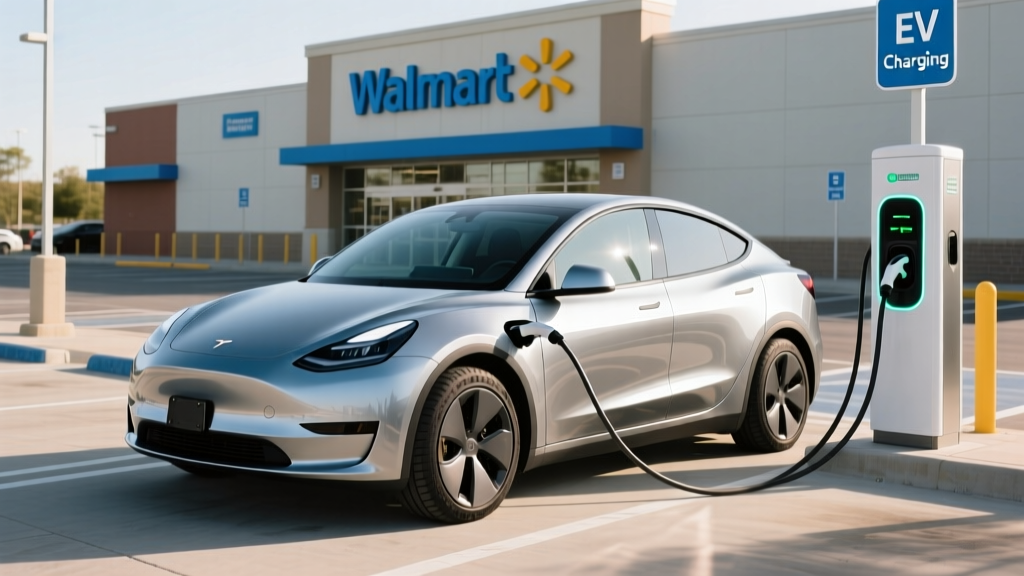
Walmart has quietly become one of the most consequential players in the U.S. EV charging landscape. With thousands of stores spread across suburban and rural corridors where dedicated charging infrastructure remains thin, the retailer's rollout of 150–350 kW DC fast chargers in partnership with networks like Electrify America and EVgo fills a gap that neither highway corridors nor urban centers fully address. If you've seen the headline that Walmart installs high-power chargers at stores for EV drivers and wondered whether these stations can replace or supplement home charging, this guide breaks down exactly what they deliver, how they compare to a home Level 2 setup, and what you need to budget for either approach.
Why Walmart's High-Power Charger Rollout Matters
Walmart and Sam's Club locations now host over 1,000 DC fast-charging stalls nationwide, primarily through partnerships with Electrify America, EVgo, and in some regions, Tesla Superchargers opened to non-Tesla vehicles via the NACS standard. Most new installations are 150 kW or 350 kW units — capable of adding 100–200 miles of range in 15–25 minutes to vehicles with compatible charge curves.
The strategic value is geographic: roughly 90% of Americans live within 10 miles of a Walmart. For apartment dwellers, renters, and homeowners without garage access, these stations function as a practical primary charging option, not just a road-trip backup. But relying on public DC fast charging exclusively carries cost and battery-health trade-offs that home Level 2 charging avoids.
Charging Levels Explained: Speeds, Power, and Real-World Range Gains
Before comparing Walmart's chargers to home options, it's essential to understand the three charging tiers. Power is measured in kilowatts (kW) — the rate of energy flow — while battery capacity is measured in kilowatt-hours (kWh), the total energy stored. Confusing these two is the most common EV literacy mistake.
| Level | Voltage | Power (kW) | Miles of Range Added per Hour | Typical Use |
|---|---|---|---|---|
| Level 1 | 120V AC | 1.0–1.4 kW | 3–5 miles | Overnight trickle; PHEV top-offs |
| Level 2 | 240V AC | 7.2–19.2 kW | 25–75 miles | Home daily charging; workplace |
| DC Fast (Level 3) | 400–800V DC | 50–350 kW | 150–1,000+ miles (theoretical peak) | Road trips; quick top-ups at Walmart, Electrify America, etc. |
- 75 kWh battery (e.g., Tesla Model Y, Ford Mustang Mach-E Extended Range): ~25–30 min on a 150 kW DC fast charger; ~8–10 hours on a 7.2 kW home Level 2.
- 100 kWh battery (e.g., Ford F-150 Lightning Extended Range, Rivian R1S): ~35–45 min on 150 kW; ~12–14 hours on 7.2 kW Level 2.
- 18 kWh PHEV battery (e.g., Toyota RAV4 Prime): ~2.5 hours on Level 2; DC fast charging not available on most PHEVs.
Note: Peak kW rates are not sustained across the full charge session. Most EVs taper charge speed significantly above 80% SoC to protect battery health. A "350 kW" charger may only deliver that rate between 10–30% SoC on compatible 800V vehicles like the Hyundai Ioniq 5 or Kia EV6.
Home Level 2 Charging: Electrical Requirements, Panel Upgrades, and Installation Costs
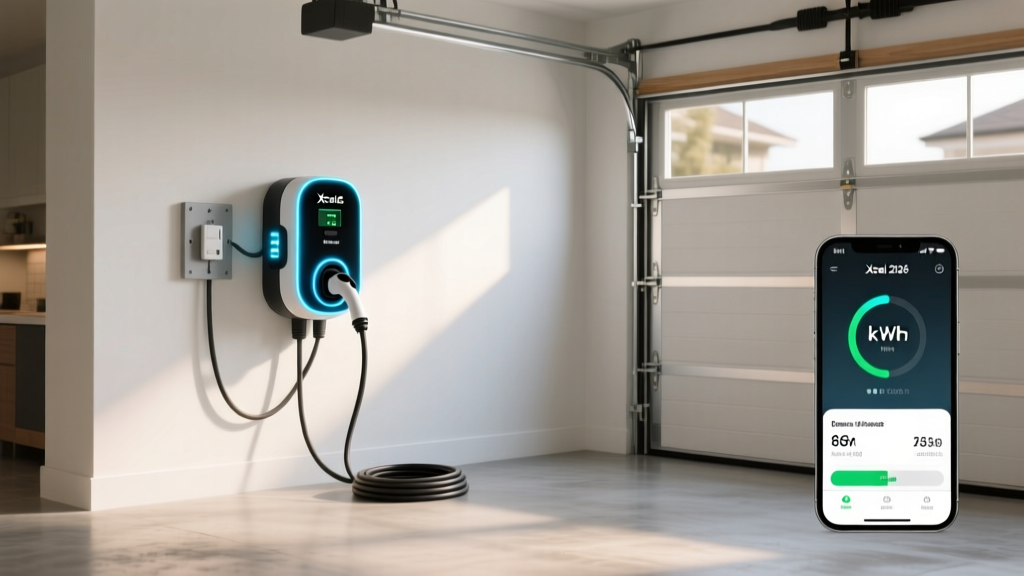
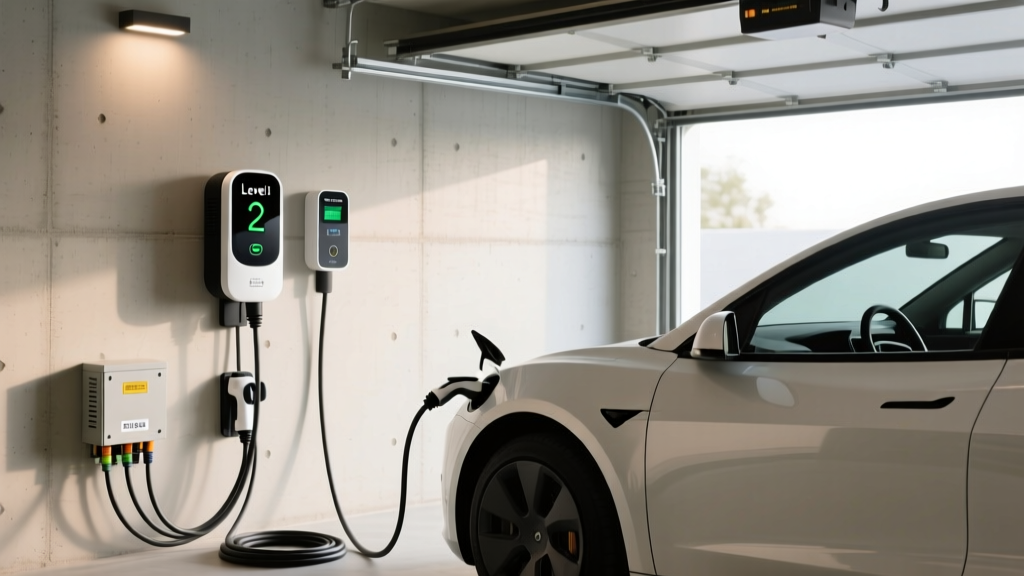
For most EV owners, a home Level 2 charger is the backbone of daily charging. Here's what a professional installation actually requires and costs in 2026.
Electrical Requirements
A typical home Level 2 charger runs on a 240V circuit — the same voltage as an electric dryer or oven. Most EV owners install a 40-amp or 60-amp dedicated circuit, which supports charge rates of 9.6 kW or 11.5 kW respectively. The National Electrical Code (NEC) requires the circuit breaker to be rated at 125% of the continuous load, meaning a 40A charger needs a 50A breaker, and a 48A charger needs a 60A breaker.
Panel Upgrade Considerations
Homes built before 2000 often have 100A or 150A main electrical panels. Adding a 60A EV circuit may exceed available capacity, especially if you already run electric heat, an electric dryer, and an electric oven. A panel upgrade to 200A typically costs $1,500–$3,500 and may be required before your electrician will sign off on the EV circuit. Some newer homes with 200A panels have ample headroom and need only a new breaker and conduit run.
Permits and Inspections
Most jurisdictions require an electrical permit for a new 240V circuit, typically $50–$250. The work must pass inspection before your utility will approve any EV-specific rate plans or rebates.
| Component | Low Estimate | High Estimate | Notes |
|---|---|---|---|
| Level 2 charger hardware | $350 | $750 | Smart Wi-Fi-enabled units; basic units from $250 |
| Electrician labor (circuit + outlet/hardwire) | $500 | $2,000 | Depends on panel proximity, conduit run length |
| Electrical permit | $50 | $250 | Varies by municipality |
| Panel upgrade (if needed) | $1,500 | $3,500 | 100A to 200A upgrade; not always required |
| Utility rebate (if available) | -$250 | -$1,000 | Check your local utility for EV make-ready programs |
| Total (no panel upgrade) | $900 | $3,000 | Most common scenario |
| Total (with panel upgrade) | $2,400 | $6,500 | Older homes with limited panel capacity |
The federal Residential Clean Energy Credit (IRC §25C) covers up to 30% of EV charger hardware and installation costs, capped at $1,000, for equipment placed in service through 2032. This applies to your primary residence. State and utility incentives may stack on top — check your local programs via the AFDC state incentive database.
Walmart Public Charging vs. Home Charging: Cost Per Mile Compared
The economics of EV charging shift dramatically depending on where you plug in. Here's how Walmart's high-power chargers compare to home Level 2 and gasoline.
| Charging Scenario | Cost per kWh | Cost per Mile (at 3.5 mi/kWh) | Notes |
|---|---|---|---|
| Home Level 2 (national avg. residential rate) | $0.16 | $0.046 | Based on EIA average of ~$0.16/kWh |
| Home Level 2 (off-peak/utility EV rate) | $0.08–$0.12 | $0.023–$0.034 | Time-of-use plans; charge overnight |
| Walmart/Electrify America DC fast | $0.35–$0.48 | $0.10–$0.14 | Varies by network, location, membership tier |
| EVgo DC fast (Walmart locations) | $0.32–$0.43 | $0.09–$0.12 | Lower rates with EVgo Plus membership |
| Gasoline (avg. $3.40/gal, 25 MPG vehicle) | — | $0.136 | National average as of early 2026 |
At home on a standard residential rate, EV charging costs roughly one-third what gasoline costs per mile. On an off-peak utility plan, the savings widen to 70–75%. But at Walmart's DC fast chargers, you're paying rates that approach or sometimes exceed gasoline on a per-mile basis. This is the core economic argument for home charging: public DC fast charging is a convenience premium, not a cost-saving strategy.
For a driver covering 12,000 miles annually in a vehicle averaging 3.5 miles per kWh (roughly 285 Wh/mile, typical for a midsize crossover like the Hyundai Ioniq 5 or Tesla Model Y):
- Home charging (national avg.): ~$548/year
- Home charging (off-peak): ~$308–$411/year
- Exclusive Walmart/public DC fast: ~$1,200–$1,680/year
- Gasoline equivalent: ~$1,632/year
Connector Compatibility: Which Plug Works at Walmart and at Home?
The North American charging connector landscape has consolidated significantly since 2024, when Ford, GM, Rivian, Volvo, and most other automakers adopted the North American Charging Standard (NACS), originally developed by Tesla. By 2026, NACS is the dominant connector on new EVs, though CCS1 remains on many 2022–2024 models still on the road, and CHAdeMO persists on older Nissan Leaf and Mitsubishi Outlander PHEV vehicles.
| Connector | Used On | Walmart/Public DC Availability | Home Level 2 | Adapter Needed? |
|---|---|---|---|---|
| NACS (Tesla/J3400) | Tesla (all), Ford, GM, Rivian, Volvo, Hyundai/Kia (2025+), most 2025+ EVs | Widely available; Tesla Superchargers at some Walmarts opened to all EVs | Tesla Wall Connector, ChargePoint Home Flex (NACS version) | CCS-to-NACS adapters available from Ford, GM; ~$200–$400 |
| CCS1 (Combined Charging System) | 2022–2024 Ford, GM, VW, Hyundai/Kia, BMW, most pre-2025 EVs | Electrify America, EVgo at Walmart locations | ChargePoint Home Flex, Emporia Vue (CCS version) | NACS-to-CCS adapters for Tesla Supercharger access; ~$200–$300 |
| CHAdeMO | Nissan Leaf (2011–2025), Mitsubishi Outlander PHEV (older) | Limited and declining; some Electrify America stations retain one connector | Rare for home; requires dedicated CHAdeMO equipment | No reliable CHAdeMO-to-NACS adapter exists |
For 2026 model-year EV buyers, NACS is the default. If you own a 2023–2024 CCS-equipped vehicle, a NACS adapter is essential for accessing Tesla Superchargers — including those at select Walmart locations. Electrify America and EVgo stations at Walmart typically offer both CCS1 and NACS cables on newer 150–350 kW dispensers.
Recommended Home Level 2 Chargers: Power, Features, and Pricing
If you're setting up home charging to reduce reliance on public stations like Walmart's DC fast chargers, these are the top-performing Level 2 units in 2026 based on power output, reliability, smart features, and cable management.
ChargePoint Home Flex (NACS or CCS)
- Power output: Up to 12 kW (50A circuit) on NEMA 14-50; up to 9.6 kW (40A) hardwired on some configurations
- Cable length: 23 feet
- Smart features: Wi-Fi, app scheduling, Alexa integration, energy tracking, utility demand-response enrollment
- Price: $599–$699
- Best for: Drivers who want utility integration and robust app controls
Tesla Wall Connector (NACS)
- Power output: Up to 11.5 kW (48A/60A circuit)
- Cable length: 24 feet
- Smart features: Wi-Fi, over-the-air updates, Power Sharing (link multiple units on one circuit), access control
- Price: $420–$470
- Best for: Tesla owners and NACS-equipped EV drivers seeking best value per kW
Emporia EV Charger (NACS or CCS)
- Power output: Up to 11.5 kW (48A/60A circuit)
- Cable length: 24 feet
- Smart features: Wi-Fi, real-time energy monitoring via Emporia Vue integration, solar-aware charging, time-of-use scheduling
- Price: $399–$499
- Best for: Budget-conscious buyers with solar panels or energy monitoring systems
Grizzl-E Smart (NACS or CCS)
- Power output: Up to 10 kW (40A/50A circuit)
- Cable length: 24 feet
- Smart features: Wi-Fi, OCPP compatibility, adjustable amperage (16A–40A), extreme cold rating (-40°F)
- Price: $449–$549
- Best for: Cold-climate drivers and those needing adjustable amperage for older panels
Safety, Electrical Code, and Installation Best Practices
EV charging draws sustained high current for hours — a fundamentally different load profile than most household appliances. Cutting corners on installation creates fire risk and may void your homeowner's insurance coverage.
- Dedicated circuit: Your EV charger must have its own dedicated breaker — never share a circuit with other appliances. The NEC requires this for continuous loads (defined as operating 3+ hours).
- GFCI protection: NEC 2023 and later require GFCI (Ground Fault Circuit Interrupter) protection for all outdoor receptacles, including NEMA 14-50 outlets used for EV charging. Many quality EV chargers have built-in GFCI protection; if yours does not, your electrician must install a GFCI breaker.
- Outdoor rating: If your charger is installed outdoors or in an unconditioned garage, it must carry a NEMA 4 or IP65 rating for weather resistance. All chargers listed above meet this standard.
- Hardwired vs. plug-in: Hardwired installations (no plug) are generally preferred for 48A+ chargers because NEMA 14-50 receptacles are rated for limited insertion cycles and may loosen over time under heavy sustained loads. Plug-in offers portability if you move.
- Wire gauge: A 60A circuit requires 6 AWG copper wire (or 4 AWG aluminum). A 50A circuit requires 6 AWG copper. Your electrician will size wire to match the breaker and run length — undersized wire on long runs causes voltage drop and overheating.
- Load management: If your panel is near capacity but you want to avoid a full upgrade, consider a smart load-management device like the Emporia Smart Load Center or the Tesla Powerwall integration, which dynamically throttles charger amperage when other household loads spike.
Making the Decision: Home Charging vs. Walmart Public Chargers
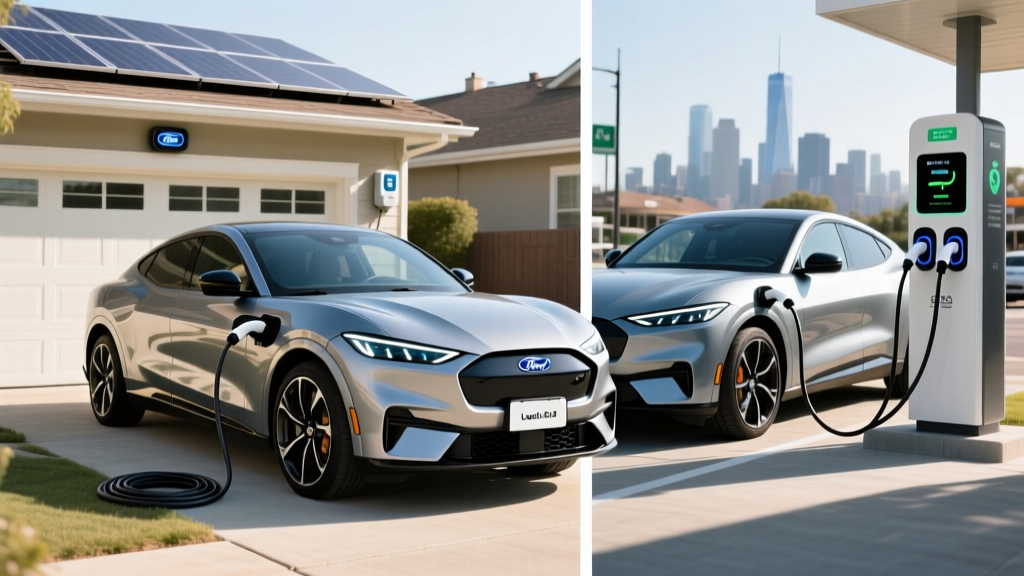
Walmart's high-power charger network solves a real problem: it gives EV drivers without home charging access a viable, widely distributed option. But the economics and convenience calculus strongly favor home Level 2 charging for anyone with the ability to install it.
- You own your home or have landlord permission for electrical work
- You drive under 80 miles daily (most commutes) and can charge overnight
- You want the lowest per-mile cost ($0.03–$0.05/mile vs. $0.10–$0.14 at public DC)
- You want to preserve long-term battery health (frequent DC fast charging accelerates degradation by 1–3% annually vs. Level 2)
- You rent an apartment or live in a condo without charging access
- Your daily commute is under 20 miles and you can top up weekly during a grocery trip
- Your electrical panel needs a costly upgrade ($3,000+) and you're planning to move within 2–3 years
- You primarily need road-trip charging and use public transit or a PHEV for daily driving
Frequently Asked Questions
How much does it cost to install a home EV charger?
A typical home Level 2 charger installation costs $900–$3,000 if your electrical panel has adequate capacity. If a panel upgrade from 100A to 200A is needed, total costs range from $2,400–$6,500. The federal §25C credit covers 30% of costs up to $1,000, and many utilities offer additional rebates of $250–$1,000.
How fast will each charging level add range?
Level 1 (120V) adds 3–5 miles per hour. Level 2 (240V, 40A) adds roughly 30–35 miles per hour. DC fast charging at 150 kW adds roughly 150–200 miles in 20 minutes on compatible vehicles, though the charge rate tapers significantly above 80% SoC.
Which connector/charger is compatible with my EV?
All 2025–2026 model-year EVs from major manufacturers now use NACS (the Tesla/J3400 standard). Vehicles from 2022–2024 typically use CCS1. Older Nissan Leafs use CHAdeMO. Check your vehicle's charge port or owner's manual, and verify the connector type before purchasing a home charger or adapter.
How much does charging cost per mile vs gas?
Home Level 2 charging costs $0.03–$0.05 per mile depending on your electricity rate. Public DC fast charging at Walmart or similar locations costs $0.10–$0.14 per mile. Gasoline at $3.40/gallon in a 25 MPG vehicle costs $0.136 per mile. Home charging saves 65–75% vs. gas; public DC fast charging is roughly cost-competitive with gas.
What electrical upgrades might I need?
If your home has a 100A or 150A main panel and you already run multiple electric appliances (dryer, oven, HVAC), you may need a panel upgrade to 200A before adding a 40–60A EV circuit. Homes with 200A panels and gas appliances typically have sufficient headroom. An electrician can perform a load calculation to determine your specific needs before you commit to equipment purchases.