Why the Wallbox Quasar 2 Bidirectional Charger Deserves Your Attention
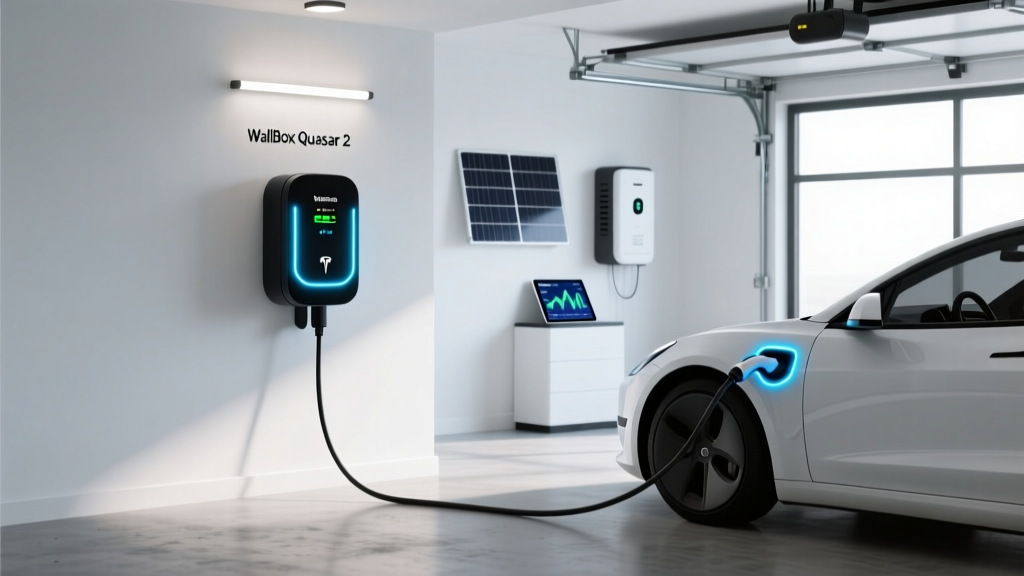
Most home EV chargers push electricity one way: from your panel into your car. The Wallbox Quasar 2 bidirectional charger flips that script. Rated at up to 7.4 kW in both directions, it can charge your EV overnight and then send stored battery energy back to your home during a blackout (V2H) or even to the grid for demand-response credits (V2G). For EV owners eyeing energy resilience in 2026, this is one of the few residential bidirectional units actually shipping in the U.S. market.
But bidirectional hardware is only half the equation. Installation complexity, electrical panel headroom, connector compatibility, and the math on cost-per-mile all determine whether the Quasar 2 makes sense for your driveway. Below, we break down every spec, cost, and compatibility question with exact numbers.
Charging Levels Explained: Where Quasar 2 Fits
Before evaluating any charger, understand the three charging tiers and what they deliver in real-world terms. Power is measured in kW (kilowatts) — the rate of energy flow. Energy stored in your battery is measured in kWh (kilowatt-hours) — the total capacity. Confusing these two is the most common EV literacy mistake.
| Level | Voltage | Max Power (kW) | Miles of Range Added per Hour | Typical Use |
|---|---|---|---|---|
| Level 1 | 120V AC | 1.4 kW | 3–5 mi/hr | Emergency / trickle top-off |
| Level 2 | 240V AC | 7.2–19.2 kW | 20–75 mi/hr | Daily home charging (Quasar 2 lives here at 7.4 kW) |
| DC Fast Charge | 400–800V DC | 50–350 kW | 150–1,000+ mi/hr | Road trips, highway corridors |
The Wallbox Quasar 2 is a Level 2 bidirectional AC charger. At 7.4 kW output, it adds roughly 25–30 miles of range per hour to a typical midsize EV. A 75 kWh battery charging from 10% to 80% (roughly 52.5 kWh delivered) takes approximately 7–8 hours — ideal for overnight sessions on time-of-use electricity rates.
Wallbox Quasar 2 Specifications & Bidirectional Capability
Here is what the hardware actually delivers, based on Wallbox's published 2026 specs:
- Max charge power: 7.4 kW (240V, 32A single-phase)
- Max discharge power (V2H/V2G): 7.4 kW back to the home or grid
- Connector: CCS1 (CCS Combo) for bidirectional; NACS adapter required for Tesla vehicles with V2H support
- Cable length: 18 ft (attached)
- Communication: ISO 15118 for plug-and-charge bidirectional handshake
- Smart features: myWallbox app, solar-integration mode, scheduled charging/discharging, energy-price arbitrage
- Enclosure rating: NEMA 4 (indoor/outdoor, weather-resistant)
- Weight: ~35 lbs
- Estimated MSRP: $4,500–$5,500 (hardware only; installation additional)
Home Installation: Electrical Requirements & Cost Breakdown
Installing the Quasar 2 is more involved than mounting a standard one-way Level 2 charger. Because it feeds power back to your panel, your electrical system must be configured for bidirectional flow, and your utility may require an interconnection agreement for V2G.
Electrical Requirements
- Circuit: Dedicated 40A breaker (240V, single-phase)
- Wire gauge: 6 AWG copper (THHN in conduit) for runs up to ~100 ft; 4 AWG for longer runs to reduce voltage drop
- Panel capacity: Minimum 200A main service recommended; older 100A or 150A panels may need an upgrade to handle 7.4 kW bidirectional flow plus existing household loads
- GFCI protection: Required by NEC 2023/2026 Article 625 for EV supply equipment — the Quasar 2 includes built-in ground-fault protection
- Permit: Required in virtually all U.S. jurisdictions; typically $50–$200 depending on municipality
| Component | Estimated Cost Range |
|---|---|
| Quasar 2 hardware | $4,500–$5,500 |
| Electrician labor (standard install, no panel upgrade) | $800–$2,000 |
| Transfer switch / smart panel integration (V2H) | $2,000–$4,500 |
| Electrical panel upgrade (100A → 200A, if needed) | $2,500–$5,000 |
| Permit & inspection | $50–$200 |
| Total (no panel upgrade, with V2H integration) | $7,350–$12,200 |
| Total (with panel upgrade + V2H) | $9,850–$17,200 |
Homes built after 2010 with 200A panels and nearby garage/breaker proximity land on the lower end. Older homes, long conduit runs from the panel to the garage, or those needing a full service upgrade push costs toward the upper range. Always get at least two quotes from licensed electricians experienced with bidirectional EV equipment.
Connector Compatibility: Will the Quasar 2 Work With Your EV?
Bidirectional charging requires more than just a physical plug — the vehicle itself must support V2H or V2G at the firmware and inverter level. As of early 2026, only a limited set of EVs are bidirectional-capable.
| Vehicle | Native Connector | Bidirectional Support | Adapter Needed? |
|---|---|---|---|
| Ford F-150 Lightning | CCS1 (NACS on newer trims) | V2H (Ford Intelligent Backup Power) | NACS-to-CCS for newer trims |
| Hyundai Ioniq 5 (2025+) | NACS | V2L standard; V2H pending OTA | NACS-to-CCS adapter |
| Kia EV9 | NACS | V2L; V2H announced | NACS-to-CCS adapter |
| GMC Sierra EV / Silverado EV | NACS | V2H (Energy Transfer Pro) | NACS-to-CCS adapter |
| Nissan Ariya / Leaf (older) | CCS1 / CHAdeMO (Leaf) | Limited V2G pilots | CHAdeMO-to-CCS (Leaf) |
For standard one-way charging, the Quasar 2's CCS1 connector works with virtually every non-Tesla EV on the road. Tesla owners will need a Tesla NACS adapter (roughly $200–$250) for basic Level 2 charging.
Cost to Charge: $/kWh Scenarios & Cost Per Mile vs Gas
One of the strongest arguments for home EV charging — bidirectional or not — is the per-mile cost advantage over gasoline. Here is how the numbers break down across common charging scenarios in 2026.
| Scenario | $/kWh | Cost to Add 200 mi (75 kWh EV at 3.5 mi/kWh) | Cost Per Mile |
|---|---|---|---|
| Home, off-peak TOU rate | $0.09–$0.13 | $12.15–$17.55 | $0.06–$0.09 |
| Home, standard flat rate | $0.14–$0.18 | $18.90–$24.30 | $0.09–$0.12 |
| Public Level 2 (ChargePoint, EVgo) | $0.25–$0.40 | $33.75–$54.00 | $0.17–$0.27 |
| DC Fast Charge (Electrify America, Tesla Supercharger) | $0.32–$0.55 | $43.20–$74.25 | $0.22–$0.37 |
| Gasoline equivalent (28 MPG, $3.40/gal) | — | $24.29 | $0.12 |
At off-peak home rates, charging an EV costs roughly half what gasoline costs per mile. The Quasar 2's V2G capability can further offset costs if your utility offers demand-response programs — some pay $0.10–$0.30/kWh for energy sent back during peak hours, effectively making your EV battery a revenue-generating asset.
According to fueleconomy.gov, the average EV achieves 3–4 miles per kWh. A vehicle rated at 110 MPGe consumes roughly 30 kWh per 100 miles, making home charging at $0.12/kWh about $0.036 per mile — dramatically cheaper than any ICE vehicle.
Equipment Comparison: Quasar 2 vs Other Home Chargers
How does the Quasar 2 stack up against other popular Level 2 home units in 2026? Here is a direct comparison of hardware specs, smart features, and pricing.
| Charger | Max Power | Bidirectional | Connector | Cable Length | Smart Features | Price (MSRP) |
|---|---|---|---|---|---|---|
| Wallbox Quasar 2 | 7.4 kW | Yes (V2H/V2G) | CCS1 | 18 ft | App, solar integration, energy arbitrage | $4,500–$5,500 |
| Wallbox Pulsar Plus | 11.5 kW (48A) | No | J1772 / NACS | 25 ft | App, load balancing | $599–$699 |
| ChargePoint Home Flex | 12 kW (50A) | No | J1772 / NACS | 23 ft | App, Alexa, flexible amperage | $649–$749 |
| Emporia Level 2 | 11.5 kW (48A) | No | J1772 / NACS | 24 ft | App, energy monitoring | $399–$449 |
| Ford Charge Station Pro | 9.6 kW (40A) | Yes (V2H with F-150) | CCS1 | 25 ft | FordPass integration | $1,310 |
If bidirectional capability is not a priority, the Pulsar Plus or ChargePoint Home Flex deliver faster one-way charging at a fraction of the cost. The Quasar 2's premium is justified only if you plan to use V2H for backup power or V2G for utility credits. The IRS §30D clean vehicle credit does not cover charger hardware directly, but the Residential Clean Energy Credit (§25D) may cover up to 30% of qualifying bidirectional equipment through 2032 — consult a tax professional for your specific eligibility.
Safety, Code & Permit Considerations
Bidirectional chargers carry additional safety and code requirements beyond standard Level 2 equipment:
- NEC Article 625: All EV supply equipment must be on a dedicated circuit with GFCI protection. The Quasar 2 integrates ground-fault detection internally.
- Anti-islanding protection: Required for any system that can export power to the grid (V2G). The Quasar 2 includes UL 1741-SA compliant inverters that automatically disconnect during grid outages unless paired with a transfer switch for V2H island mode.
- Utility interconnection agreement: Most utilities require a formal application before allowing V2G export. Approval timelines range from 2–8 weeks. Check with your local utility before purchasing.
- Outdoor installation: The Quasar 2's NEMA 4 rating handles rain, dust, and ice. Mount at least 18 inches above grade per NEC requirements. Use a weatherproof conduit entrance if the unit is wall-mounted on an exterior surface.
- Permit & inspection: Your electrician will pull an electrical permit. Most jurisdictions require a rough-in inspection (before drywall/conduit is closed) and a final inspection after the unit is energized. Factor 1–3 weeks for inspection scheduling.
Frequently Asked Questions
How much does it cost to install the Wallbox Quasar 2 bidirectional charger at home?
Expect $7,350–$12,200 total (hardware + electrician + transfer switch + permit) for a home with an existing 200A panel. If your panel needs upgrading from 100A to 200A, add $2,500–$5,000, bringing the total to roughly $9,850–$17,200. The bidirectional transfer-switch integration is the primary cost driver beyond the hardware itself.
How fast will each charging level add range to my EV?
Level 1 (120V) adds 3–5 miles per hour. Level 2 (240V) at 7.4 kW — the Quasar 2's rate — adds approximately 25–30 miles per hour depending on your EV's efficiency. DC fast charging at 150 kW can add 150+ miles in 15–20 minutes, though charge curves taper significantly above 80% SoC.
Which connector and charger is compatible with my EV?
The Quasar 2 uses a CCS1 connector natively. Most non-Tesla EVs (Ford, Hyundai, Kia, GM, VW, BMW) use CCS1 or have transitioned to NACS (requiring an adapter). Tesla vehicles can charge one-way on the Quasar 2 with a NACS-to-CCS adapter but cannot use bidirectional features. Confirm your vehicle supports V2H/V2G before investing in bidirectional hardware.
How much does charging cost per mile compared to gas?
Home off-peak charging costs $0.06–$0.09 per mile. Gasoline at $3.40/gallon in a 28 MPG vehicle costs about $0.12 per mile. DC fast charging on the road ($0.32–$0.55/kWh) can cost $0.22–$0.37 per mile — sometimes more than gas. The economic advantage of EVs depends heavily on access to cheap home charging.
What electrical upgrades might I need for bidirectional charging?
At minimum, you need a dedicated 40A/240V circuit and a transfer switch or smart panel for V2H operation. Homes with 100A or 150A main panels likely need a service upgrade to 200A. V2G export requires a utility interconnection agreement. Older homes may also need aluminum-to-copper wire remediation or conduit upgrades to meet current NEC code.