Quick Verdict: Is the Pulsar Plus Still Worth It in 2026?
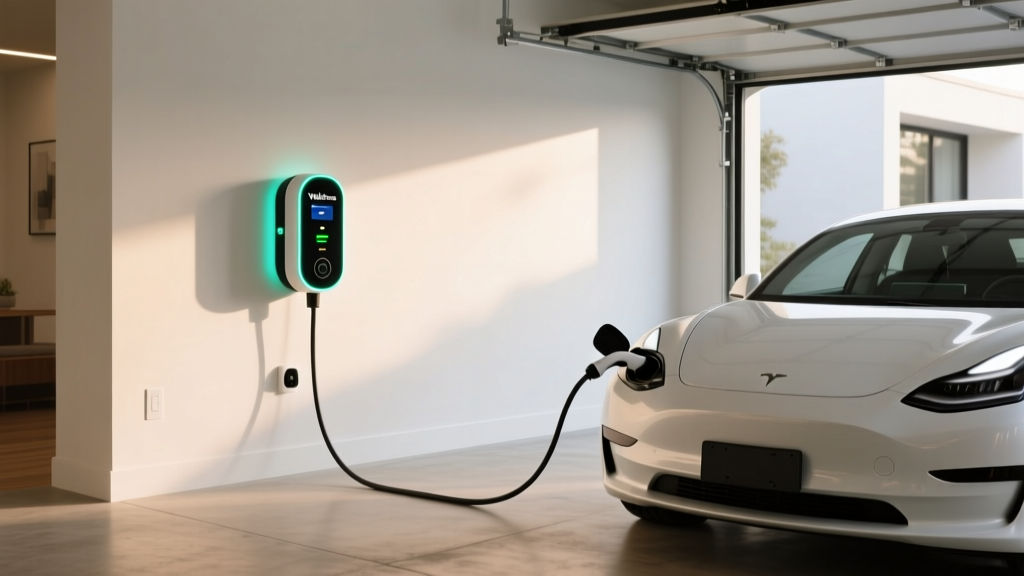
The Wallbox Pulsar Plus remains one of the most compact, well-priced Level 2 home chargers available, and its relevance has only grown as more 2026 EVs ship with NACS ports natively. Available in 40-amp (9.6 kW) and 48-amp (11.5 kW) variants, it delivers enough power to fully replenish most EV batteries overnight while keeping equipment costs under $700 before installation. Its Wi-Fi-connected smart features, Power Sharing capability, and NEMA 4 outdoor rating make it a practical pick for garage and driveway alike.
But a charger is only as good as the circuit feeding it. This guide covers the Pulsar Plus in detail — real-world charge times, electrical requirements, total installed cost, and how it stacks up against competitors like the ChargePoint Home Flex and Tesla Wall Connector.
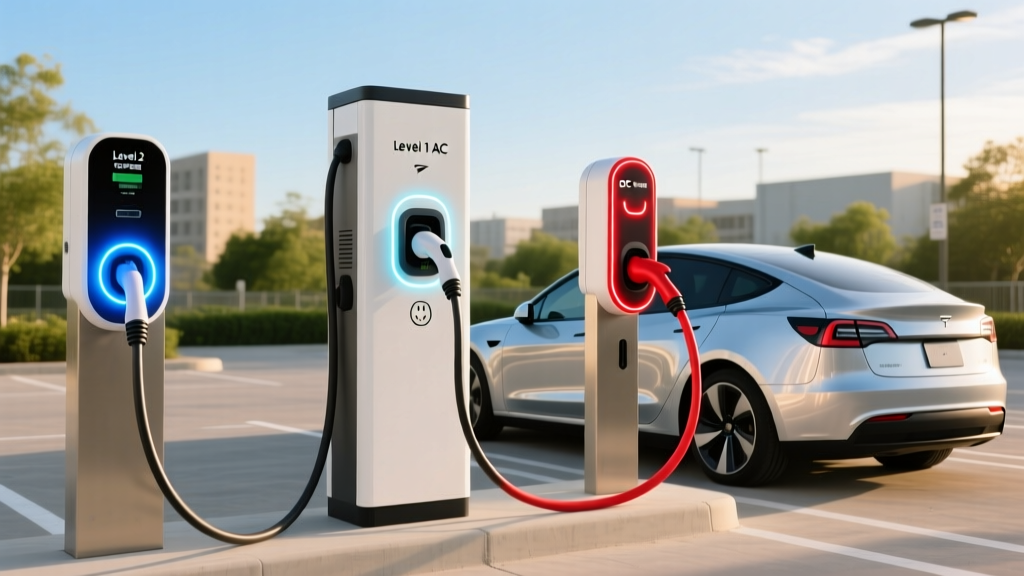
Charging Levels Explained: kW, Miles Per Hour, and What You Actually Need
Before evaluating any home charger, understand the three charging tiers. kW (kilowatts) measures power — the rate at which energy flows. kWh (kilowatt-hours) measures energy — the total amount stored in your battery. Think of kW as the width of a pipe and kWh as the size of the tank.
| Level | Voltage | Max Power (kW) | Miles of Range Added/Hour | Typical Use Case |
|---|---|---|---|---|
| Level 1 | 120V AC | 1.4 kW | 3–5 mi/hr | Overnight trickle; PHEVs; emergencies |
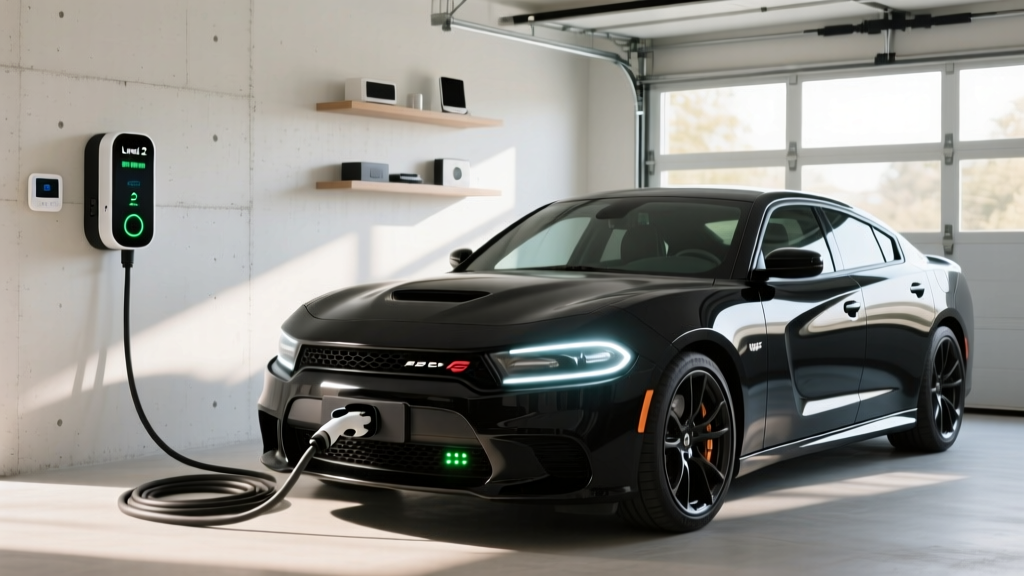
| Level 2 | 240V AC | 7.2–19.2 kW | 20–70 mi/hr | Home daily charging; workplace |
| DC Fast | 400–800V DC | 50–350 kW | 150–1,000+ mi/hr | Road trips; commercial stations |
For a 75 kWh battery (common in mid-size crossovers like the Hyundai Ioniq 5 or Tesla Model Y), a Level 2 charger at 11.5 kW adds roughly 40 miles of range per hour. A full 10–80% session takes about 5 hours — perfectly suited to overnight charging. Level 1 at 1.4 kW would need over 40 hours for the same session, making it impractical as a primary strategy for BEVs but adequate for PHEVs with 15–20 kWh batteries.
Wallbox Pulsar Plus: Specs, Features, and Real-World Charge Times
The Pulsar Plus comes in two configurations:
| Spec | Pulsar Plus 40A | Pulsar Plus 48A |
|---|---|---|
| Max Output | 9.6 kW (40A) | 11.5 kW (48A) |
| Circuit Required | 50A dedicated breaker | 60A dedicated breaker |
| Voltage | 240V (single-phase) | 240V (single-phase) |
| Connector (2026) | NACS or J1772 | NACS or J1772 |
| Cable Length | 25 ft | 25 ft |
| Weight | ~2.9 lbs (unit only) | ~2.9 lbs (unit only) |
| Wi-Fi / Bluetooth | Yes / Yes | Yes / Yes |
| Outdoor Rating | NEMA 4 | NEMA 4 |
| Energy Metering | Built-in | Built-in |
| Power Sharing | Yes (2 units on 1 circuit) | Yes (2 units on 1 circuit) |
| MSRP (approx.) | $599 | $649 |
| Warranty | 3 years | 3 years |
Charge Time Examples (10–80% SoC)
Charging from 10% to 80% State of Charge covers the typical daily-to-road-trip session. Times below assume the vehicle's onboard charger can accept the Pulsar Plus's full output:
- Tesla Model Y (75 kWh usable, 11.5 kW onboard): ~5 hours 10 minutes at 48A
- Ford F-150 Lightning (extended range, 131 kWh usable, 19.2 kW onboard): ~8 hours at 48A (onboard charger can accept more, but Pulsar Plus caps at 11.5 kW)
- Chevrolet Equinox EV (85 kWh usable, 11.5 kW onboard): ~5 hours 40 minutes at 48A
- Toyota RAV4 Prime PHEV (18.1 kWh usable, 6.6 kW onboard): ~2 hours at 40A (capped by vehicle's 6.6 kW onboard charger)
The 48A model charges roughly 20% faster than the 40A variant — meaningful for larger batteries but marginal for PHEVs and smaller BEVs. If your electrical panel can support a 60A breaker, the 48A model is the better long-term investment as battery sizes continue to grow.
Home Installation: Electrical Requirements, Panel Upgrades, and Total Cost
The single biggest variable in home EV charging cost is your electrical panel's remaining capacity. The Pulsar Plus 48A requires a dedicated 60-amp, 240-volt circuit; the 40A model needs a 50-amp circuit. The National Electrical Code (NEC) requires that continuous loads (like EV charging, which runs for 3+ hours) not exceed 80% of the breaker rating — hence 48A on a 60A breaker and 40A on a 50A breaker.
What Electrical Upgrades Might I Need?
Most modern homes with 200-amp service panels have enough headroom for a 50A or 60A circuit, especially if the charger runs overnight when other large loads (HVAC, dryer, oven) are minimal. However, older homes with 100-amp service or panels already near capacity may require:
- Panel upgrade (100A → 200A): $1,500–$3,500 including permit and utility coordination
- Heavy-up / service replacement: $2,500–$5,000+ if the utility drop and meter base also need updating
- Subpanel installation: $500–$1,500 if the main panel is full but has capacity
- Long wire runs: If the panel is far from the garage or driveway, copper wire costs add $3–$8 per foot for 6 AWG (50A) or 4 AWG (60A), potentially adding $300–$800
Wallbox's Power Sharing feature can help: it lets you install two Pulsar Plus units on a single circuit, dynamically splitting available amperage. This is useful for two-EV households that don't want to pay for a second dedicated circuit.
| Cost Component | Low Estimate | High Estimate | Notes |
|---|---|---|---|
| Pulsar Plus 48A unit | $649 | $649 | MSRP; street price may vary |
| Electrician labor (standard install) | $400 | $1,200 | Short run from panel to garage |
| Permit / inspection | $50 | $250 | Varies by municipality |
| Wire / conduit (long run) | $0 | $800 | If panel is far from install point |
| Panel upgrade (if needed) | $0 | $3,500 | Only if existing panel lacks capacity |
| Total (no panel upgrade) | $1,099 | $2,899 | Most common scenario |
| Total (with panel upgrade) | $2,599 | $6,399 | Older homes, 100A service |
Federal Tax Credit for Home Charging Equipment
The IRS residential clean energy credit (25C/25E) has covered alternative fuel vehicle refueling property at up to 30% of equipment and installation costs, capped at $1,000 per year. However, eligibility depends on census-tract income and location requirements that change. Check the IRS website or consult a tax professional for current-year applicability before purchasing.
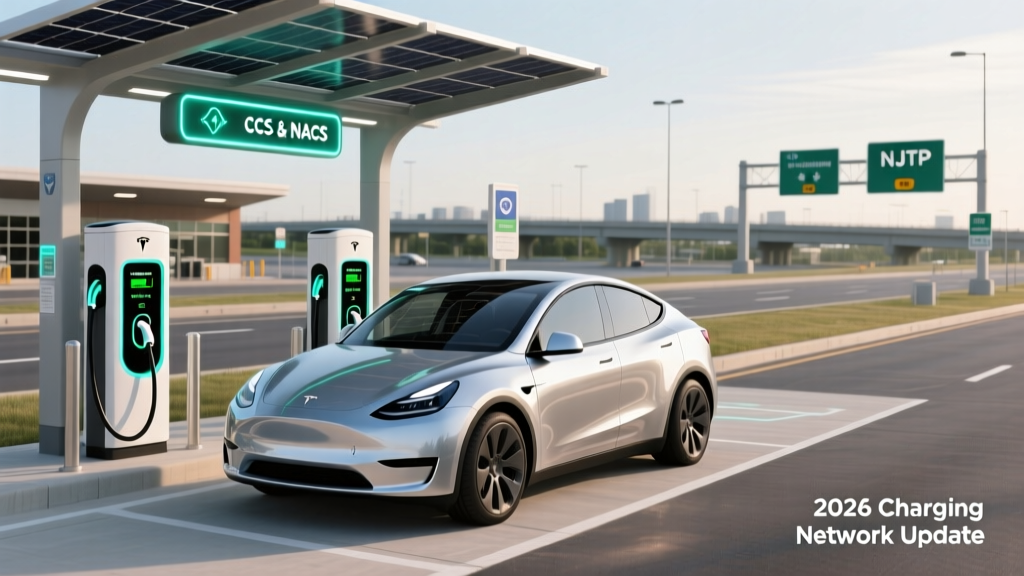
Connector Compatibility: NACS, CCS1, and Adapter Realities in 2026
The connector landscape has consolidated significantly. By 2026, nearly all new light-duty EVs sold in North America use the NACS (North American Charging Standard) port, originally developed by Tesla and now adopted industry-wide. The Pulsar Plus is available with a native NACS plug — the right choice for any 2025+ Tesla, Ford, GM, Hyundai, Kia, Rivian, or Volvo EV.
| Connector | Brands Using It (2026 Models) | Pulsar Plus Compatible? |
|---|---|---|
| NACS (native) | Tesla, Ford, GM, Hyundai/Kia, Rivian, Volvo, Polestar, BMW, Mercedes, Nissan (new models) | Yes — order NACS variant |
| J1772 (legacy AC) | Older EVs (pre-2025), some PHEVs, Mitsubishi Outlander PHEV | Yes — order J1772 variant |
| CCS1 (DC only) | Phased out on new vehicles; still found at public DC stations | N/A — CCS1 is for DC fast charging only, not home Level 2 |
| CHAdeMO | Nissan Leaf (discontinued); no 2026 new vehicles | Requires J1772-to-CHAdeMO adapter (rare, expensive) |
If you own an older CCS1-equipped EV (2022–2024 model year), you'll need a NACS-to-J1772 adapter if you buy the NACS Pulsar Plus, or simply order the J1772 variant. Adapters from Lectron or Tesla typically cost $80–$150 and are reliable for daily use. For future-proofing, the NACS variant is the stronger choice — virtually every new EV from 2025 onward uses it.
Cost to Charge: Home vs. Public vs. Gas Per Mile
Charging at home on Level 2 is where EV ownership economics shine. The cost per mile depends on your local electricity rate and your vehicle's efficiency (measured in kWh per 100 miles or miles per kWh).
| Scenario | Rate ($/kWh) | Vehicle Efficiency | Cost Per Mile | Gas Equivalent (30 MPG @ $3.50/gal) |
|---|---|---|---|---|
| Home off-peak (utility TOU rate) | $0.09 | 3.5 mi/kWh (28.5 kWh/100mi) | $0.026 | $0.117 |
| Home standard rate | $0.16 | 3.5 mi/kWh | $0.046 | $0.117 |
| Public Level 2 (ChargePoint, EVgo) | $0.35 | 3.5 mi/kWh | $0.100 | $0.117 |
| DC Fast Charging (Electrify America) | $0.48 | 3.5 mi/kWh | $0.137 | $0.117 |
| DC Fast (Tesla Supercharger, member rate) | $0.30 | 3.5 mi/kWh | $0.086 | $0.117 |
At home off-peak rates, a typical EV costs roughly 78% less per mile than a 30 MPG gas car. Even at public DC fast-charging rates, EVs can break even or slightly beat gas on a per-mile basis — though frequent DC fast charging accelerates battery degradation and should be minimized when possible.
Pulsar Plus vs. Competitors: Equipment Comparison
The Pulsar Plus competes in the smart Level 2 home charger segment against three primary rivals:
Wallbox Pulsar Plus 48A
- Output: 11.5 kW (48A)
- Connector: NACS or J1772
- Cable: 25 ft
- Smart features: Wi-Fi, scheduling, Power Sharing, energy metering
- Price: ~$649
- Standout: Smallest form factor; Power Sharing for 2-EV homes
ChargePoint Home Flex (NACS)
- Output: 12 kW (50A)
- Connector: NACS or J1772
- Cable: 23 ft
- Smart features: Wi-Fi, Alexa, scheduling, detailed app analytics
- Price: ~$699
- Standout: Mature app ecosystem; widely available at retail
Tesla Wall Connector
- Output: 11.5 kW (48A)
- Connector: NACS (native); J1772 adapter included
- Cable: 24 ft
- Smart features: Wi-Fi, OTA updates, Power Sharing, load management
- Price: ~$450
- Standout: Lowest price; seamless Tesla integration; J1772 adapter included
Emporia Vue EV Charger
- Output: 11.5 kW (48A)
- Connector: J1772 (NACS adapter available)
- Cable: 24 ft
- Smart features: Wi-Fi, solar integration, energy monitoring via Emporia Vue panel
- Price: ~$399
- Standout: Best value; deep solar/home-energy integration
When the Pulsar Plus wins: You want the smallest, lightest unit with robust smart features, or you need Power Sharing to run two chargers on one circuit. Its NEMA 4 rating handles outdoor exposure reliably, and Wallbox's app is well-reviewed for scheduling and energy tracking.
When to consider alternatives: If price is paramount, the Tesla Wall Connector at ~$450 undercuts the Pulsar Plus by $200 and includes a J1772 adapter. If you have solar panels and want integrated energy management, the Emporia Vue charger pairs with the Emporia home energy monitor for solar-aware charging.
Safety, Code, and Installation Best Practices
EV chargers draw sustained high current — more like an electric oven than a phone charger. Safety and code compliance are non-negotiable:
- Dedicated circuit: The NEC requires EVSE to have its own dedicated breaker — no sharing with other outlets or appliances.
- GFCI protection: The 2020 NEC (and most 2023/2026 adoptions) requires GFCI protection for outdoor receptacles. Hardwired installations (recommended for the Pulsar Plus) may have different GFCI requirements depending on jurisdiction — your electrician will know local code.
- Hardwired vs. plug-in: The Pulsar Plus is available as a hardwired unit or with a NEMA 14-50 plug. Hardwired is preferred for reliability (no plug overheating risk), qualifies for more utility rebates, and avoids the NEC's 2020 requirement for GFCI breakers on receptacles (a $100–$150 add). A NEMA 14-50 plug offers portability if you move.
- Outdoor rating: The Pulsar Plus carries a NEMA 4 rating, meaning it resists rain, sleet, and splashing water. It is not rated for submersion (NEMA 6P) or high-pressure washdown. In coastal or heavy-snow regions, a weatherproof enclosure adds longevity.
- Permit and inspection: Most jurisdictions require an electrical permit for a new 240V circuit. The inspection ensures wire gauge, breaker size, and grounding meet code. Skipping the permit risks insurance claim denials and home-sale complications.
- Cable management: The Pulsar Plus's 25-foot cable is long enough for most driveways but can be a tripping hazard if stretched across a walkway. Wallbox sells a cable organizer, and routing the cable along a wall or overhead is best practice.
Frequently Asked Questions
How much does it cost to install a home EV charger?
For a Wallbox Pulsar Plus 48A on an existing 200-amp panel with a short wire run, expect $1,050–$1,900 total (equipment + electrician + permit). If your panel needs upgrading from 100A to 200A, add $1,500–$3,500. The national average for a standard Level 2 install without panel work falls between $1,200 and $2,500 all-in.
How fast will each charging level add range?
Level 1 (120V) adds 3–5 miles per hour. Level 2 at 9.6 kW adds roughly 30–35 miles per hour; at 11.5 kW, about 40–45 miles per hour. Actual speed depends on vehicle efficiency (measured in mi/kWh). DC fast charging adds 150–1,000+ miles per hour at peak power, but tapers significantly above 80% State of Charge to protect the battery.
Which connector/charger is compatible with my EV?
If your EV is a 2025 or newer model from Tesla, Ford, GM, Hyundai, Kia, Rivian, Volvo, or most other major brands, it almost certainly has a NACS port — order the Pulsar Plus with a NACS connector. Older EVs (pre-2025) typically use J1772. You can use an adapter in either direction, but ordering the native connector avoids adapter cost and one more point of failure.
How much does charging cost per mile vs. gas?
At a typical home electricity rate of $0.16/kWh and a vehicle efficiency of 3.5 miles per kWh, charging costs about $0.046 per mile — roughly 60% less than a 30 MPG gas car at $3.50 per gallon ($0.117/mile). Off-peak utility rates can push EV fuel costs below $0.03 per mile. Public DC fast charging at $0.48/kWh narrows the gap to near parity with gas.
What electrical upgrades might I need?
The most common upgrade is a new 240V circuit with a 50A or 60A breaker, which most 200-amp panels can accommodate. Homes with 100-amp service or panels near capacity may need a panel upgrade ($1,500–$3,500) or a service heavy-up ($2,500–$5,000+). A licensed electrician's load calculation — not a guess — determines your actual requirement. Wallbox's Power Sharing feature can reduce circuit demands in two-EV households.
Can I install the Pulsar Plus outdoors?
Yes. The Pulsar Plus carries a NEMA 4 rating for outdoor use, protecting against rain, snow, and dust. Hardwired installation is recommended outdoors to avoid GFCI breaker requirements on receptacles and to reduce weather exposure at the plug connection. Consider a small weatherproof enclosure in regions with driving rain or heavy ice accumulation.
Does the Pulsar Plus work with solar panels?
The Pulsar Plus does not have native solar integration like the Emporia Vue charger or Zappi. However, you can schedule charging during peak solar production hours via the Wallbox app, or pair it with a home energy management system that diverts excess solar to the charger. Wallbox has announced solar-integration features for future firmware updates, but as of early 2026, third-party integration requires additional hardware.