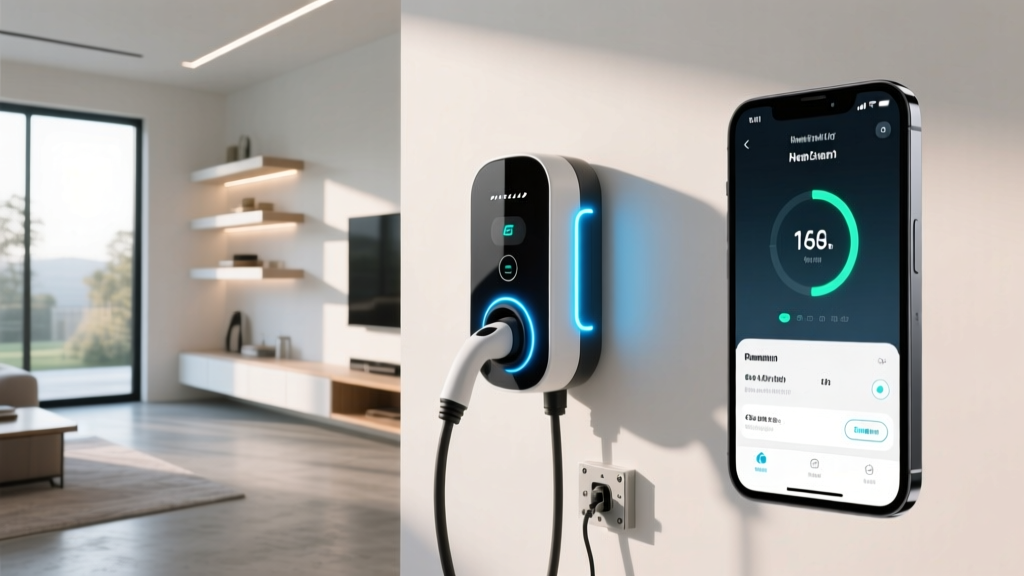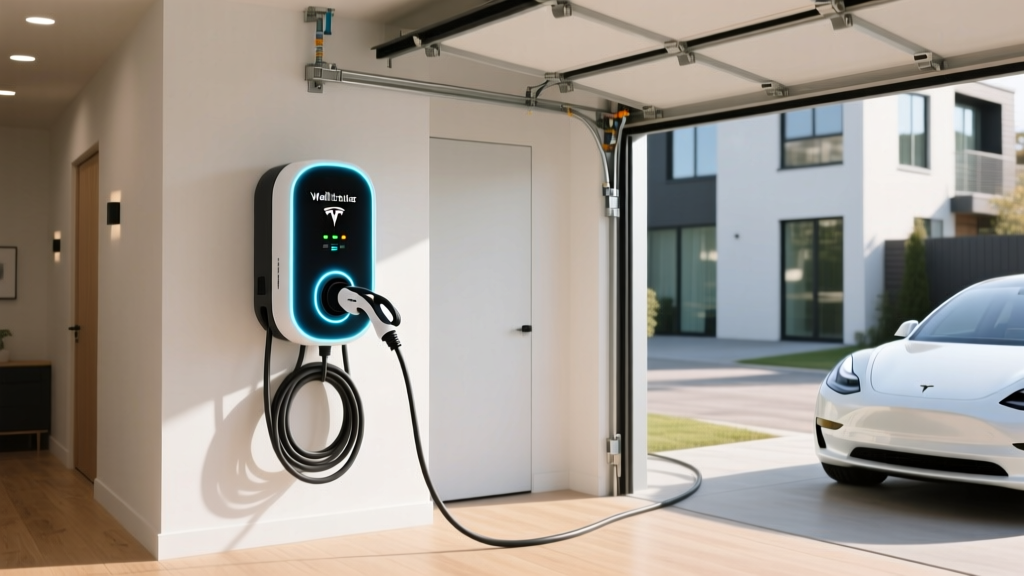
If you've narrowed your home charging search to a compact, Wi-Fi-enabled Level 2 unit, the Wallbox Pulsar Plus electric vehicle charger likely sits near the top of your shortlist. At 48 amps and up to 11.5 kW of power output, it's one of the most power-dense residential chargers in its size class, and it's available with either a J1772 plug (for CCS1-equipped EVs) or a native NACS connector for Tesla and the growing wave of NACS-standard vehicles from Ford, GM, Hyundai, Rivian, and others.
But buying the hardware is only half the equation. Real-world ownership hinges on electrical panel capacity, permitting, connector compatibility, and actual charging times for your specific battery size. This guide walks through every technical and financial detail you need before you call an electrician.
Charging Levels Explained: kW, Miles Per Hour, and Where the Pulsar Plus Fits
Before evaluating any charger, you need clarity on the three charging tiers. The distinction that trips up most new EV owners is kW versus kWh: kW (kilowatts) measures power — the rate at which energy flows into your car. kWh (kilowatt-hours) measures energy — the total capacity of your battery. Think of kW as the width of a hose and kWh as the size of the bucket you're filling.
| Level | Voltage | Max Power (kW) | Miles of Range Added Per Hour | Typical Use |
|---|---|---|---|---|
| Level 1 | 120V AC | 1.4–1.9 kW | 3–5 mi/hr | Overnight trickle, PHEVs, emergencies |
| Level 2 | 240V AC | 3.3–19.2 kW | 12–70 mi/hr | Home daily charging, workplace, retail |
| DC Fast Charge | 400–800V DC | 50–350 kW | 150–1,000+ mi/hr | Road trips, highway corridors |
The Wallbox Pulsar Plus operates at Level 2, delivering up to 11.5 kW (at 48 amps on a 240V circuit). In practical terms, that translates to roughly 35–44 miles of range per hour of charging, depending on your vehicle's efficiency (measured in kWh/100mi or MPGe). A highly efficient sedan like the Hyundai Ioniq 6 (3.6 mi/kWh) will gain range faster than a heavier, less aerodynamic truck like the Rivian R1T (roughly 2.0–2.3 mi/kWh).
Wallbox Pulsar Plus: Power Output, Connector Options, and Smart Features
Wallbox ships the Pulsar Plus in two amperage configurations — 40A and 48A — and in two connector variants. Here's how the 2026 lineup breaks down:
• Connector: J1772 (CCS1 vehicles) or NACS (Tesla, Ford, GM, Hyundai, Rivian, Volvo, etc.)
• Cable length: 25 feet (standard)
• Wi-Fi + Bluetooth enabled; myWallbox app for scheduling and energy tracking
• Power Sharing: daisy-chain two units on one circuit for dual-EV households
• NEMA 14-50 plug (portable) or hardwired (60A circuit required for hardwire at full 48A)
• Price: ~$649 (J1772) / ~$699 (NACS)
• Connector: J1772 or NACS
• Cable length: 25 feet
• Same smart features as 48A variant
• NEMA 14-50 plug or hardwired (50A circuit for hardwire)
• Price: ~$599 (J1772) / ~$649 (NACS)
The 48A model is the stronger buy for most households. The 11.5 kW output maxes out the onboard chargers of many popular EVs — the Tesla Model Y accepts up to 11.5 kW on Level 2, the Hyundai Ioniq 5 accepts 10.9 kW, and the Ford Mustang Mach-E accepts 10.5 kW. Going with the 40A unit means you'll leave 15–20% of potential charging speed on the table with these vehicles.
Which Connector Does Your EV Need?
As of 2026, the North American charging landscape has consolidated heavily around NACS, but millions of CCS1-equipped vehicles remain on the road. Here's a compatibility reference:
| Connector | Brands Using It (New Vehicles) | Adapter Needed? |
|---|---|---|
| NACS (native) | Tesla (all), Ford, GM, Hyundai, Kia, Rivian, Volvo, Polestar, BMW, Mercedes-Benz, Lucid, Subaru | None — order Pulsar Plus NACS variant |
| CCS1 (J1772 + DC pins) | Older VW ID.4, older BMW i4/iX, older Nissan Ariya, some Stellantis models | None — order Pulsar Plus J1772 variant; DC fast charging requires CCS1 adapter at NACS Superchargers |
| CHAdeMO | Nissan Leaf (legacy, discontinued after 2025) | J1772 for Level 2; CHAdeMO stations increasingly rare |
Key decision: If you currently own a CCS1 vehicle but plan to switch to a NACS vehicle within 2–3 years, consider buying the NACS variant now and using a Tesla-to-J1772 adapter (~$200–$250 aftermarket) in the interim. The reverse — a J1772-to-NACS adapter — is also available from Lectron and other brands.
Home Installation: Electrical Requirements, Panel Upgrades, and Real Costs
The Pulsar Plus 48A requires a dedicated 60-amp, 240-volt circuit when hardwired, or a NEMA 14-50 receptacle on a 60A breaker if you want portability. (Note: the National Electrical Code requires the breaker to be rated at 125% of the continuous load — 48A × 1.25 = 60A.)
This is where many homeowners hit a wall. If your electrical panel is a 100A service (common in homes built before 1990), adding a 60A EV circuit may exceed your panel's capacity, especially if you also run electric HVAC, a dryer, and an electric range. A licensed electrician will perform a load calculation per NEC Article 220 to determine whether your panel can handle the addition.
Installation Cost Breakdown
| Component | Low Estimate | High Estimate | Notes |
|---|---|---|---|
| Wallbox Pulsar Plus 48A unit | $649 | $699 | J1772 vs. NACS variant |
| Electrician labor (standard install) | $500 | $1,500 | Run from panel to garage; varies by distance and wall type |
| Electrical materials (wire, conduit, breaker) | $150 | $500 | 6 AWG copper THHN; PVC or EMT conduit |
| Permit fee | $50 | $250 | Varies by municipality |
| Panel upgrade (if needed) | $1,500 | $4,500 | 100A → 200A service upgrade; not always required |
| Total (no panel upgrade) | $1,349 | $2,949 | |
| Total (with panel upgrade) | $2,849 | $7,449 |
The variance is significant. A straightforward install in a garage with the panel on the same wall might cost $1,400 all-in. A 60-foot conduit run through finished walls to a detached garage could push past $3,000 even without a panel upgrade.
Pro tip: Some utilities offer rebates of $250–$1,000 for Level 2 charger installation, and the federal §30C alternative fuel vehicle refueling property credit covers up to 30% of equipment and installation costs (capped at $1,000) if you live in an eligible census tract. Check the latest IRS guidance, as eligible-tract maps are updated periodically.
Real Charging Times: How Long to Charge Common EV Batteries
Charging time depends on three factors: your battery's usable capacity (kWh), the charger's power output (kW), and your vehicle's onboard charger limit (kW). The onboard charger is the bottleneck — even if the Pulsar Plus can deliver 11.5 kW, a vehicle with a 7.2 kW onboard charger will only accept 7.2 kW.
| Vehicle | Usable Battery (kWh) | Onboard Charger Limit | 10–80% Time (est.) | 0–100% Time (est.) |
|---|---|---|---|---|
| Tesla Model Y Long Range | 75 kWh | 11.5 kW | ~4.5 hours | ~6.5 hours |
| Hyundai Ioniq 5 (Long Range) | 77.4 kWh | 10.9 kW | ~5.0 hours | ~7.1 hours |
| Ford Mustang Mach-E (Extended Range) | 91 kWh | 10.5 kW | ~6.1 hours | ~8.7 hours |
| Chevrolet Equinox EV | 85 kWh | 11.5 kW | ~5.2 hours | ~7.4 hours |
| BMW i4 eDrive40 | 81.5 kWh | 11 kW | ~5.2 hours | ~7.4 hours |
| Toyota bZ4X | 64 kWh | 7.2 kW | ~6.2 hours* | ~8.9 hours* |
*The bZ4X's 7.2 kW onboard charger limits Level 2 speed; the Pulsar Plus delivers only 7.2 kW to this vehicle regardless of its 11.5 kW capability.
For daily driving, most EV owners charge from roughly 30% to 80% overnight — a session the Pulsar Plus 48A handles in 3–4 hours for most mid-size crossovers. You don't need to charge to 100% daily; in fact, for NMC battery chemistry, limiting daily charges to 80% extends long-term battery health. LFP batteries (found in some Tesla Model 3/Y Standard Range variants and the Ford Mustang Mach-E Select) tolerate regular 100% charges without significant degradation.
Cost to Charge: Home vs. Public vs. Gas Per Mile
One of the strongest arguments for home Level 2 charging is cost. Here's how common scenarios break down on a per-mile basis, using a vehicle averaging 3.0 miles per kWh (roughly 112 MPGe — typical for a mid-size electric crossover):
| Scenario | Rate | Cost Per Mile |
|---|---|---|
| Home, off-peak utility rate | $0.09/kWh | $0.030 |
| Home, average U.S. residential rate | $0.17/kWh | $0.057 |
| Public Level 2 (ChargePoint, EVgo L2) | $0.30/kWh | $0.100 |
| DC fast charge (Electrify America, Tesla Supercharger) | $0.38/kWh | $0.127 |
| Gasoline vehicle (30 MPG combined, $3.40/gal) | $3.40/gallon | $0.113 |
| Gasoline vehicle (22 MPG combined, $3.40/gal) | $3.40/gallon | $0.155 |
Home off-peak charging at $0.03/mile is roughly one-quarter to one-fifth the cost of gasoline per mile. Even at the national average residential rate of $0.17/kWh, you're still at about half the per-mile fuel cost of a 30 MPG gas car. Public DC fast charging, however, erases most of the savings — it's comparable to or slightly more expensive than gasoline, which is why home charging is the economic backbone of EV ownership.
Many utilities offer time-of-use (TOU) plans that drop rates to $0.07–$0.12/kWh between 10 PM and 6 AM. The Wallbox Pulsar Plus integrates with TOU scheduling through the myWallbox app, so you can plug in at 6 PM and delay charging until off-peak rates begin.
Safety, Electrical Code, and Outdoor Installation
The Pulsar Plus carries a NEMA 4 (indoor/outdoor) rating, meaning it can be mounted on an exterior wall and withstand rain, dust, and temperature swings from -22°F to 104°F. If you're installing outdoors, your electrician should still use a weatherproof conduit entry and seal the mounting surface.
Key code and safety requirements per the 2023 NEC (adopted by most jurisdictions as of 2026):
- Dedicated circuit: The Pulsar Plus must have its own dedicated breaker — it cannot share a circuit with other appliances.
- GFCI protection: If you install a NEMA 14-50 receptacle (rather than hardwiring), NEC 625.41 requires GFCI protection on the breaker. Hardwired installations are exempt from this GFCI requirement, which is one reason many electricians prefer hardwiring.
- Wire gauge: 6 AWG copper for a 60A breaker (48A continuous load). Some jurisdictions allow 4 AWG aluminum, which is less expensive but requires larger conduit.
- Cable management: The 25-foot cable should be routed to avoid trip hazards. Wallbox includes a cable holster for wrapping the cord when not in use.
- Permit and inspection: Nearly all jurisdictions require an electrical permit for a new 240V circuit. The inspection ensures the breaker size, wire gauge, and grounding meet code. Skipping the permit risks insurance claim denial if a fire originates from the circuit.
How Does the Pulsar Plus Compare to Other Level 2 Chargers?
Power: 11.5 kW | Connector: NACS or J1772
Smart features: Wi-Fi, scheduling, Power Sharing
Price: ~$649–$699
Best for: Compact size, NACS-native option, dual-EV Power Sharing
Power: 12 kW (50A) | Connector: J1772 (NACS via adapter)
Smart features: Wi-Fi, Alexa, detailed app
Price: ~$699
Best for: Adjustable amperage (16A–50A) to match panel capacity
Power: 11.5 kW (48A) | Connector: NACS
Smart features: Wi-Fi, OTA updates, Power Sharing
Price: ~$475
Best for: Tesla-only households; lowest price at 48A
Power: 9.6 kW (40A) | Connector: J1772 or NACS
Smart features: Energy monitoring, solar integration
Price: ~$399
Best for: Budget-conscious buyers with solar panels
The Pulsar Plus's main differentiator is its physical size — it's roughly 40% smaller than the ChargePoint Home Flex — and its native NACS option, which eliminates the need for a J1772-to-NACS adapter if you drive a Tesla, Ford, GM, or Hyundai EV. The Tesla Wall Connector is cheaper but won't natively charge non-Tesla vehicles without an adapter, making the Pulsar Plus more versatile for mixed-fleet households.
Frequently Asked Questions
How much does it cost to install a Wallbox Pulsar Plus at home?
Expect $1,350–$2,950 total (equipment + electrician + permit) if your electrical panel has sufficient capacity. If a panel upgrade from 100A to 200A service is needed, add $1,500–$4,500. Get at least two quotes from licensed electricians, and confirm they include permit costs in their estimate.
How fast will the Pulsar Plus add range to my EV?
At full 11.5 kW output, expect roughly 35–44 miles of range per hour, depending on your vehicle's efficiency. A Tesla Model Y (3.5 mi/kWh) gains about 40 miles per hour. A Ford F-150 Lightning (2.0 mi/kWh) gains about 23 miles per hour.
Do I need a NACS or J1772 Pulsar Plus?
Match the connector to your vehicle. If you own or plan to buy a Tesla, Ford, GM, Hyundai, Kia, Rivian, or Volvo EV (2025+ models), order the NACS variant. If you drive an older CCS1 vehicle (e.g., pre-2025 VW ID.4, BMW i4), order the J1772 variant. Adapters exist for both directions but add bulk and cost.
Can I plug the Pulsar Plus into a NEMA 14-50 outlet, or does it need hardwiring?
Both options are available. The NEMA 14-50 plug version is portable and can be unplugged for travel or if you move homes. The hardwired version eliminates the receptacle, which some electricians prefer because it avoids the NEC GFCI-breaker requirement for receptacles and reduces a potential point of connection failure.
What if my home only has a 100-amp electrical panel?
A 100A panel can often support a 40A EV circuit (for the Pulsar Plus 40A model) without an upgrade, provided your existing loads don't max out the panel. Your electrician will run a load calculation. If the calculation shows insufficient headroom, you'll either need a panel upgrade or a lower-amperage charger on a smaller breaker. Some smart panels and load-management devices (like the Wallbox Power Meter) can dynamically adjust charging amperage based on real-time household load, avoiding a full panel upgrade.
Is the Wallbox Pulsar Plus eligible for any tax credits or rebates?
The federal §30C Alternative Fuel Vehicle Refueling Property Credit covers 30% of equipment and installation costs, up to $1,000, but only if your home is located in an eligible census tract (generally non-urban or low-income areas). Many utilities also offer rebates of $250–$1,000 for Level 2 charger installation. Check with your local utility and consult a tax professional for eligibility specifics.
Does the Pulsar Plus work with solar panels?
Yes, but with a caveat. The Pulsar Plus itself doesn't have built-in solar-aware charging like the Emporia or Zappi. However, the myWallbox app allows manual scheduling, so you can set charging windows to coincide with peak solar production hours. For true solar-surplus-only charging (where the charger adjusts power in real time based on excess solar), you'd need a Wallbox Power Meter add-on or consider the Emporia charger as an alternative.