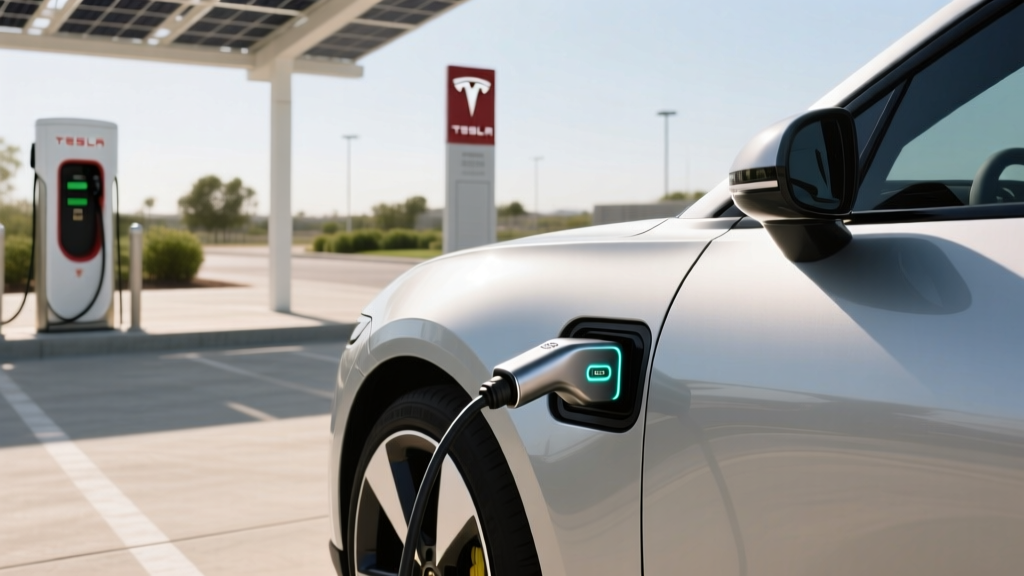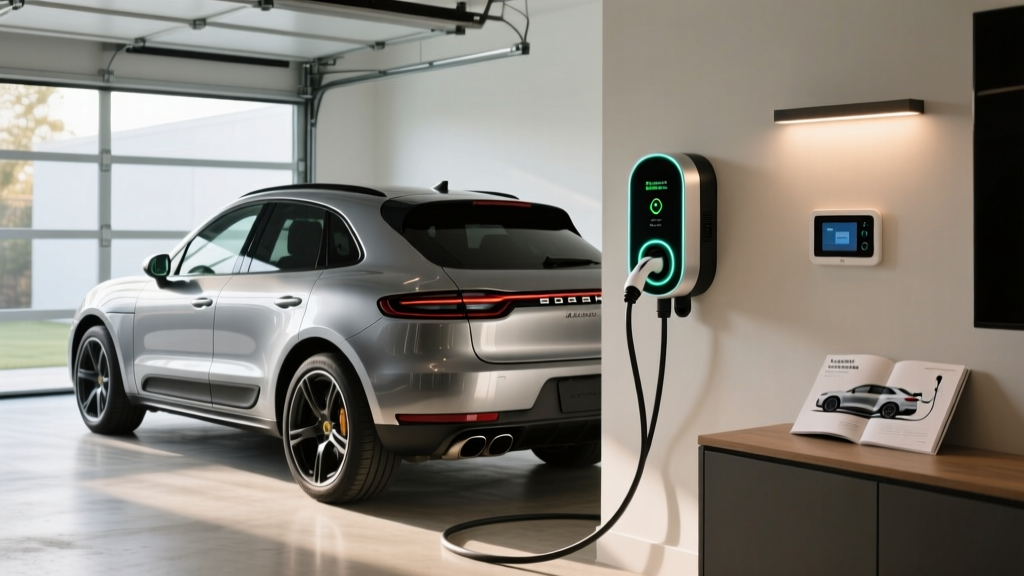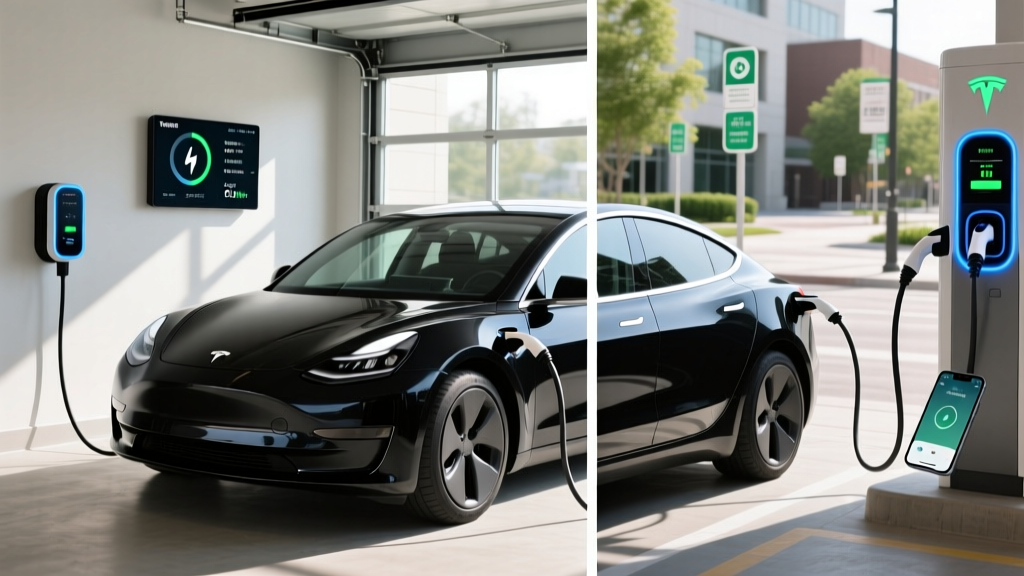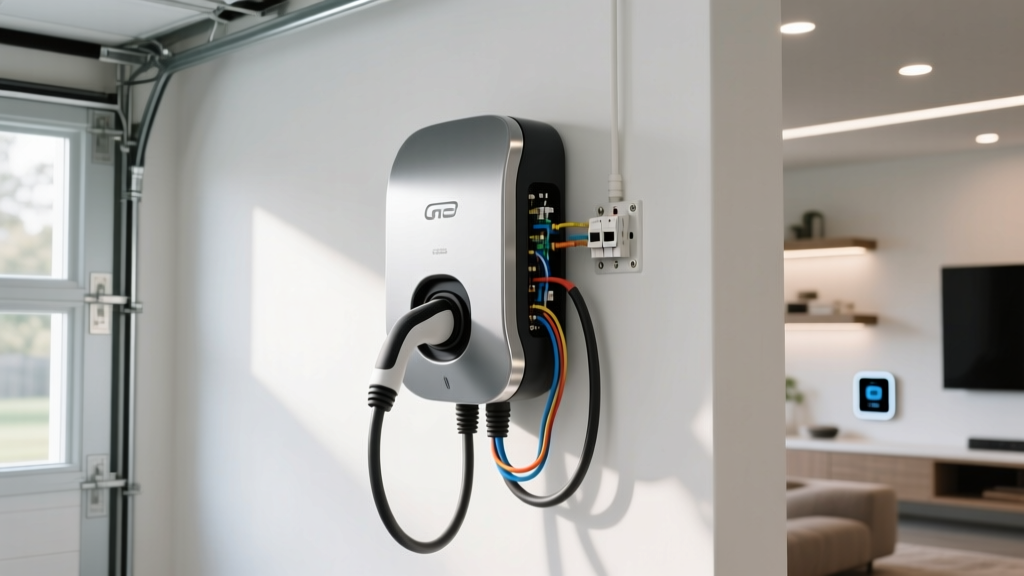
If you've just taken delivery of a new EV or are about to, the single most impactful ownership decision you'll make is installing a dedicated Level 2 home charger. Public DC fast chargers grab headlines, but over 80% of EV charging happens at home, and a proper wallbox setup transforms your daily routine from "planning around charging" to "plug in overnight, wake up full."
This guide covers exactly what a wallbox EV charger installation involves — from electrical panel capacity and wiring requirements to equipment selection, real-world charging speeds, and the true cost breakdown you won't find on a manufacturer's spec sheet. We've installed chargers in homes ranging from brand-new builds with 200A service to 1960s bungalows needing full panel upgrades, so you'll get the unvarnished numbers.
Understanding EV Charging Levels: kW Speed and Range Per Hour
Before sizing a wallbox charger, you need to understand the three charging tiers. The critical distinction: kW (kilowatts) measures power — how fast energy flows into your battery. kWh (kilowatt-hours) measures energy — the total capacity of your battery. Think of kW as the diameter of a water hose and kWh as the size of the bucket you're filling.
| Level | Voltage | Power (kW) | Miles of Range Added Per Hour | Typical Use Case |
|---|---|---|---|---|
| Level 1 | 120V AC | 1.0–1.4 kW | 3–5 miles | Overnight trickle; PHEVs; emergency backup |
| Level 2 (Home Wallbox) | 240V AC | 7.2–19.2 kW | 20–75 miles | Daily home charging; the standard |
| DC Fast Charging | 200–800V DC | 50–350 kW | 150–1,000+ miles (theoretical) | Road trips; 10–80% in 15–40 min |
For a typical 75 kWh battery (like the Hyundai Ioniq 5 Long Range or Tesla Model Y), a 48A / 11.5 kW Level 2 wallbox adds roughly 35–40 miles of range per hour — meaning a full overnight session easily replenishes any daily driving. Level 1 at 1.4 kW would take over 50 hours for the same charge, making it impractical for BEVs but workable for PHEVs with smaller 15–20 kWh batteries.
Wallbox EV Charger Installation Cost Breakdown
The headline question: how much does it actually cost? The answer depends heavily on your home's electrical infrastructure. Here's the honest range based on 2026 electrician rates and equipment pricing.
| Component | Simple Install (Panel Adjacent) | Standard Install (50–80 ft Run) | Complex Install (Panel Upgrade Needed) |
|---|---|---|---|
| Level 2 Charger Hardware | $400–$700 | $400–$700 | $400–$700 |
| Electrical Permit | $50–$150 | $50–$200 | $100–$300 |
| Electrician Labor | $300–$600 | $600–$1,200 | $800–$1,500 |
| Wiring & Conduit Materials | $100–$200 | $200–$500 | $300–$700 |
| Electrical Panel Upgrade (if needed) | — | — | $1,500–$3,500 |
| Total Estimated Cost | $850–$1,650 | $1,250–$2,600 | $3,100–$6,700 |
What drives the cost range?
The biggest variable is distance from your electrical panel to the charger location. A garage-mounted wallbox directly next to a 200A panel with spare breaker slots might cost under $1,000 total. The same charger on an exterior wall 80 feet from a basement panel, requiring trenching through concrete and new conduit, pushes toward $2,500+.
The panel upgrade scenario is the budget killer for older homes. If your home has a 100A service panel that's already near capacity (running electric range, dryer, HVAC), adding a 40–60A EV circuit may exceed available amperage. Upgrading to a 200A panel costs $1,500–$3,500 on top of the charger install. Some homeowners opt for a load-management device (like the Emporia Smart Load Center or Wallbox's own Power Meter) that dynamically reduces charger amperage when other appliances are drawing heavily — potentially avoiding a panel upgrade entirely.
Electrical Requirements: Voltage, Amperage, and Circuit Sizing
A Level 2 wallbox charger requires a 240-volt dedicated circuit — the same voltage as your electric dryer or oven. The amperage of that circuit determines your maximum charging speed:
- 30A circuit → 24A continuous draw → 5.8 kW (adequate for PHEVs and light BEV use)
- 40A circuit → 32A continuous draw → 7.7 kW (good for most daily driving)
- 50A circuit → 40A continuous draw → 9.6 kW (recommended for 75+ kWh batteries)
- 60A circuit → 48A continuous draw → 11.5 kW (optimal for large batteries like the Ford F-150 Lightning's 131 kWh Extended Range pack)
National Electrical Code (NEC) requires that continuous loads (anything running 3+ hours, which includes EV charging) only use 80% of a circuit's rated capacity. A 50A breaker delivers 40A to your car. Your electrician will size wire gauge accordingly: typically 6 AWG copper for 50A circuits, 4 AWG for 60A.
Panel capacity check
Before scheduling an electrician, check your main breaker rating (100A, 150A, or 200A) and count your available breaker slots. A 200A panel with two open slots is the ideal scenario. If your panel is a Federal Pacific or Zinsco — common in pre-1990 homes — expect your electrician to recommend full replacement regardless of EV needs, as these panels have known safety issues and may not pass inspection.
Connector Compatibility: NACS, CCS1, and CHAdeMO in 2026
The connector landscape has consolidated significantly. As of 2026, the North American Charging Standard (NACS) — originally Tesla's proprietary connector — is now the dominant standard, adopted by Ford, GM, Rivian, Hyundai, Kia, BMW, and most major automakers for new vehicles. CCS1 remains on many 2021–2025 models still on the road, and CHAdeMO is essentially legacy (Nissan Leaf, older Mitsubishi Outlander PHEV).
| Connector | Brands Using It (New Vehicles) | Home Charger Availability | Adapter Needed? |
|---|---|---|---|
| NACS (Tesla-style) | Tesla, Ford, GM, Rivian, Hyundai, Kia, BMW, Volvo, Polestar, Mercedes | Tesla Wall Connector, Wallbox Pulsar Max (NACS), Emporia Level 2 | CCS-to-NACS adapters available ($150–$250) for older CCS vehicles |
| CCS1 | VW ID.4 (through 2025), some Stellantis models, legacy 2021–2025 EVs | ChargePoint Home Flex, Emporia Vue, Wallbox Pulsar Plus (CCS) | NACS-to-CCS adapter for charging at Tesla Superchargers |
| CHAdeMO | Nissan Leaf (discontinued after 2025), Mitsubishi Outlander PHEV | Limited; mostly commercial stations | No practical home adapter; use CHAdeMO-specific stations |
For a 2026 wallbox installation, we recommend buying a charger with a NACS connector unless you currently own a CCS1 vehicle and have no plans to switch. The industry is moving decisively to NACS, and even current CCS1 owners may want a NACS charger plus a $200 adapter for future-proofing.
Charging Time Examples: What to Expect With Common Battery Sizes
Real charging times depend on battery capacity (kWh), your wallbox's output (kW), and the vehicle's onboard charger acceptance rate. Most EVs accept the full 11.5 kW from a 48A circuit, but some — like the base Nissan Leaf or certain PHEVs — cap at 6.6 kW or 7.2 kW internally.
| Vehicle Example | Battery (kWh usable) | Onboard Charger Max | 11.5 kW Wallbox (48A) | 7.7 kW Wallbox (32A) | Level 1 (1.4 kW) |
|---|---|---|---|---|---|
| Chevy Equinox EV (2026) | 85 kWh | 11.5 kW | ~5.1 hours | ~7.4 hours | ~42 hours |
| Tesla Model Y Long Range | 75 kWh | 11.5 kW | ~4.5 hours | ~6.5 hours | ~37 hours |
| Hyundai Ioniq 5 (Long Range) | 84 kWh | 10.9 kW | ~5.4 hours | ~7.7 hours | ~42 hours |
| Ford F-150 Lightning (Ext. Range) | 131 kWh | 19.2 kW | ~7.9 hours* | ~11.5 hours | ~65 hours |
| Toyota RAV4 Prime (PHEV) | 18.1 kWh | 6.6 kW | ~1.6 hours** | ~1.6 hours** | ~9 hours |
*The F-150 Lightning Extended Range can accept up to 19.2 kW with an 80A circuit and the optional Ford Pro Power onboard charger upgrade — a consideration for truck owners who tow frequently.
**PHEV batteries charge at their onboard charger's max rate regardless of wallbox capacity.
Cost Per Mile: Home Charging vs. Public vs. Gas
One of the strongest arguments for a wallbox installation is the dramatic per-mile cost advantage of home charging. Here's how it breaks down using 2026 average rates.
| Scenario | Rate | Cost per kWh | Cost per Mile (at 3 mi/kWh) |
|---|---|---|---|
| Home Level 2 (national avg. electricity) | ~$0.16/kWh | $0.16 | $0.053 |
| Home Level 2 (off-peak TOU rate) | ~$0.08/kWh | $0.08 | $0.027 |
| Public Level 2 (ChargePoint, EVgo L2) | $0.25–$0.49/kWh | $0.37 avg | $0.123 |
| DC Fast Charging (Electrify America, Tesla Supercharger) | $0.35–$0.65/kWh | $0.48 avg | $0.160 |
| Gasoline vehicle (30 MPG avg, $3.40/gal) | $3.40/gallon | — | $0.113 |
At home off-peak rates, an EV costs roughly $0.03 per mile — about one-quarter the cost of a 30 MPG gas car. Even at peak public DC fast charging rates, EVs are competitive with gasoline on a per-mile basis. The savings compound: a driver covering 12,000 miles annually saves $700–$1,100 per year with home charging versus gas, according to fueleconomy.gov comparisons.
Recommended Wallbox Chargers for 2026
Here are our top picks based on reliability, features, connector options, and value. All units listed are UL-listed (or equivalent) and support the NACS connector either natively or via included adapter.
Tesla Wall Connector (Gen 3)
- Power Output: 48A / 11.5 kW (on 60A circuit)
- Connector: NACS native; J1772 adapter included
- Cable Length: 24 ft
- Smart Features: Wi-Fi, OTA updates, power sharing (link up to 6 units on one circuit), load management
- Price: ~$475
- Best For: Tesla owners and NACS-adopters wanting a no-frills, reliable unit
Wallbox Pulsar Max
- Power Output: 48A / 11.5 kW (on 60A circuit)
- Connector: Available in NACS or J1772/CCS configurations
- Cable Length: 25 ft
- Smart Features: Wi-Fi + Bluetooth, myWallbox app scheduling, Eco-Smart mode (solar integration), dynamic power sharing
- Price: ~$599
- Best For: Homes with solar panels or those wanting detailed energy analytics
ChargePoint Home Flex
- Power Output: Up to 50A / 12 kW (on 60A circuit); adjustable down to 16A for lower-capacity panels
- Connector: NACS or J1772 (selectable at purchase)
- Cable Length: 23 ft
- Smart Features: Wi-Fi, ChargePoint app, Alexa integration, flexible amperage dial for panel-constrained homes
- Price: ~$699
- Best For: Homes with limited panel capacity — the adjustable amperage is a standout feature
Emporia Level 2 EV Charger
- Power Output: 48A / 11.5 kW (on 60A circuit)
- Connector: NACS or J1772
- Cable Length: 24 ft
- Smart Features: Wi-Fi, Emporia energy monitoring ecosystem integration, time-of-use scheduling, solar-aware charging
- Price: ~$399
- Best For: Budget-conscious buyers who still want smart scheduling and energy tracking
Safety, Permits, and Electrical Code Requirements
EV chargers draw sustained high current for hours — this is not a DIY-friendly project. Here's what code requires and why permits matter:
- Dedicated circuit: Your wallbox must have its own breaker with no other outlets or loads sharing it. This prevents overheating and nuisance trips.
- GFCI protection: NEC 2020 (and the 2023/2026 updates adopted by most jurisdictions) requires GFCI protection for all EV charging outlets. Hardwired units typically have GFCI built into the charger itself; plug-in units (using a NEMA 14-50 receptacle) need a GFCI breaker, which adds $50–$100 to the install.
- Outdoor rating: If mounting outside, ensure the charger is rated NEMA 4 (weather-resistant). All units listed above meet this standard, but the junction box and conduit entries must also be weather-sealed.
- Permit and inspection: Most municipalities require an electrical permit for a new 240V circuit. The inspection verifies wire gauge, breaker sizing, grounding, and GFCI compliance. Skipping the permit risks insurance claim denials if an electrical fire occurs.
Per the National Fire Protection Association's NEC guidelines, any Level 2 installation should be performed by a licensed electrician. Many utilities also require a licensed-electrician certification before approving rebates or TOU rate enrollment.
Federal and State Incentives for Home Charger Installation
The IRS §30C Alternative Fuel Vehicle Refueling Property Credit covers 30% of home EV charger equipment and installation costs, up to $1,000. Key eligibility rules per irs.gov:
- The charger must be installed at your primary residence
- The property must be located in an eligible census tract (non-urban or low-income community — check the IRS eligibility tool)
- The credit is non-refundable (you must have tax liability to claim it)
- Both equipment and installation labor costs qualify
Many utilities also offer direct rebates of $250–$750 for installing a smart Level 2 charger, especially if you enroll in a time-of-use rate plan. Check with your local utility before purchasing — some require pre-approval or specify approved charger models.
Frequently Asked Questions
How much does it cost to install a home EV charger?
A straightforward wallbox EV charger installation runs $850–$1,650 when your electrical panel has spare capacity and the charger is mounted nearby. A standard run of 50–80 feet typically costs $1,250–$2,600. If your home needs a panel upgrade from 100A to 200A service, total costs can reach $3,100–$6,700. The §30C federal tax credit can offset up to $1,000 of these costs if your home is in an eligible census tract.
How fast will each charging level add range?
Level 1 (120V) adds 3–5 miles per hour — suitable only for PHEVs or emergencies. Level 2 (240V wallbox) adds 20–75 miles per hour depending on amperage, easily covering daily driving overnight. DC fast charging adds 150–1,000+ theoretical miles per hour, with typical 10–80% sessions taking 15–40 minutes depending on peak kW and battery preconditioning.
Which connector is compatible with my EV?
For 2026 model-year vehicles, NACS is the dominant standard — used by Tesla, Ford, GM, Rivian, Hyundai, Kia, BMW, Volvo, and others. If you drive a 2021–2025 CCS1 vehicle (like a VW ID.4 or older Ford Mustang Mach-E), you can use a CCS-to-NACS adapter ($150–$250) with a NACS wallbox, or buy a CCS-connector charger. CHAdeMO is limited to the Nissan Leaf and Mitsubishi Outlander PHEV.
How much does charging cost per mile compared to gas?
Home charging at off-peak rates costs approximately $0.03 per mile. Even at standard residential rates (~$0.16/kWh), EVs cost about $0.05 per mile. A comparable 30 MPG gas vehicle at $3.40/gallon costs $0.11 per mile. Over 12,000 miles annually, home-charged EV drivers save $700–$1,100 per year on fuel.
What electrical upgrades might I need?
The most common upgrade is a panel replacement from 100A to 200A service ($1,500–$3,500) if your existing panel lacks spare amperage for a 40–60A dedicated EV circuit. Older panels (Federal Pacific, Zinsco, certain Challenger models) may require replacement regardless for safety reasons. If your panel has capacity but lacks physical breaker slots, a sub-panel addition ($400–$800) may suffice. Load-management devices ($200–$500) can also allow EV charging on constrained panels by dynamically reducing charger amperage when other appliances are running.