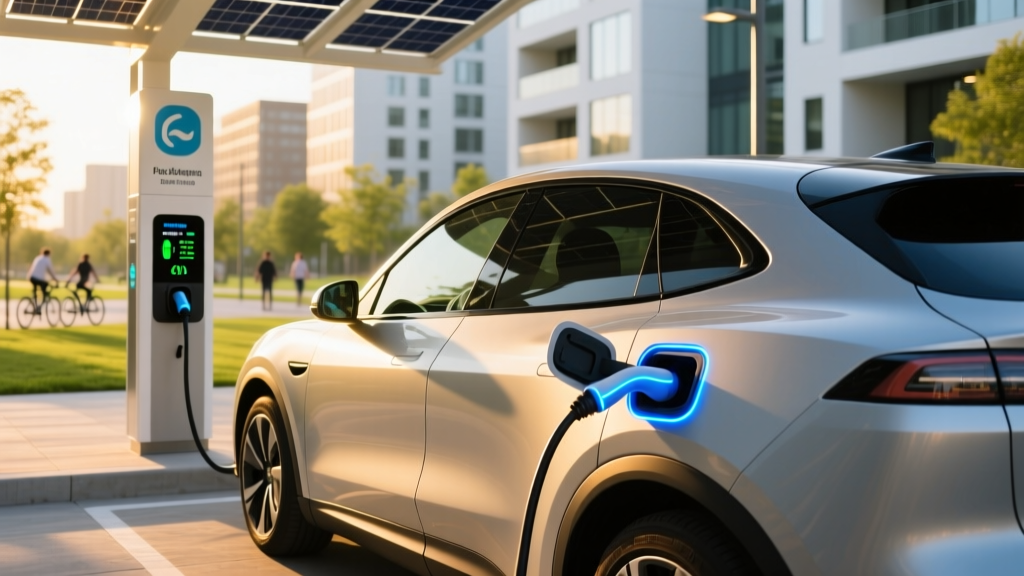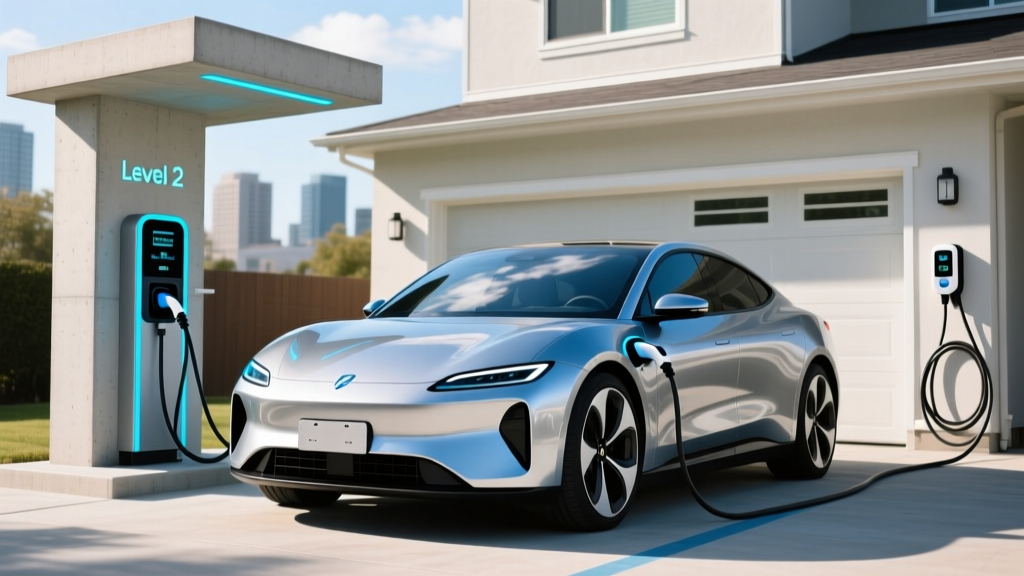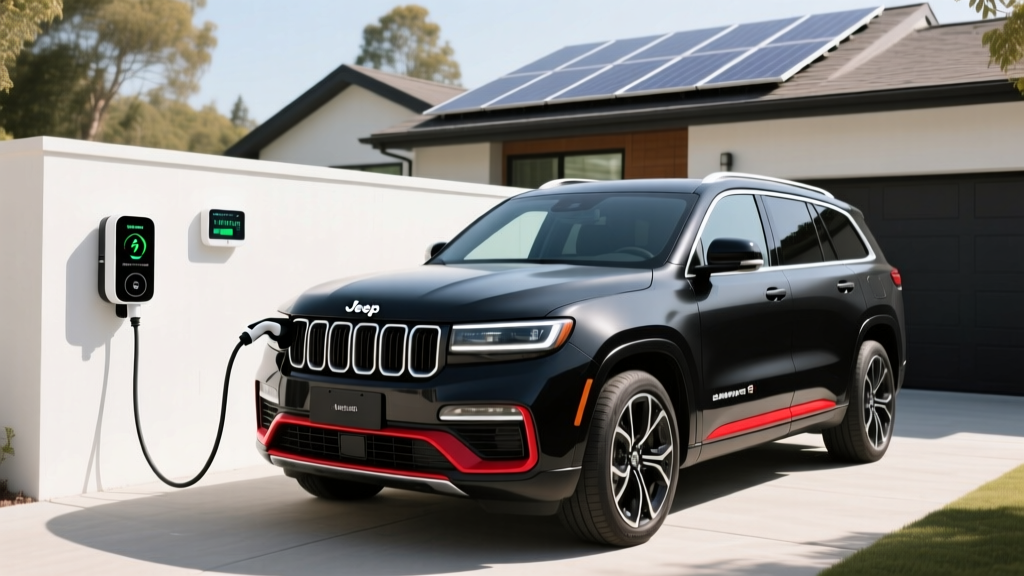
The 2025/2026 Jeep Wagoneer S is Stellantis' first serious battery-electric SUV, built on the STLA Large platform with an eye toward the luxury EV crowd currently buying Tesla Model X and BMW iX. But before you sign the paperwork, the real question isn't just how far it goes — it's whether your home, your commute, and your wallet are set up to support it. This guide breaks down the Wagoneer S range, the charging hardware it demands, and exactly what a Level 2 home installation will cost in 2026.
Wagoneer S Range: EPA Sticker vs Real-World Miles
The Jeep Wagoneer S (in its initial trim configurations) targets an EPA-estimated range between 300 and 400 miles, depending on battery pack size and drivetrain. The launch-edition models lean toward the upper end with a ~100 kWh (usable) battery pack and dual-motor AWD.
EPA 400 mi (top trim, ideal conditions). Expect ~320–350 mi on a highway-heavy road trip at 70 mph. In sub-30°F weather, plan for 250–290 mi before you're hunting for a charger. Battery preconditioning helps, but cold chemistry losses are physics, not marketing.
That 400-mile figure assumes moderate temperatures, mixed city/highway driving, and conservative speeds. Push 80 mph on I-70 in January, and you'll watch the state-of-charge (SoC) drop noticeably faster. This isn't a flaw — it's how every lithium-ion pack behaves. The key is sizing your charging setup so that a 10–80% session at home or on the road takes minutes, not hours.
Charging Levels Explained: kW, Miles Per Hour, and 10–80% Times
Before picking equipment, you need to understand the three charging tiers. kW (kilowatts) measures power — the rate at which energy flows. kWh (kilowatt-hours) measures energy — the total capacity of the battery. Think of kW as the width of the hose and kWh as the size of the tank.
| Level | Voltage | Power (kW) | Miles of Range Per Hour | 10–80% Time (~100 kWh Pack) |
|---|---|---|---|---|
| Level 1 | 120V | 1.0–1.4 kW | 3–5 mi/hr | ~70–90 hours (not practical) |
| Level 2 | 240V | 7.2–19.2 kW | 20–60 mi/hr | ~5–10 hours |
| DC Fast Charge | 400–800V DC | 50–250+ kW | 150–500+ mi/hr | ~20–35 minutes |
The Wagoneer S supports DC fast charging at peak rates north of 150 kW (with STLA Large platform vehicles targeting up to 200+ kW on capable chargers). On a 350 kW Electrify America or Tesla Supercharger V4 stall, you can expect a 10–80% session in roughly 25–33 minutes, though the charge curve tapers significantly above 80% SoC to protect battery health. Sustained rates matter more than peak — expect an average of ~110–130 kW across a typical 10–80% session.
At home on a 48-amp (11.5 kW) Level 2 charger, a full overnight session adds roughly 35–45 miles of range per hour of charging. An empty-to-full charge takes about 9–10 hours. This is the sweet spot for daily use: plug in when you get home, wake up to a full battery.
Home Charger Installation: Cost, Electrical Requirements & Panel Upgrades
Installing a Level 2 home charger isn't plug-and-play. It requires a dedicated 240V circuit, proper wire gauge, and often a panel assessment. Here's what you're looking at financially.
| Component | Low End | High End | Notes |
|---|---|---|---|
| Level 2 Charger Equipment | $350 | $750 | Smart Wi-Fi chargers, 32A–48A |
| Electrician Labor | $500 | $1,500 | Depends on run length and wall type |
| Permit & Inspection | $50 | $300 | Varies by municipality |
| Electrical Panel Upgrade (if needed) | $1,500 | $3,500 | 100A → 200A service upgrade |
| Total (no panel upgrade) | $900 | $2,550 | Most homes with 200A service |
| Total (with panel upgrade) | $2,400 | $6,050 | Older homes with 100A panels |
Electrical Requirements
A 48-amp Level 2 charger requires a 60-amp dedicated circuit (NEC code requires circuits rated at 125% of continuous load). That means 6 AWG copper wire for most runs, a 240V NEMA 14-60 outlet or a hardwired connection, and a panel with at least two open breaker slots. If your home has a 100-amp main panel that's already near capacity, you'll need a service upgrade to 200 amps — a significant but not uncommon expense.
Do You Need a Panel Upgrade?
Run a load calculation (your electrician will do this per NEC Article 220). Homes built after 2000 typically have 200A service with headroom. Homes from the 1960s–1980s often have 100A or 150A panels that may max out when you add a 60A EV circuit, especially if you already have electric range, dryer, and HVAC. Budget for the possibility.
Safety & Code Considerations
- Dedicated circuit: Never share the EV charger circuit with other appliances.
- GFCI protection: Required for outdoor installations per NEC 2023/2026 codes. Some chargers have built-in GFCI; otherwise, a GFCI breaker is needed.
- Outdoor rating: If mounting outside, ensure the charger is NEMA 4-rated for weather resistance.
- Permit: Most jurisdictions require an electrical permit and inspection. Skipping this can void home insurance claims.
- Smart load management: Devices like the Emporia V2 or Span panel can dynamically limit charger draw to avoid panel overload without a full upgrade.
Connector Compatibility: NACS, CCS1, and the Adapter Landscape
The Wagoneer S launches with the CCS1 (Combined Charging System) connector standard on most Stellantis EVs. However, the industry is rapidly shifting toward the NACS (North American Charging Standard) used by Tesla, and by 2026, most legacy automakers have either adopted NACS natively or offer adapters.
| Network | Connector | Wagoneer S Access |
|---|---|---|
| Electrify America | CCS1 | Native — plug and charge |
| EVgo | CCS1 / NACS | Native CCS1 or NACS adapter |
| Tesla Supercharger | NACS | Requires CCS-to-NACS adapter (~$200–$250) |
| ChargePoint (public) | CCS1 / NACS | Check station listing — most have CCS1 |
| Home Level 2 (J1772) | J1772 / NACS | J1772 native; NACS home chargers need adapter |
The practical move in 2026: buy a CCS1-native home charger (most Level 2 units still ship with J1772/CCS1 connectors) and invest in a quality CCS-to-NACS adapter from an approved supplier like Lectron or Tesla's official adapter (if Stellantis enables Supercharger access for the Wagoneer S). This gives you access to both Electrify America's 350 kW stalls and Tesla's Supercharger network — the two largest DC fast-charging backbones in the U.S.
Always confirm adapter compatibility with your specific model year. Some adapters limit charge rates to 150 kW even on 350 kW chargers, which adds 5–10 minutes to a 10–80% session.
Cost to Charge: Home vs Public vs Gas per Mile
Electricity pricing varies enormously by region, utility, and time of day. Here are realistic 2026 scenarios for a Wagoneer S with a ~100 kWh battery and 350-mile real-world range.
| Scenario | $/kWh | Cost for 10–80% (70 kWh) | Cost Per Mile | Equivalent Gas Price (at 25 MPG) |
|---|---|---|---|---|
| Home Off-Peak (utility rate) | $0.08–$0.12 | $5.60–$8.40 | $0.02–$0.03 | $0.50–$0.75/gallon |
| Home Standard Rate | $0.14–$0.18 | $9.80–$12.60 | $0.03–$0.04 | $0.75–$1.00/gallon |
| Public Level 2 (ChargePoint, etc.) | $0.25–$0.40 | $17.50–$28.00 | $0.05–$0.08 | $1.25–$2.00/gallon |
| DC Fast Charge (Electrify America) | $0.35–$0.55 | $24.50–$38.50 | $0.07–$0.11 | $1.75–$2.75/gallon |
| Gas Vehicle (25 MPG, $3.50/gal) | — | — | $0.14 | $3.50/gallon |
The math is clear: if you charge at home on off-peak rates (most utilities offer time-of-use plans), the Wagoneer S costs roughly $0.02–$0.03 per mile — about one-fifth the fuel cost of a comparable gas SUV getting 25 MPG. Even at public DC fast chargers, you're typically still saving money versus premium gasoline. The savings compound: 12,000 miles per year at home rates saves roughly $1,300–$1,500 annually versus gas.
Check your utility for EV-specific time-of-use rates. Many offer super-off-peak windows (11 PM–6 AM) at $0.06–$0.09/kWh, which is where the economics really shine.
Best Level 2 Home Chargers for the Wagoneer S (2026 Picks)
With a ~100 kWh battery, you want a 48-amp charger on a 60-amp circuit for maximum Level 2 speed. Here are three proven units that pair well with the Wagoneer S.
ChargePoint Home Flex (NEMA 14-50 or Hardwired)
- Power Output: Up to 12 kW (50A) on a 60A circuit; adjustable down to 16A
- Connector: J1772 (CCS1 compatible)
- Cable Length: 23 feet
- Smart Features: Wi-Fi, app scheduling, Alexa, energy tracking, utility integration
- Price: ~$550–$650
- Best For: Flexibility — adjustable amperage works even on smaller panels
Emporia Vue EV Charger
- Power Output: Up to 11.5 kW (48A) on a 60A circuit
- Connector: J1772 (CCS1 compatible)
- Cable Length: 24 feet
- Smart Features: Wi-Fi, real-time energy monitoring, solar integration, load management with Emporia panel monitor
- Price: ~$400–$500
- Best For: Budget-conscious buyers who want energy visibility and solar pairing
Tesla Wall Connector (Universal)
- Power Output: Up to 11.5 kW (48A) on a 60A circuit
- Connector: NACS (with built-in J1772 adapter on universal model)
- Cable Length: 24 feet
- Smart Features: Wi-Fi, OTA updates, power sharing between two units, load management
- Price: ~$450–$600
- Best For: Multi-EV households with a mix of Tesla and CCS vehicles
For the Wagoneer S specifically, the ChargePoint Home Flex is the pragmatic choice. Its adjustable amperage means you can set it to 32A (on a 40A circuit) if your panel can't handle 60A, and still get ~8 hours for a 10–80% charge. The J1772 connector works natively with the CCS1 inlet. If Stellantis enables NACS Supercharger access for the Wagoneer S via software update in 2026, you can always add a NACS adapter for public charging without swapping your home unit.
Federal Tax Credits and Incentives for Home Charging
The federal Alternative Fuel Vehicle Refueling Property Credit (IRS Form 8911) can cover up to 30% of home charger equipment and installation costs, capped at $1,000, for installations in qualifying census tracts (typically rural or low-income areas). Eligibility depends on your address — check the IRS guidelines or consult a tax professional.
Additionally, many utilities offer rebates of $250–$750 for installing a smart Level 2 charger, and some states provide separate incentives. Check AFDC's state incentive database for your area. These can bring your net installation cost well below $1,000 even without a panel upgrade.
For the Wagoneer S itself, the §30D Clean Vehicle Credit may apply — up to $7,500 depending on battery sourcing, MSRP caps ($80,000 for SUVs), and buyer income limits ($300,000 joint / $150,000 single). Point-of-sale transfer is available, reducing the purchase price directly at the dealer. Always verify current-year eligibility, as critical-mineral and battery-component sourcing rules tighten annually.
Wagoneer S Charging FAQ
How much does it cost to install a home EV charger for the Wagoneer S?
Expect $900–$2,550 for a standard installation (equipment, electrician, permit) if your home has a 200A panel with spare capacity. If you need a panel upgrade from 100A to 200A, add $1,500–$3,500, bringing the total to $2,400–$6,050. Get at least three quotes from licensed electricians.
How fast will each charging level add range to the Wagoneer S?
Level 1 (120V): roughly 3–5 miles per hour — essentially unusable for a 100 kWh battery. Level 2 (240V, 48A): about 35–45 miles per hour. DC Fast Charge (150+ kW): roughly 150–300+ miles per hour at peak, tapering above 80% SoC.
Which connector and charger is compatible with the Wagoneer S?
The Wagoneer S uses a CCS1 connector for DC fast charging and J1772 for Level 2 AC charging. Most public Electrify America and EVgo stations have CCS1 cables. For Tesla Supercharger access, you'll need a CCS-to-NACS adapter. At home, any J1772 Level 2 charger works natively.
How much does charging the Wagoneer S cost per mile vs gas?
At home off-peak rates ($0.08–$0.12/kWh), you're looking at $0.02–$0.03 per mile. A comparable gas SUV at 25 MPG with $3.50/gallon fuel costs $0.14 per mile. That's a 75–85% reduction in energy cost per mile when charging at home.
What electrical upgrades might I need for a Level 2 charger?
You need a dedicated 240V circuit (60A for a 48A charger). If your panel lacks two open slots or sufficient amperage headroom, you may need a panel upgrade (100A to 200A) or a smart load-management device. A licensed electrician should perform a NEC Article 220 load calculation before installation.
Can I use a Tesla Supercharger with the Wagoneer S?
As of 2026, Stellantis has been working toward Supercharger network access for its EVs via adapter. Confirm with your dealer whether the Wagoneer S is approved for Supercharger use with a CCS-to-NACS adapter. If approved, expect charge rates up to 150 kW on V3 stalls and potentially higher on V4 stalls.
How long does a full home charge take for the Wagoneer S?
On a 48-amp (11.5 kW) Level 2 charger, a full 0–100% charge of the ~100 kWh battery takes approximately 9–10 hours. In practice, most owners charge from 20–80%, which takes about 5–6 hours — easily done overnight.
Sources: EPA Fuel Economy, IRS Clean Vehicle Credits, AFDC State Incentive Database.