Volkswagen's transition to the North American Charging Standard (NACS) connector has reshaped how ID.4 owners charge at home and on the road. If you own a 2025–2026 VW ID.4 or are shopping for one, you now have access to Tesla Superchargers via a factory-approved NACS adapter — a significant expansion of the DC fast-charging network available to you. But the switch also raises practical questions: What adapter do you need? How fast can your ID.4 actually charge? What does a home Level 2 setup cost in 2026?
This guide walks through every charging scenario VW ID.4 owners face — from the electrical panel in your garage to the Supercharger stall on a road trip — with exact numbers, equipment picks, and cost breakdowns.
VW's NACS Transition: What Changed for ID.4 Owners
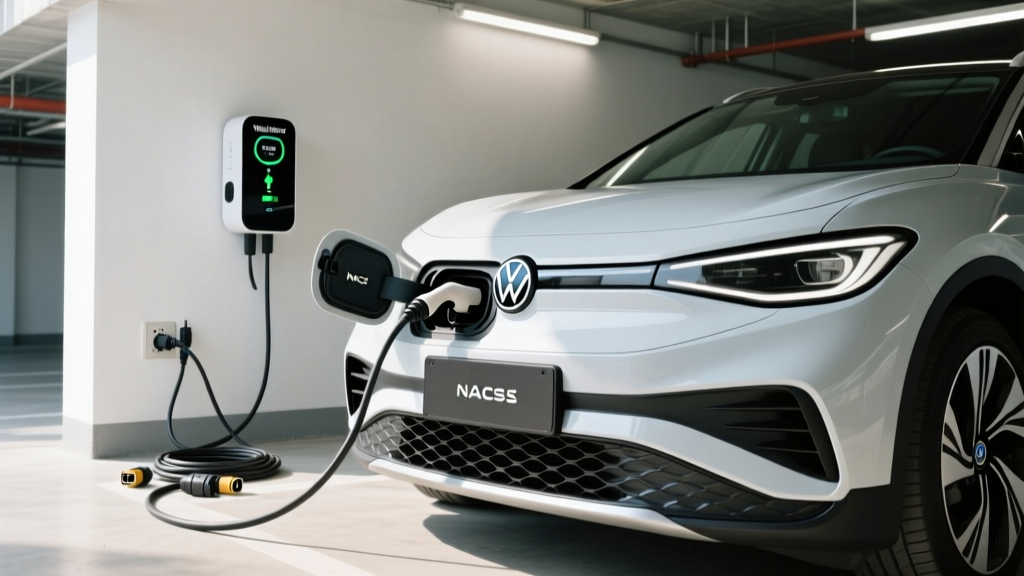
Starting with the 2025 model year, Volkswagen began equipping the ID.4 with a native NACS charge port, replacing the CCS1 port used on 2021–2024 models. By the 2026 model year, all new ID.4 vehicles sold in North America ship with NACS. This matters because it grants direct access to the Tesla Supercharger network — over 25,000 stalls in the U.S. and Canada — without an adapter.
If you own a 2021–2024 ID.4 with a CCS1 port, Volkswagen offers an official CCS1-to-NACS adapter (approximately $200–$250 through dealerships) that enables Supercharger access. Third-party adapters from brands like Lectron and A2Z are also available, though VW recommends the OEM unit for warranty compliance.
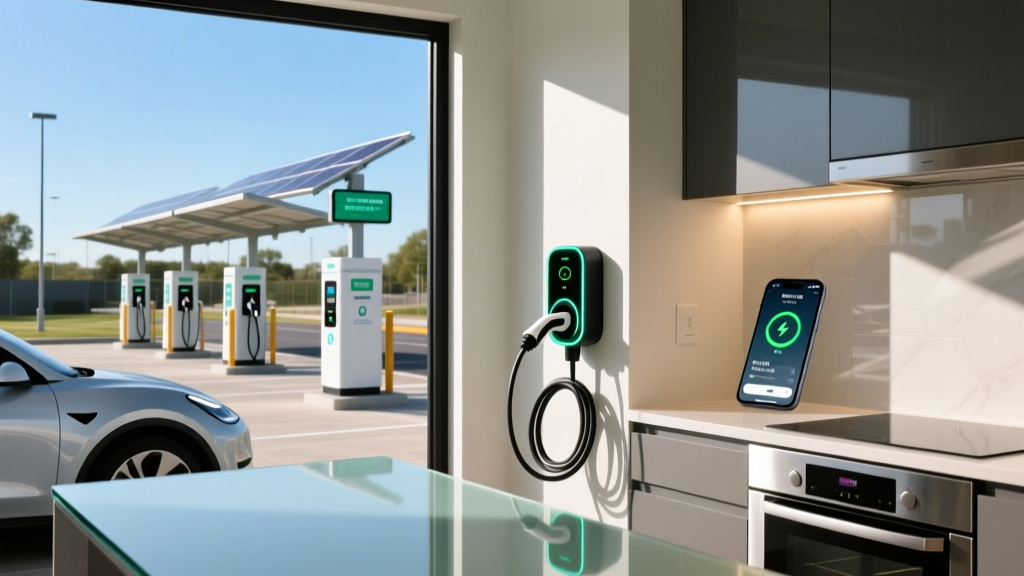
For home Level 2 charging, the connector on your wall charger matters too. Most 2026 home chargers now ship with NACS connectors or offer dual-cable options. CCS1-port ID.4 owners can use a NACS-to-CCS1 adapter at home, or simply install a J1772 charger with the vehicle's included J1772-to-CCS1 adapter.
Charging Levels Explained: Speeds and Range Added
EV charging falls into three tiers. Understanding the difference between kW (power — how fast energy flows) and kWh (energy — how much the battery stores) is essential. Think of kW as the width of a hose and kWh as the size of the bucket.
| Level | Voltage | Power (kW) | Miles of Range Added per Hour | Best For |
|---|---|---|---|---|
| Level 1 (120V) | 120V AC | 1.0–1.4 kW | 3–5 mi/hr | Overnight trickle, emergency top-ups |
| Level 2 (240V) | 240V AC | 7.2–11.5 kW | 22–37 mi/hr | Daily home charging, workplace |
| DC Fast Charging | 200–800V DC | 50–350 kW | 150–800+ mi/hr (peak) | Road trips, rapid top-ups |
The 2026 VW ID.4 Pro S has an 82 kWh usable battery (NMC chemistry) and an EPA-estimated range of 275 miles. Here's what charging looks like in practice across each level:
- Level 1 (120V, 12A): Adds roughly 4 miles of range per hour. A full charge from 10% to 100% takes over 60 hours — impractical for daily use but adequate if you drive under 30 miles daily and can plug in overnight.
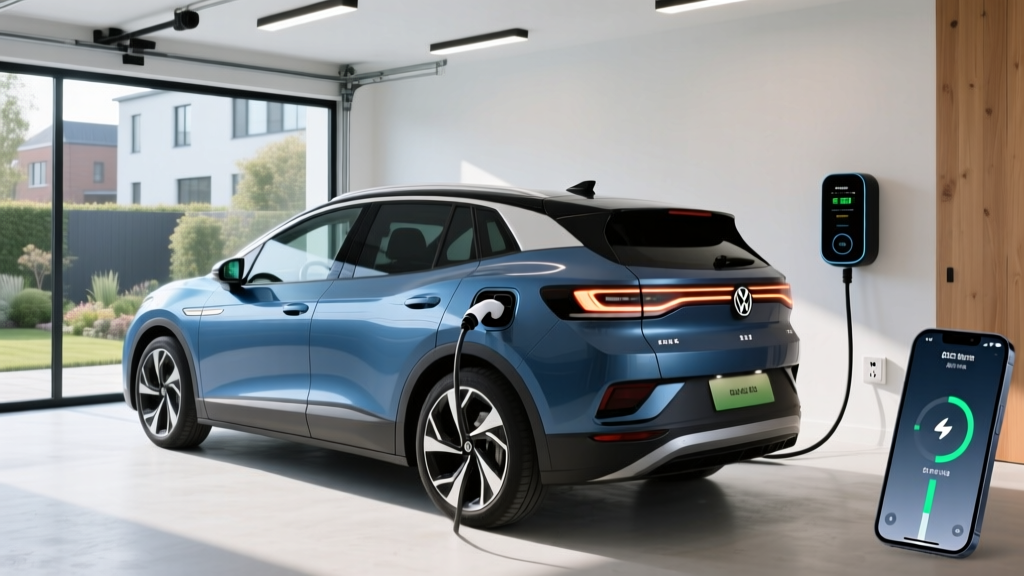
- Level 2 (240V, 48A): The ID.4's onboard charger accepts up to 11 kW AC. At this rate, a 10%–80% charge takes approximately 5.5 hours, adding about 33 miles of range per hour.
- DC Fast Charging (NACS Supercharger, 170 kW peak): The 2026 ID.4 peaks at 170 kW on DC fast chargers. In real-world conditions, a 10%–80% session takes roughly 28–32 minutes. Expect the charge rate to taper significantly above 80% — the last 20% can take as long as the first 60%.
Home Charger Installation: Requirements and Costs
A Level 2 home charger is where most ID.4 owners do 80%+ of their charging. Here's what the installation actually involves and costs in 2026.
Electrical Requirements
For optimal Level 2 charging at 11 kW (matching the ID.4's onboard charger maximum), you need a 240V circuit rated at 48 amps. Per National Electrical Code (NEC), continuous loads like EV charging must use only 80% of a circuit's rated capacity, so you'll need a 60-amp breaker.
If your electrical panel is at or near capacity (common in homes built before 2000 with 100-amp service), you may need a panel upgrade to 200 amps. This is the single largest variable in home charging costs.
Installation Cost Breakdown
| Component | Basic Install (Near Panel) | Complex Install (Panel Upgrade + Long Run) |
|---|---|---|
| Level 2 Charger Equipment | $400–$650 | $400–$650 |
| Electrician Labor (2–4 hrs typical) | $300–$600 | $800–$1,500 |
| Electrical Permit | $50–$150 | $50–$200 |
| Wiring/Conduit (if 50+ ft run) | $100–$300 | $300–$800 |
| Panel Upgrade (100A → 200A, if needed) | N/A | $1,500–$3,500 |
| Total Estimated Cost | $850–$1,700 | $3,050–$6,650 |
The wide range reflects real-world variability. A homeowner with a 200-amp panel, a garage adjacent to the electrical panel, and drywall (not concrete) walls might pay under $1,000 total. A homeowner needing a panel upgrade, a 75-foot conduit run through an attic, and a post-mounted outdoor pedestal could approach $5,000–$6,000.
Always hire a licensed electrician and pull a permit. Unpermitted EV charger installations can void homeowner's insurance claims and create fire liability. The NEC requires a dedicated circuit (not shared with other appliances) and GFCI protection for outdoor installations.
Connector Compatibility: NACS, CCS1, and What You Need
The connector landscape in 2026 has largely consolidated around NACS, but legacy CCS1 vehicles and chargers remain common. Here's how compatibility breaks down for VW owners.
| Connector Standard | 2021–2024 ID.4 (CCS1 Port) | 2025–2026 ID.4 (NACS Port) |
|---|---|---|
| NACS (Tesla Supercharger) | Requires CCS1-to-NACS adapter | Native — plug directly |
| CCS1 (Electrify America, EVgo) | Native — plug directly | Requires NACS-to-CCS1 adapter |
| CHAdeMO | Not compatible (no adapter available) | Not compatible |
| J1772 (Level 2 public) | Use included J1772 adapter | Use included J1772 adapter or NACS-J1772 adapter |
Key takeaway: 2025–2026 ID.4 owners will primarily use NACS for DC fast charging and need a NACS-to-CCS1 adapter only for older Electrify America stations that haven't been retrofitted. VW includes a J1772 adapter with every ID.4 for public Level 2 charging at destinations like hotels and shopping centers.
Cost to Charge: Home vs. Public vs. Gas Comparison
One of the strongest arguments for EV ownership is fuel cost savings, but the math depends heavily on where and when you charge.
| Scenario | Rate ($/kWh) | Cost for 10–80% Charge (57 kWh) | Cost per Mile |
|---|---|---|---|
| Home Off-Peak (utility time-of-use) | $0.08–$0.12 | $4.56–$6.84 | $0.03–$0.04 |
| Home Standard Rate | $0.14–$0.18 | $7.98–$10.26 | $0.05–$0.06 |
| Public Level 2 (ChargePoint, etc.) | $0.25–$0.40 | $14.25–$22.80 | $0.09–$0.14 |
| DC Fast Charging (Supercharger/EA) | $0.30–$0.50 | $17.10–$28.50 | $0.11–$0.17 |
| Gas Equivalent (25 MPG avg, $3.40/gal) | — | — | $0.14 |
At home on off-peak rates, the ID.4 costs roughly $0.03–$0.04 per mile to "fuel" — about one-quarter the cost of a comparable gas SUV at 25 MPG. Even on standard residential rates, you're paying $0.05–$0.06 per mile. The savings narrow when relying exclusively on public DC fast charging at $0.35–$0.50/kWh, where costs can match or exceed gasoline.
The financial case for EV ownership is strongest when you can charge at home. According to fueleconomy.gov, the 2026 ID.4 Pro S achieves 104 MPGe combined, translating to approximately 32 kWh per 100 miles of driving.
Recommended Home Chargers for VW ID.4 (2026 Picks)
Not all Level 2 chargers are equal. For the ID.4's 11 kW onboard charger, a 48-amp charger maximizes your charging speed. Here are three proven options at different price points:
Emporia Vue Level 2
- Power Output: 48A / 11.5 kW (240V)
- Connector: NACS (CCS1 adapter included)
- Cable Length: 24 ft
- Smart Features: Wi-Fi, app scheduling, solar integration, energy monitoring
- Price: ~$400
- Best For: Budget-conscious buyers who want smart scheduling for off-peak rates
ChargePoint Home Flex
- Power Output: Up to 50A / 12 kW (adjustable via DIP switches)
- Connector: NACS or J1772 (configurable)
- Cable Length: 23 ft
- Smart Features: Wi-Fi, Alexa integration, app scheduling, circuit-sharing for two chargers
- Price: ~$550–$650
- Best For: ID.4 owners wanting a proven, UL-listed unit with flexible amperage
Wall Connector (Tesla, 3rd Gen)
- Power Output: 48A / 11.5 kW (240V)
- Connector: NACS native
- Cable Length: 24 ft
- Smart Features: Wi-Fi, OTA updates, load sharing, power-sharing between units
- Price: ~$475
- Best For: Households with both a VW and a Tesla — seamless NACS compatibility
All three chargers are hardwired (no plug), which is the preferred installation method for 48A+ circuits and avoids the need for a NEMA 14-50 receptacle. Hardwired installations also typically satisfy NEC requirements without a GFCI breaker (the charger has built-in ground-fault protection), saving $50–$100 on the breaker itself.
Safety, Code, and Installation Best Practices
EV charging draws sustained high current for hours — more like a continuous industrial load than a typical household appliance. Proper installation isn't optional.
- Dedicated Circuit: Your charger must have its own breaker — no sharing with a dryer, HVAC, or workshop outlet.
- GFCI Protection: Required for outdoor receptacles (NEMA 14-50). Hardwired chargers typically have internal GFCI, but local codes vary. Check with your electrician and local AHJ (Authority Having Jurisdiction).
- Outdoor Rating: If mounting outside, confirm the charger is rated NEMA 4 (weatherproof). All three picks above carry NEMA 4 ratings.
- Cable Management: Use a holster or cable reel to prevent tripping hazards and protect the connector from ground moisture and debris.
- Permit and Inspection: Most jurisdictions require an electrical permit for a new 240V circuit. The inspection verifies wire gauge, breaker sizing, and grounding — it's your protection against substandard work.
Frequently Asked Questions
How much does it cost to install a home EV charger for a VW ID.4?
A straightforward Level 2 installation (240V, 60-amp circuit, short wire run, no panel upgrade) typically costs $850–$1,700 including equipment, electrician labor, and permit. If your home needs a panel upgrade from 100A to 200A service, total costs can reach $3,000–$6,500. Always get 2–3 quotes from licensed electricians.
How fast will each charging level add range to my ID.4?
Level 1 (120V) adds about 3–5 miles per hour. Level 2 (240V, 48A) adds approximately 33 miles per hour, fully charging the 82 kWh battery in about 8 hours. DC fast charging at 170 kW can add roughly 150+ miles in 15 minutes under ideal conditions, with a 10–80% session taking 28–32 minutes.
Which connector is compatible with my VW ID.4?
2025–2026 ID.4 models have a native NACS port and plug directly into Tesla Superchargers and NACS-equipped home chargers. 2021–2024 models use CCS1 and require a CCS1-to-NACS adapter for Supercharger access. All model years can use J1772 public Level 2 chargers with the included adapter.
How much does charging an ID.4 cost per mile compared to gas?
Home charging on off-peak rates costs $0.03–$0.04 per mile — roughly 75% less than a 25 MPG gas SUV at $3.40/gallon ($0.14/mile). Even on standard residential rates ($0.14–$0.18/kWh), you'll pay $0.05–$0.06 per mile. Public DC fast charging at $0.35–$0.50/kWh narrows the gap to $0.11–$0.17 per mile.
What electrical upgrades might I need for a home charger?
The most common upgrade is a panel replacement from 100-amp to 200-amp service, costing $1,500–$3,500. You'll also need a dedicated 60-amp, 240V breaker. If your panel is full, a sub-panel or tandem breakers may be alternatives. An electrician performs a load calculation to determine if an upgrade is truly necessary.
Can I charge my NACS ID.4 at Electrify America stations?
Yes, but you'll need a NACS-to-CCS1 adapter for Electrify America stalls that still use CCS1 connectors. EA has been retrofitting stations with NACS cables through 2025–2026, but coverage is incomplete. Keep a NACS-to-CCS1 adapter in your frunk for non-Tesla DC fast-charging networks. VW ID.4 vehicles also include complimentary charging credits on Electrify America — check your EA account for current promotional terms.