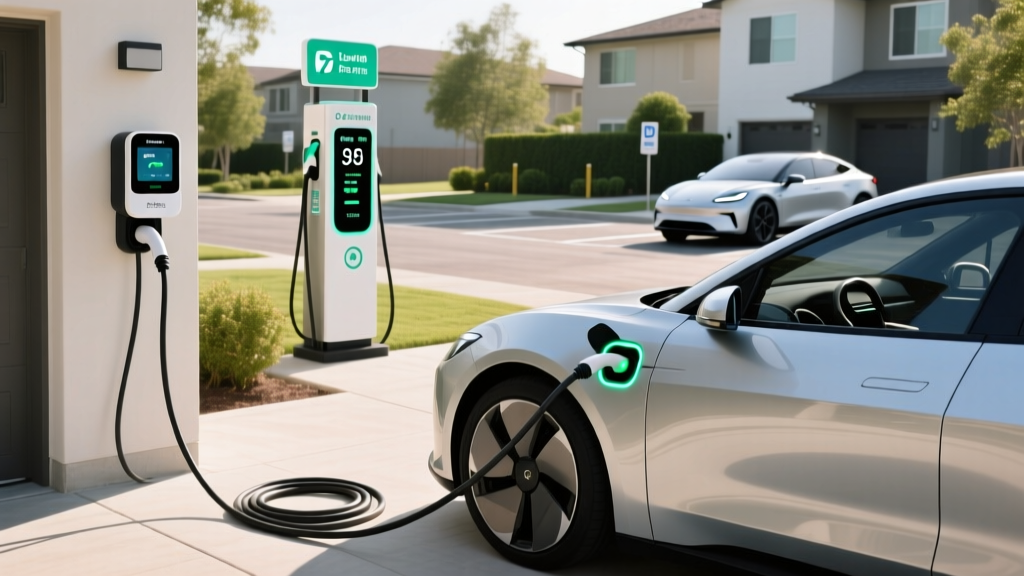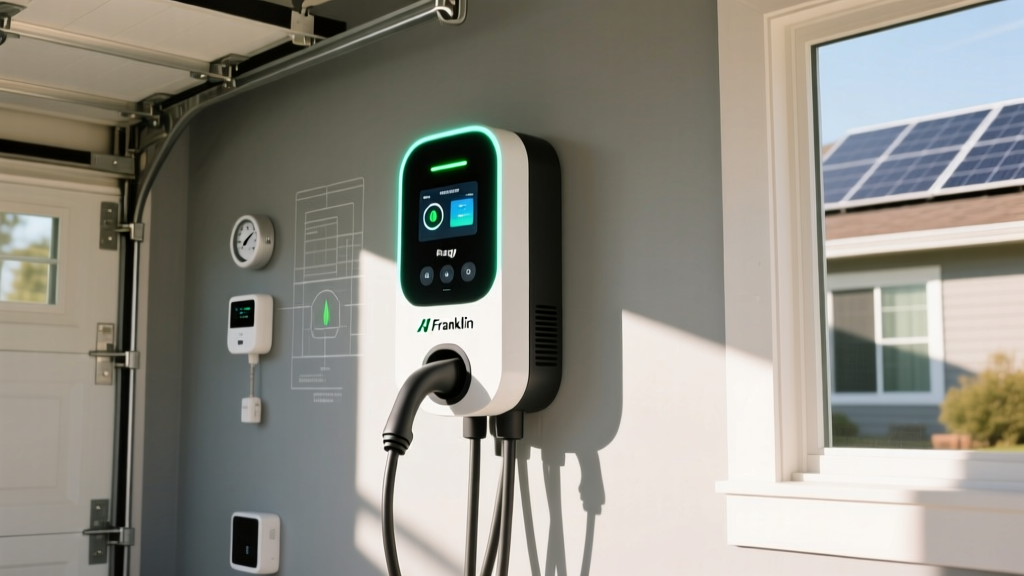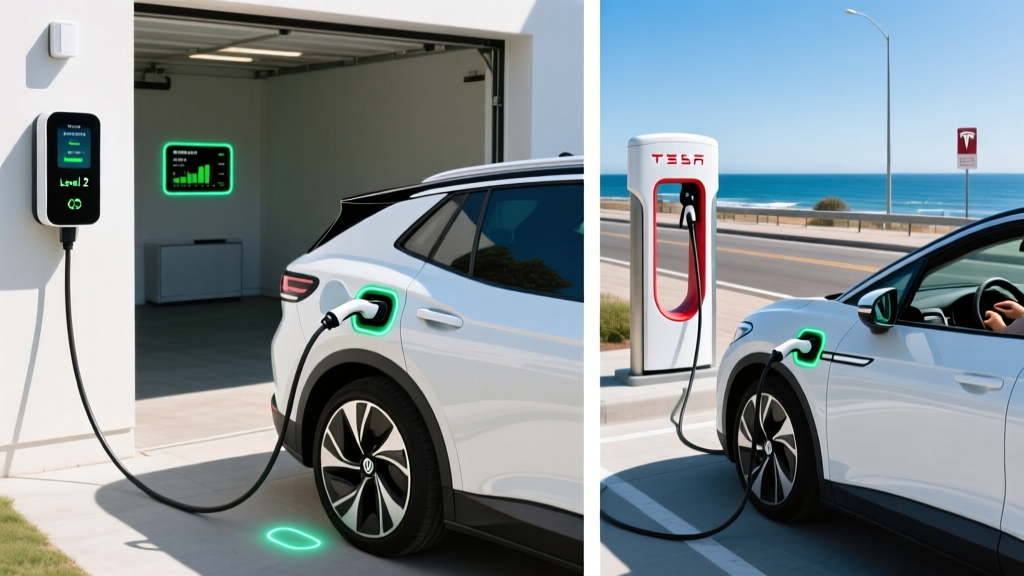
Volkswagen ID.4 owners in 2026 face a charging landscape that has shifted dramatically since the SUV launched. With Tesla opening its Supercharger network to non-Tesla EVs via the North American Charging Standard (NACS), and VW transitioning new models to the NACS port, many ID.4 drivers are asking a practical question: can I use a VW ID.4 Tesla Supercharger adapter to access the largest fast-charging network in the country, and what do I need to know about charging at home?
This guide breaks down every charging scenario for the ID.4 — from the NACS adapter situation and Supercharger access, to home Level 2 installation costs, to the real math on what you'll pay per mile compared to a gas crossover. We'll use the 2026 VW ID.4 with its 82 kWh usable battery (NMC chemistry), EPA-rated 291 miles of range (Pro S AWD), and 170 kW peak DC fast-charge capability as our reference point.
The VW ID.4 Tesla Supercharger Adapter Situation in 2026
Here's where things stand: Volkswagen began equipping new ID.4 models with a native NACS charge port starting with the 2025 model year. If you purchased a 2025 or 2026 ID.4, your vehicle has a NACS port and can plug directly into a Tesla Supercharger (V3 and V4 stalls) without any adapter — no translation hardware needed. Tesla's Supercharger network now lists compatible non-Tesla EVs in the Tesla app, and the ID.4 is included.
If you own a 2021–2024 VW ID.4, your vehicle has a CCS1 (Combined Charging System) port. To access Tesla Superchargers, you need a CCS-to-NACS adapter. Tesla sells an official adapter (roughly $250) that is compatible with vehicles on Tesla's approved list. As of early 2026, the VW ID.4 is on that approved list, meaning you can purchase the adapter, register it in the Tesla app, and charge at Supercharger stalls that have been enabled for non-Tesla vehicles (not every stall at every station is enabled — check the Tesla app before you drive there).
| Model Year | Native Port | Supercharger Access | Adapter Required? |
|---|---|---|---|
| 2021–2024 ID.4 | CCS1 | Via adapter at enabled stalls | Yes — CCS-to-NACS (~$250) |
| 2025–2026 ID.4 | NACS | Direct plug-in | No adapter needed |
Real-world caveat: Supercharger stalls enabled for non-Tesla vehicles may have shorter cable reach. The Tesla Supercharger cable is designed for a Tesla's rear-quarter charge port. The ID.4's port is on the rear passenger side, which generally reaches, but at some older V2 stalls the cable may be tight. Always pull in carefully and check cable length before committing to a spot.
Charging Levels Explained: Speeds, kW, and Range Per Hour
Before we get into costs and installation, let's establish the three charging tiers every ID.4 owner should understand. The critical distinction: kW (kilowatts) measures power — how fast energy flows into your battery. kWh (kilowatt-hours) measures energy — how much your battery holds. Think of kW as the flow rate of a hose and kWh as the size of the bucket.
| Level | Power (kW) | Voltage / Amperage | Miles of Range Added Per Hour | Typical Use Case |
|---|---|---|---|---|
| Level 1 (120V outlet) | ~1.4 kW | 120V / 12A | ~4–5 miles/hr | Overnight trickle, emergencies |
| Level 2 (240V home/public) | 7.2–11.5 kW | 240V / 32–48A | ~25–40 miles/hr | Daily home charging, workplace |
| DC Fast Charging | 50–170 kW peak | 400V+ DC direct | ~150–350 miles/hr (at peak) | Road trips, highway corridors |
The ID.4's onboard charger maxes out at 11.5 kW on Level 2 AC charging. That means even if you install a 48-amp Level 2 charger capable of delivering 11.5 kW, you'll get the maximum AC charge speed the car can accept. On DC fast charging, the ID.4 peaks at approximately 170 kW under ideal conditions (warm battery, low state of charge), tapering significantly above 80% SoC to protect the NMC cells.
Real-World DC Fast-Charging Times
For the ID.4's 82 kWh battery, here's what 10–80% charging looks like at different DC fast-charger power levels:
- 170 kW peak ( Electrify America or Supercharger V3+): 10–80% in approximately 30–33 minutes. The ID.4 sustains above 100 kW through roughly 60% SoC before tapering.
- 50 kW DC fast charger: 10–80% in approximately 85–95 minutes. Slower but widely available in rural areas.
- 150 kW (typical V3 Supercharger sustained average): 10–80% in approximately 34–38 minutes. Real-world average accounts for the charge curve taper.
Cold-weather note: In temperatures below 40°F, expect 10–80% times to increase by 15–30% unless you precondition the battery. The ID.4 supports navigation-based preconditioning — set a Supercharger or DC fast charger as your destination and the thermal management system will warm the pack en route. Always use this feature.
Home Level 2 Charger Installation: Costs, Electrical Requirements, and Upgrades
How much does it cost to install a home EV charger? The honest answer spans a wide range, because the condition of your electrical panel and the distance from panel to garage or driveway are the biggest variables — not the charger itself.
Electrical Requirements for the ID.4
To unlock the ID.4's full 11.5 kW AC charging capability, you need a 240V circuit rated at 60 amps (which supports a continuous 48-amp charge, per the National Electrical Code's 80% rule for continuous loads). If your panel can't support a 60-amp breaker, a 50-amp circuit (40 amps continuous, 9.6 kW) is a common and still very capable fallback. You'll add roughly 32 miles of range per hour at 9.6 kW — enough to fully replenish the ID.4 overnight in about 8.5 hours.
Panel upgrade reality: Homes built before 2000 often have 100-amp or 150-amp main panels. Adding a 60-amp EV circuit may push total load beyond 80% of panel capacity — the threshold electricians use to determine if an upgrade is needed. A panel upgrade from 100A to 200A typically costs $1,500–$3,500 depending on your region, utility connection fees, and whether a new meter base is required. This is the single biggest surprise cost for new EV owners in older homes.
| Component | Typical Cost Range | Notes |
|---|---|---|
| Level 2 charger (hardware) | $400–$750 | 40A–48A smart charger, NACS or J1772/NACS combo |
| Electrician labor (standard install) | $500–$1,500 | Assumes panel to garage <30 ft, conduit run, 240V outlet or hardwire |
| Electrical permit | $50–$200 | Varies by municipality; required for code compliance |
| Panel upgrade (if needed) | $1,500–$3,500 | 100A→200A; not always required |
| Conduit/wire (long runs) | $200–$800 | Adds cost if charger is >50 ft from panel |
| Total (no panel upgrade) | $950–$2,450 | Most common scenario for homes with 200A panels |
| Total (with panel upgrade) | $2,450–$5,950 | Older homes with 100A service |
Always hire a licensed electrician and pull a permit. Unpermitted EV charger installations can void homeowner's insurance claims related to electrical fires and may fail a home inspection when you sell. The NEC requires a dedicated circuit for EV charging — you cannot share the circuit with other large appliances.
Safety and Code Considerations
- Dedicated circuit: Your Level 2 charger must be on its own breaker — no sharing with a dryer or HVAC.
- GFCI protection: The 2023 NEC update requires GFCI protection for outdoor receptacles used for EV charging. Hardwired chargers may have this built in; receptacle-based installs may need a GFCI breaker (adds $50–$120).
- Outdoor rating: If your charger is mounted outside or in an unenclosed carport, ensure it carries a NEMA 4 or NEMA 4X rating for weather resistance.
- NEMA 14-50 vs. hardwire: A NEMA 14-50 receptacle gives you portability (take the charger when you move), but hardwiring eliminates the GFCI breaker requirement in many jurisdictions and allows the full 48A continuous draw. Discuss both options with your electrician.
Recommended Level 2 Chargers for the VW ID.4
Below are three chargers we recommend for ID.4 owners based on power output, cable reach, smart features, and connector compatibility. Since 2025+ ID.4s have NACS ports and older models use CCS1 (J1772 for AC), your choice depends on model year.
ChargePoint Home Flex (NACS)
- Power output: Up to 12 kW (50A) on 240V — exceeds ID.4's 11.5 kW max, so you'll get full speed
- Cable length: 23 feet
- Connector: NACS (native for 2025+ ID.4)
- Smart features: Wi-Fi, ChargePoint app scheduling, Alexa integration, energy tracking
- Price: ~$550
- Best for: 2025–2026 ID.4 owners who want native NACS and app-based charge scheduling for off-peak rates
Emporia Level 2 Smart Charger
- Power output: Up to 11.5 kW (48A) on 240V — perfectly matched to ID.4
- Cable length: 24 feet
- Connector: J1772 (use with ID.4's included J1772-to-NACS adapter for 2025+ models, or plug directly into 2021–2024 CCS1/J1772 port)
- Smart features: Wi-Fi, Emporia app, integrates with Emporia home energy monitors, solar-aware scheduling
- Price: ~$400
- Best for: Budget-conscious owners and those with home solar who want to optimize charge timing
Tesla Wall Connector (NACS)
- Power output: Up to 11.5 kW (48A) on 240V
- Cable length: 24 feet
- Connector: NACS native
- Smart features: Wi-Fi, Tesla app, power-sharing with second Wall Connector on same circuit, firmware OTA updates
- Price: ~$475
- Best for: Households with a Tesla and an ID.4 — one charger serves both vehicles natively (2025+ ID.4) or via adapter (2021–2024)
Charging Cost Per Mile: ID.4 vs. a Gas Crossover
How much does charging cost per mile vs gas? Let's run the real numbers for the ID.4 against a comparable gas-powered compact SUV getting 28 MPG combined (a realistic figure for vehicles like the Toyota RAV4 AWD or Honda CR-V AWD).
The ID.4 Pro S AWD has an EPA efficiency rating of 104 MPGe combined, which translates to roughly 32 kWh per 100 miles (or 0.32 kWh/mile). We'll use that consumption figure across three charging scenarios:
| Scenario | Rate | ID.4 Cost/Mile | Gas SUV Cost/Mile ($3.40/gal) | Savings Per 1,000 Miles |
|---|---|---|---|---|
| Home (off-peak utility rate) | $0.13/kWh | $0.042 | $0.121 | $79 |
| Home (average US residential) | $0.17/kWh | $0.054 | $0.121 | $67 |
| Public Level 2 (network pricing) | $0.35/kWh | $0.112 | $0.121 | $9 |
| DC fast charging (EA/Supercharger) | $0.48/kWh | $0.154 | $0.121 | –$33 (gas is cheaper) |
The takeaway is clear: home charging is where EV economics shine. At off-peak residential rates, the ID.4 costs roughly one-third what a gas SUV costs per mile. But if you rely exclusively on DC fast charging at $0.48/kWh, you'll actually pay more per mile than the gas alternative. This is why home Level 2 installation isn't a luxury — it's the economic foundation of EV ownership.
Over 15,000 miles per year, a home-charged ID.4 at $0.13/kWh costs about $624 in electricity vs. $1,821 in gasoline for the 28 MPG crossover — a $1,197 annual savings before factoring in reduced maintenance (no oil changes, fewer brake replacements due to regenerative braking).
Public Charging Networks: Where the ID.4 Fits
Beyond Tesla Superchargers, the ID.4 has access to the broadest public charging ecosystem of any non-Tesla EV thanks to its CCS1 port (2021–2024) or NACS port (2025–2026) and VW's historical charging partnerships.
Electrify America: VW's legacy partner. Older ID.4 models came with complimentary EA charging credits. The EA network offers CCS1 connectors at up to 350 kW (the ID.4 will peak at 170 kW). Pricing averages $0.48–$0.56/kWh for guest users, or $0.36–$0.43/kWh with a Pass+ subscription ($7/month).
Tesla Superchargers: As detailed above, 2025+ ID.4s plug in natively; 2021–2024 models need the CCS-to-NACS adapter. Supercharger pricing averages $0.35–$0.48/kWh depending on location and time of day, and reliability remains the network's strongest advantage — stall uptime exceeds 98% according to Tesla's own reporting.
ChargePoint, EVgo, and others: The ChargePoint and EVgo networks offer both CCS1 and an increasing number of NACS connectors. Use the PlugShare or A Better Routeplanner apps to check connector availability at specific stations before you travel.
Which connector/charger is compatible with my EV? Here's the quick reference:
- 2025–2026 ID.4 (NACS port): Tesla Superchargers (no adapter), Electrify America NACS stalls, ChargePoint NACS stalls. For legacy CCS1 stations, you'll need a NACS-to-CCS adapter (several are available from brands like Lectron and A2Z, typically $150–$200).
- 2021–2024 ID.4 (CCS1 port): Electrify America, ChargePoint, EVgo, and other CCS networks directly. Tesla Superchargers require the CCS-to-NACS adapter (~$250 from Tesla).
Frequently Asked Questions
What electrical upgrades might I need for a home Level 2 charger?
The most common upgrade is a panel capacity increase from 100A to 200A, needed when your existing panel can't support an additional 50–60A breaker without exceeding 80% of rated capacity. Your electrician will perform a load calculation (Article 220 of the NEC) to determine if an upgrade is required. Other potential upgrades include running new conduit from the panel to your garage or driveway, installing a GFCI breaker for outdoor receptacles, and upgrading the meter base if your utility requires it for higher amperage service.
Can I use a Tesla Supercharger with my 2022 VW ID.4?
Yes, but you need Tesla's CCS-to-NACS adapter (~$250). After purchasing the adapter, add your ID.4 to the Tesla app using the adapter's serial number. Only Supercharger stalls that Tesla has enabled for non-Tesla vehicles will work — the Tesla app shows these as "available for non-Tesla EVs." Check station details before you drive there, as not every stall at a given location may be enabled.
How fast will Level 1 (120V) charging add range to the ID.4?
Approximately 4–5 miles of range per hour at 1.4 kW. A full charge from empty on Level 1 would take roughly 60+ hours — impractical for daily use but sufficient for topping up if you drive less than 30 miles per day and can plug in overnight. The ID.4 comes with a Level 1 charging cable; however, we strongly recommend installing a Level 2 charger for any owner who regularly drives more than 40 miles per day.
Is it cheaper to charge at home or at public DC fast chargers?
Home charging is dramatically cheaper. At the US average residential rate of ~$0.17/kWh, you'll pay about $0.054 per mile in the ID.4. At a typical DC fast-charger rate of $0.48/kWh, you'll pay $0.154 per mile — nearly three times more. If DC fast charging is your only option (apartment dwellers, street parkers), a gas hybrid may actually cost less per mile. This is why we consider home charging access a prerequisite for EV ownership economics to work.
Does the VW ID.4 qualify for the federal EV tax credit?
The 2026 VW ID.4 is assembled in Chattanooga, Tennessee, and may qualify for up to $7,500 under IRS §30D, but eligibility depends on your taxable income (capped at $150,000 single / $300,000 joint filer), the vehicle's MSRP (must be under $80,000 for SUVs — the ID.4 qualifies), and battery critical-mineral and component sourcing requirements that change annually. The credit can now be transferred to the dealer at point of sale as an upfront discount. Always verify current eligibility on IRS.gov and consult a tax professional before relying on the credit in your purchase decision.
Bottom Line: Charging the ID.4 in 2026
The VW ID.4 occupies one of the best charging-access positions of any non-Tesla EV on the market. If you're buying new (2025–2026), the native NACS port gives you seamless Supercharger access alongside full CCS infrastructure compatibility via adapter. If you own an earlier CCS1 model, the Tesla CCS-to-NACS adapter opens up the Supercharger network for road trips while Electrify America, ChargePoint, and EVgo cover your daily and regional needs.
Install a 48-amp Level 2 charger at home (budget $1,000–$2,500 if your panel has capacity), use off-peak utility rates, and your per-mile fuel cost drops to roughly $0.04–$0.05 — a fraction of what a gas crossover costs. According to fueleconomy.gov, the ID.4 Pro S AWD achieves 104 MPGe combined, making it one of the most efficient electric SUVs in its class. That efficiency, paired with home charging, is where the real ownership savings compound year over year.