If you own or are considering a Volkswagen ID.4, one of the most common questions in 2026 is whether you can tap into the Tesla Supercharger network. With VW officially adopting the North American Charging Standard (NACS) for future models and the Supercharger network opening to non-Tesla EVs, the answer is yes — but with important caveats about adapters, charge speeds, and connector compatibility. This guide breaks down exactly how ID.4 Tesla Supercharger access works, plus everything you need to know about home charging setup, public charging costs, and equipment picks.
How the VW ID.4 Connects to Tesla Superchargers
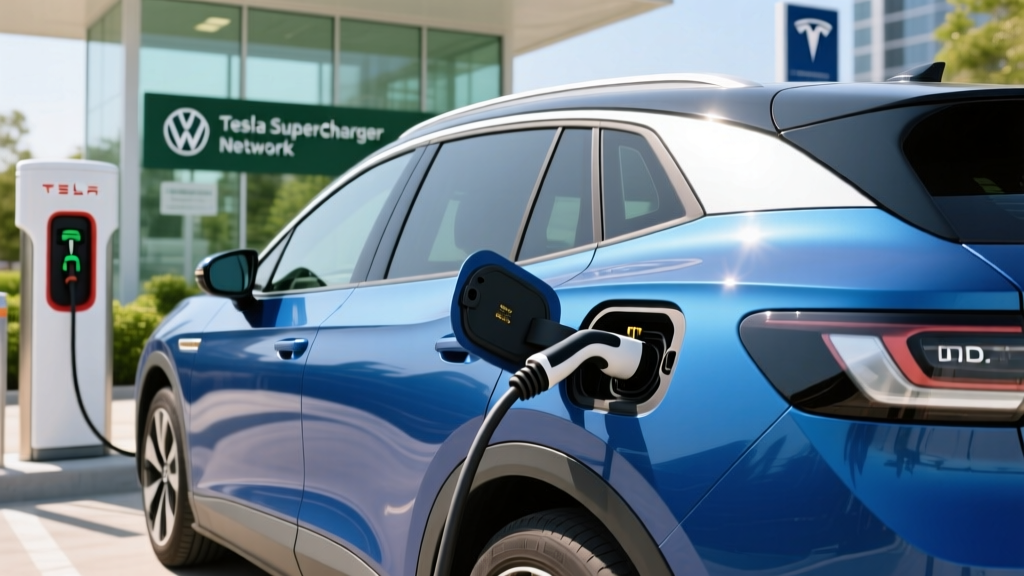
The 2021–2025 Volkswagen ID.4 ships with a CCS1 (Combined Charging System) DC fast-charging port. Tesla Superchargers historically used a proprietary connector, but beginning in 2024, Tesla opened select Supercharger stalls to non-Tesla EVs via the Magic Dock adapter built into the stall, and by 2025–2026, an expanding number of stalls feature native NACS connectors accessible with an approved CCS-to-NACS adapter.
Here's what ID.4 owners need to know:
- 2021–2025 ID.4 (CCS1 port): You can use Tesla Superchargers equipped with the integrated Magic Dock (no separate adapter needed) or use a Tesla-approved CCS-to-NACS adapter at NACS-equipped stalls.
- 2026+ ID.4 (expected NACS port): Volkswagen has signaled a transition to NACS for future model years. If the 2026 or 2027 ID.4 ships with a native NACS port, it will plug directly into any Supercharger stall without an adapter.
- Charge speed limitation: The ID.4 peaks at approximately 135 kW on DC fast charging (10–80% in roughly 29 minutes per EPA data). Even at a 250 kW V3 Supercharger, the ID.4 will only draw what its onboard system allows — so expect the same ~29-minute 10–80% session regardless of stall capability.
| Connector Type | ID.4 Port (2021–2025) | ID.4 Port (2026+ est.) | Adapter Needed? |
|---|---|---|---|
| CCS1 | ✅ Native | ❌ (expected NACS) | No |
| NACS (Tesla) | ❌ Native | ✅ Native (expected) | CCS-to-NACS adapter (2021–2025 models) |
| CHAdeMO | ❌ Not supported | ❌ Not supported | N/A — no viable adapter |
| J1772 (Level 2 AC) | ✅ Via Type 1 inlet | ✅ Via Type 1 inlet | No (native J1772 AC inlet) |
Real-world note: Not every Supercharger stall is open to non-Tesla vehicles. Use the Tesla app (available to non-Tesla owners) or in-car navigation updates to filter for "Open to Non-Tesla EVs" stalls. Availability varies by region — urban and highway corridor stations are prioritized.
Charging Levels Explained: Speeds, kW, and Range Added
Before we break down home installation, let's clarify the three charging levels. The critical distinction: kW (kilowatts) measures power — how fast energy flows into the battery. kWh (kilowatt-hours) measures energy — the total capacity of the battery, which is 82 kWh usable in the 2024–2025 ID.4.
| Level | Voltage | Power (kW) | Miles of Range Added per Hour | Best For |
|---|---|---|---|---|
| Level 1 (120V AC) | 120V | 1.0–1.4 kW | 3–5 miles/hour | Overnight trickle, PHEVs, emergencies |
| Level 2 (240V AC) | 240V | 7.2–19.2 kW | 20–65 miles/hour | Daily home charging, workplace |
| DC Fast Charging | 400–800V DC | 50–350 kW | 150–1,000+ miles/hour (peak) | Road trips, rapid top-ups |
For the ID.4 specifically:
- Level 1 (120V, ~1.2 kW): Adds roughly 4 miles of range per hour. A full charge from 10% to 100% on the 82 kWh battery would take approximately 68 hours — impractical for daily use.
- Level 2 (240V, 11 kW onboard limit): The ID.4's onboard charger maxes out at 11 kW AC. Even with a 48A charger capable of 11.5 kW, the ID.4 will accept ~11 kW, adding about 33–37 miles of range per hour. A 10–100% charge takes roughly 7.5 hours.
- DC Fast Charging (peak 135 kW): At a V3 Supercharger or Electrify America 150+ kW stall, the ID.4 charges from 10–80% in approximately 29 minutes. Above 80%, the charge curve tapers significantly — expect 80–100% to take an additional 20+ minutes.
Home Charger Installation: Costs, Electrical Requirements, and Panel Upgrades
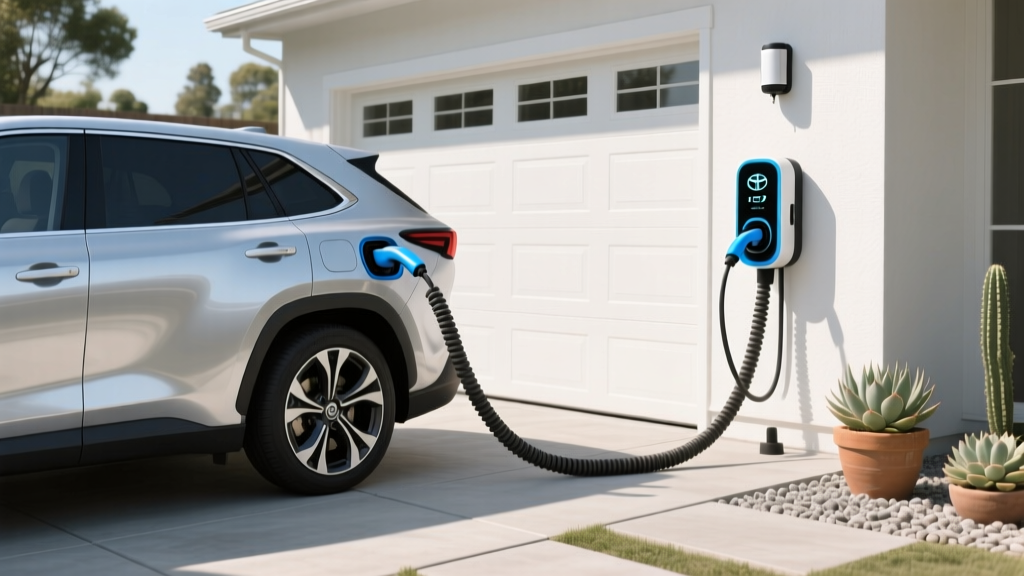
Installing a Level 2 home charger is the single most impactful upgrade for EV ownership. Here's what the electrical work actually involves.
Electrical Requirements
A Level 2 charger requires a dedicated 240V circuit. The most common setups:
- 40-amp circuit (32A continuous charge): Requires a NEMA 14-50 outlet or hardwired connection. Delivers up to 7.7 kW. Sufficient for most EVs including the ID.4.
- 50-amp circuit (40A continuous charge): NEMA 14-50 outlet. Delivers up to 9.6 kW. Common for larger batteries.
- 60-amp circuit (48A continuous charge): Hardwired only (no plug). Delivers up to 11.5 kW. This matches the ID.4's 11 kW onboard charger limit closely.
Panel upgrade reality: Most homes built after 1990 have a 200-amp electrical panel, which typically supports a 40–60A EV circuit without upgrade. However, older homes with 100A panels or panels already near capacity (electric range, dryer, HVAC) may require a panel upgrade to 200A — costing $1,500–$3,500 before the charger circuit is even installed.
| Component | Simple Install (panel nearby) | Complex Install (long run / panel upgrade) |
|---|---|---|
| Level 2 Charger Equipment | $300–$700 | $300–$700 |
| Electrician Labor (2–4 hrs basic / 6–10 hrs complex) | $500–$1,200 | $1,500–$3,000 |
| Electrical Permit | $50–$200 | $50–$200 |
| Panel Upgrade (if needed) | $0 | $1,500–$3,500 |
| Conduit / Wiring Materials | $100–$300 | $300–$800 |
| Total Estimated Cost | $950–$2,400 | $3,650–$8,200 |
Always hire a licensed electrician familiar with EV charger installations. The National Electrical Code (NEC) requires a dedicated circuit — you cannot share the circuit with other major appliances. Your electrician will also determine if a GFCI breaker is required (it is for outdoor receptacles in most jurisdictions) and whether your charger needs an outdoor-rated enclosure (NEMA 4 or 4X rating).
Federal Tax Credit for Home Charging Equipment
Under IRS §30D and the Alternative Fuel Vehicle Refueling Property Credit (§30C), homeowners may qualify for a tax credit covering up to 30% of home charging equipment and installation costs, capped at $1,000. Eligibility depends on your census tract (must be a non-urban or low-income area) and income limits. Consult IRS guidelines and a tax professional to confirm your eligibility.
Cost to Charge: Home vs. Public vs. Gas Comparison
One of the strongest economic arguments for the ID.4 is the per-mile fuel cost. Let's run the numbers using the ID.4's EPA-rated efficiency of approximately 104 MPGe combined (roughly 32 kWh per 100 miles for AWD Pro models per fueleconomy.gov).
| Scenario | Rate | Cost per 100 Miles | Cost per Mile |
|---|---|---|---|
| Home Charging (off-peak, national avg) | $0.13/kWh | $4.16 | $0.042 |
| Home Charging (Time-of-Use peak) | $0.25/kWh | $8.00 | $0.080 |
| Public Level 2 (ChargePoint, EVgo) | $0.35/kWh | $11.20 | $0.112 |
| DC Fast Charging (Electrify America) | $0.48/kWh | $15.36 | $0.154 |
| Tesla Supercharger (non-Tesla rate, avg) | $0.38/kWh | $12.16 | $0.122 |
| Gas Vehicle (25 MPG, $3.50/gal) | $3.50/gallon | $14.00 | $0.140 |
Key takeaways: Home off-peak charging is roughly 70% cheaper per mile than gasoline. Even DC fast charging at public rates is competitive with or slightly above gas costs. The ID.4 owner who charges primarily at home and uses DC fast charging only for road trips will see the most significant fuel savings.
Supercharger pricing note: Tesla typically charges non-Tesla vehicles a higher per-kWh rate than Tesla owners at Supercharger stalls. Expect to pay $0.33–$0.48/kWh depending on location and time of day. Enrolling in Tesla's membership ($4.99/month) can reduce the per-kWh rate closer to Tesla-owner pricing.
Recommended Level 2 Home Chargers for the ID.4
Since the ID.4's onboard charger is limited to 11 kW AC, you don't need the most powerful charger on the market — but investing in a quality 40A or 48A unit ensures future-proofing if you add a second EV. Here are our top picks:
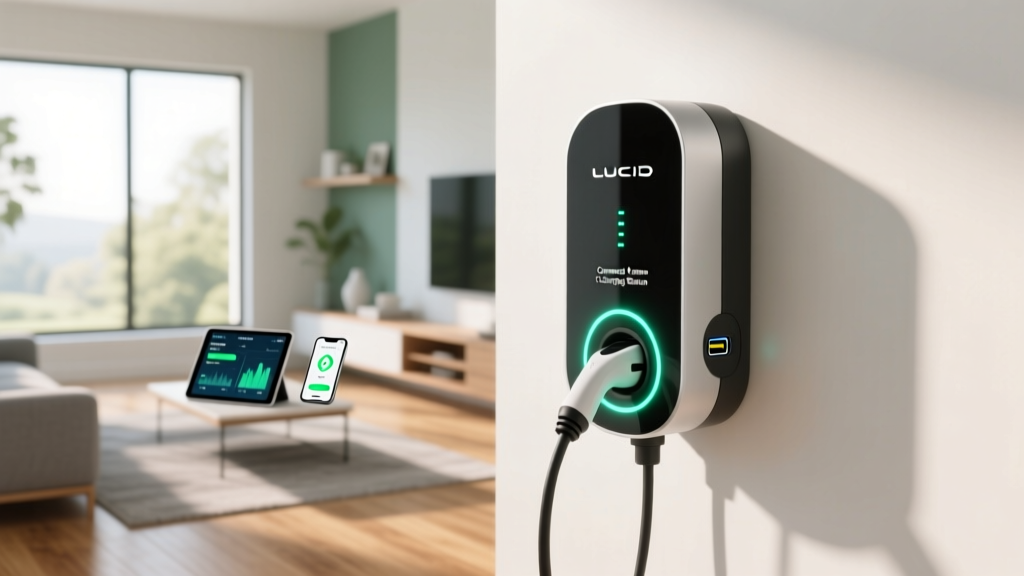
Emporia Vue Level 2 Charger
- Power Output: 48A / 11.5 kW (hardwired) or 40A / 9.6 kW (NEMA 14-50)
- Connector: J1772 (native for ID.4 AC charging)
- Cable Length: 24 feet
- Smart Features: Wi-Fi, app scheduling, energy monitoring, solar integration
- Price: ~$399
- Why we recommend it: Best value in smart chargers. The energy monitoring pairs well with solar systems, and the 48A output maxes out the ID.4's 11 kW onboard charger.
ChargePoint Home Flex
- Power Output: Configurable 16A–50A (up to 12 kW hardwired)
- Connector: J1772
- Cable Length: 23 feet
- Smart Features: Wi-Fi, Alexa integration, app scheduling, ChargePoint network access
- Price: ~$549
- Why we recommend it: Amperage flexibility lets your electrician set the exact draw for your panel. Robust app and network ecosystem.
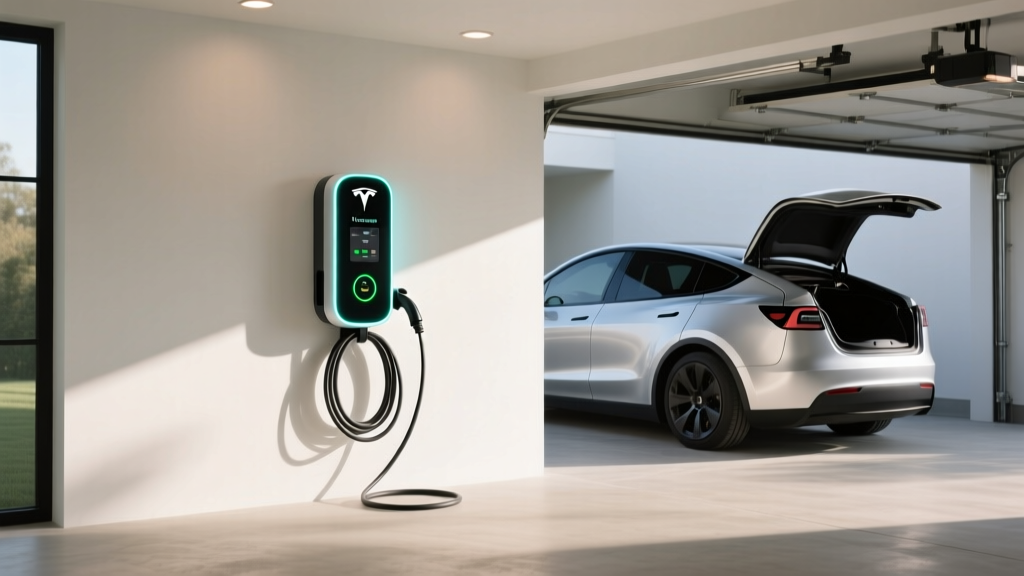
Tesla Wall Connector (J1772 version)
- Power Output: 48A / 11.5 kW (hardwired)
- Connector: J1772 (non-Tesla version released 2024)
- Cable Length: 24 feet
- Smart Features: Wi-Fi, OTA updates, power sharing between two units, load management
- Price: ~$475
- Why we recommend it: Sleek design, excellent build quality, and power-sharing capability is ideal for two-EV households on a single circuit.
For ID.4 owners who also want DC fast-charging access at home (rare but available), the Enel X JuiceBox with DC capability exists but costs $5,000+ and requires three-phase power — not practical for residential use. Stick with a quality Level 2 unit for daily charging.
DC Fast Charging Times: What to Expect on Road Trips
When using Tesla Superchargers or other DC fast-charging networks, the ID.4's charge curve is the limiting factor, not the station. Here's a realistic breakdown:
| State of Charge | Station Power | Actual ID.4 Draw | Estimated Time |
|---|---|---|---|
| 10% → 80% | 150+ kW (V3 Supercharger / EA) | Peak 135 kW, tapering to ~50 kW | ~29 minutes |
| 10% → 80% | 50 kW (older CHAdeMO/CCS) | 50 kW sustained | ~72 minutes |
| 80% → 100% | Any DCFC | 15–25 kW (heavy taper) | ~20–25 additional minutes |
Preconditioning matters: The ID.4 does not currently precondition its battery automatically when navigating to a charger (unlike Tesla or Hyundai's E-GMP platform). In cold weather (below 40°F / 4°C), expect charging speeds to be 20–40% slower until the battery warms up. Plan for longer stops in winter, and consider driving the vehicle for 20–30 minutes at highway speeds before arriving at a DC fast charger to generate some battery warmth.
Real-world range caveat: The ID.4 Pro AWD carries an EPA range of 245 miles. In real-world highway driving at 70+ mph, expect approximately 210–225 miles. In cold weather (below 30°F), that drops to roughly 180–200 miles. Plan your road-trip charging stops accordingly — aim to arrive at chargers with 15–20% remaining, not 5%.
Safety and Code Considerations
EV charging involves sustained high-current draw — more like running an electric furnace than plugging in a lamp. Safety requirements are non-negotiable:
- Dedicated circuit: NEC Article 625 requires a dedicated circuit for EV charging equipment. Do not share with dryers, ranges, or HVAC.
- GFCI protection: Required for all outdoor receptacles and in many jurisdictions for indoor garage outlets as well. Hardwired chargers may have GFCI built into the unit.
- Outdoor rating: If your charger is installed outdoors or in an unsealed garage, ensure it carries a NEMA 4 (weatherproof) or NEMA 4X (corrosion-resistant) rating. All three chargers recommended above meet this standard.
- Cable management: Use a wall-mounted cable organizer to prevent tripping hazards and cable damage. Never run a charging cable across a driveway or walkway where vehicles could drive over it.
- Permit and inspection: Most municipalities require an electrical permit for EV charger installation. Your electrician will pull this, and a city inspector will verify the work meets code. Do not skip this step — unpermitted work can void home insurance claims.
Frequently Asked Questions
Can my VW ID.4 charge at a Tesla Supercharger today?
Yes, with conditions. For 2021–2025 ID.4 models with a CCS1 port, you can use Supercharger stalls equipped with Tesla's Magic Dock (built-in CCS adapter) or use a Tesla-approved CCS-to-NACS adapter at NACS-equipped stalls. Check the Tesla app for "Open to Non-Tesla EVs" station availability in your area.
How much does it cost to install a home EV charger?
A straightforward Level 2 installation with a nearby 200A panel typically costs $950–$2,400 including equipment, labor, and permit. If your home needs a panel upgrade or a long conduit run, costs can reach $3,650–$8,200. Get at least two quotes from licensed electricians.
How fast will each charging level add range to my ID.4?
Level 1 (120V) adds roughly 4 miles per hour. Level 2 (240V, 11 kW) adds about 33–37 miles per hour. DC fast charging at peak rate can add up to 150+ miles in 15 minutes, though the ID.4's 135 kW peak means a realistic 10–80% session takes ~29 minutes.
Which connector do I need for the ID.4?
The 2021–2025 ID.4 uses CCS1 for DC fast charging and J1772 for Level 1/Level 2 AC charging. No CHAdeMO support. For Tesla Supercharger access, you'll need either a Magic Dock-equipped stall or a CCS-to-NACS adapter. The 2026+ ID.4 is expected to switch to a native NACS port.
How much does charging cost per mile compared to gas?
Home off-peak charging costs approximately $0.04 per mile in the ID.4 — about 70% less than a 25 MPG gas vehicle at $3.50/gallon ($0.14/mile). Public DC fast charging averages $0.12–$0.15 per mile, roughly on par with gasoline.
What electrical upgrades might I need for a home charger?
If you have a 200A panel with available capacity, you likely only need a new dedicated 40–60A circuit. Homes with 100A panels, older wiring (knob-and-tube or aluminum), or panels already near capacity may require a panel upgrade ($1,500–$3,500), rewiring, or a utility service upgrade. Your electrician will assess this during a site visit.
Is it safe to charge an EV in the rain or snow?
Yes. EV chargers and vehicle inlets are designed and rated for outdoor use in all weather conditions. The connector is sealed when mated, and the system will not energize until a secure connection is confirmed. Just ensure your outdoor charger has a NEMA 4 or 4X rating and that the cable isn't submerged in standing water.